
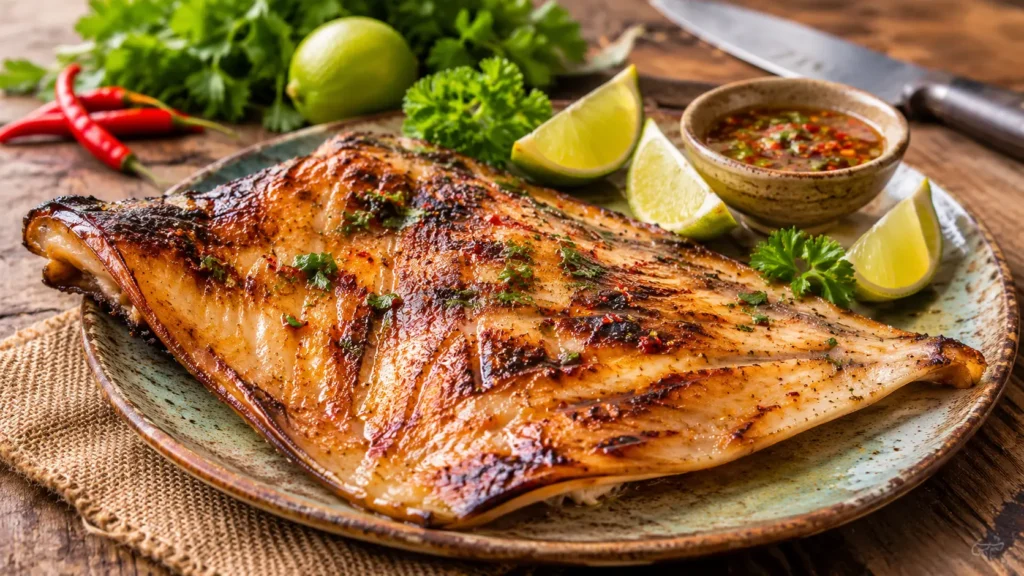
Can you eat stingray, or should you avoid this unusual seafood? Yes, you can eat stingray. People around the world eat the meat from the wings of certain ray species, usually after removing the skin, barb, and cartilage. The key is correct species identification, legal harvesting, careful cleaning, and thorough cooking—not assuming every ray is safe to eat.
Stingray is not a mainstream seafood in the United States, but it appears in coastal cuisines from Singapore and Malaysia to parts of the Caribbean and South America. When fresh and prepared well, the flesh can be mild, firm, and slightly sweet. Poor handling, however, can leave an ammonia-like smell that makes even good stingray meat unappetizing.

Can You Eat Stingray?
Can you eat stingray meat? Surprisingly, stingray makes a popular meal in several coastal regions around the world. Its firm, mild-tasting meat works well in grilled, fried, and baked recipes. Still, proper preparation matters before you bring stingray to your dinner table.
Is Stingray Safe to Eat?
Stingray can be safe to eat when you choose an edible species, source it from clean waters, and handle and cook the meat properly. Stingray meat provides protein and has a mild flavor, but safety depends on the species, where it lives, and potential environmental contamination. Some stingray species and populations may contain elevated levels of heavy metals and other pollutants.
Before cooking stingray, check local fishing regulations and seafood advisories. Avoid eating stingrays from polluted waters or areas with contamination warnings. Buy fresh meat from a reputable seafood supplier, remove the skin and any remaining cartilage, and cook the flesh thoroughly to an internal temperature of 145°F (63°C).
One important distinction: Cooking kills many harmful microorganisms, but it does not reliably remove heavy metals or chemical contaminants. If you cannot identify the species or verify its source, choose a different seafood option.
Which Stingray Species Are Edible?
Not every ray is equally desirable as a stingray to eat. In some regions, people commonly target species with large pectoral fins because they provide more usable meat. The southern stingray, for example, is a large coastal ray, but harvest rules differ dramatically by jurisdiction; Puerto Rico prohibits harvesting southern stingray in its listed waters.
Before you keep one, check the rules for the exact body of water and species. A ray that is legal in one state, country, or fishery may be protected, size-restricted, or prohibited elsewhere. NOAA directs anglers to region-specific federal rules, while state and local regulations often add further limits.
What Does Stingray Taste Like?
What does stingray taste like? Properly prepared stingray has a mild, clean seafood flavor with a slightly sweet flavor. Many people say it can taste similar to scallop, shark, or firm white fish, although the texture is usually denser and more chewy than flaky finfish.
The wing is the part most often eaten. Its flesh is firm, white to pale pink, and holds together well over a grill, in a pan, or in a curry. A fresh ray should smell mildly briny—not strongly of ammonia.
What Part of a Stingray Can You Eat?
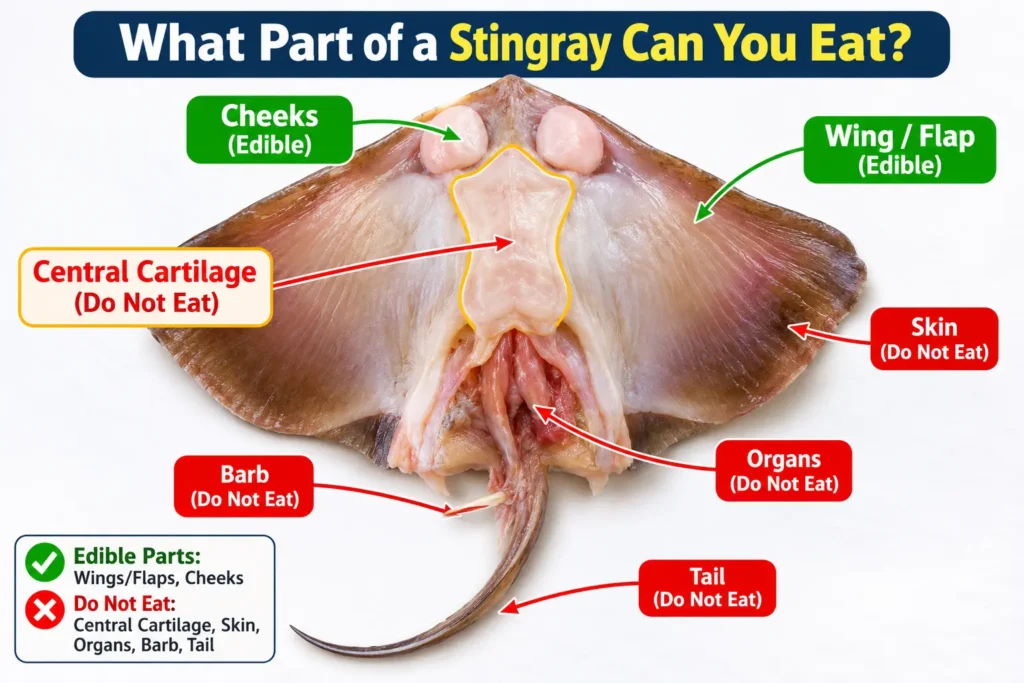
You can eat stingray. Its wings contain edible white meat with a texture similar to scallops or shark. You can grill, fry, or steam stingray, but you should remove the skin and cartilage before cooking. The FDA also recommends checking local seafood advisories because some marine species can accumulate environmental contaminants.
Are Stingray Wings Edible?
Yes. Can you eat stingray wings? Absolutely—the wings, also called flaps, contain most of the edible meat. Each wing has a broad sheet of flesh around a central plate of cartilage instead of bones.
To prepare a wing, remove the skin, cut the meat away from the cartilage, and rinse the fillet well. A sharp fillet knife makes this much easier. The resulting chunk of meat can be cut into strips, cubes, or medallions for frying, grilling, or stewing.
Can You Eat Stingray Cheeks and Other Parts?
In some cuisines, people also eat stingray cheeks, which can be tender and prized. The liver is eaten in certain traditions, but it requires extra caution because organs can concentrate environmental contaminants.
Avoid eating the stingray’s tail, barb, skin, and internal organs unless you have specific local knowledge and a trusted preparation method. The tail and barb are not food; they are the parts most likely to injure someone handling a live or recently caught ray.
Is Stingray Meat Healthy?
Stingray meat can be a nutritious source of lean protein, but its safety depends on the species, habitat, and contamination levels. Some stingrays may accumulate heavy metals and other environmental pollutants, including mercury and persistent contaminants.
The FDA and EPA recommend checking seafood advisories and considering local contamination warnings before eating wild-caught seafood.
Stingray Nutrition and Protein Content
Stingray meat provides lean seafood protein, like many other fish. Exact nutrition varies by species and cut, so treat broad calorie or protein claims cautiously rather than relying on a single universal number.
For most people, the bigger question is not protein but frequency and source. Ray is best enjoyed occasionally, especially if it comes from an area with known pollution, algal blooms, or a fish-consumption advisory.
Does Stingray Contain Mercury?
Is stingray meat healthy? It can fit into a balanced diet, but mercury exposure deserves respect. Nearly all fish and shellfish contain some methylmercury, and larger, longer-lived predators generally accumulate more. The FDA specifically lists shark, swordfish, king mackerel, and tilefish as high-mercury fish to avoid; stingray is not on that short list, but levels can still vary.
Pregnant people, young children, and frequent seafood eaters should be especially careful with locally caught ray. Check the EPA/FDA advisory map or ask the local health department before making stingray a regular meal.
How to Clean and Prepare Stingray for Cooking
Cleaning a stingray starts before you leave the water. Handle the animal carefully, keep the barb away from your hands and feet, and use a cooler with ice if you intend to keep a legally harvested ray.
- Confirm the species and legal status. Do not keep a ray if identification or regulations are unclear.
- Humanely dispatch and bleed it promptly. Bleeding soon after a catch helps improve meat quality.
- Remove the barb and tail. Cut well behind the barb; never assume a ray is harmless because it looks calm.
- Skin the wings. The tough outer membrane and denticles should be removed with a fillet knife.
- Fillet around the cartilage. Separate the flesh from the central cartilage, then rinse the fillet thoroughly.
- Soak if needed. A short soak in cold water, optionally with lemon juice or a little salt, can reduce off-flavors.
- Keep it cold and cook it soon. Freshness matters more than any marinade.
Does Stingray Meat Have Bones?
No—stingray does not have the same bone structure as a typical fish. Rays have a skeleton made largely of cartilage, so the wing contains firm cartilage rather than a row of small bones.
That makes a cleaned stingray fillet relatively easy to eat, but it does not mean every part is boneless. Always remove the central cartilage, skin, and any dark or discolored scrap before cooking.
How to Cook Stingray Fish: 5 Popular Methods
You can cook stingray in five popular ways: grilling, frying, baking, steaming, and curry cooking. Each method brings out different flavors and textures, from smoky grilled wings to crispy fried pieces and tender steamed meat. Fresh stingray, proper cleaning, and balanced seasoning help you get the best results.
We’ll walk you through all five cooking methods, explain how to prepare and season the meat, and share practical tips for avoiding a tough or rubbery texture. Let’s explore the best ways to cook stingray and find the method that suits your taste!
Grilling and Barbecuing
Grill is one of the best ways to cook stingray because high heat adds char while a marinade keeps the flesh from drying out. Brush the fillet with olive oil, season with salt, garlic, and a little spice, then cook over medium charcoal heat until the flesh flakes easily.
For a Singapore-style approach, coat the wing in a savory spice paste, wrap it in foil or banana leaf, and grill it slowly. The sauce keeps the meat moist and gives the ray a rich, smoky flavor.
Pan-Frying
To fry stingray, pat the fillet dry, season it, and dust it lightly with flour or batter. Pan-fry in a little butter or oil until golden, then finish with lemon juice. Do not crowd the pan; cook in batches so the coating crisps rather than steams.
Baking
To bake stingray, place seasoned fillets in a lightly oiled dish, cover with foil, and bake until the flesh turns opaque and flakes. Avoid high heat for too long, because ray can become tough if you overcook it.
Steaming
Steaming is a gentle method that preserves moisture. Season the fillet with ginger, garlic, scallion, and a light soy-based sauce, then steam until just cooked through. This suits thinner pieces and Chinese-style seafood preparations.
Making Stingray Curry
Stingray curry is popular in parts of Southeast Asia. Simmer chunks of wing meat in a coconut-based curry with chile, lemongrass, garlic, and spices until tender. The sauce adds flavor and helps prevent the flesh from drying out.
Why Does Stingray Meat Smell Like Ammonia?
An ammonia smell usually comes from urea in the ray’s tissues breaking down after death. It does not mean every stingray is unsafe, but a strong ammonia odor after proper cleaning and soaking is a reason to discard the meat rather than mask it.
To reduce the odor, bleed and clean the ray quickly, keep it on ice, remove the skin and dark tissue, and soak the fillet in cold water or an acidic marinade. Fresh ray should have a mild, clean smell and firm flesh—not a slimy texture or pungent odor.
Is It Legal and Sustainable to Catch and Eat Stingray in the US?
It depends on the species, location, and fishery. Federal rules differ by region, and many rays are managed through state rules, seasonal closures, size limits, or outright harvest prohibitions.
Before you catch a ray for food, check the current regulations for your exact fishing area. Do not rely on a forum post, an old video, or a general assumption that “rays are fair game.” Responsible sourcing also matters: buy from a reputable seafood seller when possible, and release protected, undersized, or unidentified rays safely.
Frequently Asked Questions About Eating Stingray
Can You Eat Stingray Raw?
No. Do not eat stingray raw. Cooking reduces risks from bacteria and parasites, and it also improves the texture and flavor of the flesh.
Can You Eat Stingray From the Beach?
Sometimes, but only if it is legal, correctly identified, and comes from clean water. Surf-caught fish can be exposed to local contamination, so check advisories before taking any ray home.
Is Stingray Better Than Shark to Eat?
Sting ray and shark are related elasmobranchs, and both can develop ammonia notes when poorly handled. Shark meat is generally a poorer choice from a mercury standpoint because the FDA specifically advises avoiding shark because of high mercury levels.fda
Can You Eat Stingray Every Day?
No. Treat stingray as an occasional seafood meal, particularly if it is locally caught. Vary your seafood choices and follow local advisories to limit exposure to mercury and other contaminants.
Can You Eat Freshwater Stingray?
Be very cautious. Freshwater rays may face different contamination risks, and species identification can be difficult. Unless a local authority confirms the species is legal and safe to consume, do not eat it.
Do stingrays eat seaweed?
No—most stingrays do not eat seaweed. They are mainly carnivorous bottom feeders, eating crabs, shrimp, clams, worms, and small fish; manta and devil rays filter plankton instead. They may swallow tiny plant material accidentally while foraging.
Conclusion
Can you eat stingray fish? Yes—but treat it as a specialty wild seafood, not an automatic catch-and-cook meal. The wings offer the best meat, while the tail, barb, skin, and organs are best left alone. A correctly handled ray can make a delicious, mildly sweet dish with a firm, satisfying texture.
The difference between a great meal and a bad experience usually comes down to handling. Bleed and clean the ray quickly, keep it cold, remove the skin and cartilage, soak the fillet if needed, and cook it until it flakes. Check local rules and advisories before you keep one, and choose a reputable seafood source when possible. Done responsibly, stingray can be a worthwhile addition to your seafood repertoire; done carelessly, it can smell like ammonia, taste unpleasant, or create avoidable safety risks.
You might also like: