
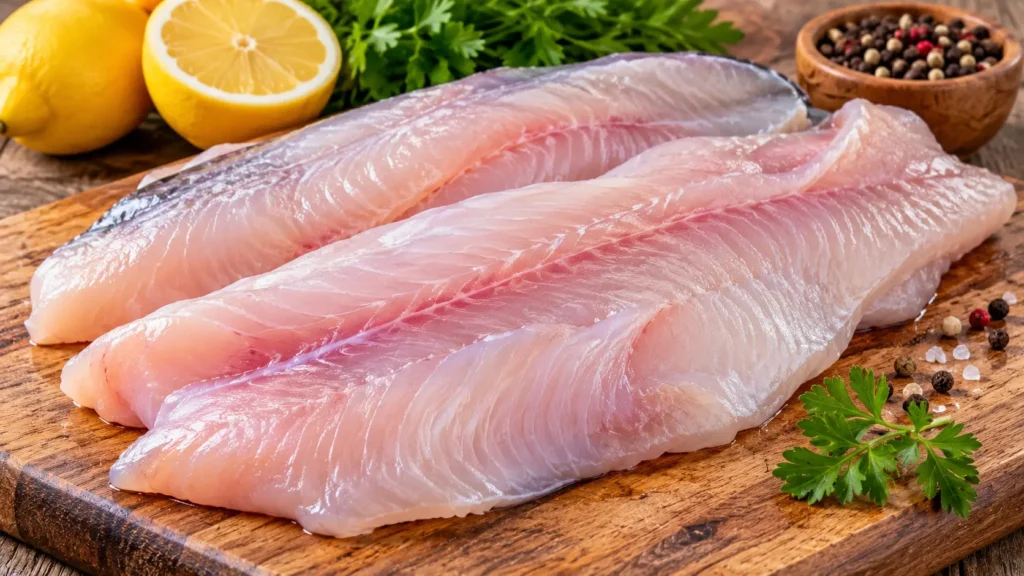
Does catfish have bones when fried? Catfish have bones, including a backbone, ribs, and protective fin spines. However, properly prepared catfish fillets have the backbone and rib bones removed, making them relatively easy to eat. Always inspect the meat for any remaining bone fragments before cooking.
When buying fresh fish at the market or ordering a basket at a local seafood shack, safety and convenience come first. The aquatic living catfish depends on a strong skeletal frame to swim through inland river currents and lakes.
However, the experience on your dinner plate changes dramatically depending on whether you purchase whole fish or trimmed fillets. Understanding how this species of fish is structured makes preparing and eating catfish simple, safe, and enjoyable.
Does Catfish Have Bones? (The Short Answer)
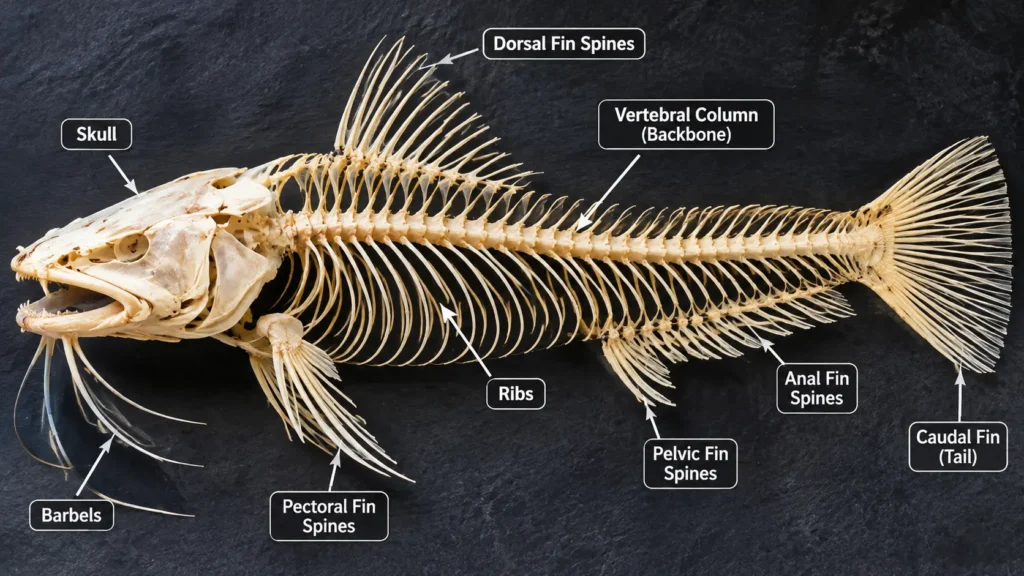
Cat fish have bones like common fish. They are bony fish, not cartilaginous fish such as sharks and rays, so their skeleton is made of bones rather than cartilage. A living catfish uses this skeletal structure to support its body, protect internal organs, and anchor the muscles that power swimming. wildlife.utah
A whole catfish contains:
- A backbone, or spine, running from the catfish head to the tail
- Rib bones attached near the spine
- Skull and jaw bones
- Bones supporting the fins
- Hard, sharp spines in the dorsal and pectoral fins
The key distinction is between a whole catfish and a catfish filet. A whole fish naturally has bones; a professionally cut fillet has had the central skeleton and rib cage removed. That makes many catfish fillets easy to prepare and eat, although no fillet should automatically be treated as completely bone-free.
What Types of Bones Do Catfish Have?
Catfish bones fall into several groups. Knowing them helps you understand why a whole catfish needs careful cleaning before cooking.
– Backbone and vertebrae
The backbone is the long row of vertebrae along the fish’s upper body. It extends from behind the skull to the tail and forms the central support for the fish’s body. When you fillet a catfish, you cut along this spine to separate the meat from the bone.
– Rib bones
Catfish ribs curve around the body cavity and help protect the internal organs. They connect near the backbone and sit inside the thicker front portion of the fish. A proper fillet removes the rib cage, but an inexperienced fillet can leave rib tips behind.
– Skull and jaw bones
The catfish head contains the skull, jawbones, gill structures, and other skeletal parts. These bones are not usually an issue when you eat fillets, but they matter if you cook or eat a whole catfish. Catfish often have large heads, and their broad mouths and sensory barbels—commonly called whiskers—help them find food in freshwater environments.
– Fin spines
Many catfish species have stiff, bony spines at the front of the dorsal fin on the back and the pectoral fins on the sides. These spines can lock into place and help protect the fish from predators. Handle a live or freshly caught catfish carefully, because the pectoral spines can cause painful puncture wounds.
Where Are the Bones Located in a Catfish?
The main bones sit in predictable places:
| Bone type | Location | Removed by filleting? |
|---|---|---|
| Backbone | Runs along the top center of the fish | Yes |
| Rib bones | Curve through the upper body cavity | Usually yes |
| Skull and jawbones | In the catfish head | Yes, if the head is removed |
| Dorsal fin spine | On the fish’s back | Usually yes |
| Pectoral fin spines | On either side, near the gills | Usually yes |
The backbone is easiest to locate: place the fish on its side and look for the raised line running from head to tail. The ribs sit just below and around that line. The sharp pectoral spines are near the gill area, while the dorsal spine rises from the fish’s back.
Catfish also have a lateral line, a sensory line along each side of the body that helps the fish detect movement and vibrations in the water. It is not a bone, but anglers often remove the darker lateral-line tissue while cleaning a fillet because it can carry a stronger flavor.
Do Catfish Fillets Have Bones?
Usually, no—but catfish fillets can still contain a stray bone. Commercial processors and experienced anglers remove the backbone, rib cage, head, skin, and most fin bones during filleting. A well-cut catfish filet should therefore be mostly boneless.
However, “boneless” does not always mean “zero bones.” Small fragments can remain near the rib area, especially in a homemade fillet. Before cooking, run clean fingers over both sides of the raw fillet and look closely for pale, hard pieces. Remove any visible bone with fish tweezers or clean needle-nose pliers.
A good rule is simple: inspect every fillet, even one labeled boneless. Commercial processing reduces the chance of bones, but it cannot guarantee that every tiny fragment was removed.
Do Catfish Have Pin Bones Like Salmon?
Catfish generally do not have the same prominent rows of pin bones that salmon and trout can have. Catfish pin bones, also called intermuscular bones, are thin bones that sit within the muscle rather than forming part of the backbone or rib cage. Salmon fillets often need a separate pin-bone removal step because these bones can remain after the main skeleton is removed.
Catfish are different in a helpful way: once you remove the spine and rib cage, the fillet is usually straightforward to eat. That does not mean catfish are boneless fish. It means their bone structure is generally easier to manage than that of some other freshwater fish, such as carp, which can have many small intermuscular bones through the flesh. animalso
| Fish | Main bone concern | Typical eating experience |
|---|---|---|
| Catfish | Backbone, ribs, and sharp fin spines | Fillets are usually easy to eat |
| Salmon | Pin bones in the muscle | Pin bones often need removal |
| Trout | Backbone, ribs, and pin bones | Can contain more small bones |
| Carp | Many intermuscular bones | Often considered a bony fish |
| Shark | Skeleton made mostly of cartilage | Not a typical bony fish comparison |
Are Catfish Bones Dangerous to Eat?
Large or sharp catfish bones can be dangerous if swallowed. They may scratch the mouth or throat, become lodged in the esophagus, or create a choking risk—particularly for children and older adults. Fish bones are thin and rigid, so cooking does not reliably make them safe to swallow.
Do not try to swallow a bone because it feels small. Stop eating, spit it out if possible, and remove it carefully. Seek medical advice promptly if someone has throat pain, trouble swallowing, coughing, drooling, chest discomfort, or a bone that may still be stuck.
The most important safety step happens before cooking: inspect the fillet. Frying, baking, grilling, or air-frying catfish does not dissolve or remove fish bones.
How to Remove Bones From Catfish Before Cooking
If you are cleaning a whole catfish at home, use a sharp fillet knife, a stable cutting board, and protective gloves. The Utah Division of Wildlife Resources recommends a flexible 6- to 8-inch fillet knife, catfish skinning pliers, and a clamped fillet board for easier handling.
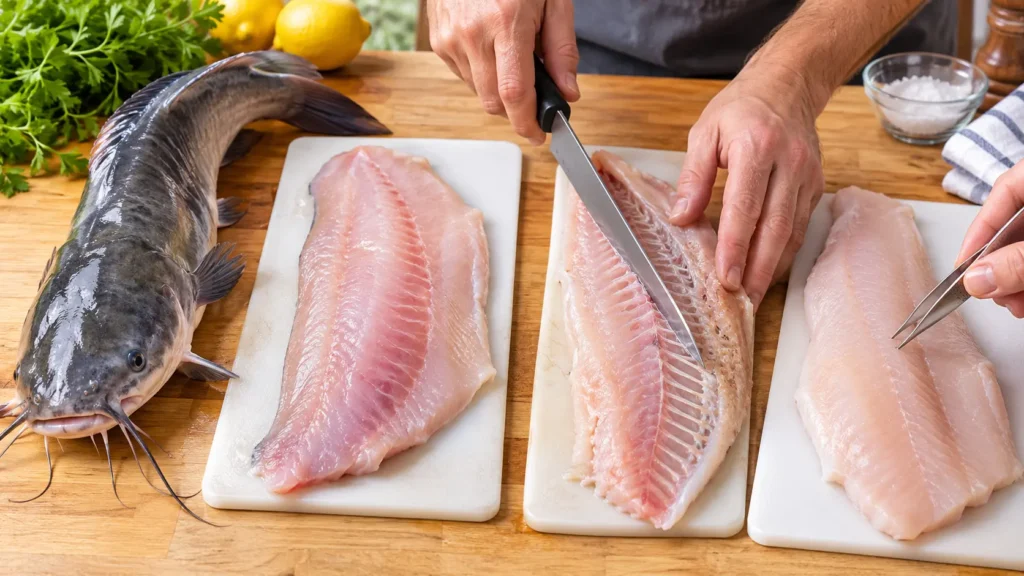
Fillet the catfish
- Secure the catfish with its spine parallel to the cutting board.
- Cut into the tail until you reach the backbone.
- Run the knife along the spine from tail toward head, keeping the blade close to the bone.
- When you reach the rib cage, guide the knife over and around the ribs.
- Peel the fillet away from the rib cage using slow, controlled strokes.
Check for remaining bones
After filleting, place the filet flat on a clean surface. Feel gently from one end to the other, paying special attention to the thicker area where the ribs were attached. Pull any visible bone in the direction it points, using fish tweezers or clean pliers.
Also remove the dark lateral line, excess belly fat, and any thin membrane if desired. These are not bones, but removing them can improve the flavor and texture of the finished meal.
Is Fried Catfish Boneless?
Fried catfish fillets are usually boneless, but frying does not remove bones. Heat cooks the fish; it does not dissolve the skeleton. If a bone remains in the fillet before cooking, it will still be there after frying.
The difference comes down to the cut:
- Fried catfish fillets: Usually boneless because the backbone and ribs were removed before breading and frying.
- Whole fried catfish: Contains the backbone, rib bones, head bones, and fin bones unless the fish was specially prepared.
- Catfish nuggets: Usually cut from fillets, but inspect them because small pieces can occasionally contain a fragment.
When eating fried catfish, cut or break the piece apart before taking a bite. Look for pale, hard edges or thin white lines that could be bone. Eat slowly, especially when serving catfish to children.
How to Eat Catfish Without Getting Bones in Your Mouth
You can greatly reduce the chance of encountering bones by choosing the right product and checking it before cooking.
- Buy skinless, boneless catfish fillets from a reputable fish counter or processor.
- Inspect raw fillets with your fingers and eyes before seasoning them.
- Remove any visible bone with tweezers before cooking.
- Cut large fillets into smaller, even portions so they cook evenly.
- Break cooked catfish into smaller bites rather than placing a large piece in your mouth.
- Chew carefully and avoid talking or laughing while eating fish.
- Be extra cautious with whole catfish, homemade fillets, and fish served at informal cookouts.
Farm-raised channel catfish, blue catfish, and flathead catfish all have bones. Farm-raised catfish is not naturally boneless; it is simply often sold as a cleanly processed fillet. Different species of catfish can vary in size, flavor, and bone structure, but none should be treated as completely bone-free in whole form.
Frequently Asked Questions About Catfish Bones
Do catfish have small bones?
Yes. Catfish can have small bone fragments, especially around the rib area of a poorly filleted fish. They generally do not have as many noticeable pin bones as salmon, trout, or carp, but a fillet can still contain a stray piece.
Does farm-raised catfish have bones?
Yes. Farm-raised catfish have the same basic skeletal structure as wild catfish. The difference is that farm-raised fish are often processed into clean, skinless, boneless fillets before sale.
Do channel catfish have bones?
Yes. Channel catfish have a backbone, ribs, skull bones, and sharp dorsal and pectoral fin spines. A properly filleted channel catfish is usually easy to eat.
Can you eat catfish with bones?
You can eat whole catfish, but you need to avoid swallowing the bones. Many people eat the meat carefully away from the backbone and ribs. For the easiest experience, choose fillets instead of whole fish.
Does cooking soften catfish bones?
Cooking may make small bones slightly more brittle, but it does not make them safe to swallow. Large or sharp bones remain a choking and injury risk after frying, baking, or grilling.
Are catfish fillets completely boneless?
Not always. A commercial catfish fillet is usually close to boneless, but processors cannot guarantee that every tiny fragment has been removed. Inspect the fillet before cooking.
Which catfish species have the most bones?
All cat fish species have bones. Blue catfish, channel catfish, flathead catfish, and Vietnamese catfish—often sold as basa or swai—should be handled with the same basic care. Species differences affect size and flavor more than whether the fish has a skeleton.
Are sharks and catfish the same type of fish?
No. Sharks are cartilaginous fish, meaning their skeletons are made largely of cartilage. Catfish are bony fish, so their skeletons are made of bones.
What fish fillets have no bones?
Tilapia, cod, flounder, sole, pollock, and catfish fillets are commonly sold boneless. No fillet is guaranteed completely bone-free, so check it before cooking; remove any visible bones with tweezers. target
What can you not touch on a catfish?
Avoid the sharp spines at the front of the dorsal fin and each pectoral fin. They can lock upright and puncture skin, so handle catfish from below or use gloves and pliers. dnr.state.mn
Why do they say “don’t eat catfish”?
People may say this because some locally caught catfish can carry mercury or other contaminants, depending on the waterway. Commercial catfish is generally a low-mercury choice; follow local fish advisories.
Conclusion
Does catfish have bones? Yes. A whole catfish has a complete bony skeleton, including a backbone, ribs, skull bones, and sharp spines in its dorsal and pectoral fins. Those bones protect the fish and support its body, but they are not something you want to bite into during dinner.
The practical answer for most people is simple: choose a properly cleaned catfish fillet. Filleting removes the backbone, rib cage, head, and most fin bones, leaving a mild, versatile piece of fish that works well fried, baked, grilled, or blackened. Check the raw fillet for stray bones, cook it thoroughly, and eat it slowly. With a little attention before cooking, catfish can be an easy, satisfying freshwater meal without the worry of unexpected fish bones.
You might also like: