
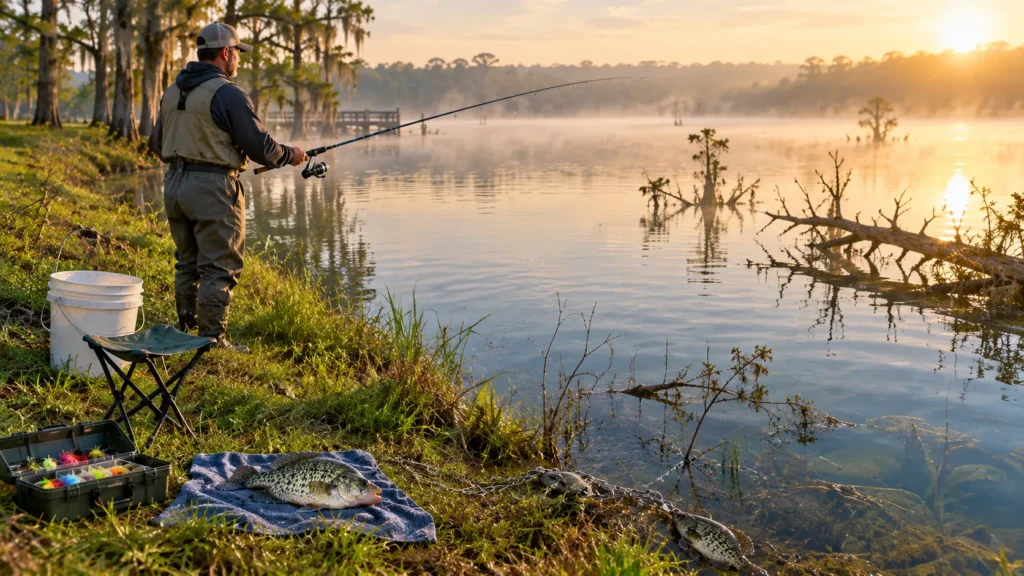
Crappie bank fishing is the art of catching feisty, delicious crappie from the shoreline without the need for a boat, kayak, or expensive marine electronics.
If you want to know how to catch crappie from the bank, you are in the right place. You do not need a vessel to catch a limit of slabs; you just need to understand how these fish move, feed, and relate to the shoreline throughout the year.
What Experienced Bank Anglers Pack Before Every Trip” Get the essentials for your next trip, from dependable fishing line to productive jigs and portable tackle storage.
How to Find the Best Crappie Bank Fishing Spots
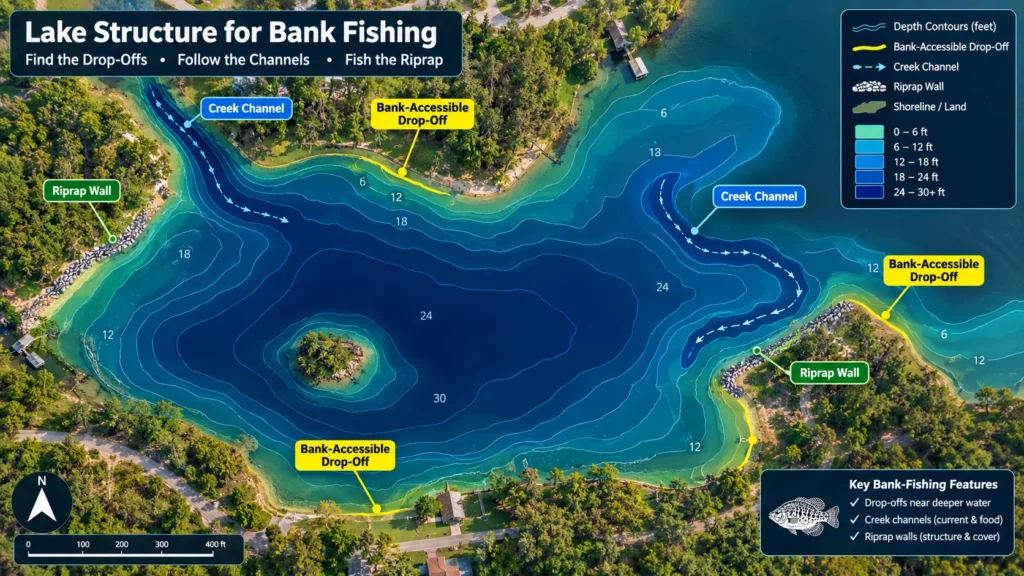
Finding fish from shore starts long before your first cast. Crappie move based on water temperature, food sources, and spawning urges. When you arrive at a lake, reservoir, or river, look for locations where deep water swings close to the bank.
- Public Fishing Piers and Access Points: State parks and local reserves often drop Christmas trees or brush piles within casting distance of wooden piers.
- Creek Arms and Inlets: These areas warm up faster in the spring and draw baitfish in massive schools.
- Riprap Banks: Rock-lined dams and bridge pilings absorb heat and harbor aquatic insects and minnows.
Best Time of Year to Catch Crappie From the Bank
Timing dictates your success on the water. Bank fishing for crappie in spring is legendary because spawning fish migrate into shallow water where they are easily within reach of a long rod.
- Spring (Pre-Spawn & Spawn): When water temperatures hit 55°F to 65°F, crappie move into water as shallow as one to three feet. This is prime time for shore anglers.
- Summer: Fish retreat to deeper, cooler water. Target deep docks or shade lines near the bank during early morning and late evening.
- Fall: Crappie chase shad into shallow pockets as water cools down, offering a fantastic secondary shallow-water bite.
- Winter: Fish suspend around deep channel ledges. Fishing for crappie from the bank is tough unless a steep creek channel runs right against the shore.
Best Time of Day for Crappie Bank Fishing
Crappie possess large, sensitive eyes designed for low-light conditions. Knowing the best time to catch crappie from shore will instantly double your catch rate.
- Dawn and Dusk: The absolute peak feeding windows. Baitfish move shallow, and predator fish follow.
- Overcast Days: Low cloud cover encourages crappie to roam away from deep cover and hunt aggressively in mid-depths near the bank.
- Night Fishing: Setting up a lantern on a dock or bank after dark attracts plankton, which draws minnows and schools of hungry crappie right to your feet.
Best Baits and Lures for Catching Crappie From Shore
Choosing the best bait for crappie bank fishing depends on whether you prefer live bait or artificial presentations.
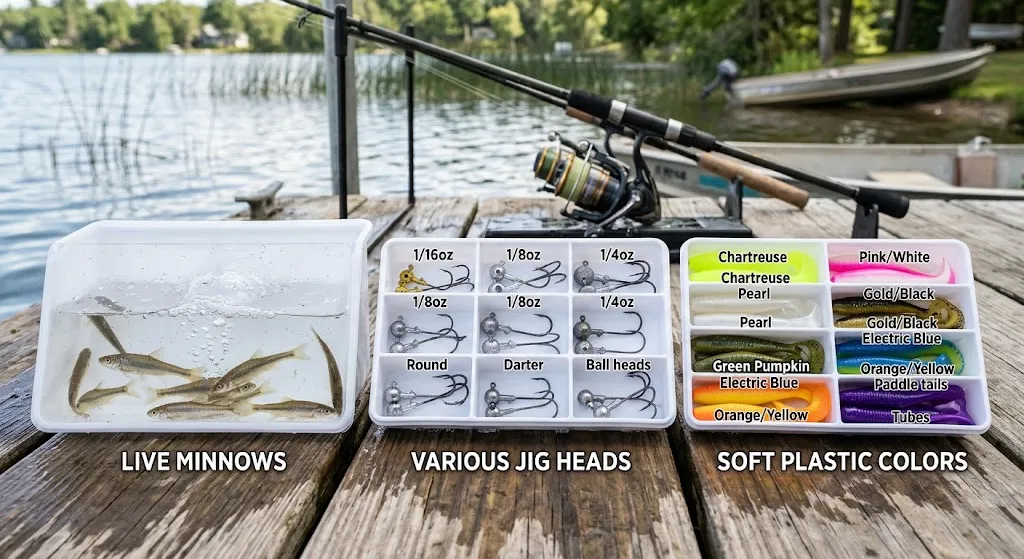
- Live Minnows: The gold standard. Hook a lively shiner or fathead minnow through the lips or dorsal back on a small wire hook beneath a slip bobber.
- Soft Plastic Grubs and Tubes: 1.5-inch to 2-inch curly-tail grubs in chartreuse, white, or pink paired with a 1/16-ounce jig head are deadly.
- Hair Jigs: Hand-tied marabou jigs pulse naturally in the water column with the slightest twitch of your rod tip.
Best Rod, Reel, and Fishing Line for Bank Fishing
Casting distance and leverage are your best friends when targeting fish without a boat.
- The Rod: Choose a light or ultra-light spinning rod between 7 and 9 feet long. The extra length lets you cast further from the bank and swing fish away from shoreline obstacles.
- The Reel: A reliable 1000 to 2500 series spinning reel with a smooth drag system.
- The Line: Spool up with 4lb to 6lb test monofilament or high-vis 6lb braided line with a 4lb fluorocarbon leader. High-vis line helps you track subtle bites when watching your line drift.
How to Catch Crappie From the Bank – Step by Step fishing setup
Follow this step-by-step framework to systematically break down any shoreline and learn how to fish for crappie from the bank effectively:
- Equip Your Tackle: Rig an ultra-light rod with a slip float, a small split shot, and a size 2 wire hook or 1/16-ounce jig.
- Scan the Shoreline: Look for visible cover like fallen timber, standing timber, or boat docks.
- Determine Depth: Set your bobber stop so your bait hangs just above the submerged brush or timber. Crappie look up to feed.
- Make Gentle Casts: Pitch or cast your bait past the target structure and let it drift naturally into the strike zone.
- Work the Water Column: If you get no strikes after three casts, adjust your bobber depth deeper or shallower until you locate active fish.
Where Crappie Hide Near Shore: Docks, Brush, and Fallen Trees
Crappie are structure-oriented fish. They rarely suspend out in open, barren water unless chasing shad.
- Boat Docks: Shaded dock pilings offer cool sanctuary and harbor insects and minnows. Skip your jig underneath the walkway for explosive strikes.
- Submerged Brush Piles: Man-made or natural brush heaps act as magnet zones for schools of paper-mouths.
- Fallen Trees (Laydowns): Focus on the submerged branches hanging in deep water rather than the trunk resting on dry dirt.
Best Crappie Rigs for Fishing From the Bank
Having the best crappie rigs for bank fishing prevents frustrating hang-ups in heavy cover.
- The Slip Bobber Rig: Allows you to cast deep water easily while keeping your bait suspended at a precise depth.
- The Carolina Rig (Modified): A small egg sinker above a swivel with a two-foot leader, perfect for dragging bottom baits along sloping banks.
- The Naked Jig: Simply tying a 1/16-ounce jig directly to your main line for active casting and retrieving without hardware.
Common Bank Fishing Mistakes and How to Avoid Them
- Fishing Too Fast: Crappie can be lethargic. Slow down your presentation and let your bait linger in front of cover.
- Ignoring Stealth: Stomping along the bank or slamming tackle boxes on concrete piers sends vibrations through the water and spooks shallow fish.
- Staying Stationary Too Long: If you haven’t had a bite in 20 minutes, pack up your mobile gear and walk down the shoreline to fresh water.
Crappie Bank Fishing Tips for Beginners: FAQs
Can I throw net to catch crappie fishing from the bank?
Local regulations regarding cast nets vary significantly by state and water body. While cast nets are legal in many areas for catching live shad and minnows for bait, catching game fish like crappie with a net is strictly illegal in most jurisdictions. Always check your state’s Department of Natural Resources (DNR) rulebook before throwing a net.
How deep should I fish from the bank?
In spring, start crappie fishing from bank 1 to 3 feet deep. During summer and winter, adjust your presentation to 8 to 15 feet deep near creek channels or deep dock slips.
Do I need a boat for successful crappie fishing?
Not at all. With a long ultra-light rod, mobile tackle bag, and knowledge of shoreline migration patterns, you can catch massive stringers right from the bank.
What is the best color jig for murky water?
When water clarity is low, switch to high-visibility or dark silhouette colors like chartreuse, electric chicken, or solid black-and-chartreuse.
How do I prevent my jig from getting snagged in brush?
Use a slip float to keep your bait suspended above the timber, or switch to weedless jig heads equipped with light wire guard brushes.
What is the best crappie rig for bank fishing?
The slip bobber rig is widely considered the best overall setup for bank fishing. It lets you easily cast long distances while keeping your bait suspended at an exact depth over brush piles or deep drop-offs. If you prefer casting artificials without a float, a simple 1/16-ounce jig head tied directly to your line gives you maximum control and feel.
Conclusion
How to crappie fish from the bank? Mastering crappie bank fishing proves that you do not need a motorized boat or expensive marine electronics to experience world-class multi-species action. By understanding seasonal migrations, targeting structural hideouts like docks and fallen timber, and presenting live minnows or lightweight jigs with precision, you can consistently haul in impressive stringers of fish right from the shoreline. Remember to stay mobile, respect local regulations, and approach the water quietly to maximize your success. Pack light, keep your presentation slow, and enjoy the thrill of tracking down slabs on foot.
You might also like: