
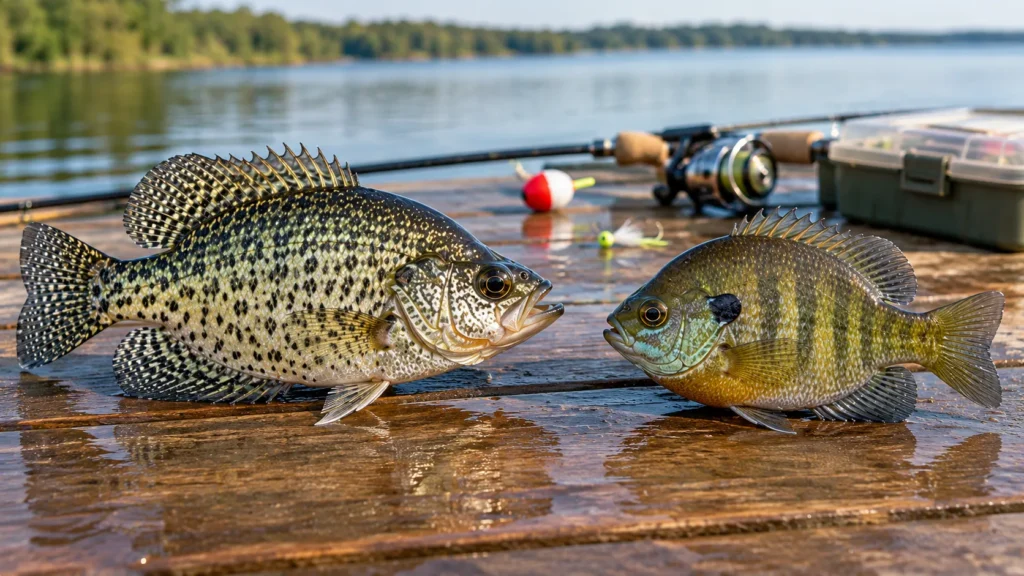
Are crappie and bream the same fish? Crappie and bream are not the same fish. Crappie are a type of panfish with a larger mouth, spotted or barred sides, and a preference for brush, timber, and deeper structure. “Bream” is a regional Southern term that usually means bluegill, though it can also include redear sunfish, redbreast sunfish, and other sunfish species.
If you have ever heard someone say “brim,” they almost always mean “bream”—the word is pronounced that way in much of the South. So when anglers compare crappie vs bream, they are usually comparing crappie with bluegill or another common sunfish. myfwc
Crappie vs Bream: What’s the Difference?
The biggest brim vs crappy difference is that crappie is one specific group of fish, while bream is a loose nickname for several sunfish species. Crappie belong to the sunfish family, but they are not what most Southern anglers mean when they say “bream.”
In practical fishing terms:
- Crappie usually means black crappie or white crappie.
- Bream often means bluegill.
- Bream can also mean redear sunfish, warmouth, redbreast sunfish, longear sunfish, or spotted sunfish, depending on where you fish.
- Brim is simply a pronunciation/spelling variation of bream, not a separate species.
A simple way to remember it: all bluegill can be called bream in many places, but not every fish called bream is a bluegill.
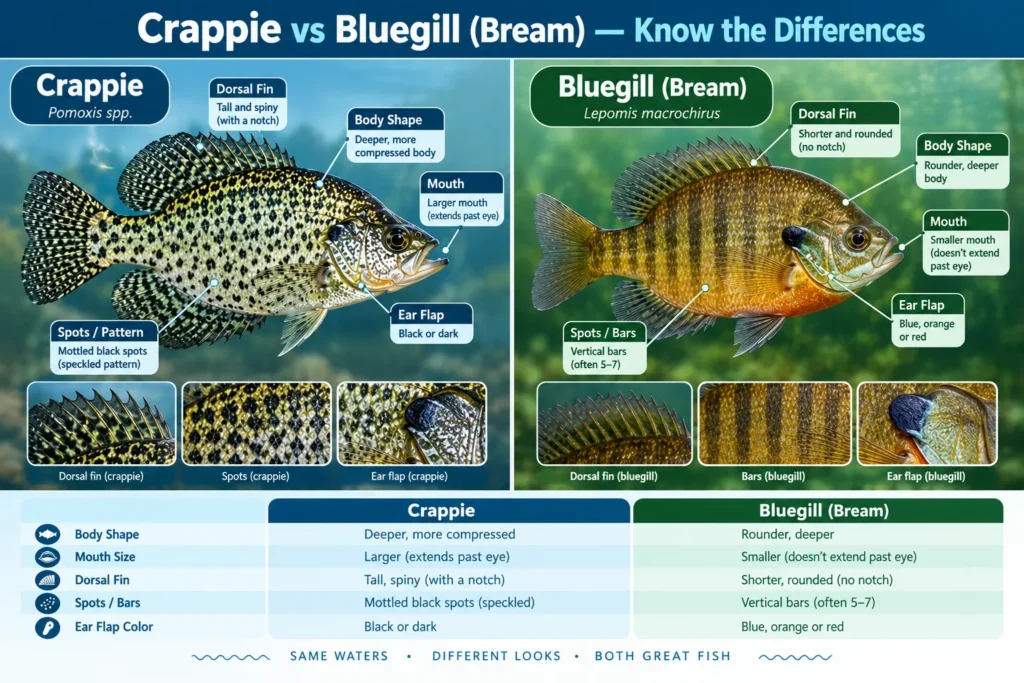
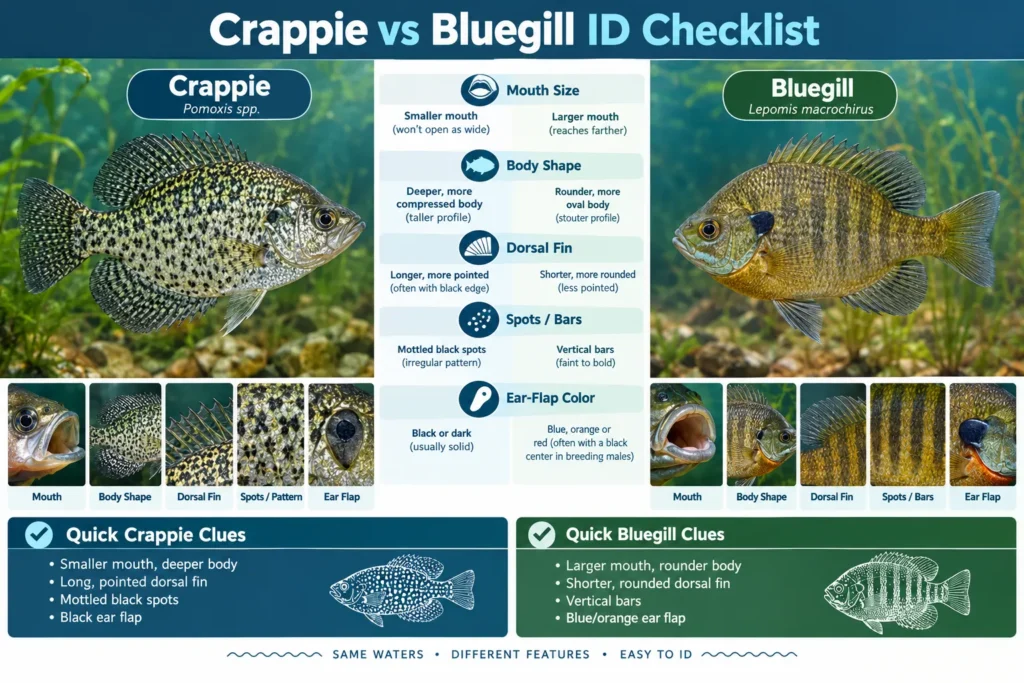
How to Identify Crappie and Bream by Appearance (crappie or bream)
Crappie identification
Crappie have a thinner, more elongated body than bluegill. They also have a noticeably larger mouth, which helps them eat small minnows and other baitfish.
Look for these features:
- Silvery body with black spots or vertical bars
- Large mouth that extends farther back on the head
- Tall, pointed dorsal fin
- Black crappie: irregular scattered spots and 7–8 dorsal spines
- White crappie: clearer vertical bars and 5–6 dorsal spines
Bream identification
Bream, especially bluegill, look rounder and deeper-bodied. They have small mouths, a pan-shaped body, and bright color around the face and belly. ncwildlife
Look for these features:
- Deep, round body
- Small mouth
- Olive-green back with dark vertical bars
- Yellow or orange belly
- Black ear flap on bluegill
- Black spot near the rear of the dorsal fin on bluegill
Redear sunfish, often called shellcrackers, are easy to separate from bluegill because they have a red or orange edge on the ear flap.
Crappie vs Bream: Size and Weight Comparison
Crappie generally grow larger than most bream, although a big redear sunfish can compete with an average crappie. Crappie are often targeted as “slabs” because anglers want fish large enough to fillet.
| Feature | Crappie | Bream / Bluegill |
|---|---|---|
| Typical keeper size | 8–12 inches | 5–8 inches |
| Good eating size | 10 inches or longer | 6–8 inches |
| Common adult weight | 0.5–1.5 pounds | 0.25–0.75 pound |
| Body shape | Slimmer, longer, taller dorsal fin | Deep, round, pan-shaped |
| Mouth | Large | Small |
| Best fishing style | Jigs, minnows, structure fishing | Worms, crickets, float fishing |
Crappie between 8 and 11 inches are commonly considered ideal for a fish fry, while many anglers release the largest fish to protect the population.
Where Do Crappie and Bream Live?
Both fish live in freshwater lakes, ponds, reservoirs, and slow rivers, but they use different parts of the water.
Crappie habitat
Crappie relate closely to cover and depth changes. In spring, they move shallow to spawn near brush, docks, cattails, bulrushes, and lily pads. During summer and winter, they often hold around submerged timber, brush piles, bridge pilings, creek channels, and drop-offs.
Start your search in places where shallow and deep water sit close together. A brush pile near a creek channel or a dock over deeper water can hold crappie all day.
Bream habitat
Bream prefer shallow, warm water with plenty of cover. Bluegill often gather around weed beds, boat docks, laydowns, and shallow spawning beds. Redear sunfish usually stay deeper than bluegill and favor harder bottoms where snails and other mollusks live.
If you see shaded docks, lily pads, reeds, or small fish dimpling the surface, you are likely in bream country.
What Do Crappie and Bream Eat?
Crappie and bream both eat insects, but their diets split as they grow.
- Crappie eat insects, zooplankton, and small fish. Their larger mouths let them feed on minnows, which is why live minnows work so well. carolinasportsman
- Bluegill and other bream eat aquatic insects, larvae, freshwater shrimp, and mollusks. Redear sunfish specialize in snails and clams, using strong throat teeth to crush shells.
That diet difference explains much of the bait difference: crappie respond well to minnow imitations, while bream often prefer small natural baits.
Best Bait for Catching Crappie vs Bream
Best crappie bait
Use small jigs or live minnows. Fish them slowly around brush piles, dock posts, submerged timber, and channel edges. When crappie are finicky, change depth first, then slow your retrieve, then adjust bait size or color.
Good crappie options include:
- Small feather or plastic jigs
- Live minnows under a float
- Jig-and-minnow combinations
- Small crankbaits around deeper cover
- Vertical jigging near brush or ledges
Best bream bait
Bream fishing works best with small hooks, light line, and natural bait. Bluegill respond especially well to worms, while crickets, wigglers, and grass shrimp also produce well under a float. myfwc
Good bream options include:
- Red worms or nightcrawler pieces
- Crickets
- Grass shrimp
- Small beetle spins
- Tiny jigs or flies
- Small poppers for surface action
A standard crappie jig can be too large for many bream because their mouths are small. Downsize your hook and bait when the bites are short or missed.
Bream vs Crappie: Which Is Easier to Catch?
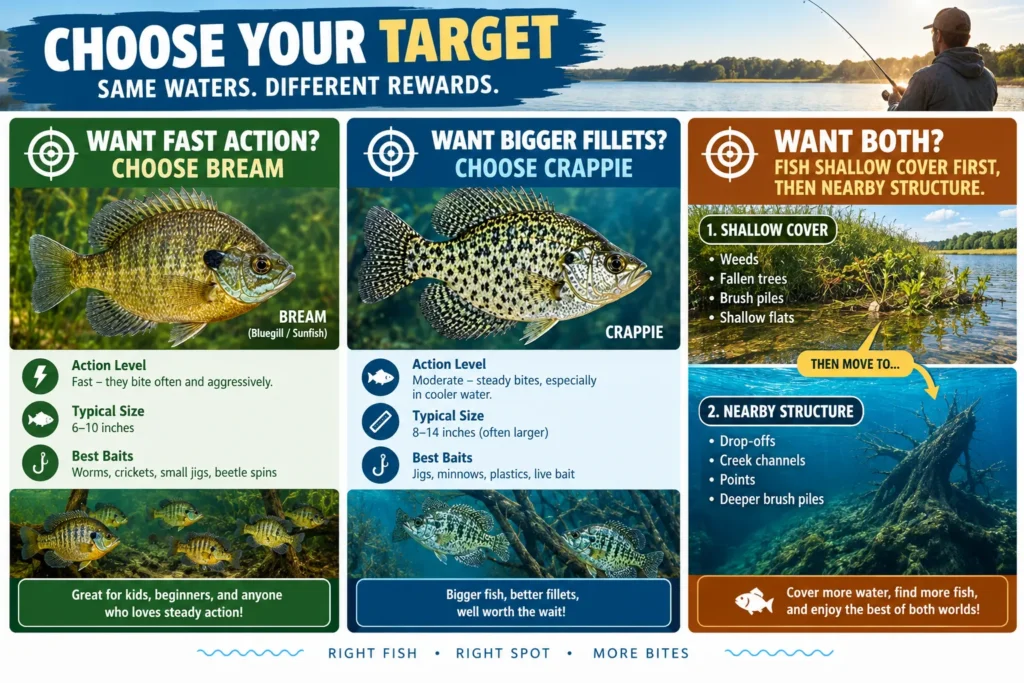
Bream are usually easier to catch, especially for kids, beginners, or anyone fishing from the bank. They bite often, live close to visible cover, and readily take worms or crickets.
Crappie can be easy during a strong spring spawn, but they often require more precision. You may need to find the right depth, work cover slowly, and adjust your presentation until you locate a school.eufaulalakeguides
Choose bream when you want steady action. Choose crappie when you want a more deliberate fishing pattern and a better chance at larger fillets.
Crappie Vs Brim Fish: Which Fish Tastes Better?
Both taste excellent when fresh, but they offer different eating experiences.
- Crappie have firm, white, flaky fillets and usually provide more meat per fish.
- Bream/bluegill have sweet, mild meat, but smaller fillets require more fish for a meal.
- Redear sunfish are also highly regarded on the table and can grow larger than bluegill.
For a family fish fry, crappie often win because you get bigger fillets. For flavor, many anglers rank fresh bluegill right alongside crappie. Either fish tastes best when iced immediately and cooked fresh.
Best Time of Year to Catch Crappie and Bream
Spring
Spring is prime time for both species. Crappie move shallow to spawn and can be caught around vegetation, docks, and brush with jigs tipped with minnows. Bream also move shallow as water warms, and bluegill begin bedding in protected areas.
Summer
Bream often remain active around shallow weeds, docks, and shade lines. Crappie may move deeper or suspend around cover, so slow presentations and electronics become more useful.
Fall
Crappie feed heavily as water cools and often follow baitfish toward creek channels and structure. Bream still bite well, but their shallow bedding activity fades.
Winter
Crappie often school tightly around deeper brush, timber, or channel bends. Bream fishing slows, though bluegill can still be caught near warm-water discharge areas or deeper cover.
Crappie vs Bream: Which Fish Should You Target?
Target crappie if you want larger fish, enjoy working structure, and like using jigs or minnows. Target bream if you want simple, active fishing with light tackle and natural bait.
For many anglers, the best answer is both. Start shallow with crickets or worms for bream, then move to nearby brush or a dock over deeper water for crappie. The two fisheries often overlap enough that you can switch techniques without changing lakes. lakeblackshearfishing
FAQs
Are crappie and bream the same fish?
No. Crappie are black or white crappie. Bream is a regional nickname most often used for bluegill, but it can also include redear sunfish and other sunfish.
Is it “bream” or “brim”?
Both spellings appear, but bream is the standard spelling. “Brim” reflects the common Southern pronunciation.
Is a crappie a bream?
Usually, no. Crappie are in the sunfish family, but anglers normally use “bream” for bluegill and similar sunfish—not crappie.
What is the difference between bream and crappie?
Bream are usually deep-bodied sunfish with small mouths. Crappie are slimmer, have larger mouths, and often hold around deeper brush, timber, and channel structure.
Which tastes better: crappie or brim?
Both are delicious. Crappie give you larger fillets; bluegill offer sweet, mild meat. Choose based on how much meat you want and how many fish you plan to clean.
Can you catch crappie and bream in the same spot?
Yes. Shallow docks, vegetation, and brush near depth changes can hold both. Use small natural bait for bream and jigs or minnows for crappie.
Conclusion
Understanding crappie vs bream comes down to recognizing two different Bass or crappie fishing opportunities. Crappie are sleek, larger-mouthed panfish that reward anglers who work brush piles, docks, timber, and depth changes with jigs or minnows. Bream—most often bluegill, but sometimes redear sunfish or other sunfish—are deep-bodied fish that provide fast, dependable action around shallow weeds, beds, and shaded cover.
Neither fish is “better” in every situation. Choose crappie when you want bigger fillets and a more technical fishing day. Choose bream when you want constant bites, simple tackle, and a great experience for new anglers. Learn the body shape, mouth size, markings, and habitat preferences of each, and you will spend less time guessing and more time catching. Whether you call them bream, brim, bluegill, or shellcrackers, both crappie and bream deserve a place in every Southern angler’s fishing plan.
You will also like:
- How To Fish For Crappie From The Bank! (Beginner’s Guide)
- 7 Best Fish Finder For Crappie Fishing (Top Picks & Reviews)
- Scorpion Fishing Bait – Fresh Baitz Scorpion Lures (Reviews)
- Bream Fishing: 25 Things That Bream Anglers (Should Know!)
- When Do Crappie Spawn? Best Time, Water Temp & Tips
- Are Crappie Good to Eat? Taste, Bones & Best Recipes