
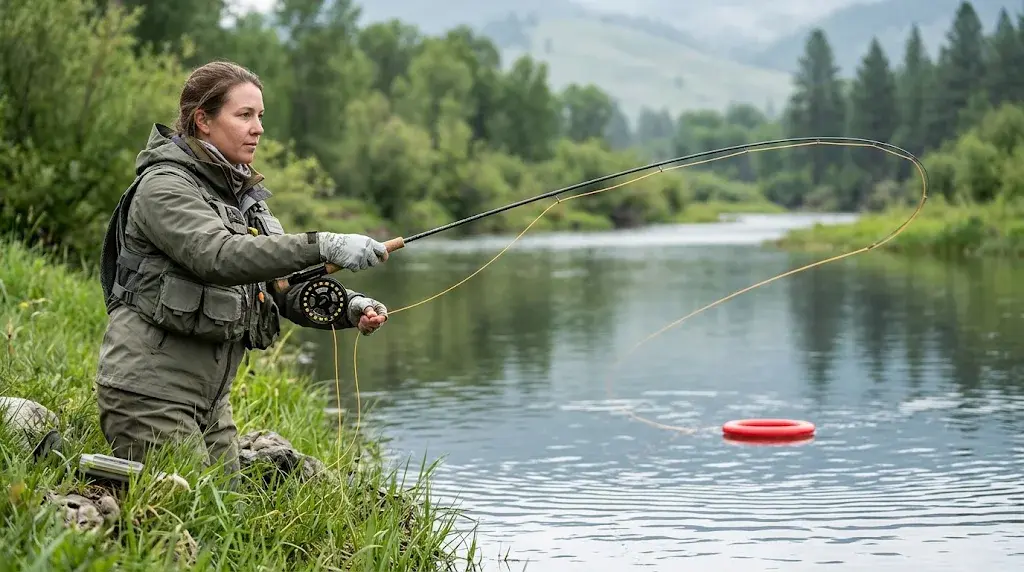
To learn how to improve fly casting accuracy, start with a clear target, smooth acceleration, and a pause that lets the line unfold before you deliver the fly. Build control at short range before adding distance, and keep your eyes on the landing spot during delivery.
A long cast means little when your fly lands beyond the feeding lane. A controlled delivery gives you a better chance to place it where a fish can see it without an awkward correction.
This guide turns those principles into a practical routine you can use on grass, beside a pond, or before your next fishing trip. You’ll learn what to watch, which adjustments to test, and how to measure progress without chasing distance. Start with one change at a time, record your results, and use the drills below to find what works.
Why Fly Casting Accuracy Matters for Successful Fishing
A well-placed fly reaches the feeding lane without forcing you to stretch a cast beyond your control. Shorter, precise deliveries can also make it easier to manage the drift and set the hook.
For an angler targeting trout, placement is only part of the job: the fly must also behave naturally after landing. A delicate presentation and a natural drift matter more than winning an imaginary distance contest.
Choose a landing window
Before casting, identify a small landing window rather than a broad patch of river. Local fly fishing guides recommend choosing a precise point because it helps you find and follow the fly after delivery.
Try this: Name your target before every attempt: “the upstream edge of that foam patch,” not simply “over there.”
Understand Accurate Fly Casting
Accurate fly casting starts with coordinated movement, not extra strength. Smooth acceleration, controlled stops, and enough time for the line to unfold create a more repeatable delivery.
During an overhead cast, the back cast should travel opposite the intended delivery. Keep both movements aligned rather than sweeping around your body. wetflyswing
Match movement to line length
Basic casting changes with the amount of line outside the tip: short deliveries need less movement, while longer ones need more room and time. A fixed 10 and 2 o’clock rule can serve as an early reference, but it should not lock every cast into the same movement.
If you are a beginner learning to cast a fly rod, work on a repeatable delivery before adding advanced fly fishing casting techniques. A qualified teacher can help you separate useful adjustments from movements that hide a problem.
Choose Rod, Line, and Leader
Choose a fly rod that suits your fishing and feels easy to control. A medium-action rod is worth testing, but do not assume that buying a different action will fix inconsistent timing.
Ask a fly shop to help you compare a suitable rod and line combination at the distances you actually fish. Include your usual leader and fly size in that conversation rather than testing equipment only for maximum reach.
Test before replacing equipment
Use this equipment check before changing your setup:
- Check the recommended line rating.
- Clean and inspect the fly line.
- Examine the leader for knots, damage, and obvious wear.
- Confirm that the reel works smoothly.
- Compare several casts with the same amount of line outside the tip.
Matching equipment and keeping it in good condition support control; gear alone does not replace sound mechanics. orvis.co
Suggested comparison: Use your existing leader, then test a suitable alternative recommended for your fly. Record which setup turns over cleanly with less effort.
Master Stance and Body Position
Stand with relaxed knees and secure footing, and avoid twisting your upper body unnecessarily. Keep your grip firm enough to guide the tackle without squeezing throughout the movement.
When wading, move into position first and cast second. Trying to do both at once divides your attention and increases the chance of losing balance.
Build a repeatable setup
Use this proposed pre-cast checklist:
- Check behind you and beside you.
- Settle your feet.
- Relax your shoulder and forearm.
- Identify the landing window.
- Make one deliberate delivery.
For kayak practice, use a hookless yarn marker and a stable, controlled setting. Treat seated delivery as a separate skill rather than expecting standing practice to transfer perfectly.
Improve Timing and Stroke Control
Begin the movement smoothly, increase speed progressively, and finish with a definite stop. Avoid trying to create the entire cast with one sudden burst of force.
Watch the backcast during a few practice repetitions to judge the pause. Let it nearly straighten before starting the next movement, rather than rushing ahead while it is still unfolding.
Feel tension, not strain
The moving line helps load your rod; your job is to manage that movement without disrupting it. Smooth timing allows energy to transfer into the delivery instead of relying on brute effort.
Use a compact stroke for short casts and lengthen it as you carry more line. Make an abrupt stop without confusing that stop with a violent start.
A useful practice cue is: smooth start, build speed, stop, wait. Think of this as allowing the rod to respond, not forcing it through every stage.
Control Loops for Precision
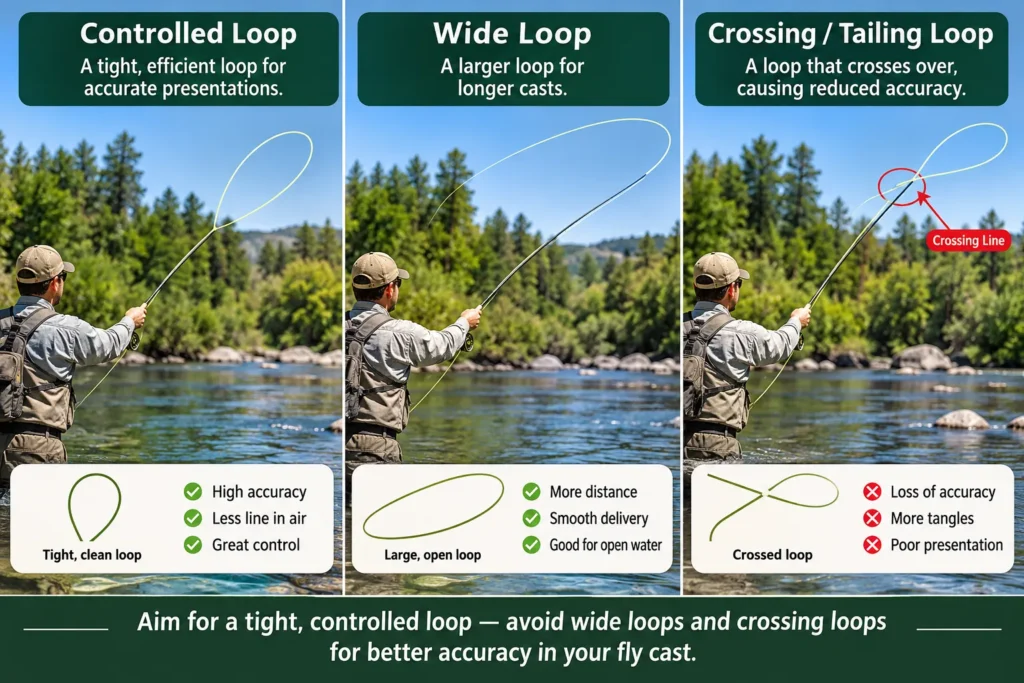
For a clean overhead delivery, aim to move the rod tip along a near straight line during the working part of the movement. A controlled loop transfers energy more effectively than an unintentionally wide one.
A tighter loop can help with efficient delivery, but the smallest possible loop is not always appropriate. Heavy or multiple flies may need a more open shape to avoid collisions.
Diagnose before adding power
A tailing loop has crossing legs and can lead to a tangle. Uneven power application and an unsuitable movement for the carried line are reasons to review your mechanics rather than simply push harder.
Suggested video check: Film five casts from the side. Look for a sudden punch, unwanted tip movement, or a change in loop shape as you add distance.
For ordinary overhead work, keep your rod tip moving toward the intended delivery path. Do not try to repair every miss by adding force.
Practice Short and Long Casts
Start close enough to control both direction and length. The reviewed instruction favors short-range practice before extending your reach, because longer casts magnify small errors.
For this article’s suggested progression, place your first target at 20 feet, measured from your standing position. That measurement includes the leader and yarn marker; it is not a claim about the amount of line outside the tip.
Earn the next distance
Use this proposed progression:
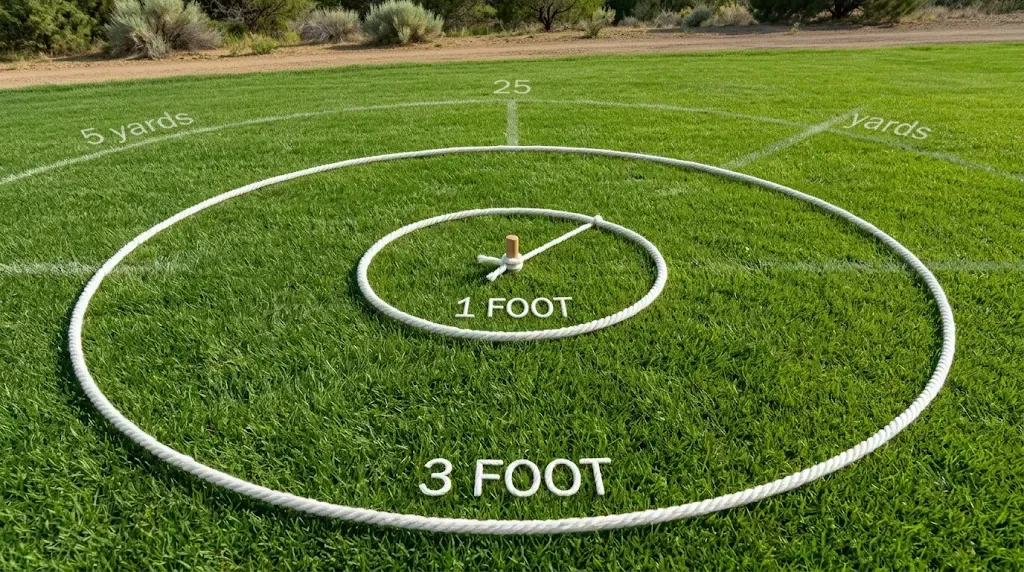
- Make ten deliveries to a 3-foot target.
- Record how many yarn landings finish inside it.
- Repeat until you score seven successful attempts in two rounds.
- Move the target back 5 feet.
- Return closer if control breaks down.
These are training benchmarks, not competition standards. Their purpose is to make casting distance a controlled variable rather than a reward for one lucky attempt.
Shorten the task whenever you lose the ability to repeat it. That is a practical way to improve your casting without rehearsing the same miss.
Use Visual Targets for Accuracy
Choose specific targets and keep your eyes on the landing point during delivery. Looking away until the last moment makes precise placement harder.
Inspect your rear clearance before starting. During a dedicated timing drill, you can watch the line behind you; during a target drill, shift your focus back to the spot you want before the final delivery.
Measure direction and length separately
Use two imaginary lines through the target: one left-to-right and one near-to-far. Record whether each miss finishes left, right, short, or long.
This separates two questions:
- Did the cast travel in the intended direction?
- Did the yarn land at the intended distance?
Proposed scoring system: Give yourself two points inside a 1-foot center circle, one point inside a surrounding 3-foot circle, and zero outside. Track ten attempts using the same setup.
The score is your own baseline, not a universal measure of proficiency.
Common Fly Casting Mistakes That Reduce Accuracy
Good fly casting tips should help you identify a likely cause, not just tell you to “practice more.” The following checks connect common symptoms with adjustments discussed in the reviewed instruction.
| Symptom | What to check | Adjustment to test |
|---|---|---|
| Repeated sideways misses | A sweeping delivery path | Keep the movement aligned with the target. |
| Fly kicks back or falls awkwardly | Excessive force | Ease the power and observe the turnover. |
| Uncontrolled, wide loops | Inconsistent movement | Review the path and timing before adding reach. |
| Crossing or tailing loops | Power application and available movement | Smooth the acceleration and match movement to carried line. |
| Poor pickup | Slack or an aggressive lift | Reduce loose line on the water, then lift progressively. |
| Accuracy falls apart farther out | Working at your limit | Move closer where conditions allow. |
Avoid fixing everything at once
Choose one symptom, test one adjustment, and record the result. If several problems persist, a certified casting instructor can help you diagnose poor technique before it becomes a habit; Hatch also recommends coaching and phone video as learning tools.
When seeking fly casting instruction, ask whether the teacher holds an FFI qualification and has experience with your type of fishing.
How to Improve Fly Casting Accuracy
Use the following fly casting practice drills as a structured routine. The timings, scores, and progress rules are proposed training tools, not published performance standards.
Practice casting with a small yarn marker instead of a hook. Choose an open space and check for people, animals, and overhead obstacles before starting.
Drill One: Ten-Cast Baseline
Place a target at a comfortable short distance. Make ten deliveries without changing your equipment or target position.
Record your score and the direction of every miss. Repeat the test at the end of the week under similar conditions.
Drill Two: Distance Ladder
Arrange three flat markers at progressively longer ranges. Deliver to the closest, middle, and farthest marker, then reverse the order.
Use the same sequence each session. The goal is better control of length, not a new personal distance record.
Drill Three: One-Delivery Challenge
Lift smoothly, make one forward cast, and deliver to the target. Reset rather than adding repeated false casts to rescue the attempt.
A gentle pickup and reduced slack make the start more controlled.
For the grass version, begin with the yarn and leader laid out ahead of you.
Drill Four: Direction Change
Place three markers in a shallow fan. Alternate among them while checking clearance before each change.
Reset your stance and delivery alignment instead of reaching across your body. Adjust the angle between targets only after you can repeat the easier version.
Drill Five: Water Transfer
On calm water, choose a visible reference and repeat the short-range target exercise. Watch the entire presentation after the yarn hits the water.
For a dry fly, a successful delivery must also support the intended drift; hitting the landing point alone does not guarantee a useful presentation.
When fishing, plan where to place the line to help prevent drag rather than automatically drawing everything tight. Treat this as a separate presentation task after you establish reliable placement.
A Simple Weekly Routine
Try three short sessions:
- Session one: Baseline test and timing review
- Session two: Distance ladder and direction changes
- Session three: One-delivery challenge and water transfer
Set aside 15 or 20 minutes per session as a manageable starting point. Stop earlier if concentration fades, and write down one adjustment for the next session.
You do not need world champion distance to become proficient. If you want to improve, make each repetition answer a question.
Frequently Asked Questions
How can I make my fly casting more accurate?
How to become a better fly caster?Pick a small target, use smooth acceleration, and let the line unfold before the next movement. Work close enough to repeat the delivery, then extend the distance gradually.
To improve your fly casting accuracy, track misses instead of judging the session by your single best attempt.
What is the best distance to practice?
Start at a range where you can observe and control the full delivery. Published advice varies: Orvis suggests beginning with very short casts, while R&R emphasizes staying inside your reliable fishing range.
The distance ladder above provides a practical alternative to treating one measurement as right for everyone.
Why does my line keep landing off target?
Check delivery alignment, timing, and excessive force. An off-axis movement can send the cast sideways, while poor turnover or too much power can disrupt the landing.
Film several attempts and change one factor at a time.
How do I improve accuracy in wind?
Prioritize smooth acceleration and an efficient loop rather than trying to overpower the cast. A double haul can increase line speed, but it adds coordination demands and is not the first skill to learn.
For practice, shorten the distance and use yarn. If wind carries the marker toward your body or nearby people, change position or stop.
How often should I practice?
Start with the short weekly schedule above and adjust it to your attention span. Hatch recommends regular, focused practice with sound mechanics rather than repetition alone. The goal is useful muscle memory, not simply more time on the water.
Should I learn other casts first?
Learn to fly cast with a controlled basic delivery, then add techniques for your fishing environment. A roll cast can help organize slack and prepare a pickup; a spey cast is a separate skill to explore when your fishing calls for it.
If you want to catch more consistently, choose the technique that solves the situation rather than the one that looks most impressive.
How can I cast accurately at longer distances?
Build distance gradually. Keep the same target focus, use smooth acceleration, allow the backcast to unfold, and return closer whenever control weakens.
What drills can help me practice accurate fly casting?
Use a yarn target, a ten-cast baseline, a distance ladder, direction changes, and one-delivery challenges. Record misses and adjust one variable at a time.
How should I adjust my cast for wind and other local conditions?
Shorten the distance, keep movements smooth, and avoid overpowering. Check clearance, use a controlled loop, and choose a delivery angle that reduces interference.
How should I control my rod-tip path and casting stroke for more accurate casts?
Move the rod tip along a straight path toward the target. Use a compact stroke for short casts, lengthen it as needed, and finish with a controlled stop.
How can I improve my timing and line control when casting?
Let the backcast nearly straighten before starting the forward cast. Use smooth acceleration, avoid excess slack, and match the stroke to the line length.
Conclusion: Make Every Cast Count
Learning how to improve fly casting accuracy works best as a series of small tests, not a search for one perfect trick. Choose a target, make ten deliberate deliveries, and write down where the misses land. Change one thing, then repeat the test.
Keep your next practice session simple. Use a yarn marker, stay within a comfortable range, and focus on a smooth start followed by a controlled finish. Give yourself a clear reason to move farther away rather than adding distance because one cast felt good.
To become a good caster, take that same patience fishing. Before you deliver, decide where the fly should land and what should happen next. Judge the result by placement and presentation, not reach alone.
Your next step is small: set out one target and establish a baseline. Build from that score, keep the useful adjustments, and let consistent practice shape a delivery you can trust when opportunities appear.
Recommended posts
- Is Fly Fishing Good in the Rain? Tips for Catching More Fish
- How to Mend Fly Line? Easy Steps to Repair Damage & Cracks
- Master the Double Haul Casting Technique (Like A Pro)