
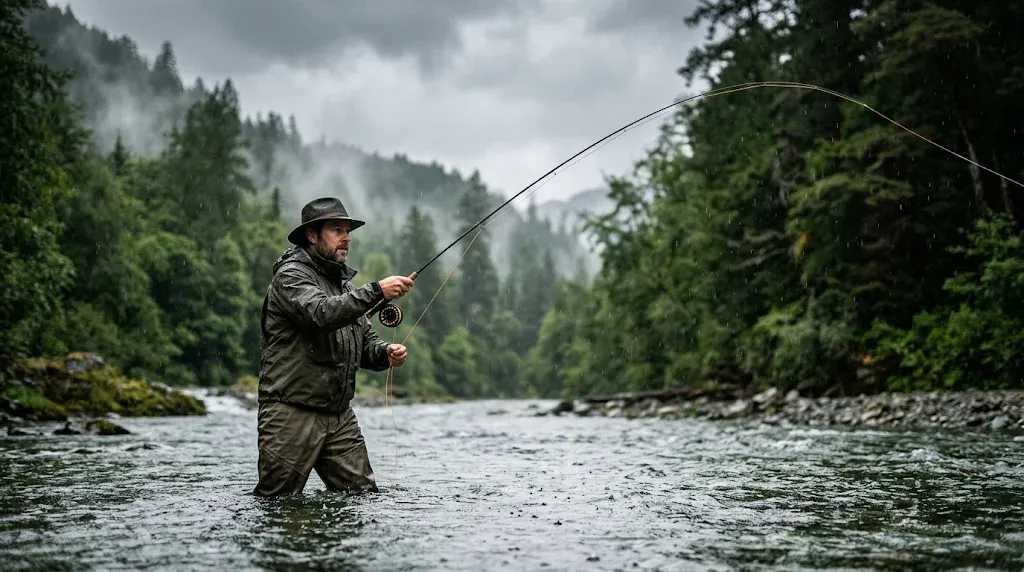
Is fly fishing good in the rain? fly fishing can be very good in the rain, especially for trout. Rain can cool the water, dim the light, wash insects and worms into the current, and give fish more confidence to move out and feed. The key is matching your approach to the rainfall: light rain often improves dry-fly fishing, while hard rain and rising water usually call for nymphs, wet flies, or streamers.
Fly fishing in the rain can be highly productive, especially during light to moderate rainfall. Rain can wash insects and terrestrial food into rivers, increase feeding activity, and help anglers approach fish without spooking them.
Experienced fly fishing authorities like Tom Rosenbauer, a longtime Orvis fishing expert, emphasize the importance of understanding weather, water conditions, and insect activity when choosing the right fishing approach.
From selecting the best flies to adjusting your presentation and finding productive holding spots, a little preparation can make a rainy fishing trip worthwhile. Heavy rain, rising water levels, and muddy conditions require extra caution.
So, grab your rain jacket and explore how to make the most of your next wet-weather fly fishing adventure!
Is Fly Fishing Good in the Rain?
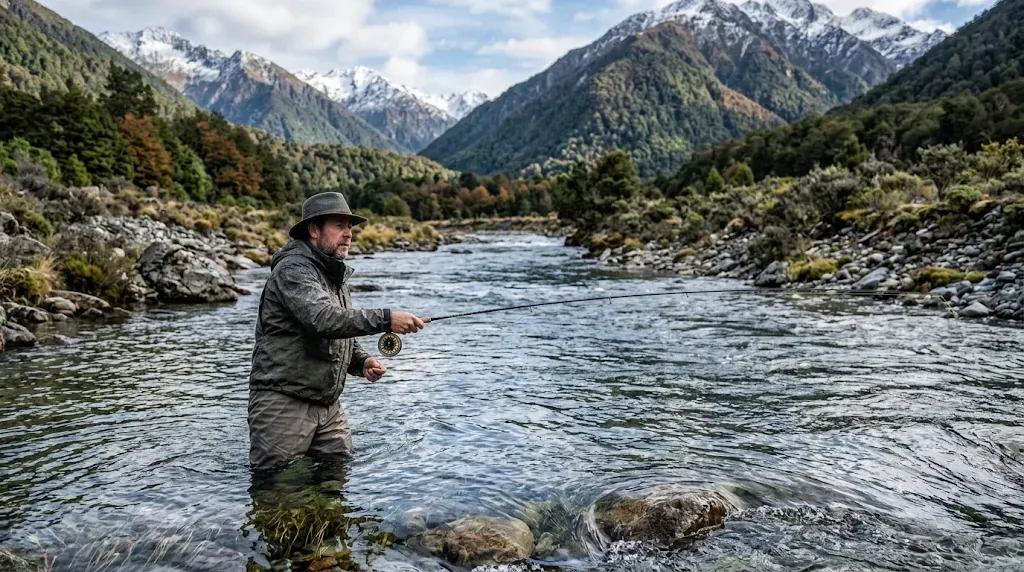
Fly fishing in the rain can be excellent when conditions stay safe and the water remains fishable. A gentle shower breaks up the water’s surface, reduces visibility for fish, and can trigger insect activity—three advantages that often make trout less cautious.
That said, rain is not automatically good fishing. Does rain affect trout fishing? It does, but the effect depends on water temperature, water clarity, current speed, and how much the river rises. A steady drizzle may create one of the best fishing windows of the week; a violent thunderstorm can turn a clear creek into a dangerous, muddy torrent.
How Rain Affects Fish Behavior and Feeding Patterns
Rain changes what trout see, hear, and feel. Raindrops create surface disturbance, clouds reduce bright light, and runoff carries food from the bank into the stream. Together, these conditions can make trout feel safer and encourage feeding.
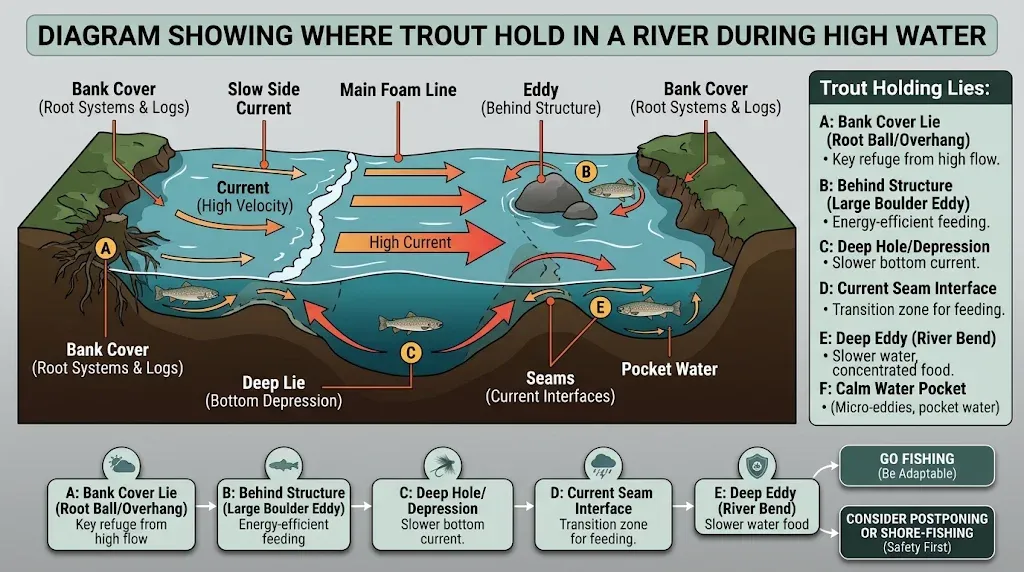
Fish may move into slower water when the current strengthens. During high water, trout often hold behind rocks, along the bank, near submerged wood, and in eddies where the flow is easier to handle. The Pennsylvania Fish and Boat Commission notes that trout seek refuge areas during high-water events rather than simply being washed downstream.
Rain also washes terrestrial insects—ants, beetles, hoppers, worms, and moths—into the water. Those meals can pull fish toward the surface, especially during light rain or fly fishing in cloudy weather.
Why Rain Can Improve Trout Fly Fishing
Trout fishing in rainy weather often improves because low light reduces the fish’s ability to spot an angler. A gray sky, rippled surface, and slightly stained water give you more stealth than you would have under bright, sunny conditions.
Rain can also enhance insect activity. Cloud cover and humidity may support hatches, while rainfall knocks terrestrial insects into the water. A mayfly, stonefly, or beetle drifting downstream gives trout an easy reason to rise.
There is another benefit: rain can add oxygen and cool warm water. In summer, a cool rain may make trout more comfortable and active, particularly after a long stretch of heat. rainbow trout generally prefer water temperatures between 50 and 60 degrees Fahrenheit, and they become stressed as temperatures climb.
The Best Conditions for Fly Fishing in the Rain
Rainy weather doesn’t guarantee a successful catch, though. Heavy downpours, muddy water, rising currents, and lightning can quickly turn a promising fishing trip into a dangerous one. So, what flies should you use, where should you look for trout, and when should you head to the river? Let’s explore the best conditions for fly fishing in the rain and how to make every cast count.
Light Rain vs. Heavy Rain
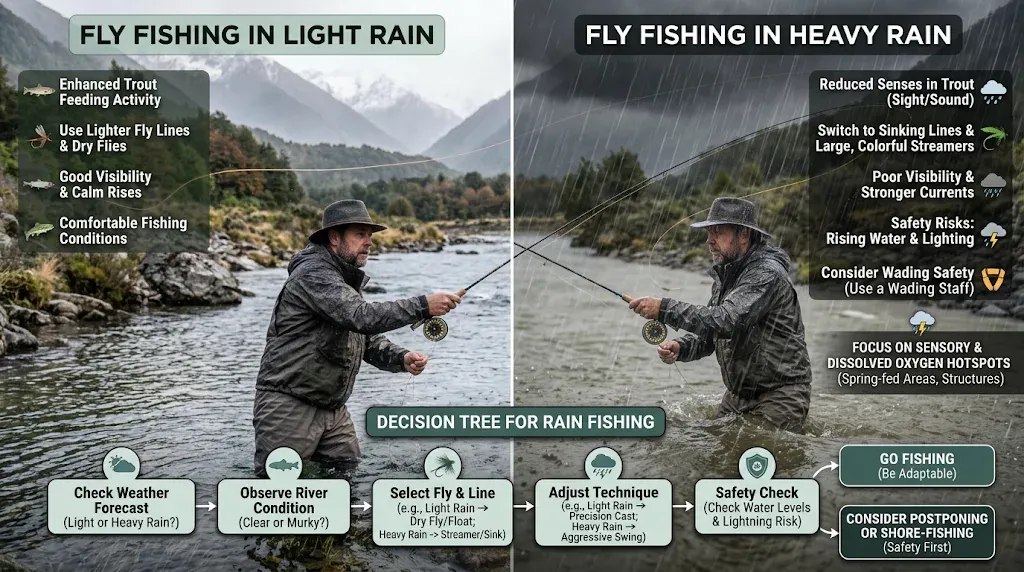
Light rain is usually the optimal condition for fly fishing. The surface stays readable, dry-fly patterns remain visible, and trout often keep feeding. A parachute dry fly can work well because its visible post helps you track it through the disturbed surface.
Heavy rain is different. Hard rain raises the water level, speeds up the current, and can turn the river muddy. At that point, dry flies become difficult to see and may sink; subsurface tactics usually work better.
Fishing Before, During, and After a Storm
The hours before a storm can be productive because falling pressure and changing conditions may encourage fish to feed. Once lightning, strong wind, or a flash-flood risk appears, leave the water immediately. A fly rod is not worth the danger.
Fly fishing after rain can be outstanding if the water is clearing and the flow is safe. Runoff continues to deliver food, while brown trout settle into predictable holding water. Fishing rivers after heavy rain requires patience: wait until the stream drops, clears, and becomes safe to approach.
Best Flies to Use When Fly Fishing in the Rain
The best flies for rainy days depend on water clarity and current. As a simple rule, use larger or darker patterns when visibility drops, and add weight when the water rises.
Dry Flies for Light Rain
During light rain, try a buoyant dry fly such as a Stimulator, Chernobyl Ant, elk-hair caddis, or hopper pattern. Terrestrial imitations work well because rain washes insects off the bank and into the water.
If trout are rising, match the hatch with a mayfly or midge pattern. A black ant or beetle can also imitate the insects rain knocks into the stream. Keep the fly floating high and watch closely—small rises are easy to miss in a rain-pocked surface.
Nymphs and Wet Flies for Rainy Conditions
When the surface becomes too broken to track a dry fly, switch to nymphing. A beadhead Pheasant Tail, Hare’s Ear, or stonefly nymph can get down quickly in faster water.
Wet flies also work well when trout feed below the surface. A soft-hackle pattern swung through a seam or drifted through an eddy can imitate an emerging insect without requiring a perfect dry-fly presentation.
Streamers for Murky or Rising Water
When the water turns murky, fishing streamers becomes one of the most dependable tactics. A black, brown, or olive Woolly Bugger can imitate a baitfish, leech, or large aquatic insect and give trout a clear target in poor visibility.
Use a heavier streamer or add split shot when the current is strong. Keep the fly near the bottom, then strip or swing it through slower pockets, seams, and the tail-outs of pools.
Where to Find Trout in Rivers and Streams During Rain
In high water, do not focus on the fastest middle of the river. Trout prefer to fish where they can hold without fighting the full force of the current. Look for seams, eddies, foam lines, undercut banks, boulders, and slow pockets behind structure.
Foam is especially useful. It collects food and shows you where the current slows. Cast upstream or across to the edge of a foam line, then let your fly drift naturally through the seam.
A creek can fish well after rain if it has enough cover and manageable flow. In Pennsylvania fly fishing, small streams often clear faster than large rivers, making them a smart choice when the main river remains stained. The PFBC specifically recommends lakes or other safer alternatives when creeks run high, fast, and muddy.
Best Fly Fishing Techniques for Rainy Weather
The best rainy-day fly fishing techniques include using darker flies, fishing streamers near the bottom, targeting protected riverbanks, and adjusting your presentation to match water conditions.
Experienced anglers such as fly fishing author and instructor Tom Rosenbauer emphasize understanding trout behavior, reading water, and matching flies to feeding activity. A slower, more deliberate approach can help you find feeding fish even when rain reduces visibility.
Rain also creates opportunities that many anglers overlook. From choosing the right fly patterns to adjusting your casting technique and reading changing currents, small decisions can make a big difference. Ready to make your next rainy-day fishing trip more productive? Let’s explore the techniques, tackle adjustments, and practical tips that can help you catch more fish in wet weather.
Adjusting Your Presentation and Retrieve
Rain changes the water flow, so adjust your presentation. Keep more fly line off the water by raising the fly rod; this reduces drag and helps a nymph or dry fly drift naturally.
If the current is fast, use a drag-free drift and add enough weight to reach the fish. If trout are not responding, slow down. A twitched dry fly, a paused streamer, or a slowly swung wet fly can trigger a reaction when a steady retrieve does not.
Choosing the Right Leader and Tippet
Use a slightly stronger tippet in rain because debris, submerged wood, and fast water increase the chance of a break-off. A 4X to 5X tippet is a practical starting point for many trout situations, while streamer fishing may call for 3X or stronger.
Check your knot and fly frequently. Rain can hide a wind knot, and a weakened tippet can snap at the worst moment. Keep your fly rod low when moving through trees, and make short, controlled casts when visibility is poor.
How Rain Changes Water Clarity, Current, and Temperature
Rainfall affects more than the sky. It changes water temperatures, water clarity, current speed, and the amount of food in the drift. A small amount of rain may simply dim the light; sustained rainfall can transform the entire river.
As water rises, trout move toward the bank and into refuge areas. They avoid the fastest surface current and use rocks, logs, depth, and eddies for protection.pa
Muddy water makes foraging harder because trout cannot see food as easily. The PFBC notes that long periods of muddy water can irritate fish gills and make feeding more difficult. When that happens, use a larger, darker, or more visible fly rather than trying to match a tiny insect.
Essential Gear and Safety Tips for Fly Fishing in the Rain
Bad weather does not have to ruin a trip, but it demands preparation. Wear a waterproof jacket, warm layers, a hat with a brim, polarized glasses, and boots with reliable traction. Keep a dry bag for your phone, keys, and spare layers.
Before you go, check the forecast, river gauge, and local flood warnings. The Pennsylvania Fish and Boat Commission advises anglers to avoid wading in high, fast, muddy water where the streambed cannot be seen.
Never wade into water that is above your knees or moving too quickly to handle safely. The National Weather Service warns that just six inches of fast-moving water can knock a person off their feet. If lightning appears, get off the water and away from the stream.
A life jacket is smart gear for any angler wading in cold or high water. Cold rain and cold water can cause hypothermia quickly, even when the air temperature feels mild.
Common Mistakes to Avoid When Fly Fishing in the Rain
- Fishing unsafe water. Never wade into fast, muddy, or rising water; submerged logs, deep holes, and unstable banks create serious hazards.
- Staying with a dry fly too long. If rain makes the surface too rough, switch to a nymph, wet fly, or streamer.
- Using flies that are too small. In stained water, trout need a clear target. A larger dark pattern often works better than a tiny imitation.
- Ignoring the forecast. Storms can raise water quickly, even downstream from where the rain fell.
- Wading too aggressively. Use stealth, move slowly, and keep both feet planted. Rain may hide you from fish, but it does not make slippery rocks safer.
- Leaving too early. Some of the best fishing happens just after the rain eases, when insects wash into the current and trout begin feeding again.
FAQs
Do trout bite in the rain?
Yes. Trout often feed during light to moderate rain because cloud cover, surface disturbance, and washed-in food make them feel less exposed. Heavy rain can shut down feeding temporarily if the water becomes too fast, cold, or muddy.
Can you use a dry fly in the rain?
Yes. A dry fly can work well in light rain, especially during a hatch or when terrestrial insects are blowing into the water. Choose a buoyant pattern and switch to subsurface flies if the rain becomes heavy.
Is fly fishing better before or after rain?
Both can be productive. Fishing before a storm can produce aggressive feeding, while fly fishing after rain often improves as runoff delivers food and trout settle into holding water. Avoid fishing during lightning or when the river is dangerously high.
What color flies work best in rainy weather?
Dark flies—black, brown, olive, and dark purple—usually show up better in low light and stained water. For murky water, try a black or olive Woolly Bugger, a dark streamer, or a larger terrestrial pattern.
Is it safe to wade a river after heavy rain?
Not always. Do not wade if the water is high, fast, muddy, or if you cannot see the bottom. Flash floods can develop quickly, and unstable banks make falls more likely.
What should I do if the river rises while I am fishing?
Leave the water immediately and move to high ground. Do not try to cross a rising stream. Check the forecast and water conditions before your next trip.
What is the best month to fish for trout?
Spring is often best—usually April through June—because water temperatures are cool, insect hatches are active, and trout feed consistently. Fall can also be excellent as fish prepare for winter.
Do fish know when rain is coming?
Fish sense changes in barometric pressure, light, and water movement before rain arrives. Many trout become more active and feed aggressively just before a storm.
Conclusion
Is fly fishing good in the rain? It can be one of the best times to catch trout—if you understand the conditions and put safety first. Light rain, cloud cover, and a gentle rise often create a better experience than bright, sunny water because trout feel less exposed and insects wash into the stream. A dry fly, nymph, wet fly, or streamer can all produce when you match the fly to the water conditions.
The biggest mistake is treating every rainstorm the same. A drizzle may invite trout to rise; hard rain may push fish into protected water and demand a heavier nymph or streamer. Check the forecast, watch the water level, avoid lightning and high water, and fish the seams, foam lines, and slower pockets where trout hold. When you adapt your flies, presentation, and location to the conditions, rainy weather can turn an ordinary day into some of the best fishing of the season.
Recommended posts
- How to Fly Fish for Carp: Tips, Flies & Techniques
- Is Trout Fishing Good in the Rain! (Is It Worth It?)