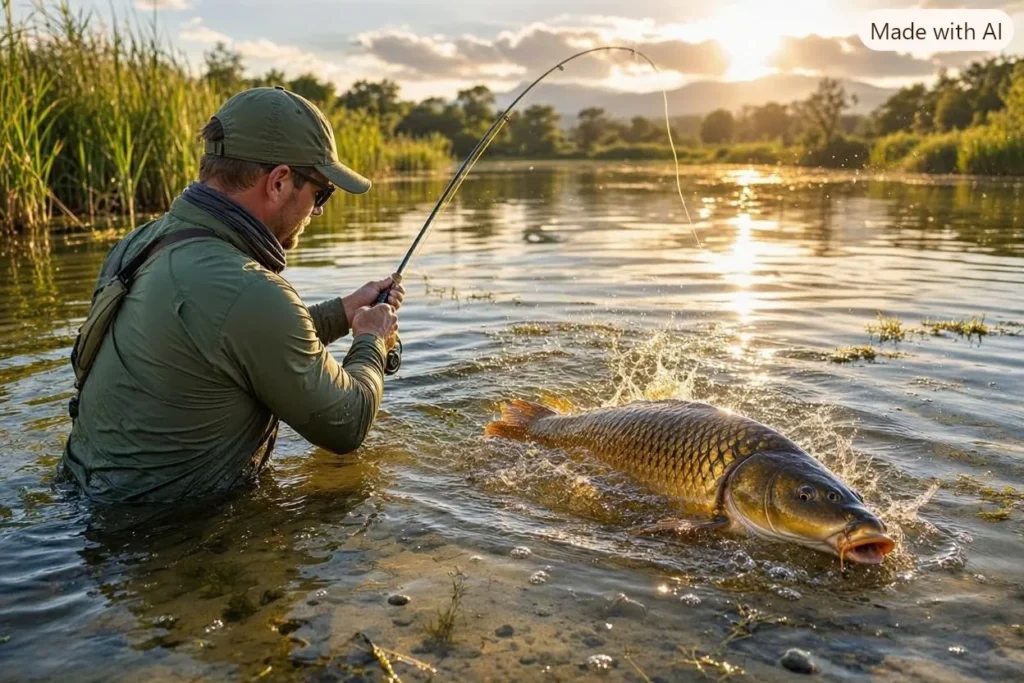
How to fly fish for carp comes down to finding a feeding fish, approaching it quietly, and putting a realistic fly in front of its mouth without spooking it.
Carp on the fly is a sight-fishing game: you watch for tails, mud clouds, bubbles, or slow cruising fish, then lead the carp with a small weighted fly and wait for the take. A solid carp fly rod setup usually includes a 6- to 8-weight fly rod, floating line, strong reel drag, and 8- to 12-pound tippet.
The best flies for carp imitate crayfish, leeches, worms, damselfly nymphs, seeds, and other natural food. This guide covers carp fly fishing techniques for lakes, ponds, and rivers, including casting, presentation, hook sets, and the mistakes that cost anglers fish.
What Is Carp Fly Fishing and Why Try It?
Fly fishing carp means targeting carp with a fly rod instead of conventional bait or ledger tackle. Most anglers sight fish for common carp in shallow water, although river carp can also be caught by dead-drifting nymphs like a trout angler would.
Carp are strong, wary, and widely available. A hooked carp often makes a long, powerful run, so catching carp on a fly rod delivers a genuine fight without requiring a boat or expensive destination trip.
The challenge is not brute force alone. Carp often ignore a fly unless they are already feeding, which makes observation, stealth, and presentation more important than simply casting farther. outdoorlife
How to Fly Fish for Carp: Gear That Works
How to catch carp fly fishing? You do not need a specialized room full of tackle to start carp fishing with a fly rod. Start with a versatile setup, then adjust for wind, fish size, water depth, and casting distance.
Choosing the Right Fly Rod and Reel
A 9-foot, 6- to 8-weight fly rod covers most carp situations. Use a 6-weight for smaller ponds, calm conditions, and delicate presentations; choose a 7- or 8-weight for wind, larger flies, bigger carp, or open water where long casts matter.
Pick a large-arbor reel with a smooth, dependable drag. Carp can strip line quickly, so carry at least 75 to 100 yards of 20-pound backing; on big lakes, 150 to 200 yards gives you more security.
A fighting butt is useful but not required. It helps when you need to lift a heavy fish or turn it away from snags.
Best Fly Line, Leader, and Tippet for Carp
A weight-forward floating line is the best all-around choice for carp fly fishing. It handles weighted flies, turns over larger patterns, and lets you perform the drag-and-drop presentation that works so well on feeding carp.
Use a 9- to 12-foot tapered leader for most stillwater fishing. In clear, calm water, lengthen it; in wind, shallow water, or close-range shots, shorten it for accuracy.
For tippet, start with 3X, roughly 8 to 10 pounds, and move to 2X or 12 to 16 pounds around cover, weeds, or larger fish. Avoid going too light: carp are not delicate trout, and a weak tippet can cost you a fish near rocks or timber.
Carp Fly Rod Setup by Situation
| Situation | Rod | Line | Leader/tippet | Fly style |
|---|---|---|---|---|
| Small pond, calm water | 6-weight | Floating WF | 10–12 ft, 3X | Small nymph, worm, egg |
| Typical lake or river | 7-weight | Floating WF | 9–12 ft, 3X–2X | Crayfish, leech, damsel |
| Windy lake, big carp | 8-weight | Floating WF | 7–10 ft, 2X–1X | Weighted bugger or crayfish |
| Clear, pressured water | 6–7 weight | Floating WF | 12–14 ft, 4X–3X | Small, natural, unweighted or lightly weighted |
Where to Find Carp When Fly Fishing
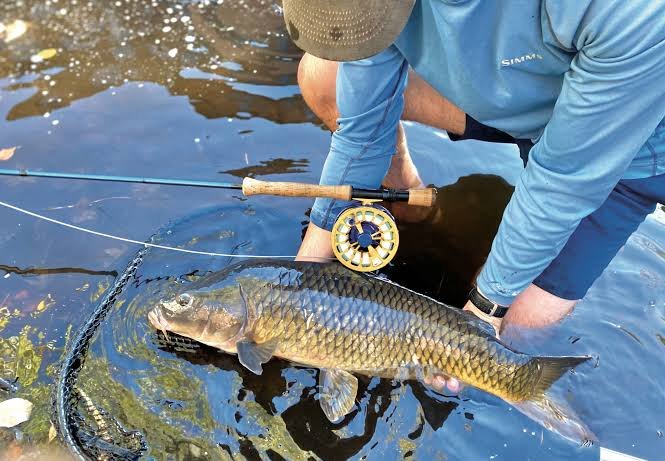
The fastest way to improve is to stop casting at every carp you see. Target carp that are actively feeding, preferably in water shallow enough to watch their behavior.
Spotting Carp in Shallow Water
Look for a carp’s tail breaking the surface, a back or dorsal fin showing, mud plumes, bubbles, wakes, or a fish slowly rooting along the bottom. These signs usually mean the carp is feeding and more likely to eat a fly.
Polarized sunglasses are essential. They cut glare, help you see fish and bottom structure, and make sight fishing for carp far easier.
Start on shallow flats, pond edges, backwaters, slow river bends, and areas with soft bottom, weeds, or undercut banks. Carp often feed in water that is knee-deep or less, especially during warm months.
Reading Carp Behavior and Feeding Patterns
A tailing carp with its head down is usually the best target. Slow cruisers that pause, tilt, or “shop” along the bottom are also worth casting to.
Avoid fish that are sprinting in a straight line, fleeing, sunning without interest, or thrashing during spawning activity. These carp are rarely in a feeding mood, and repeated casts can push them—and nearby fish—away.
In rivers, focus on slow flats, eddies, side channels, and soft current seams. In lakes, check shallow coves, windward banks, drop-offs near flats, and areas where food collects.
Best Flies for Carp Fishing
The best flies for carp match what the fish are actually eating. In many waters, that means bottom food: crayfish, leeches, aquatic insects, worms, scuds, snails, seeds, and berries.
Top Carp Fly Patterns That Get Results
Carry a small selection rather than dozens of patterns:
- Crayfish patterns: Excellent for carp chasing crayfish on flats; fish them slowly along bottom.
- Woolly bugger: A versatile bugger pattern in olive, black, brown, or purple; useful for leeches, crayfish, and general bottom forage.
- San Juan worm or squirmy worm: Great after rain, in stained water, or where carp feed on worms.
- Damselfly and dragonfly nymphs: Strong choices around vegetation, especially in olive or light green.
- Egg and berry patterns: Useful for carp feeding on mulberries, seeds, corn, or other floating food.
- Crazy Charlie-style patterns: Good as a small crayfish or scud imitation on hard-bottom flats.
Choose flies in sizes 6 to 10 for most subsurface carp fishing. Weighted patterns with bead-chain or dumbbell eyes help the fly reach the feeding zone quickly and ride hook-point-up, reducing snags.
Matching Your Fly to Natural Carp Food
Watch what the carp are doing before you choose a fly. If they are mudding on the bottom, try a crayfish, leech, worm, or nymph. If they are feeding in the surface film, use a beetle, ant, grasshopper, berry, or floating pellet imitation.
You do not need a perfect match. Carp often respond to the general size, shape, color, and action of a food item, especially when they are already feeding confidently.
How to Approach Carp Without Spooking Them
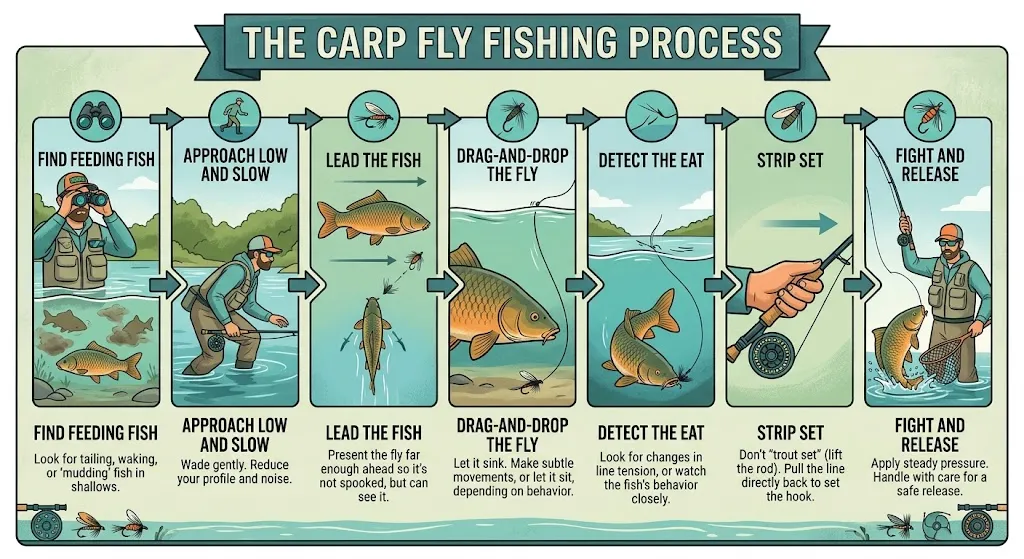
Move slowly, stay low, and avoid sudden movements. Carp notice shadows, vibrations, loud footsteps, and line landing on the water; one careless approach can spook an entire group.
Wear muted clothing, keep your rod tip low, and use vegetation or a slight elevation change to hide your outline. Approach from behind or from the side when possible, and watch the fish before you cast.
Do not cast over one carp to reach another. Work on the closest feeding fish first, because a bad cast can put every fish in the area on alert.
How to Cast a Fly to Carp?
Casting for carp is about placement, not distance. A short, quiet cast that lands softly in the fish’s feeding lane beats a long cast that slaps the water.
Sight Fishing and Accurate Fly Placement
Sight fly fishing for carp means picking one fish and presenting to it. Watch its direction, speed, and head position, then place the fly where it will pass—not directly on top of it.
For a tailing carp, aim for a dinner-plate-sized area just ahead of its head or in the mud cloud it is creating. For a cruiser, lead the fish by roughly two to three feet and let the fly sink into its path.
Keep the line tight but not dragging. Slack makes strikes hard to detect, while drag can make the fly move unnaturally.
Leading the Fish and Controlling Your Cast
Use a drag-and-drop cast when the fish is feeding on the bottom. Cast slightly past the target, keep the fly in the surface film, drag it into position above the carp’s head, then drop the rod tip and let it fall naturally into the feeding zone.
At close range, a simple “claw” or dap presentation can work: lower or pitch the fly gently into the fish’s path with very little line on the water. This is especially effective on tailing fish or carp in murky water.
How to Present a Fly to Feeding Carp
Let the fly sink to the carp’s feeding depth, then leave it still for a few seconds. Many carp eat a motionless fly after it settles, especially on soft bottoms.
If the carp does not find it, use tiny twitches or short, slow strips—about an inch at a time. Do not rip the fly away; carp often want an easy meal, not something that behaves like a fleeing baitfish.
In rivers, dead-drift a nymph through the carp’s feeding lane, then let it swing at the end of the drift. This trout-style approach works well when carp are holding in current.
Pro tips: If the carp stops over your fly, watch its mouth and body language. A subtle tilt, pause, or suction movement can be the eat. ginkandgasoline
How to Set the Hook and Fight Carp on a Fly Rod
Carp takes are often subtle. Instead of a big trout-style rod lift, use a firm strip set: point the rod at the fish, strip line until you feel weight, then raise the rod smoothly.
At very close range, a controlled lift can work. At longer range, a strip set removes slack and drives the hook into the carp’s tough mouth.
After the hook set, let the reel drag do its job. Keep the rod tip up enough to absorb surges, but do not lock up; carp make strong initial runs and may take you into backing.
Use a rubber mesh net when possible. Support the fish horizontally, remove the hook quickly, and release it promptly—especially in warm water.
Common Carp Fly Fishing Mistakes and How to Avoid Them
- Casting at non-feeding carp. Spend your time on tailers, mudders, and slow cruisers instead of fish hovering or moving fast.
- Landing the fly too close. A fly in front of a carp should enter its feeding lane, not land on its head or back.
- Using too much fly line on the water. Extra line creates noise, drag, and poor strike detection.
- Moving the fly too fast. Small twitches or a slow strip usually outperform a fast chase-style retrieve.
- Setting the hook too late. Carp can inhale and reject a fly quickly, so watch the fish and set as soon as it commits.
- Using tackle that is too light. A trout setup may work for small carp, but a 6- to 8-weight fly rod gives you better control.
- Ignoring wind and sun. Position yourself so the wind helps your cast and the sun lets you see into the water.
Seasonal Carp Fly Fishing Tactics
Carp behavior changes with water temperature. In spring, look for the first warm, shallow water and fish slowly around mud bottoms. In summer, early mornings, evenings, and windy banks often produce the best sight-fishing windows.
In autumn, carp often feed heavily before cooler weather. Focus on flats near deep water, weed edges, and areas where seeds or terrestrial food collect.
In winter, carp move less and feed in shorter windows. Fish deeper, slower water, use a small weighted fly, and let it sit much longer before moving it.
Tips for Catching More Carp on a Fly Rod
- Target one fish at a time. Pick the closest active feeder and make one clean presentation.
- Fish the feeding zone, not the fish. A fly placed in the carp’s path gives it time to see and eat naturally.
- Match weight to depth. Use enough weight to reach the bottom quickly, but not so much that the fly crashes down and spooks the carp.
- Carry natural colors. Olive, brown, black, tan, and rust cover most crayfish, leech, nymph, and worm situations.
- Practice short accuracy casts. Most carp shots happen inside 30 to 40 feet, often with little room for a false cast.
- Learn the water. Return to the same lake or river and note where carp feed, how they move, and which flies draw takes.
- Stay patient after a refusal. Let the fish settle, then try a smaller fly, different weight, or a more natural presentation.
Fly Fishing for Common Carp FAQs
Can you catch carp on a fly rod?
Yes. catching carp on the fly is challenging but very achievable, especially when you sight fish to actively feeding carp in shallow water.
What is the best fly rod for carp?
A 9-foot 7- or 8-weight fly rod is the best all-around choice. A 6-weight works well for smaller carp and calm ponds, while an 8-weight handles wind, bigger flies, and stronger fish.
What are the best flies for carp?
Crayfish patterns, woolly buggers, San Juan worms, damselfly nymphs, leech imitations, eggs, and beetles are dependable choices. Match the fly to the carp’s visible feeding behavior.
How do you present a fly to carp?
Use a drag-and-drop presentation: cast past the fish, drag the fly into its feeding lane, let it sink, then leave it still or twitch it gently.
Do carp eat dry flies?
Yes. Carp will eat beetles, ants, grasshoppers, berries, and floating food imitations when they are feeding at the surface.
What tippet should I use for carp?
Start with 3X, about 8 to 10 pounds. Use 2X or stronger around snags, weeds, or larger carp; avoid going lighter than 3X in most cases.
Is carp fly fishing like trout fishing?
Some river tactics overlap, especially dead-drift nymphing, but carp usually demand more stealth, more accurate casting, and a willingness to wait for a genuine feeding opportunity.
What is the 60/20/20 rule in fly fishing?
It is a leader-building formula: about 60% thick butt section, 20% tapered middle, and 20% fine tippet. This taper transfers casting energy smoothly and helps the fly turn over naturally.
Do carp taste good to eat?
Yes, when fresh and prepared well. Carp has firm, mildly sweet flesh, though common carp can taste earthy; clean water, proper cleaning, and removing Y-bones improve the flavor.
Conclusion
Learning how to fly fish for carp is less about owning the most expensive gear and more about reading water, approaching quietly, and delivering the right fly at the right moment. Start with a dependable carp fly rod setup, carry a handful of proven carp flies, and spend your time targeting carp that are tailing, mudding, or cruising slowly in shallow water.
When you see a feeding carp, lead it, make a soft cast, and let the fly settle naturally. Detect the subtle take, set with a firm strip, and enjoy one of freshwater fly fishing’s most exciting fights. Whether you are chasing carp on a lake flat, pond edge, or slow river bend, patience and presentation will catch more carp on the fly than luck ever will.
Recommended posts
- When Was Fly Fishing Invented: (History of Fly Fishing)