
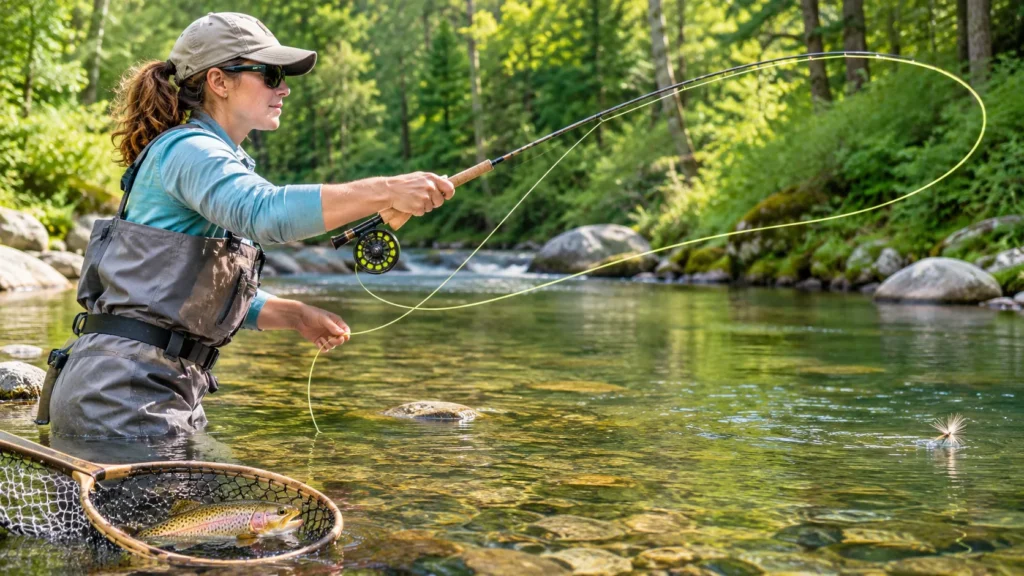
What Is a 5 Weight Fly Rod Used For? A 5 weight fly rod is primarily used for freshwater fly fishing, especially trout, panfish, and light bass fishing. It balances enough power to cast nymphs and small streamers with enough finesse for dry flies, making it the most practical all-around choice for many anglers.
If you enjoy fly fishing, you have probably heard anglers call the 5-weight rod an all-around favorite. But what makes this rod so popular? Can it handle trout, bass, bluegill, and other freshwater species without sacrificing casting control?
In this guide, we’ll explore the best uses for a 5-weight fly rod, the fish you can target, and the flies it handles best. We’ll also look at expert fly-fishing advice from respected anglers like Tom Rosenbauer, author of The Orvis Fly-Fishing Guide. Ready to find out whether a 5-weight rod deserves a place in your fishing setup? Let’s dive in!
What Is a 5 Weight Fly Rod?
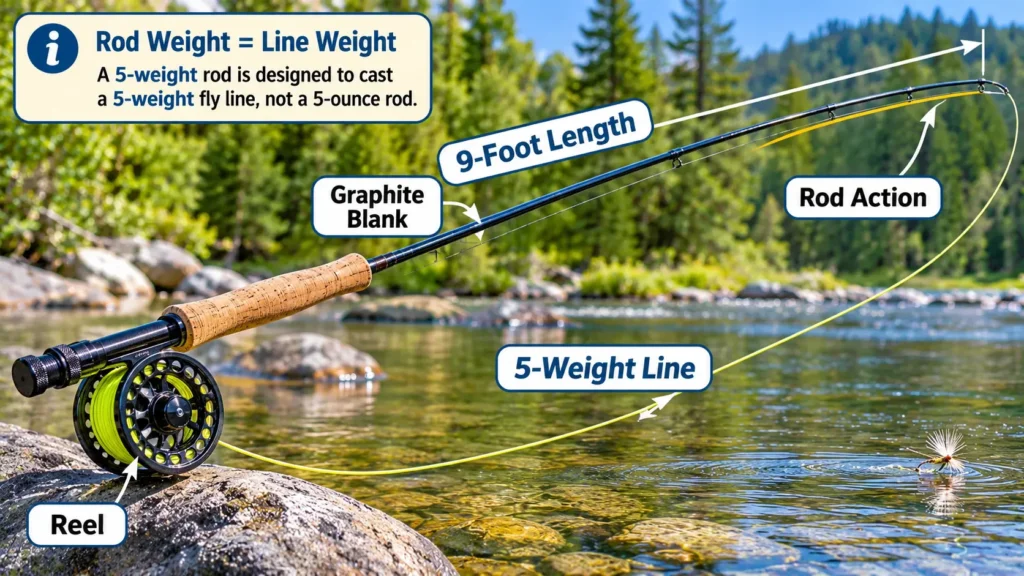
A 5 weight fly rod is a rod designed to cast a 5-weight fly line. The number does not describe the rod’s physical weight; it describes the line weight the rod is built to load efficiently. Under the AFFTA standard, a 5-weight line targets about 140 grains in the first 30 feet.
Most 5-weight rods are 9 feet long, though 8-foot-6-inch and 10-foot versions are common. A 9 ft model gives an angler useful line control for mending, nymphing, and reaching fish across a medium river. Graphite is the usual blank material because it is light, responsive, and strong.
The 5 wt fly rod earns its reputation as the best all-around freshwater rod because it handles a wide range of flies rather than excelling at only one job. It can present a small dry fly, manage a nymph rig, and cast a modest streamer without feeling badly mismatched.
What Is a 5 Weight Fly Rod Used For?
A 5 weight fly rod is used mainly for freshwater fishing with dry flies, nymphs, wet flies, and small streamers. It is the standard choice for trout fishing on creeks, spring creeks, medium rivers, and many stillwater fisheries.
Common 5 weight fly rod uses include:
- Casting dry flies to rising trout.
- Nymphing with one or two flies beneath an indicator.
- Fishing wet flies on a swing.
- Presenting small streamers to trout.
- Catching bluegill, crappie, perch, and other panfish.
- Light bass fishing with smaller poppers, buggers, and streamers.
- Stillwater fishing for trout with chironomids, leeches, and small baitfish patterns.
A 5 weight works especially well when you want one rod that can do several jobs. It is not the perfect dry fly rod for tiny spring-creek flies, and it is not the strongest choice for heavy streamer fishing, but it performs well across both situations.
What Fish Can You Catch With a 5 Weight Fly Rod?
You can catch trout, panfish, smallmouth bass, largemouth bass, grayling, whitefish, and many other small freshwater species with a 5 weight fly rod. The key limitation is not usually the fish itself; it is the size and weight of the fly you need to cast.
| Fish | How well a 5 weight works | Best fly types |
|---|---|---|
| Rainbow trout | Excellent | Dry flies, nymphs, small streamers |
| Brown trout | Excellent | Nymphs, dries, Woolly Bugger patterns |
| Brook trout | Excellent | Small dries, nymphs, wet flies |
| Cutthroat trout | Excellent | Dries, nymphs, small streamers |
| Bluegill and crappie | Excellent | Poppers, small nymphs, wet flies |
| Smallmouth bass | Good for smaller fish and flies | Small poppers, buggers, streamers |
| Largemouth bass | Situational | Small poppers and streamers; a 6 wt is often better |
A 5 wt rod can handle trout well into the 20-inch range, particularly when the angler uses sound technique and appropriate tippet. For bass, it is best treated as a light-duty option rather than a dedicated bass rod.
Is a 5 Weight Fly Rod Good for Trout Fishing?
Yes. A 5wt fly rod for trout is arguably the most useful single trout rod an angler can own. It gives enough delicacy for dry fly fishing while retaining enough strength to fight a healthy trout, cast a weighted nymph, or move a small streamer through current.
For most trout fishing, a 9-foot 5-weight paired with a weight-forward floating fly line is an excellent starting setup. It works for 8-inch stocked trout as well as larger wild fish, and it gives the angler enough reach to make useful casts across typical river water.
Choose leaders and tippet based on the fly and water. A 9-foot tapered leader in 4X or 5X suits many trout situations, while 6X may be useful for selective fish on calm water. A softer rod helps protect light tippet during the fight because its flex absorbs sudden pulls. allpointsflyfishing
Can You Use a 5 Weight Fly Rod for Bass?
You can use a 5 weight fly rod for bass, especially smallmouth bass and smaller largemouth bass. It works best with compact flies such as a Woolly Bugger, small Clouser-style streamer, modest popper, or weighted crayfish pattern.
The limitation comes when you need to throw large, wind-resistant bass flies. A 5-weight does not have the same backbone as a 6 wt or 7 wt, so it can struggle to turn over bulky poppers, long streamers, or heavy flies in wind.
For an angler who occasionally fishes bass, a 5 weight is a sensible crossover rod. For regular bass fishing, especially around heavy cover or with bigger flies, a 6 weight or 7 weight is usually the better tool.
What Flies Can You Cast With a 5 Weight Fly Rod?
The best flies for a 5 weight fly rod are patterns in roughly sizes 8 through 20, depending on the situation. This range covers most trout food, small bass flies, and common panfish patterns.
Dry Flies
A 5 weight casts dry flies such as Parachute Adams, Elk Hair Caddis, Blue-Winged Olive patterns, attractor dries, and hopper patterns. It is not as delicate as a 3 wt or 4 wt on tiny flies, but it remains very capable for normal dry fly fishing.
Nymphs and Wet Flies
Nymphing is one of the 5 weight’s strongest uses. Pheasant Tails, Hare’s Ears, Copper Johns, Prince Nymphs, and soft-hackled wet flies all cast comfortably, particularly with a weight-forward floating line.
Streamers
A 5 weight can cast a Woolly Bugger, Muddler Minnow, small leech, or modest bucktail streamer. It becomes less comfortable with heavy conehead patterns, long articulated streamers, or oversized baitfish imitations; those flies are better matched to a 6 wt or 7 wt.
What Is the Best Fly Line for a 5 Weight Rod?
The best fly line for a 5 weight rod is usually a weight-forward floating line rated 5 weight. It loads the rod easily, handles dry flies and nymphs, and gives the angler a useful balance of accuracy and distance.
Use a floating line for most river and creek fishing. Choose a sink-tip or full-sinking line when you need to get a streamer deeper in a lake, tailwater, or fast current. The line weight must match the rod rating; putting a 6-weight line on a 5-weight rod can overload the blank and make casting feel clumsy.
A fly shop can help match line taper, rod action, and casting style. Weight-forward lines are popular because they help newer casters turn over flies more easily, while double-taper lines can offer gentler presentations at closer range.
How Far Can You Cast With a 5 Weight Fly Rod?
A competent caster can commonly make practical fishing casts from about 20 to 50 feet with a 5 weight, and many experienced anglers can reach 60 feet or more when conditions allow. Exact fishing distances depend much more on wind, fly size, line choice, and casting stroke than on the rod label alone.
A fast action rod can generate higher line speed and cut through wind more easily. A slower action or softer rod may feel smoother and protect light tippet better, but it can require a more deliberate casting stroke. Neither is automatically better; the right choice depends on the water and flies you fish.
Wind is the major limiting factor. A small dry fly may cast fine on a calm morning, while a foam hopper, wind-resistant streamer, or heavy nymph rig can become difficult when the breeze picks up.
5 Weight vs. 4 Weight vs. 6 Weight Fly Rod: What’s the Difference?
The difference between a 4 weight, 5 weight, and 6 weight comes down to line mass, casting power, wind resistance, and fly size. A 5 weight sits in the middle, which explains why it is such a popular all-around freshwater rod.
| Rod weight | Best use | Strengths | Limits |
|---|---|---|---|
| 3 wt | Small streams and delicate dry fly fishing | Gentle presentations, fun with small fish | Limited power for wind and larger flies |
| 4 wt | Small creeks, technical dry fly fishing | Light feel, delicate presentations | Less authority with nymph rigs and streamers |
| 5 weight | All-around trout fishing, panfish, light bass | Handles dries, nymphs, and small streamers | Not ideal for big flies or strong wind |
| 6 wt | Bigger water, wind, streamers, bass | More backbone and line speed | Less delicate with tiny dry flies |
A 4wt is often the better choice for small water, smaller fish, and fine dry-fly work. A 6wt adds roughly 20 grains of line mass in the first 30 feet compared with a 5 weight, which helps it turn over heavier flies and perform better in wind.
For a 5 weight vs 6 weight fly rod decision, choose the 5 weight if trout on rivers and creeks will make up most of your fishing. Choose the 6 wt if you regularly fish large rivers, windy lakes, bass water, or heavier streamer setups.
Is a 5 Weight Fly Rod a Good Choice for Beginners?
Yes. A 5 weight fly rod for beginners is usually the smartest first purchase because it covers the widest range of normal freshwater situations. It is forgiving enough to learn with, yet capable enough to remain useful as casting skill improves.
A good starter setup is a 9-foot 5-weight graphite rod, a matching weight-forward floating fly line, a simple disc-drag reel, and a 9-foot tapered leader. This combination works for dry flies, nymphs, and small streamers without forcing a new angler to buy several rods immediately.
A beginner should choose a 6 wt instead if their local water is large, windy, or dominated by bass and bigger streamer fishing. Otherwise, a 5 weight is a good starter rod and likely the one rod most new fly anglers will use most often.
When Should You Not Use a 5wt Rod for Trout?
Do not use a 5wt rod for trout when you need to cast heavy streamers, fight strong wind, or manage oversized hopper-dropper and nymph rigs. The rod can still catch the fish, but it may make the casting unnecessarily difficult.
Avoid relying on a 5 weight when fishing large, wind-exposed stillwaters, throwing bulky articulated streamers, or presenting big foam terrestrials with a dropper. In those cases, a 6 wt gives the angler more control and less fatigue.
A 5 weight also becomes less ideal on very small, clear spring creeks where fish feed on tiny flies and the angler wants the softest possible presentation. There, a 3 wt or 4 wt can offer better finesse.
FAQs
Can a 5 weight fly rod catch bass?
Yes. A 5 weight can catch smallmouth and largemouth bass with small poppers, buggers, and streamers. For regular bass fishing or larger flies, a 6 wt or 7 wt is usually easier to cast and more dependable around cover.
What size fish can a 5 weight fly rod handle?
A 9-foot 5-weight can handle trout up to about 20 inches comfortably, along with panfish and smaller bass. Fish size matters less than fly size, current strength, wind, and the angler’s ability to apply side pressure during the fight.
Is a 5 weight too heavy for small streams?
Not usually. A 5 weight works on small streams, although a 3 wt or 4 wt can feel more pleasant for tiny flies, tight cover, and small fish. Shorter rods can also help in brushy creek environments.
Can you use a 5 weight rod in saltwater?
A 5 weight is too light for most saltwater fly fishing. It may work for very small inshore species in calm conditions, but anglers targeting bonefish, redfish, striped bass, or similar fish normally choose heavier rods.howtoflyfish.
What is the best all-around fly rod weight?
For many freshwater anglers, the 5 weight is the best all-around choice. It covers trout, panfish, and occasional light bass fishing while handling dry flies, nymphs, and small streamers.
What is the best length for a 5-weight fly rod?
A 9-foot 5-weight is the best all-around length. It offers enough reach, line control, and mending ability for most rivers, lakes, and trout fishing situations.
Should I get a 4 or 5 weight fly rod?
Choose a 4 weight for small creeks and delicate dry-fly fishing. Choose a 5 weight if you want one versatile rod for trout, nymphs, small streamers, panfish, and light bass fishing.
Is a 5-weight fly rod a good all-around choice?
Yes. A 5 weight is widely considered the best all-around freshwater fly rod because it handles dry flies, nymph rigs, small streamers, trout, panfish, and occasional light bass fishing.
Can you use a 5-weight fly rod to cast streamers?
Yes, a 5 weight can cast small to medium streamers such as Woolly Buggers and size 6 to 10 patterns. For large, heavy, or wind-resistant streamers, a 6wt or 7 wt is easier to cast.
Should I get a 5 or 6 weight fly rod?
Choose a 5 weight for most trout rivers, creeks, dry flies, nymphs, and small streamers. Choose a 6 weight for windy conditions, larger flies, heavier streamers, bigger water, or regular bass fishing.
Conclusion
Understanding what is a 5 weight fly rod used for comes down to recognizing its balance. A 5 weight fly rod is not the absolute best tool for every situation, but it is the most useful single freshwater fly rod for many anglers. It casts dry flies with enough delicacy, manages nymph rigs with confidence, and handles small streamers when trout or bass become aggressive.
For a new angler, a 9-foot 5-weight with a matching floating fly line is a practical first setup. For an experienced angler, it remains a dependable trout rod that can cover creeks, rivers, lakes, and light bass water. Choose a 4 wt for finer presentations, a 6 wt for wind and larger flies, and a 5 weight when you want one rod that can do most freshwater jobs well.