
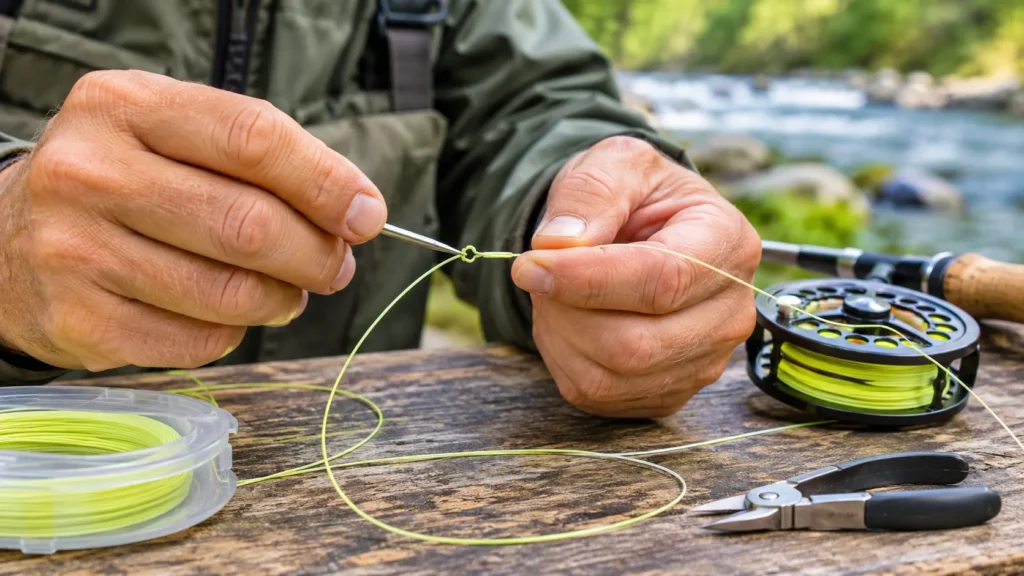
How to mend fly line, and why is it important? Have you ever watched your fly drift unnaturally across the current, missing the strike zone? To mend a fly line, lift the rod tip and move the line upstream or downstream without disturbing your fly.
Use an upstream mend to counter surface currents that pull your fly too quickly, or a downstream mend when the current demands it. This guide explains when to mend, how to perform different mends, and how to avoid common angler mistakes.
Whether you fish fast-moving rivers or gentle streams, techniques such as upstream mends, downstream mends, and reach casts can improve your presentation and extend your drift.
This guide explains how to inspect your line, choose the right repair method, fix damaged sections, and recognize when replacement makes more sense. It also covers practical tips for maintaining your line and preventing future damage.
Ready to rescue your fly line and get back to fishing? Let’s dive in!
Quick Jump
ToggleWhy Does Fly Line Get Damaged?
Fly line takes a beating from sunlight, heat, abrasion, dirt, and repeated casting. The outer coating can crack, peel, or split where it rubs against rod guides, rocks, boat hardware, or a reel seat.
Small nicks matter because they can expose the core. Once water reaches the core, a floating line may absorb moisture, lose buoyancy, cast poorly, or eventually fail under load.
Common causes include:
- UV exposure and heat, which gradually break down the coating.
- Abrasion from rocks, gravel, brush, or a rough rod guide.
- Dirt and grime that increase friction and accelerate wear.
- Stress at welded loops, especially where the line bends repeatedly.
- Storing the line tightly coiled or leaving it in a hot vehicle.
Can You Repair a Damaged Fly Fishing Line?
Yes. You can repair a damaged fly fishing line if the damage is small, localized, and the core remains intact. A minor crack, surface nick, or damaged tip loop is often worth fixing; widespread peeling, a severed core, or damage along much of the line usually calls for replacement.
Think of fly line maintenance as a quick inspection after every few trips. Run the line gently between your fingers and look for rough spots, exposed core, soft areas, or a loop that has begun to separate.
| Damage type | Usually repairable? | Best response |
|---|---|---|
| Tiny surface crack | Yes | Clean, dry, and seal with flexible UV resin or gel adhesive. |
| Small cut exposing the core | Yes, temporarily | Seal immediately, then make a stronger repair at home. |
| Peeling coating | Sometimes | Repair isolated spots; replace the line if peeling is widespread. |
| Broken tip loop | Yes | Rebuild the loop or attach a new leader connection. |
| Severed core or major damage | No | Replace the fly line. |
Tools and Materials Needed to Mend Fly Line
Keep a small repair kit in your fly-fishing pack. The exact materials depend on whether you are sealing a crack or rebuilding a loop.
- Fly line cleaner or mild soap and fresh water
- Clean cloth or microfiber towel
- UV-cure resin, such as Loon UV Knot Sense, or flexible gel super glue
- Toothpick, needle, or small applicator
- Sharp scissors or a hobby knife
- Heat-shrink tubing for a more durable coating repair
- Heat gun or warm light source, used carefully
- Fly-tying thread, 10–20 lb monofilament, and nail-knot tool
- Leader material or a replacement loop kit
- Flexible adhesive such as Aquaseal or Pliobond for sealing repairs
How to Mend Fly Line: Step-by-Step Instructions
How do you mend a fly line to improve your fly’s drift and presentation? If your fly drifts unnaturally or moves faster than the surrounding current, drag might be the problem. Learning to mend your fly line helps you control slack, manage current differences, and present your fly naturally to feeding fish.
To mend a fly line, lift the rod tip and reposition the line upstream, downstream, or across the river or stream without moving the fly. Upstream mends help counter drag the fly, while downstream and reach mends suit different current conditions and casting angles.
But successful mending involves more than simply flicking your rod. The right timing, mend direction, line control, and understanding of water currents can make a noticeable difference in your catch rate.
Let’s explore the essential fly-line mending techniques and learn how to achieve a more natural drift on your next fishing trip!
Identify the Damaged Section
Stretch a short section of line between your hands and inspect it under good light. Look for a white line, split coating, rough patch, exposed braided core, or a loop that is pulling away from the body of the line.
Mark the damage with a small piece of masking tape if you need to work on it later. Do not cut the line until you know whether the core is intact.
Clean and Prepare the Fly Line
Rinse the damaged area with fresh water and dry it completely. Dirt, sunscreen, and algae prevent adhesive from bonding well.
If the coating is loose but not missing, trim only the frayed material with a sharp blade. Keep the cut clean and avoid slicing into the core.
Repair Small Cracks and Surface Damage
For a small crack, use a flexible repair material rather than a rigid glue. UV resin is useful because it cures quickly and remains slightly flexible; gel-type cyanoacrylate adhesive can also work for a temporary streamside patch.
- Clean and dry the damaged section.
- Gently flex the line so the crack opens.
- Apply a very small amount of UV resin or gel adhesive with a toothpick.
- Close the crack and smooth the repair into a thin, even layer.
- Cure UV resin under sunlight or a UV flashlight for roughly 10–20 seconds.
- Let the patch fully set before putting it through rod guides.
Avoid building a thick blob. A smooth, low-profile fly line coating repair slides through the guides and casts much better than a hard lump.
Fix Cuts and Deeper Damage
A cut that exposes the core needs more than surface glue. First, seal it so water cannot enter; then make a stronger repair with heat-shrink tubing if the line is PVC-coated.
- Clean the area and remove loose coating.
- Apply a thin layer of flexible adhesive into the gap.
- Slide clear heat-shrink tubing over the line, centered on the damage.
- Apply gentle, moving heat until the tubing shrinks and re-forms the coating.
- Let it cool completely before removing the sleeve.
- Seal the repaired area with a thin layer of flexible adhesive and allow it to cure overnight.
Use low heat and keep the line moving. Too much heat can damage the coating or weaken the core.
How to Repair a Fly Line Coating That Is Peeling
Peeling usually means the coating has begun to fail. If it is confined to one small area, clean the loose material away, seal the exposed core, and cover the repair with a flexible adhesive or a heat-shrink patch.
If the coating peels along several feet of line, repair attempts become temporary at best. Repeated casting will keep stressing the weak area, and the line may no longer float, shoot, or load the rod properly.
A useful rule: repair a nick; replace a line that feels rough, cracks in multiple places, or sinks when it should float.
How to Fix a Broken Fly Line Loop
A broken loop does not necessarily ruin the line. You can rebuild it with monofilament, fly-tying thread, and adhesive, or use a commercial loop-repair kit.
Simple rebuilt-loop method:
- Cut away the damaged loop cleanly.
- Fold the final inch of fly line back on itself to form a small loop.
- Tie a six- or seven-turn nail knot around both legs of the folded line using 15–20 lb monofilament.
- Tie a second nail knot about 1/8 inch behind the first.
- Trim the tags and coat the knots with UV resin or flexible adhesive. deneki
Keep the rebuilt loop small. A bulky loop can hinge, catch in the rod guides, or make the leader connection less smooth.
How to Repair a Damaged Fly Line Connection
If the factory loop is damaged but the line itself is healthy, you have two good options: rebuild the loop or attach the leader directly with a nail knot. A nail knot needs six or seven tight, even turns for dependable strength.
For a loop-to-loop connection, make a small loop in the fly line and secure it with tying thread or monofilament nail knots. Then attach a leader with a matching loop.
If you attach a leader directly, seal the exposed end of the fly line. An unsealed end can allow water into the core and make a floating line sink.
When Should You Replace Your Fly Line Instead of Repairing It?
Replace the line when damage is widespread, the core is broken, the coating peels continuously, or the line no longer floats or casts well. Cracks and peeling are signs that the coating is breaking down, often from UV exposure and heat.
A repair makes sense when you need to finish a trip, the damage is in one place, and the line otherwise performs well. A replacement makes more sense when you find yourself repairing the same line every few outings.
Tips to Prevent Future Fly Line Damage
Good fly line maintenance costs a few minutes and can extend the life of an expensive line.
- Rinse the line with fresh water after saltwater use or dirty-water trips.
- Clean it periodically with a fly-line cleaner or cleaning pad to remove grime that reduces slickness.
- Let the line dry completely before storing it.
- Store it loosely coiled in a cool, dark place rather than in a hot car.
- Check rod guides for cracks or burrs that can scrape the coating.
- Inspect the tip and welded loop before each season.
- Avoid stepping on the line or dragging it across gravel.
A Quick Note on Mending on the Water
Do not confuse line repair with the fly-fishing technique called mending. On the water, to mend your fly line means lifting and repositioning the line on the surface so varying currents do not drag the fly.
When the water between you and the fly moves faster than the water holding the fly, make an upstream mend. Lift the rod tip, break the line’s surface tension, and place the belly of line upstream of the fly. This creates controlled slack in the line and helps produce a dead drift.
If the near-side current is slower, a downstream mend may be needed instead. The purpose of a mend is simple: keep the line from pulling the fly out of its natural feeding lane.
For a dry fly or nymph, mend soon after the fly lands on the water, before the line bonds to the surface. Use a smooth flick of the rod tip, mend from far to near, and avoid moving the fly or indicator. Several small mends often work better than one huge correction.
Frequently Asked Questions About Fly Line Repair
Can you use super glue to repair fly line?
Yes, for a small temporary repair. Use a flexible gel-type cyanoacrylate adhesive or UV-cure resin, apply only a thin layer, and smooth it so it does not create a hard bump.
How long does a repaired fly line last?
A well-made small repair can last for several outings, but it is not always permanent. Repeated casting, bending, and heat can cause the patched section to crack again, so inspect it regularly.
Can a cracked fly line still be used?
Yes, if the crack is minor and the core is intact. Seal it promptly so water cannot reach the core, then monitor the repair during the day.
Is it worth repairing an old fly line?
Sometimes. Repair an otherwise good line with one small flaw; replace a line with widespread cracking, peeling, poor flotation, or a damaged core.
What are the main fly line mending techniques?
The main techniques are the upstream mend, downstream mend, roll-cast mend, aerial mend, and stack mend. Use each to reposition line and control the fly’s drift.
When should you mend your fly line?
Mend as soon as the line lands when current will create drag. Mend upstream to slow the drift; mend downstream to speed it up.
What are common fly line mending mistakes to avoid?
Avoid mending too late, using weak or excessive force, moving the fly, and mending when the swing is already working.
How can you read the current before making a mend?
Watch seams, faster and slower lanes, and the line’s belly. Mend the section of line that will otherwise pull the fly across current.
Can too much mending hurt your fly’s drift?
Yes. Over-mending can pull the fly out of its feeding lane or create unnatural movement. Make only the mend the current requires.
How can you practice and improve your mending?
Practice on moving water with different current speeds. Start with short upstream mends, keep the rod tip low, and gradually increase distance and force.
Conclusion
Knowing how to mend fly line can save a fishing day and extend the life of gear you already trust. Start by identifying whether the problem is a surface crack, exposed core, peeling coating, or broken loop. Clean the area, use a flexible adhesive or UV resin for small damage, and use heat-shrink tubing or a rebuilt loop for a stronger repair.
Do not ignore a small nick: water entering the core can turn a floating line into a sinking frustration. Inspect your line regularly, keep it clean, and replace it when damage becomes widespread. With a few simple tools and a little patience, you can keep your fly line casting smoothly and get back to presenting dead drifting flies naturally to trout.
Recommended posts
- What Is Fly fishing Line Backing? Why It Matters & How Much You Need
- What Fishing Line Floats Best? (Incl. AFFORDABLE Types)