
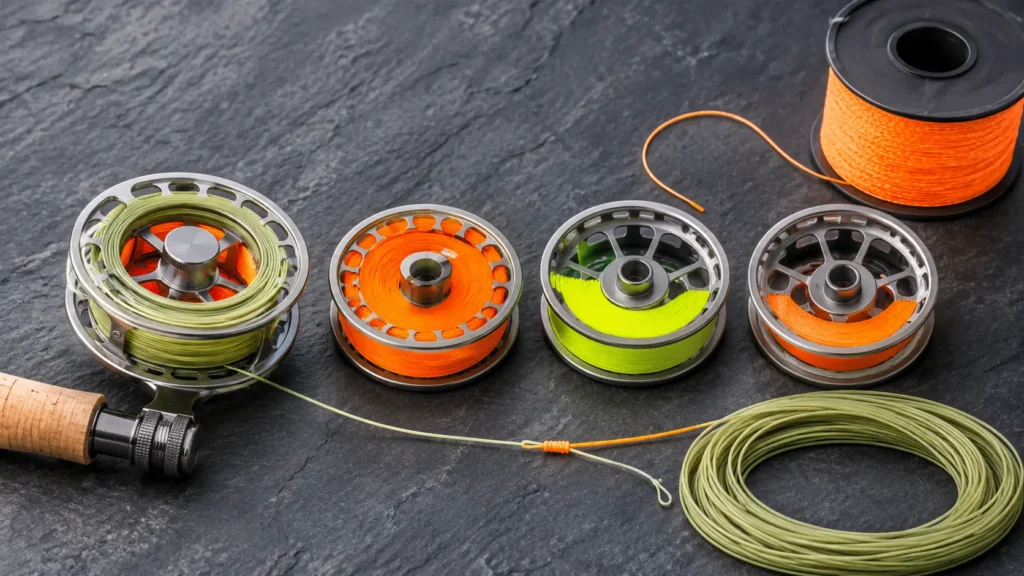
What is fly line backing, and why do fly anglers need it? Fly line backing is a thin, strong braided line that connects your fly reel to your fly line. It provides extra line capacity when a powerful fish makes a long run beyond your fly line’s length. Without enough backing, you risk losing control of a hard-fighting fish.
Fly line backing serves two main purposes: it fills empty space on your reel and gives you extra line to fight fish. Most fly anglers choose 20-pound or 30-pound Dacron backing, while anglers targeting large saltwater species often prefer stronger gel-spun polyethylene (GSP) backing.
But how much backing do you actually need? Does backing affect casting, and should you choose Dacron or braided backing? Let’s explore everything you need to know about fly line backing, including its types, strength, capacity, and how to attach it to your fly reel.
What Is Fly Line Backing Used For?
What is fly line backing used for? It extends the total amount of line on your fly reel and gives you a reserve when a fish runs beyond the length of your fly line. It also helps the reel spool sit at a useful diameter, which can improve line handling and retrieval.
A typical fly-fishing setup works in this order: Reel arbor → Backing → Fly line → Leader → Tippet → Fly
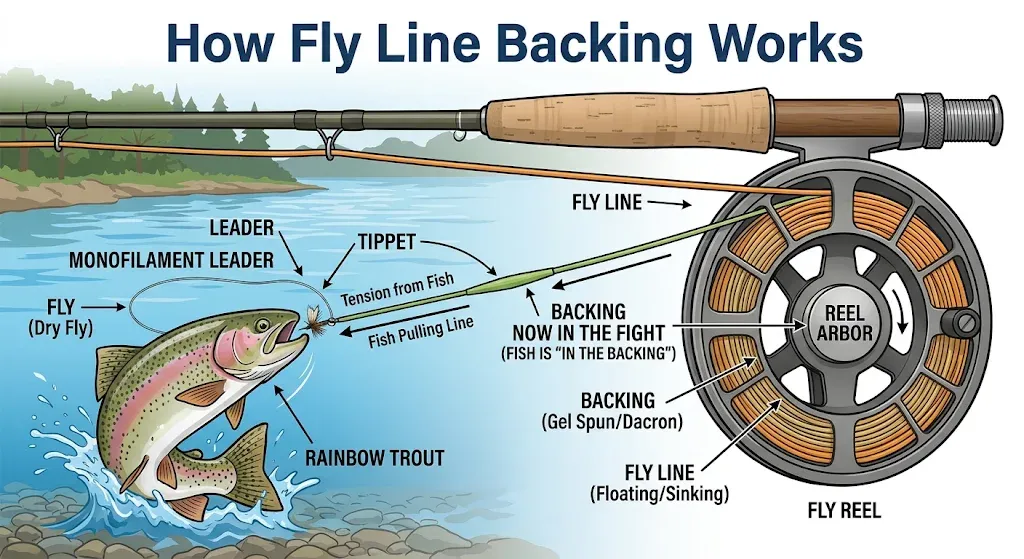
The backing attaches directly to the reel’s arbor. The fly line then connects to the backing, usually with a loop-to-loop connection or a strong knot. From there, the leader and tippet carry the fly to the fish.
Why backing matters during a fight?
A fish does not care how much fly line you have. When it runs, it pulls line through the guides and off the reel at a fast rate. Current, wind, open water, and a fish’s size all increase the distance it can cover.
If you hook a large trout in a river, it may take 50 to 100 feet of line quickly. A steelhead, salmon, carp, bonefish, or tarpon can take far more. Without backing, you could reach the end of the fly line and lose the fish because the leader or fly line fails under sudden pressure.
Backing gives you time. It lets the fish run while you apply controlled pressure, recover line when it stops, and work it back toward you.
What Is Fly Line Backing Made Of?
Most fly backing comes in two main materials: Dacron and gel-spun polyethylene, often called GSP. Both work, but they suit different reels, budgets, and fish.
| Material | Best use | Strengths | Trade-offs |
|---|---|---|---|
| Dacron | Most freshwater fishing and many saltwater applications | Affordable, easy to handle, durable, less likely to cut into itself | Thicker, so it takes up more spool capacity |
| Gel-spun polyethylene (GSP) | Small reels, long-running fish, and saltwater | Much thinner for its strength, allowing more yards on the reel | Costs more and can cut into itself if spooled loosely |
Dacron backing
Dacron backing is braided polyester. It is the traditional choice because it is strong, smooth, easy to tie, and relatively inexpensive. A common 30 lb Dacron backing is about 0.024 inch in diameter, which takes up more room on the spool than thinner gel-spun material.
Choose Dacron when you want dependable, easy-to-manage backing for freshwater trout, bass, panfish, and many inshore saltwater species. It is also easier on your hands if you ever need to grab the line during a fight.
Gel-spun polyethylene backing
Gel-spun polyethylene, or GSP, is a high-strength braid made from ultra-high-molecular-weight polyethylene. It is much thinner than Dacron at a similar strength, so it lets you fit more backing on a smaller fly reel. A 30 lb gel-spun backing may measure around 0.014 inch in diameter.
Use GSP when reel capacity is limited or when you expect long runs from powerful fish. It is especially useful for saltwater fishing, steelhead, salmon, and larger freshwater species. The downside is cost and the need to spool it tightly; loose GSP can cut into itself under heavy pressure.
How Does Fly Line Backing Work?
Backing works by adding reserve length behind your fly line. When a fish pulls out all the usable fly line, the connection between the line and backing lets the fight continue onto the backing.
Think of the fly line as the working line. It loads the rod, helps you cast, controls the fly, and provides the main connection during most of the fight. The backing is the emergency reserve. It does not load the rod or present the fly; it simply prevents you from running out of line.
The connection that matters
The fly line and backing must connect securely. Many modern fly lines include a welded loop at the rear end, which makes a loop-to-loop connection quick and reliable. If your line does not have a welded loop, use a needle nail knot, standard nail knot, or Albright knot.
A clean connection matters because the junction passes through the rod guides during a long run. A bulky or weak knot can catch, wear, or fail when pressure is highest.
How Much Backing Do You Need on a Fly Reel?
The right amount of backing depends on your reel’s capacity, the fly line you use, the fish you target, and the water you fish. A useful rule is to fill the reel until the fly line sits about 1/8 to 1/4 inch below the reel frame. Do not overfill it, because the line can rub or jam against the frame.
Practical backing amounts
| Fishing situation | Typical backing amount | Common strength |
|---|---|---|
| Small-stream trout or panfish | 25 to 50 yards | 12 to 20 lb |
| Standard freshwater trout | 50 to 100 yards | 20 lb |
| Larger trout, bass, carp | 100 to 150 yards | 20 to 30 lb |
| Steelhead or salmon | 150 to 250 yards | 20 to 30 lb |
| Bonefish, redfish, stripers | 200 to 250 yards | 30 lb |
| Tarpon, tuna, large saltwater fish | 250 to 300+ yards | 30 lb or heavier |
These are starting points, not strict rules. A five-weight trout reel commonly holds about 80 to 120 yards of backing, depending on the reel design, arbor size, and fly line.gearjunkie
Factors that change capacity
- Reel size: A larger arbor and wider spool hold more backing.
- Fly line length and diameter: A heavier or thicker line leaves less room for backing.
- Backing diameter: Thinner gel-spun backing fits more yards than Dacron.
- Target species: Bigger fish generally require more reserve line.
- Water type: Open lakes, large rivers, and saltwater give fish more room to run than small streams.
For freshwater trout, 100 yards of 20 lb backing is a sensible default. For saltwater, prioritize capacity and choose a reel rated for the line weight and species you plan to chase.
What Is the Difference Between Fly Line and Backing?
Fly line and backing look similar on the reel, but they do completely different jobs. Fly line is the weighted line that loads the rod and delivers the fly. Backing is the thinner reserve line that extends your total line capacity.
| Feature | Fly line | Backing |
|---|---|---|
| Main job | Loads the rod and presents the fly | Provides reserve line during a run |
| Thickness | Much thicker and heavier | Thin and lightweight |
| Material | PVC-coated core | Dacron or gel-spun braid |
| Length | Usually 80 to 120 feet | Often 50 to 300+ yards |
| Casting role | Essential | None |
| Position on reel | Sits on top of backing | Sits directly on the arbor |
You cannot replace fly line with backing. Backing has no proper weight or taper, so it will not load the rod correctly or turn over a fly. Likewise, fly line alone cannot provide enough reserve for a powerful fish. The two work together: fly line for casting and presentation, backing for security.
Does Every Fly Fishing Setup Need Backing?
No. Not every setup needs a large amount of backing, but almost every reel benefits from having some. Small-stream trout anglers may rarely see their backing, yet it still protects them if they hook an unexpectedly strong fish.
When backing is essential
Backing becomes essential when you target fish with long runs or fish water with room to run. Steelhead, salmon, carp, pike, bonefish, tarpon, and other saltwater species commonly require serious backing capacity.
It also matters when you fish from a boat. A fish may pull line toward structure, current, or open water before you can move into a better position.
When you may rarely use it
If you fish tiny creeks for brook trout or panfish, you may never reach the backing. Even then, a modest amount of 20 lb backing is inexpensive insurance. It fills the reel properly and prepares you for the day a larger fish takes the fly.
How Strong Should Fly Line Backing Be?
For most freshwater fishing, 20 lb backing is the standard choice. Step up to 30 lb for bigger fish, heavier rods, saltwater, or situations where abrasion and long runs are likely.
- 20 lb: Ideal for trout, panfish, bass, and most freshwater applications.
- 30 lb: A strong choice for salmon, steelhead, carp, pike, and many saltwater fish.
- 50 lb or heavier: Useful for large saltwater species, tropical fish, and reels where thin GSP backing maximizes capacity.
Match the backing strength to the reel, fly line, and expected fish. A reel designed for a five-weight line does not need 50 lb backing for normal trout fishing. A saltwater reel built for an eight- to twelve-weight line, however, should carry stronger backing and far more of it.
How Do You Attach Backing to a Fly Line?
How do I put backing line on a fly reel? Attach backing to the reel first, then connect it to the fly line. Use an arbor knot for the reel and a loop-to-loop connection, Albright knot, or nail knot for the fly line.
Step 1: Attach backing to the reel arbor
- Pass the backing around the reel arbor.
- Tie an arbor knot and tighten it firmly.
- Wind the backing onto the spool under light, even tension.
- Stop when you have enough backing to leave room for the fly line.
An arbor knot is simple, secure, and the standard way to attach backing to a fly reel.
Step 2: Connect backing to fly line
If both the backing and fly line have loops, use a loop-to-loop connection. If the fly line has a welded loop, attach the backing loop directly to it. If neither has a loop, tie an Albright knot or nail knot.
Step 3: Add the fly line and fill the reel
Wind the fly line over the backing until the spool is nearly full. Leave a small gap between the fly line and the reel frame. This clearance prevents rubbing, jamming, and poor retrieval.
Tip: Have a fly shop or local tackle shop spool a new fly line if you are unsure. They can fill the reel correctly and leave the right amount of backing beneath it.
When Should You Replace Fly Line Backing?
Replace backing when it looks frayed, faded, fuzzy, weakened, or damaged near a knot. Backing can last several seasons, but sunlight, salt, moisture, and abrasion eventually reduce its strength.
Inspect it at the start of each season and after any hard fight. Check especially near the arbor knot, the backing-to-fly-line connection, and any section that rubbed on rocks, boat hardware, or reel components.
Maintenance checklist
- Rinse the reel and backing with fresh water after saltwater use.
- Let the reel dry completely before storage.
- Check for cuts, frays, mildew, and discoloration.
- Re-spool backing that has become deeply compacted or damaged.
- Replace backing every few seasons, or sooner if it shows wear.
Saltwater is especially hard on tackle. Rinse your reel after every saltwater trip, then inspect the backing before your next outing.orvis.co
Frequently Asked Questions About Fly Line Backing
Can you catch fish without fly line backing?
Yes. You can catch small fish without backing, especially in small streams where fish cannot run far. But backing is still smart insurance because an unusually strong fish can take more line than your fly line provides.
Does backing help you cast farther?
No. Backing does not help you cast farther. Fly line loads the rod and carries the fly; backing simply provides reserve line beneath the fly line.
Can fish pull all the backing off your reel?
Yes, especially large saltwater fish, salmon, or steelhead in strong current. That is why anglers choose higher-capacity reels and carry 200 to 300 yards or more of backing for demanding fisheries.
Is 20 lb backing enough for trout?
Yes. Twenty-pound backing is enough for most trout fishing. Use 30 lb backing if you target larger trout, fish heavy cover, or expect long runs in big water.
How often should you replace fly line backing?
Replace it when it shows fraying, fading, mildew, cuts, or weakened sections. Many anglers replace backing every few seasons, but saltwater anglers should inspect and replace it more often.
What is fly fishing backing line purpose?
The purpose of fly fishing backing line is to extend the total line capacity of your fly reel. It gives you extra line when a fish runs beyond the length of your fly line and helps the spool perform more smoothly.
What is backing on a fly reel?
Backing on a fly reel is the thin, strong line spooled beneath the fly line. It connects to the reel arbor and serves as a reserve when a fish makes a long run.
What fly line weight should I use for fly fishing?
Match your fly line weight to your rod’s rating—for example, use a 5-weight line on a 5-weight rod. Choose heavier lines for larger flies, wind, and bigger fish; lighter lines suit small streams and delicate presentations.
Does the color of fly line backing matter?
No, color does not affect performance. Choose a high-visibility color if you want to track line during a long run, or a subdued color if you prefer a low-profile setup. uttings.co
What types of fly line backing are available?
The two main types are Dacron and gel-spun polyethylene (GSP). Dacron is affordable and easy to handle; GSP is thinner and stronger, allowing more backing capacity on the same reel.
Conclusion: What Is Fly Line Backing?
Fly line backing is the quiet workhorse of a fly-fishing setup. It does not help you cast, load the rod, or present a dry fly, but it protects you when a fish makes a run longer than your fly line can handle. A quality backing spool gives you reserve capacity, helps keep your fly line seated properly on the reel, and gives you confidence when a big fish decides to run.
Choose 20 lb Dacron backing for most freshwater trout fishing. Move to 30 lb or gel-spun polyethylene when you chase steelhead, salmon, carp, bonefish, or saltwater species. Attach it securely to the arbor, connect it cleanly to the fly line, and leave enough room on the spool for smooth retrieval. Inspect it regularly, rinse it after saltwater use, and replace it when it shows wear.
The best backing setup is not the one with the most line. It is the one matched to your reel, rod, target species, and water. Get that balance right, and backing becomes the insurance policy that turns a long run into a landed fish rather than a lost opportunity.