
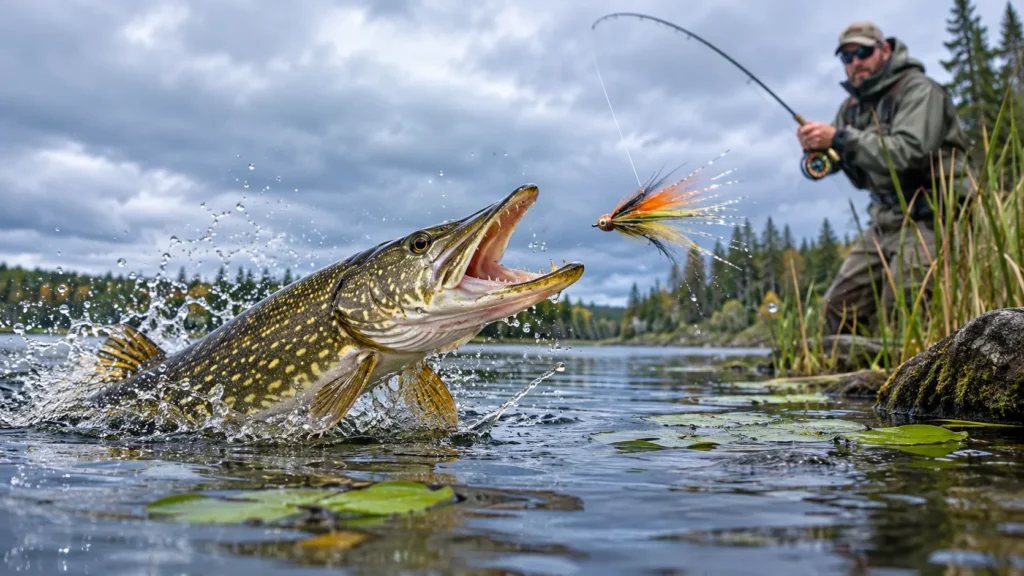
Fly fishing for pike is a freshwater game built around big flies, aggressive strikes, and hard fights. Northern pike are ambush predators that hold along weed edges, drop-offs, and submerged cover, then rush a baitfish imitation when it swims into their strike zone.
If you want to catch northern pike with a fly rod, use an 8- to 10-weight setup, a short leader with wire bite protection, and large streamers or poppers. Pike fly fishing rewards anglers who cover shallow water methodically, vary the retrieve, and use a low, firm strip set rather than a trout-style hook set.
This guide to fly fishing for pike covers the best flies, rods, reels, lines, leaders, seasonal tactics, and proven techniques to help you catch more pike with a fly rod. Whether you’re targeting your first pike or chasing a trophy-sized predator, the right approach can make all the difference.
Ready to catch more pike on the fly? Get the complete guide to pike fly fishing—proven flies, gear setups, retrieves, seasonal tactics, and expert tips. Get Your Copy on Amazon →
Quick Jump
ToggleWhat Is Fly Fishing for Pike?
Fly fishing for northern pike means using a fly rod, fly line, and large artificial fly to imitate the baitfish, frogs, leeches, or small prey that northern pike eat. Unlike trout fly-fishing, which often relies on delicate presentations, pike on the fly usually calls for wind-resistant flies, short leaders, and deliberate retrieves.
Northern pike (Esox lucius) are predatory fish with rows of sharp teeth and a flat, bony mouth. Those teeth can slice through ordinary monofilament, so a wire leader or heavy fluorocarbon bite section is a core part of a dependable pike fly fishing setup.
Why Northern Pike Are Great Targets for Fly Anglers
Northern pike are excellent sport fish because they are aggressive, widely distributed in freshwater lakes and rivers, and willing to chase large flies. They often strike hard, pull strongly, and give an angler a memorable fight—especially when a big pike eats a streamer close to weeds.
Pike also suit fly anglers who enjoy visual fishing. In clear, shallow water, you may see a fish follow the fly, turn away, then explode on it after a pause. That makes pike and musky fishing feel more like hunting than simply casting and retrieving.
Unlike trout, pike do not always need a perfect drift or tiny fly. A well-placed large fly that pushes a ton of water can trigger a reaction strike, even when the fish are not actively feeding.
Best Fly Fishing Gear for Pike
A standard trout outfit is usually too light for big pike. Pike fishing needs enough rod power to cast bulky flies, fight strong fish, and keep a hooked pike away from snags.
Choosing the Right Fly Rod and Reel
For a versatile all-around pike fly fishing setup, start with a 9-weight fly rod, weight-forward floating line, and a short 5- to 7-foot leader. This combination turns over large streamers well and gives you enough backbone to control a strong fish around weeds.
Fly Line, Leaders, and Wire Bite Guards
Use a floating line when pike hunt shallow weed flats, bays, and shoreline cover. Switch to an intermediate line or sinking line when fish move deeper during bright midday conditions or in cooler months.
Keep the leader short. A 4- to 7-foot leader made from 30- to 50-pound fluorocarbon or monofilament helps turn over big flies and improves hook control. Finish it with 8 to 18 inches of 20- to 40-pound wire bite tippet; pike teeth will quickly cut lighter material.
A quick-change snap or stay-lock clip can save time when you change pike fly patterns. It also lets the fly move more freely, which can improve the action of a streamer or popper.
Best Pike Flies for Fly Fishing
The best flies for pike are usually large, visible, and easy to keep moving. Pike feed by sight and often key on the eye of a baitfish, so flies with clear eyes, flash, and a realistic profile can draw more strikes.
Large Streamers and Pike Bunny Flies
Large streamers are the foundation of northern pike fly fishing. Good choices include Lefty’s Deceiver, Game Changer, Whistler, Clouser Minnow, Murdich Minnow, and pike bunny patterns in sizes roughly 2 to 5/0.
A pike bunny uses rabbit strip, bucktail, flash, and a durable hook to create a bulky baitfish profile. It pushes water, swims with a lifelike pulse, and remains effective in stained water or around heavy cover.
Useful color choices include:
- White or pearl for clear water and bright conditions
- Black, olive, or natural baitfish tones for pressured fish
- Red and white, chartreuse, orange, or fire-tiger for visibility and reaction strikes
Topwater Poppers and Divers
Poppers, sliders, and Dahlberg divers create surface disturbance that can bring pike out of weeds or shallow cover. They work especially well in calm water, early morning, evening, and during spring and fall when fish roam shallows.
Fish a popper with two or three sharp strips, then pause. The first strip creates a pop or gurgle; the later strips make the fly behave like a wounded baitfish.
A diver can be retrieved beneath the surface, then allowed to rise and dive again. This action works well along weed edges, lily pads, submerged timber, and other ambush cover.
Where to Find Pike When Fly Fishing
Pike are ambush predators. They rarely cruise open water looking for food; instead, they hold motionless in cover and wait for prey to swim past.
Focus on:
- Weed beds, especially outside edges and openings
- Lily pads, reeds, and milfoil
- Points, drop-offs, and transitions between shallow and deeper water
- Tributary mouths and current seams in rivers
- Fallen trees, brush piles, docks, and other submerged structure
In a river or lake, cast close to cover first. A fly placed a foot into the weeds and retrieved outward can put the pattern directly in a pike’s strike zone.
Best Time of Year and Weather Conditions for Pike
Spring and fall are prime windows for pike fly fishing. Cooler water often pushes fish into shallow, accessible areas, where they feed aggressively and readily chase streamers and topwater flies.
In summer, fish early and late in the day. Bright midday sun can push pike deeper or into thicker cover, making a sinking line or intermediate line more useful.
Wind can help because it breaks up the surface and makes fish less cautious. It can also make casting large flies difficult, so practice an open oval or Belgium-style cast to avoid tangling a heavy fly around the rod tip.
How to Fly Fish for Pike: Step-by-Step Techniques
How to fly fish for pike successfully and land one of these aggressive freshwater predators? Northern pike offer an exciting challenge for fly anglers with their explosive strikes, powerful runs, and impressive size. Whether you fish lakes, rivers, or weedy backwaters, the right fly, tackle, and presentation can make all the difference.
To fly fish for pike, use a powerful 8–10 weight fly rod, a large-arbor reel, a weight-forward floating or sinking line, and a bite-resistant wire or heavy fluorocarbon leader. Choose large baitfish patterns, such as streamers that imitate perch, shad, or other natural prey. Focus on weed edges, shallow bays, drop-offs, and ambush points where pike hunt.
From choosing the best pike flies to mastering retrieves, casting techniques, seasonal patterns, and safe fish handling, this guide covers everything you need to know.
Casting and Retrieving Large Flies
- Identify likely ambush cover before you cast.
- Make a controlled cast parallel to, or slightly beyond, the weed edge.
- Let the fly settle briefly, then begin a steady strip retrieve.
- Use short, firm strips of roughly 6 to 18 inches, followed by pauses.
- Change speed and rhythm until you find what triggers fish that day.
A slow, steady retrieve can work when pike are relaxed. When they are aggressive, sharp snaps and abrupt pauses often imitate a wounded baitfish and provoke a strike.
Using Pause-and-Go and Figure-Eight Retrieves
The pause-and-go retrieve is one of the most effective fly patterns for pike because it gives a following fish time to commit. Strip twice or three times, pause, then strip again; many strikes happen as the fly stops or changes direction.
At boatside, use a figure-eight retrieve. Keep the rod tip low, move the fly in a wide figure-eight motion, and maintain a straight connection to the fly. This can trigger a follow-up strike from a pike that trailed the pattern but did not commit earlier.
How to Set the Hook and Fight a Pike on a Fly Rod
Do not set the hook like you would for trout. Pike have a flat, bony mouth, so a high rod-tip trout set often fails to drive the hook home.
Use a strip set:
- Keep the rod tip low, near the water or even slightly below it.
- When a fish eats, continue stripping line with force.
- Once the line comes tight, make one or two additional firm strips.
- Raise the rod only after the hook is set.
During the fight, keep pressure on the fish but avoid locking the drag down. Let a big pike run when needed, then recover line steadily. Strong hooks, sharp points, and a reliable drag matter more than fancy gear when a large pike turns toward weeds.
Common Fly Fishing for Pike Mistakes to Avoid
- Using trout tackle. A 5- or 6-weight rod struggles with wind-resistant flies and strong fish; pike usually demand at least an 8-weight.
- Skipping bite protection. Mono or light fluorocarbon alone can be severed by pike teeth.
- Retrieving too fast all the time. Pauses often trigger the strike.
- Lifting the rod on the strike. A low-angle strip set gives a much better hookup rate.
- Fishing only open water. Pike relate closely to weeds, wood, current seams, and structure.
- Using flies that are too small. While pike can eat smaller patterns, 4- to 8-inch baitfish imitations are often more consistent.
- Ignoring fly-tying details. Eyes, flash, durable materials, and a balanced shank help a fly track properly and survive toothy fish.
Pike Handling, Landing, and Catch-and-Release Tips
Pike are slimy, powerful, and toothy. Keep fingers away from the mouth, use long-nose pliers or forceps, and never try to “lip” a northern pike.
For safe catch-and-release:
- Use a soft rubber or nylon landing net when needed.
- Keep the fish in the water as much as possible.
- Wet your hands before handling it.
- Support the fish horizontally; never hold a large pike vertically.
- Avoid touching the gills or eyes.
- Remove hooks quickly with pliers; if a hook is deep, cut the line and leave the hook in place.
If the fish needs revival, hold it gently in the water until it can right itself and swim away under its own power. Do not move it back and forth; steady support is usually better.
Northern Pike Fly Fishing – FAQs
What size fly rod is best for pike?
An 8- or 9-weight fly rod is the most versatile choice for pike. Use a 10-weight when casting very large flies, fishing windy water, or targeting especially large pike.
Do you need wire leader for pike?
Yes. Pike have sharp teeth that can cut monofilament and lighter fluorocarbon. Use tie-able wire, titanium, or sufficiently heavy fluorocarbon as bite protection at the end of the leader.
What are the best flies for northern pike?
Large baitfish streamers, pike bunny patterns, Game Changers, Deceivers, Whistlers, Dahlberg divers, and poppers are all proven choices. Carry natural, white, black, chartreuse, red-and-white, and fire-tiger options.
Can you fly fish for pike in a river?
Yes. Target slower water beside current, back eddies, woody cover, tributary mouths, and current seams. Pike use these areas as ambush points while baitfish move through the system.
What retrieve works best for pike on the fly?
Start with short, firm strips and pauses. If a fish follows without eating, slow down, add longer pauses, or switch to a figure-eight retrieve near the boat.
Is pike fly fishing good for beginners?
Yes, but it is easier with the right gear. A beginner should start with an 8- or 9-weight rod, floating line, short leader, wire bite tippet, and a few durable streamers rather than trying to master every pike fly pattern at once.
How can I improve my chances of catching pike in murky or heavily fished water?
Use darker, high-contrast flies such as black, black-and-chartreuse, or olive; slow your retrieve and add longer pauses. Fish less-pressured edges, shade lines, and cover, and downsize if follows do not convert.
How can I fish for pike in weed beds, shallow water, or deeper areas?
In weeds and shallow water, use a floating line with a streamer, popper, or diver along weed edges. For deeper areas, switch to an intermediate or sinking line and retrieve the fly slowly near drop-offs, structure, and transitions.
Which flies work best for pike, and how should I choose their size and color?
Large baitfish streamers, pike bunnies, Game Changers, Deceivers, poppers, and divers work well. Match the size and color to local baitfish; use natural or white flies in clear water, and darker or brighter high-visibility patterns in stained water.
Conclusion
Fly fishing for pike is one of the most exciting ways to target a hard-fighting freshwater predator. With an 8- to 10-weight fly rod, a short leader, dependable wire bite protection, and a box of large streamers and poppers, you can confidently fish weed edges, river seams, and shallow ambush cover.
Northern pike reward anglers who vary their retrieve, keep the fly in the strike zone, and use a low strip set when the moment comes. The best approach is simple: find cover, present a fly that pushes water, pause often, and stay ready for a violent strike.
Whether you are chasing your first northern pike with a fly or hunting a trophy-class fish, pike fly fishing offers explosive takes, strong runs, and a genuine sense of hunting. Build a reliable pike fly fishing setup, learn the water, handle every fish carefully, and let the fly do the work.
Recommended posts
- What Is Fly Line Backing? Why It Matters & How Much You Need