
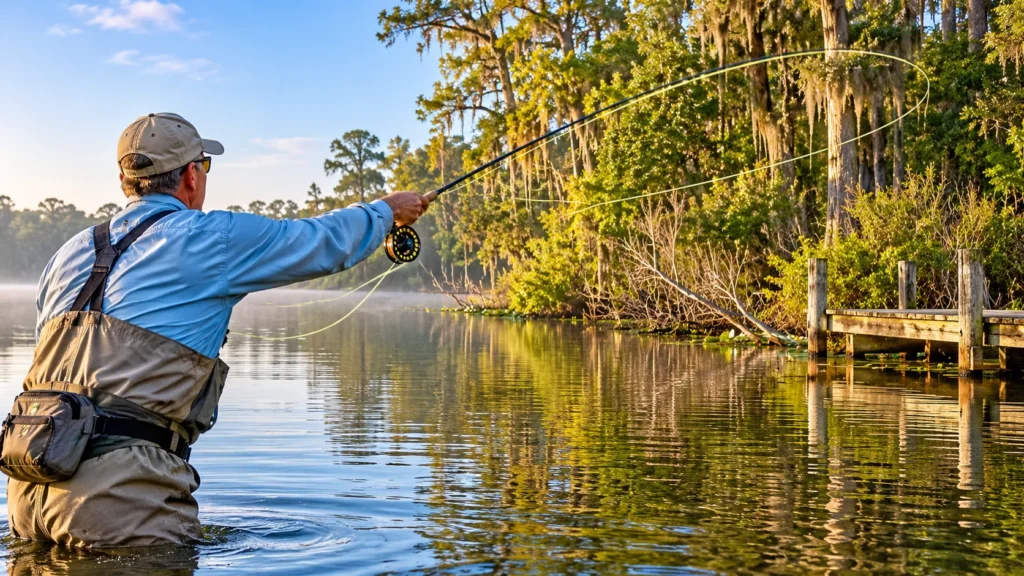
How to Fly Fish for Crappie might sound challenging, but it can be surprisingly productive once you understand their feeding habits. Have you ever wondered whether a fly rod can catch slabs as effectively as traditional spinning tackle? Crappie readily strike small baitfish, insects, and other aquatic prey, making them excellent targets for fly anglers.
To fly fish for crappie, use a 3- to 5-weight fly rod, a floating line, and small streamers, woolly buggers, or nymph patterns. Target submerged brush, weed edges, docks, and shallow spawning areas where crappie gather. Retrieve your fly slowly with short strips, and adjust its depth until you find actively feeding fish.
Whether you’re a beginner or an experienced fly angler, choosing the right flies, tackle, and presentation can make a big difference. We’ll break down proven techniques for locating crappie, selecting effective fly patterns, and catching more fish throughout the seasons. Let’s explore how to turn your next fly fishing trip into a successful crappie adventure!
Can You Catch Crappie on a Fly Rod?
Yes. Crappies are one of the best warm-water species for fly anglers because they readily eat small baitfish imitations, nymphs, wet flies, and occasionally surface flies. Their paper-thin mouths require a gentle hookset, but a light fly rod makes the fight enjoyable—even a slab can pull hard on a 4- or 5-weight setup.
Why crappie are excellent targets for fly fishing
Crappies feed on tiny prey: minnows, insect larvae, zooplankton, scuds, and small crustaceans. That diet lines up well with common trout patterns, including a woolly bugger, pheasant tail nymph, soft hackle, and small Clouser minnow.
They also school heavily. Once you locate one crappie, work the area carefully because more fish are often nearby. A fly rod lets you make quiet, accurate presentations around brush, docks, and vegetation without spooking a school.
Where fly fishing works best for crappie
Fly fishing for crappie is most effective around:
- Shallow coves and protected bays during spring
- Weed beds, lily pads, bulrush, and cattails
- Fallen trees, submerged brush, and standing timber
- Dock pilings, boathouses, and bridge pilings
- Drop-offs, creek channels, rocky points, and deeper structure
Crappies often hold slightly off the visible cover rather than directly beneath it. Cast beyond the structure, let the fly sink, and retrieve it through the edge of the cover.
Advantages of using a fly rod
A fly rod gives you better control over a small, lightweight fly than a spinning rod. You can present a tiny jig-style fly, nymph, or streamer with less splash and more precision.
Fly fishing also makes light bites easier to notice. Crappies often suck in a fly and release it quickly, so a sensitive rod, tight line, and patient retrieve help you detect the take before the fish spits it out.
Best Fly Fishing Gear for Crappie
You do not need heavy saltwater-style fly gear. For most crappie fishing, choose a light, versatile setup that can cast small flies accurately and handle wind on open water.
| Gear | Practical recommendation | Why it works |
|---|---|---|
| Fly rod | 9-foot, 4- or 5-weight | Enough power for wind and weighted flies, but light enough for panfish |
| Fly reel | Any reliable large-arbor or standard reel | Crappies are usually stripped in by hand |
| Fly line | Weight-forward floating line | Best for shallow water, docks, and spring fish |
| Leader | 7.5- to 9-foot tapered leader | Turns over small flies cleanly |
| Tippet | 4X to 6X fluorocarbon or mono | Light tippet helps small flies look natural |
| Flies | Sizes 8–14 streamers, nymphs, and wet flies | Matches crappie forage without overpowering the presentation |
Recommended fly rod weight
A 5-weight fly rod is the best all-around choice. It handles wind, weighted streamers, and larger flies better than a 3-weight, while still protecting light-wire hooks and soft crappie mouths.
A 4-weight is excellent for calm ponds, protected coves, and small flies. A 6-weight can be useful when you need to punch through wind or throw heavier flies into deeper water, but it is not necessary for most anglers.
Choosing the right fly reel and fly line
Your reel mainly stores line and provides drag when a bigger fish runs. Most crappies can be stripped in by hand, so prioritize a smooth, dependable reel rather than an expensive one.
Start with a weight-forward floating line. It is ideal for shallow spring crappies, dock fishing, weed beds, and small streamers. If crappies move deep in summer or winter, use a sink-tip or full-sinking line to reach suspended schools.
Leaders, tippets, and line recommendations
Use a 7- to 9-foot tapered leader with 5X tippet as a simple starting point. Fluorocarbon sinks slightly and is less visible underwater, while monofilament works well for surface flies and shallow presentations.
Avoid oversized leaders or heavy tippet. Crappies have soft mouths, and heavy line can make the fly behave unnaturally. Light wire hooks and 4X to 6X tippet are usually enough for even a big crappie.
Best Flies for Catching Crappie
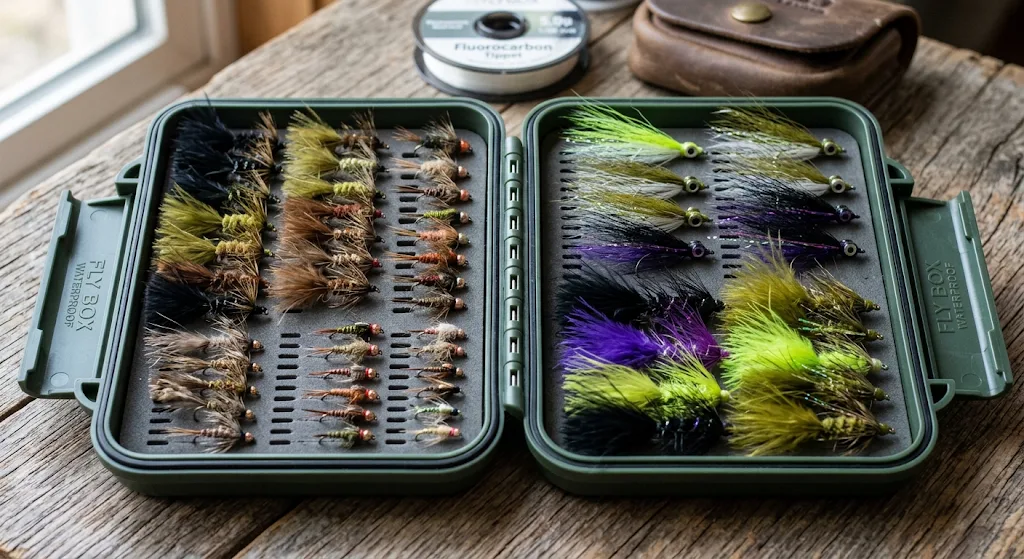
The best flies for crappie are small, visible, and easy to fish slowly. Start with white, chartreuse, olive, black, pink, or two-tone patterns, then adjust based on water clarity and what the fish want that day.
Woolly Buggers
A woolly bugger is one of the most reliable crappie flies. It can imitate a leech, small baitfish, damselfly nymph, or general food item, depending on its color and movement.
Fish a size 8 to 12 woolly bugger in white, chartreuse, olive, black, or pink. A marabou tail gives the fly lifelike movement even when it is barely moving.
Clouser Minnows
A Clouser minnow is a proven streamer for crappies because its dumbbell eyes make it ride hook-point-up and sink quickly. Chartreuse-and-white, white, olive, red-and-white, and pink-and-white are strong color choices.
Use a size 8 to 14 Clouser when crappies are feeding on small minnows. The weighted head helps the fly reach fish holding below the surface without requiring a sinking line.
Small streamer patterns
Small streamers are excellent when crappies are chasing fry or baitfish. Look for flies with a marabou tail, flash, rubber legs, or a small bead head.
Good choices include:
- Small baitfish imitations in white, silver, olive, or light gray
- Leech patterns with a tungsten bead
- Muddler-style streamers
- Small cone-head buggers
- Jig-style streamers tied on a jig hooks
Keep streamers small. Sizes 8 to 14 are usually more effective than large trout streamers because crappies often feed on very small forage.
Crappie-specific wet flies and nymphs
Crappies eat insects and larvae, especially in spring. Small wet flies, soft hackles, pheasant tail nymphs, Prince nymphs, and midge-style patterns can produce when streamers are not working.
A balanced leech is another strong choice because it hangs horizontally in the water and stays in the strike zone longer. Tie it with a bead, marabou, chenille, or ice dub body, and fish it slowly near brush or drop-offs.
A scud pattern can also work around vegetation and rocky structure. Use olive, tan, gray, or orange in sizes 12 to 16 when crappies are feeding on crustaceans.
Where to Find Crappie When Fly Fishing
Crappies relate to cover, depth changes, and schools of baitfish. The exact spot changes by season, but structure is the common thread.
Weed beds and submerged vegetation
In spring, target the outside edges of emerging vegetation, including bulrush, cattails, and lily pads. Crappies use these areas for feeding, cover, and spawning.
Cast alongside the weeds rather than into the thickest cover. A small streamer or nymph retrieved slowly along the edge often draws a strike.
Brush piles and fallen trees
Brush piles, sunken logs, standing timber, and laydowns are reliable crappie holding areas. These spots provide shade, ambush cover, and protection from current.
Make short, accurate casts close to the branches. Let the fly fall beside the cover before moving it.
Docks, shallow flats, and underwater structures
Dock pilings, boathouses, bridge supports, and shaded edges can hold crappies all day. Fish the shaded side first, then work outward toward open water.
In summer and fall, look for points, drop-offs, creek channels, and submerged humps. Crappies often suspend above these areas rather than sitting on the bottom.
How to Fly Fish for Crappie Step by Step
Ready to put these techniques into action? We’ll walk you through rod selection, fly patterns, seasonal locations, casting techniques, and proven retrieval methods. Here is a simple step-by-step approach for catching crappie on a fly:
- Choose a likely location. Start near a cove, weed edge, dock, brush pile, or drop-off.
- Start shallow and high in the water column. Cast beyond the cover and let the fly sink for a few seconds.
- Retrieve slowly. Strip 4 to 6 inches of line, pause, then repeat. Many strikes happen during the pause as the fly sinks. sippingmayflies
- Change depth before changing flies. Count down longer or shorter before each retrieve until you find the holding depth.
- Watch the line and leader. A twitch, hesitation, sideways movement, or sudden stop can be a bite.
- Set the hook gently. Use a smooth strip-set or a light lift rather than a hard trout-style hookset.
- Stay on productive water. Crappies school, so repeat casts to the same area after a hookup.
Choosing the right fishing location
Look for transition zones: where shallow flats meet deeper water, where weeds end, or where brush meets open water. These areas give crappies quick access to both food and security.
If you fish from shore, focus on points, coves, docks, and visible drop-offs. If you fish from a boat, work the outside edges of cover before moving into the thickest structure.
Casting near structure and cover
Accuracy matters more than distance. A cast that lands quietly beside a dock piling, brush limb, or weed edge is more valuable than a long cast into open water.
Avoid slapping the fly line onto the water. Let the fly settle naturally, especially in clear water or when fish are shallow.
Controlling fly depth and retrieving the fly
Depth is often more important than fly pattern. Crappies may hold just under the surface, several feet down, or suspended over deeper structure.
Use an unweighted fly for shallow fish, a bead head or weighted fly for mid-depth fish, and a sinking line or tungsten bead fly when fish are deeper. A small bobber or strike indicator can also suspend a nymph or wet fly at a chosen depth.
Detecting subtle strikes and setting the hook
Crappies often take a fly softly. Keep your line tight enough to feel movement but do not drag the fly unnaturally through the water.
When you feel a tap, see the line move, or notice the fly disappear, use a gentle strip-set. Crappies have delicate mouths, so a hard hookset can pull the fly free.
Best Fly Fishing Techniques for Crappie
There are several ways to fly fish for crappie, but slow presentations usually win. Cold-water fish especially respond to a fly that stays in front of them longer.digital.
Slow stripping and retrieving
Start with short strips and long pauses. If that does not work, try tiny 1- to 2-inch strips or let the fly dead-drift for several seconds.
Crappies frequently strike as the fly falls, so do not rush the retrieve. Let the fly sink, pause, then move it again.
Vertical jigging with a fly rod
When crappies hold below the boat, make a short cast, open the bail or strip out line, and allow the fly to sink straight down. Then lift the rod tip gently and let it fall again.
This mimics a crappie jig presentation. A marabou jig, balanced leech, or small jig fly works especially well with this method.
Fishing under docks and overhanging branches
Sidearm casts, roll casts, and bow-and-arrow casts help place a fly under docks and branches. Keep the rod low and make a quiet presentation.
Let the fly sink beside the piling or branch, then strip it slowly back into open water. Crappies often sit in the shade and move out to intercept prey.
Using a floating line or sinking line
Use a floating line for shallow water, spring fish, and surface presentations. Use a sink-tip or full-sinking line when crappies suspend deeper over channels, humps, or brush piles.
A sinking line is useful in summer and winter, but it requires more patience. Let it sink fully, then use a slow lift-and-fall retrieve rather than a fast strip.
Best Time of Year to Fly Fish for Crappie
Spring is the easiest and most productive season, but crappies can be caught year-round if you adjust depth and presentation.
– Spring spawning season
Spring is the prime window for crappie fly fishing. As water warms, crappies move from deeper winter areas toward staging structure and then into shallow spawning areas.
Males move in first and build bowl-shaped nests over gravel, sand, or muck. They can be aggressive during the spawn because they defend their nests. Fish slowly and put the fly close to cover.
– Summer fishing around deeper structure
After the spawn, crappies disperse toward deeper water. Look for them around weed edges, drop-offs, creek channels, submerged timber, and shade-producing structure.
Early morning and evening can be productive, especially when fish move shallower to feed. A small streamer, leech, or nymph worked slowly along a drop-off is a good starting point.
– Fall feeding activity
Fall is another strong window. Crappies move back toward shallower water and feed actively before winter. Target weed lines, rocky points, brush piles, and flooded channels.
Match your fly to the available forage. If small minnows are present, use a Clouser or baitfish streamer. If insects are active, try a nymph, soft hackle, or small wet fly.
– Winter crappie fishing techniques
In winter, crappies often gather in schools over deeper structure, sometimes 20 to 30 feet down or deeper. Slow down, fish vertically, and use a fly that sinks at a controlled rate.
A float-and-fly approach can work well: suspend a small jig-style fly beneath a bobber and hold it at a precise depth. This technique gives crappies time to see and take the fly. lurenet
How to Catch Crappie on a Fly Rod in Different Water Conditions
Water clarity, depth, wind, and weather all affect fly selection and presentation. Adjust quickly rather than waiting for the fish to adapt to you.
The key to catching crappie on a fly rod is matching your fly selection, depth, and retrieve speed to the water conditions. Use small streamers, wet flies, and minnow imitations in clear water, while brighter or darker patterns can improve visibility in stained water.
Adjust your presentation around vegetation, submerged structures, temperature changes, and seasonal movements to locate feeding crappie.
From choosing the best fly patterns to adjusting your casting technique in windy weather, every detail matters. We’ll explore practical strategies for shallow, deep, clear, muddy, and moving water, drawing on established fly-fishing principles and techniques used by experienced anglers. Grab your fly rod, prepare your favorite crappie flies, and discover how to catch more fish in changing conditions!
Fishing clear versus muddy water
In clear water, use smaller flies, longer leaders, and natural colors such as olive, gray, white, and tan. Make longer casts and avoid landing the line directly over fish.
In muddy water, use brighter colors such as chartreuse, pink, orange, or white. Add a little flash or use a fly with a marabou tail that creates movement.
Adjusting fly colors to water clarity
A simple rule is to start natural in clear water and brighter in stained water. White, chartreuse, olive, black, red, and pink are all proven crappie colors.
If one color stops producing, change size, weight, or color before leaving the area. Crappies may still be there but want a different presentation.
Fishing shallow and deep water
In shallow water, use unweighted flies, floating line, and a slow retrieve. In deeper water, use a bead head, tungsten bead, weighted streamer, sink-tip line, or full-sinking line.
Count your fly down in consistent increments. For example, let it sink for five seconds, retrieve, then try ten seconds. This helps you map the depth where the school is holding.
Adapting to wind and changing weather
Wind makes casting harder, so a 5-weight rod and weighted fly can help. Position yourself so the wind helps carry the fly rather than blowing the line into your casting lane.
After a cold front, slow down even more. Before a weather change, crappies may feed aggressively, so cover more water and try a slightly faster retrieve.
Common Mistakes to Avoid When Fly Fishing for Crappie
Avoiding a few common errors can turn a slow day into a productive one.
- Using flies that are too large. Crappies often feed on tiny minnows, insects, larvae, and zooplankton. Start small.
- Retrieving too quickly. Crappies often want a slow, subtle presentation, especially in cold water.digital.
- Fishing at the wrong depth. If you are not getting bites, change the sink time or fly weight before changing locations.
- Ignoring underwater structure. Brush, drop-offs, timber, docks, and weed edges concentrate fish.
- Using tackle that is too heavy. A heavy rod, thick tippet, or oversized fly can reduce sensitivity and make the presentation less natural.
- Setting the hook too hard. Crappies have soft mouths, so use a smooth strip-set or gentle lift.
- Leaving a productive spot too soon. Crappies school, so work an area thoroughly before moving on.
Tips for Catching More Crappie on a Fly Rod
These fishing tips will help you catch more crappies consistently:
- Match fly size and color to local forage. Use small minnow, leech, nymph, and scud patterns rather than oversized bass flies.
- Experiment with retrieval speed. Try dead-drifting, short strips, long pauses, and a slow lift-and-fall retrieve.
- Target schools rather than isolated fish. When you hook one crappie, make several more casts to the same depth and line.
- Keep a record of productive locations and conditions. Note water temperature, time of day, fly color, depth, wind, and structure.
- Carry both weighted and unweighted flies. A tungsten bead fly may be needed one day; a weightless wet fly may work better the next.
- Use a light-wire hook when possible. It penetrates easily and reduces damage to the fish’s soft mouth.
- Bring forceps. Crappies often inhale small flies deeply, and forceps make hook removal safer for both you and the fish. sippingmayflies
- Do not overlook bluegill and sunfish. The same small panfish flies often catch bream, bluegill, and sunfish alongside crappies.
Crappie Fly Fishing FAQs
What size fly rod is best for crappie?
A 9-foot, 4- or 5-weight fly rod is ideal for most crappie fishing. A 5-weight is the better choice when wind, weighted streamers, or longer casts are involved.
What are the best flies for crappie?
The best flies for crappie include woolly buggers, Clouser minnows, small leech patterns, balanced leeches, pheasant tail nymphs, soft hackles, and small baitfish streamers. White, chartreuse, olive, black, and pink are dependable colors.
Can you catch crappie on dry flies?
Yes, but it is less consistent than fishing subsurface. Small poppers, foam spiders, and other surface flies can work during warm, calm periods when crappies feed near the top. Most of the time, subsurface streamers, nymphs, and wet flies produce more fish.
What tippet should I use for crappie?
Use 4X to 6X tippet. Start with 5X fluorocarbon or monofilament, then go lighter in clear water or when fish refuse larger offerings.
Do crappies hit flies during the spawn?
Yes. Male crappies can be aggressive during the spawn because they guard nests. Fish slowly and place the fly close to nesting cover, vegetation, docks, or brush.
Can you fly fish for crappie from shore?
Yes. Shore fishing works especially well in spring when crappies move into shallow coves, weed beds, docks, and protected shorelines. Look for a drop-off or cover close to deeper water.
What is the best time of day to fly fish for crappie?
Early morning and late afternoon are usually best, especially in spring and summer. Low-light periods often put crappies in a more active feeding mood.
How deep should I fish for crappie?
In spring, start in 1 to 8 feet of water near vegetation, brush, or spawning cover. In summer and winter, crappies may suspend over deeper structure, sometimes 15 to 30 feet down.
What’s the best bait for catching crappie?
Live minnows are the best bait for crappie. Fish a small minnow under a bobber, on a plain hook, or with a light jig; small jigs and soft plastics are excellent alternatives.
What lake is the crappie capital of the world?
Weiss Lake in Alabama is widely known as the “Crappie Capital of the World.” Grenada Lake in Mississippi is another famous destination for trophy crappie.
What is a crappie’s favorite food?
Adult crappies favor small baitfish, especially minnows and shad. They also eat insects, larvae, zooplankton, and small crustaceans.
Conclusion
Learning how to fly fish for crappie is less about owning specialty gear and more about presenting a small fly at the right depth near the right cover. A 4- or 5-weight fly rod, floating line, light tippet, and a selection of small streamers, wet flies, and nymphs will catch plenty of crappies.
Start with a woolly bugger, Clouser minnow, balanced leech, or small nymph. Fish it slowly around weed edges, brush, docks, drop-offs, and submerged timber. When you find one fish, keep working the area because crappies usually travel in schools.
Spring offers the easiest opportunity, but adjusting your depth, color, retrieve speed, and fly weight lets you catch crappies throughout the year. Be patient with the strike, set the hook gently, and enjoy the fight. Once you learn to read structure and slow down your presentation, catching crappie on a fly becomes one of the most rewarding ways to target panfish.
Recommended posts
- Do Fish Bite in Cold Weather? 7 Tips for Winter Fishing
- Are Crappie Good to Eat? Taste, Bones & Best Recipes