
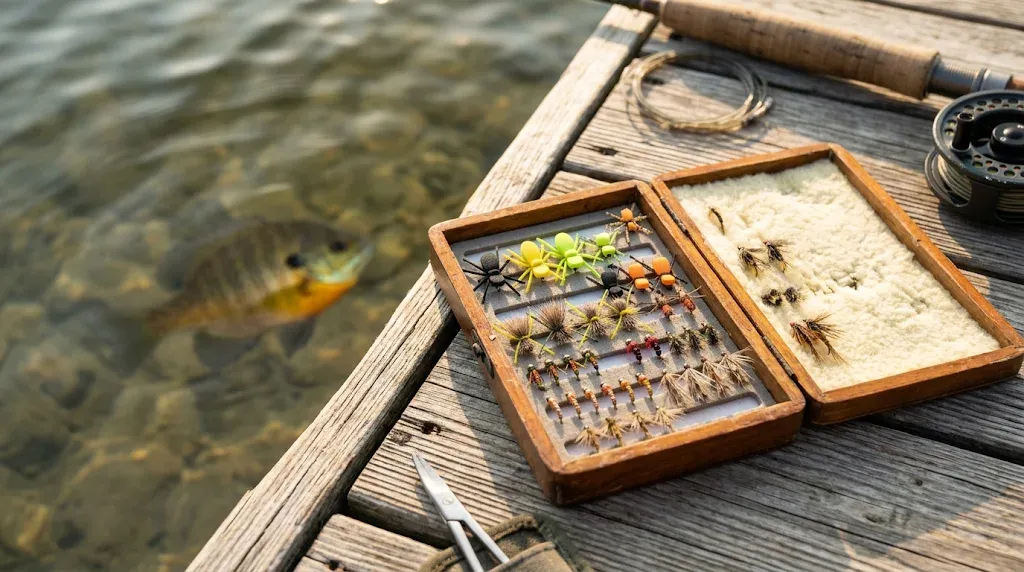
What are the best flies for bluegill, and how do you choose patterns that consistently attract these aggressive panfish? The best flies for bluegill include foam spiders, poppers, woolly buggers, hare’s ear nymphs, elk hair caddis, and small Clouser minnows.
Fly fishing expert Tom Rosenbauer of Orvis emphasizes matching fly patterns to the insects and food sources fish encounter. Small flies in sizes 10–16 work particularly well for targeting bluegill, or panfish on the fly.
But which patterns work best on the surface, and when should you switch to underwater flies? This guide explores the top bluegill fly patterns, recommended sizes, and proven fishing techniques to help you get more bites. Let’s dive in and find the perfect flies for your next bluegill fishing adventure!
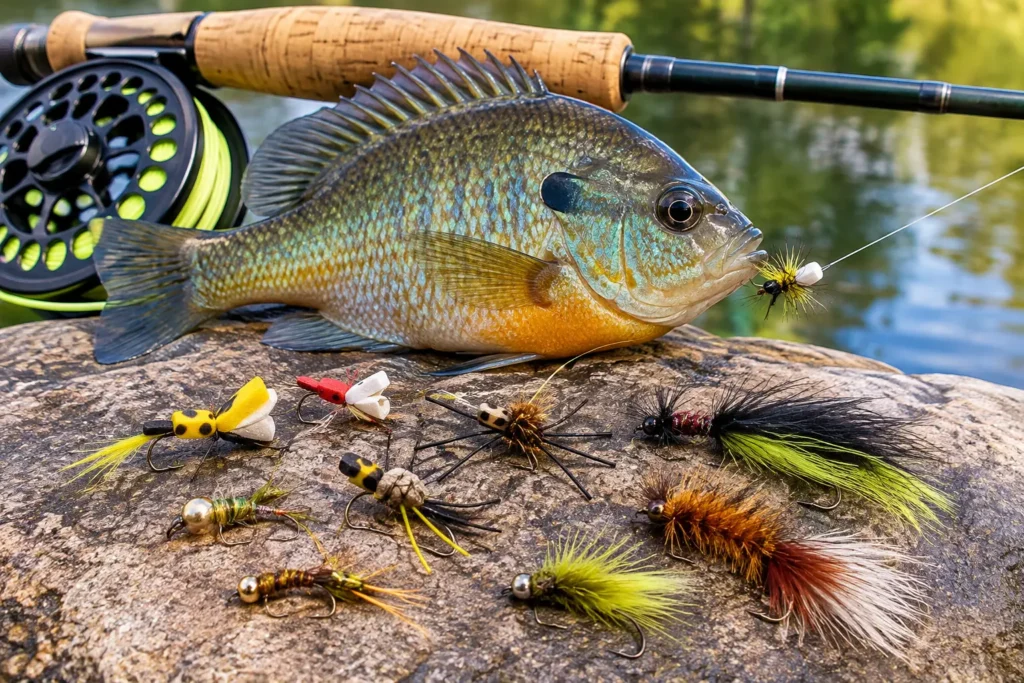
Top Recommended Flies to Use for Bluegill Fishing
These seven fly choices make an excellent starting fly box for bluegill, sunfish, and other panfish. Each link goes to Amazon so you can compare current prices, sizes, and colors.
- Foam Bluegill Poppers — Small poppers create a loud surface disturbance and are ideal for active fish near weeds, docks, and shade.
- Rubber-Leg Foam Spiders — A sponge or foam spider with white rubber legs is one of the most reliable bluegill surface patterns.
- Foam Ant Flies — Black, red, and cinnamon ants work especially well along shorelines during warm months.
- Foam Beetle Flies — Beetles are easy for beginners to see and give bluegill a simple, realistic terrestrial meal.
- Pheasant Tail Nymphs — This slim nymph imitates mayfly larvae and works well when bluegill feed below the surface.
- Hare’s Ear Bluegill Nymphs — A buggy Hare’s Ear is a dependable all-purpose subsurface fly for panfish.
- Small Woolly Buggers — Black, olive, brown, and white Buggers imitate leeches, crayfish, and small baitfish.
What Are the Best Flies for Bluegill?
The best bluegill fly fishing flies are small insect imitations, foam bugs, and tiny streamers. Bluegill eat aquatic insects, terrestrial bugs, worms, small crustaceans, and occasionally minnows, so a varied selection of flies gives you an answer for changing conditions.
For most anglers, the best bluegill fly patterns are:
| Fly pattern | Best use | Recommended size | Best color |
|---|---|---|---|
| Foam popper | Active fish, warm mornings and evenings | #8–#12 | Chartreuse, white, yellow |
| Rubber-leg spider | Shallow water, weeds, docks | #8–#12 | Black, olive, brown |
| Foam ant | Shorelines and overhanging cover | #10–#14 | Black, red, cinnamon |
| Foam beetle | Sunny days and calm water | #10–#14 | Black, brown |
| Pheasant Tail nymph | Subsurface feeding, clear water | #12–#16 | Olive, brown |
| Hare’s Ear nymph | All-purpose subsurface pattern | #10–#14 | Olive, tan, brown |
| Woolly Bugger | Deeper water, wind, bigger bluegill | #10–#12 | Black, olive, white |
Small hooks are important because bluegill have relatively small mouths. Virginia’s Department of Wildlife Resources recommends sizes 6 through 12 for many panfish flies, while many bluegill-specific patterns perform best in sizes 8 to 14.
If you want one fly to start with, use a size 10 black rubber-leg spider. It floats, moves with the slightest twitch, and appeals to bluegill, redear sunfish, pumpkinseed, and even small bass.
Best Topwater Flies for Bluegill
Topwater fishing is the most exciting way to catch bluegill with a fly rod. A small popper, spider, or terrestrial pattern lets you watch the take and often draws strikes from fish holding near weeds, docks, lily pads, and shaded banks.
– Foam Poppers
Bluegill poppers are small floating bugs with a concave face that makes a pop and ripple when you twitch them. They work best when fish are actively feeding near the surface, especially during summer mornings and evenings.
Use a short, gentle retrieve: pop once, let the fly sit for several seconds, then pop again. Do not strip continuously; bluegill often strike during the pause.
A foam or sponge spider is arguably the best all-around bluegill fly. Its rubber legs create movement even when the fly sits still, which makes it effective around weed beds, brush, and docks.
Fish it with light twitches and long pauses. Black, olive, brown, red, and green are all productive colors.
– Foam Ants and Beetles
Ants, beetles, crickets, and grasshopper patterns imitate terrestrial insects that fall onto the water. These flies are especially useful near grassy banks, overhanging trees, and windy shorelines.
A black ant is a simple, high-confidence choice in summer. A foam beetle is easier to track in bright light and often produces strikes when fish ignore a popper.
Best Subsurface Flies for Bluegill
When bluegill will not rise, take the fly below the surface. Nymphs, wet flies, and small streamers often catch more fish during bright midday hours, cold fronts, or when fish hold deeper around structure.
– Pheasant Tail Nymphs
The Pheasant Tail nymph is a slim, realistic imitation of aquatic insects. Fish it slowly near weed edges, drop-offs, and submerged wood.
A size 14 Pheasant Tail is an excellent choice for clear water or pressured fish. Add a small bead-head version when you need the fly to sink faster.
– Hare’s Ear Nymphs
A Hare’s Ear nymph has a buggy, imperfect profile that bluegill readily eat. It works well as a general searching pattern when you cannot identify what the fish are feeding on.
Use olive, tan, or brown. A slow hand-twist retrieve, followed by occasional pauses, usually works better than a fast strip.
– Small Woolly Buggers
A Woolly Bugger is one of the most versatile panfish flies. In black it can suggest a leech or cricket; in brown it can resemble a tiny crayfish; in white it can imitate a small baitfish.
Keep it small—size 12 or smaller is often best for bluegill. Strip it in short pulls, then pause and let it fall; bluegill frequently take the fly during the descent.
Best Bluegill Fly Colors and Sizes
The best fly size for bluegill is usually #8 through #14. Smaller flies fit the fish’s mouth better, produce more solid hookups, and work well for both average and large bluegills.
| Condition | Best fly choice | Best color | Size |
|---|---|---|---|
| Clear water, bright sun | Spider, beetle, small nymph | Olive, brown, black | #12–#16 |
| Stained water | Popper, Woolly Bugger, chartreuse fly | Chartreuse, white, black | #8–#12 |
| Low light or evening | Popper or rubber-leg spider | Black, dark olive | #8–#12 |
| Weeds and shallow cover | Foam spider or popper | Black, white, yellow | #8–#12 |
| Deep water or cold conditions | Bead-head nymph or small streamer | Olive, brown, black | #10–#16 |
Chartreuse is an excellent visibility color in stained water or low light. Black is a reliable choice in clear water, while olive and brown match many natural aquatic insects.
Avoid automatically using huge bass flies. A size 10 or 12 fly is often more effective than a size 6 pattern because bluegill can actually get it into their mouths.
Best Flies for Bluegill in Different Seasons
Bluegill feeding behavior changes with water temperature. Match your fly and presentation to the season instead of using the same pattern all year.
Spring: Nymphs and Small Wet Flies
As water warms, bluegill move shallow to feed and prepare for spawning. Pheasant Tail nymphs, Hare’s Ear nymphs, soft hackles, and small wet flies work well around weed edges and spawning flats.
Fish slowly and keep the fly near cover. A small split shot 12 to 18 inches above a wet fly can help it reach fish that will not come to the surface.
Summer: Poppers, Spiders, and Terrestrial Flies
Summer is prime time for bluegill poppers, foam spiders, ants, beetles, and grasshoppers. Fish early and late around shade, docks, weed lines, and shallow bays.
When surface action slows, switch to a small Woolly Bugger or nymph. Bluegill often move slightly deeper during the hottest part of the day.
Fall and Winter: Small Nymphs and Streamers
Cooler water pushes bluegill deeper and makes them less willing to chase. Downsize to #12–#16 nymphs, micro-leeches, and small jig-style flies, then fish them with a very slow lift-and-pause retrieve.
A balanced leech or jig fly with a forward tungsten bead can hang horizontally and stay in the strike zone longer. For deeper winter fish, use a sink-tip or full-sinking fly line and count the fly down to the holding depth.
How to Choose the Right Fly for Bluegill Fishing Conditions
The right fly depends on water clarity, depth, light, and what bluegill are eating. Start with a pattern you can see, then change size, color, or depth before changing your entire approach.
- Clear water: Use smaller, natural-colored flies such as olive nymphs, brown spiders, and black ants.
- Stained water: Use chartreuse, white, black, or high-visibility poppers and Buggers.
- Shallow water: Start with a foam spider, beetle, or small popper.
- Deep water: Use a bead-head nymph, Woolly Bugger, or small jig fly.
- Sunny conditions: Try beetles, ants, and small terrestrials near shaded cover.
- Cloudy conditions: Use a popper or rubber-leg spider with a slower, more deliberate retrieve.
- Match the food: If fish are rising to insects, use dry flies or spiders; if they are holding deep, use nymphs or streamers.
Bluegill eat many of the same foods as trout, including insects and small nymphs. That is why classic trout patterns such as the Hare’s Ear, Pheasant Tail, Adams, Elk Hair Caddis, and Woolly Bugger also catch panfish.
How to Fish Flies for Bluegill Successfully
Want to catch more bluegill on the water? Learning how to fish flies for bluegill successfully can turn a slow fishing day into an exciting experience. Bluegill readily strike small flies that imitate insects, aquatic larvae, and tiny baitfish. With the right fly patterns, tackle, and presentation, you can catch them in ponds, lakes, and slow-moving rivers.
The best way to catch bluegill on flies is to use small poppers, foam spiders, wet flies, and nymphs on a lightweight 2- to 5-weight fly rod. Target shallow weed beds, submerged structures, and shaded banks where bluegill feed. Adjust your fly size, retrieve speed, and presentation to match their feeding behavior.
But choosing the right fly is only half the battle! Presentation matters as much as fly selection. Most bluegill want a slow, subtle presentation—not a fast retrieve.
Fish Poppers and Spiders
Cast close to weeds, docks, fallen trees, or shaded banks. Let the fly land quietly, wait a few seconds, then give it one small twitch.
Keep the fly still between movements. Bluegill often inspect a surface bug before committing, and repeated aggressive popping can spook fish in clear water. outdoorlife
Fish Nymphs and Wet Flies
Use a slow hand-twist retrieve or short strips with long pauses. Let the fly sink near weed edges, brush, and drop-offs before moving it.
If you are not getting strikes, add a small split shot above the fly or switch to a bead-head version. A tiny amount of weight can make a major difference.
Use a Popper-Dropper Setup
A popper-dropper rig gives you two chances on every cast. Tie on a small popper, then attach an 18–24 inch piece of tippet to the hook bend and add a #12–#14 nymph below it.
The popper acts as a strike indicator, while the nymph fishes below the surface. If the popper dips, twitches, or disappears, set the hook.
Target the Right Structure
Bluegill relate to cover. Focus on weed beds, lily pads, docks, submerged timber, rock piles, and shallow spawning flats.
Cast along the edges first. Fish often hold just outside the thickest cover, where they can see food without getting tangled in vegetation.
Best Fly Fishing Setup for Bluegill
A simple setup is best for panfishing. You do not need expensive gear to catch bluegill with a fly rod.
| Gear | Recommended choice | Why it works |
|---|---|---|
| Fly rod | 3–5 weight, 8–9 feet | Light enough for small flies but strong enough for wind and occasional bass |
| Fly line | Weight-forward floating line | Turns over poppers, spiders, and small nymph rigs easily |
| Leader | 7.5–9 feet | Provides a natural presentation and helps protect light tippet |
| Tippet | 3X–5X | Strong enough for bluegill and occasional bass, light enough for small flies |
| Fly box | Small waterproof box | Keeps poppers, nymphs, wets, and terrestrials organized |
A 4- or 5-weight fly rod is often easier to cast than a very light 2- or 3-weight rod, especially when throwing wind-resistant foam bugs. A 9-foot 3X leader and 3X tippet can also help turn over small poppers while giving you a safety margin if a largemouth bass takes the fly.
For beginners, start with a floating fly line, a few foam spiders, two poppers, a Pheasant Tail nymph, a Hare’s Ear nymph, and a black Woolly Bugger. That compact selection of flies covers most bluegill situations.
Common Mistakes to Avoid When Choosing Bluegill Flies
Many anglers struggle with bluegill because their flies are too large, too deep, or moving too quickly.
- Using flies that are too large: Downsize to #8–#14 for most situations.
- Choosing the wrong depth: If fish ignore a surface fly, try a nymph or Bugger below the surface.
- Retrieving too quickly: Slow down, pause often, and let the fly sit.
- Ignoring seasonal behavior: Use more surface patterns in summer and smaller subsurface flies in colder water.
- Fishing open water only: Bluegill concentrate around weeds, docks, wood, and other structure.
- Using only one color: Change between black, olive, brown, white, and chartreuse until you find what works.
- Overlooking small flies: When fish are pressured, a #14 or #16 nymph can outfish a larger attractor pattern.
Frequently Asked Questions About Bluegill Flies
What is the single best fly for catching bluegill?
A size 10 black rubber-leg foam spider is the best single fly for bluegill. It floats well, creates movement, and works in shallow water, around weeds, and near docks.
Do bluegill prefer dry flies or wet flies?
Bluegill will eat both. Use dry flies, spiders, and poppers when fish are active near the surface; use wet flies, nymphs, and small streamers when they hold deeper or will not rise.
What size flies work best for bluegill?
Sizes #8 through #14 cover most bluegill fishing. Start with #10 or #12, then go smaller in clear water or when fish are selective.
Are poppers good for bluegill fishing?
Yes. Small bluegill poppers are excellent when fish are aggressive and feeding near the surface. Use a size 8–12 popper, make a gentle pop, and allow a long pause between movements.
What color flies attract the most bluegill?
Black, olive, brown, white, and chartreuse are dependable choices. Use natural colors in clear water and brighter colors in stained water or low light.
Can you catch bluegill with trout flies?
Yes. Trout flies such as the Pheasant Tail, Hare’s Ear, Adams, Elk Hair Caddis, Woolly Bugger, and soft hackle wet fly all catch bluegill. Use smaller sizes and slow presentations.
What flies should I use for bluegill in a pond?
Start with a rubber-leg spider, small popper, foam ant, Pheasant Tail nymph, and black Woolly Bugger. Fish shorelines, weed edges, docks, and any visible cover.
Can bluegill flies catch crappie and bass?
Yes. Many panfish flies also catch crappies, perch, smallmouth bass, and largemouth bass. A small Woolly Bugger or bead-head nymph is especially useful when larger fish are nearby.
What is the holy grail of fly fishing?
Many anglers call a large trout taken on a tiny dry fly the “holy grail,” but for bluegill, a big gill rising to a small popper or spider is just as rewarding.
What are the best flies to use for bream fishing?
What flies to use for bluegill and bream? Use small rubber-leg spiders, foam poppers, ants, beetles, Pheasant Tail nymphs, and black Woolly Buggers. Sizes #8–#14 work best for bream.
What are some good flies for panfish fishing?
Good panfish flies include foam spiders, small poppers, ants, beetles, Hare’s Ear nymphs, soft hackles, and size 10–12 Woolly Buggers.
Conclusion
The best flies for bluegill fish are usually small, buggy, and easy to fish slowly. A rubber-leg spider, foam popper, Pheasant Tail nymph, Hare’s Ear nymph, and size 10–12 Woolly Bugger will cover nearly every situation you face on a pond, lake, or slow river. Keep your fly box simple, carry several colors, and match your presentation to the water conditions.
Start with a black spider or small chartreuse popper when fish are near the surface. If they refuse it, switch to a subsurface nymph or small Bugger and slow down. Bluegill often respond best to a fly that sits still, sinks naturally, or moves with only a slight twitch.
You do not need a huge collection of flies to catch bluegill consistently. A compact selection of productive flies, a light fly rod, floating fly line, and patience around weeds, docks, and structure will put more bluegills on the end of your line. Fish for panfish often, adjust quickly, and let the fish tell you whether they want a topwater bug or something below the surface.
Recommended posts
- How to Fly Fish for Crappie: Tips, Best Flies & Techniques
- Best Bait for Bluegill – 9 Proven Options for More Bites
- Is Bluegill Good Eating Fish? (Catch, Cook & Pan Bluegill Fish)