
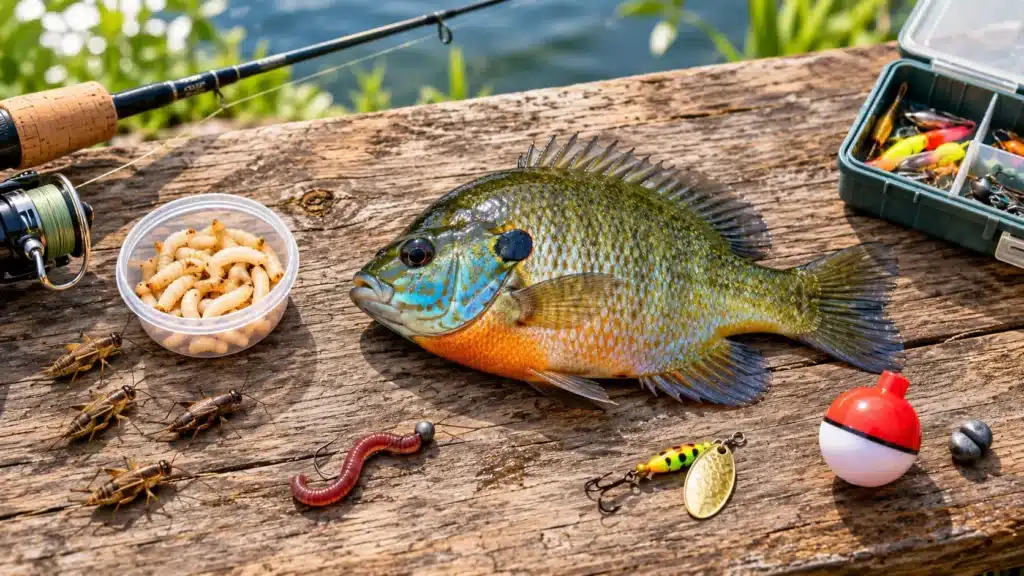
Bluegill best bait is, small pieces of live earthworms and live crickets are the most dependable choices for bluegill because they match the natural insects and invertebrates panfish eat daily. Using the best bait for bluegill paired with a small #8 or #10 light-wire hook ensures quick bites and solid hookups in any pond, lake, or stream.
Whether you are teaching a child to fish on a quiet farm pond or hunting slab panfish in deep lake cover, picking the right offering makes all the difference. Bluegill have small mouths and keen eyesight. They will inspect a presentation closely before striking.
In this complete guide, you will learn the top nine live and artificial options, exact rigging methods to stop bait theft, and seasonal adjustments to fill your cooler or bend your fly rod all day long.
Find Out How Jake Found the best bait to catch a bluegill—and Discover What they Bite On”
Quick comparison: 9 proven bluegill baits
| Bait option | Best use | Main advantage |
|---|---|---|
| 1. Earthworms and red wigglers | Ponds and general fishing | Dependable, easy to find |
| 2. Crickets | Shallow water and spawning areas | Mimics natural insect prey |
| 3. Waxworms and mealworms | Small hooks and light tackle | Compact, easy-to-present bait |
| 4. Grasshoppers and other insects | Warm weather near vegetation | Matches natural forage |
| 5. Micro-jigs | Fishing at different depths | Precise depth control |
| 6. Tiny soft plastics | Repeated casts and pressured fish | Reusable and durable |
| 7. Micro-spinners and Beetle Spins | Covering open water | Flash and vibration attract attention |
| 8. Bread and dough bait | Casual pond fishing | Cheap and accessible |
| 9. Sweet corn | Simple bait fishing | Convenient alternative |
What Is the Best Bait for Bluegill and Crappie?
What bait do you use for Bluegill? Bluegill are opportunistic feeders that consume aquatic insects, small crustaceans, popping bugs, spiders, wet flies, worm segments, and terrestrial bugs that drop from overhanging trees. The ultimate bait triggers their sense of smell, visual curiosity, and natural feeding instinct while fitting inside their narrow mouths.
Why Live Bait Works So Well
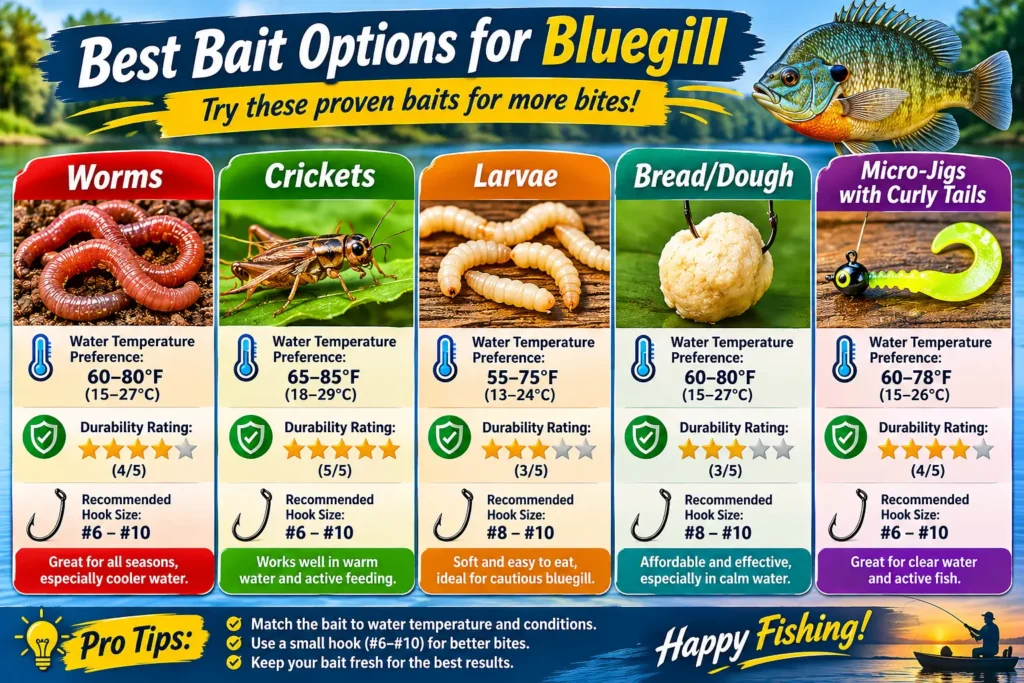
Live bait dominates panfish angling because it delivers three distinct natural triggers simultaneously: scent, lifelike movement, and soft texture. When a bluegill approaches a live red wiggler or cricket, it tastes amino acids dissolved in the water column before it ever strikes. Once the fish takes the bait, the natural, squirmy texture prevents it from spitting the hook out immediately, giving you ample time to set the hook.
Choosing the Right Bait for Your Fishing Conditions
Selecting your bait depends heavily on water clarity, water temperature, and fish activity levels:
- Murky or Stained Water: Scent-heavy live options like pinched nightcrawlers or active red wigglers create a strong scent trail that helps fish hunt by smell.
- Clear Water: Natural insect presentations like crickets, waxworms, or realistic micro soft-plastics shine when panfish rely primarily on vision.
- High Fishing Pressure: Smaller, delicate offerings such as single waxworms or tiny 1-inch soft plastic tails on micro tungsten heads fool cautious slabs that refuse larger live baits.
Use these starting points, then adjust based on what the fish do.
| Condition | Best bait choice |
|---|---|
| New water or casual trip | Small piece of nightcrawler |
| Bluegill bedding in shallow water | Crickets, waxworms, or small jigs |
| Clear, pressured water | Waxworms, mealworms, or tiny soft plastics |
| Windy water or active fish | Micro-spinner or small jig |
| Kids or beginners | Worm piece under a bobber |
| You want bigger bluegill | Cricket, larger waxworm, or small jig |
Start small. If you get bites but miss fish, use less bait or downsize your hook.
Nightcrawlers and Red Wigglers for Bluegill
Worms remain the classic choice across North America for good reason. They are affordable, widely available, and universally recognized as prime forage by sunfish.
- Red Wigglers (Eisenia fetida): Smaller, hyperactive worms that wiggler vigorously on the hook. Their scent profile and non-stop movement make them arguably the bluegill best bait for bank anglers targeting shallow cover.
- Canadian Nightcrawlers (Lumbricus terrestris): Thick and meaty. A whole nightcrawler is far too large for a bluegill’s small mouth, so you should break or pinch them into 1-inch to 1.5-inch segments. The exposed juicy ends release a powerful scent trail directly into the current.
How to Hook Worms for More Bites
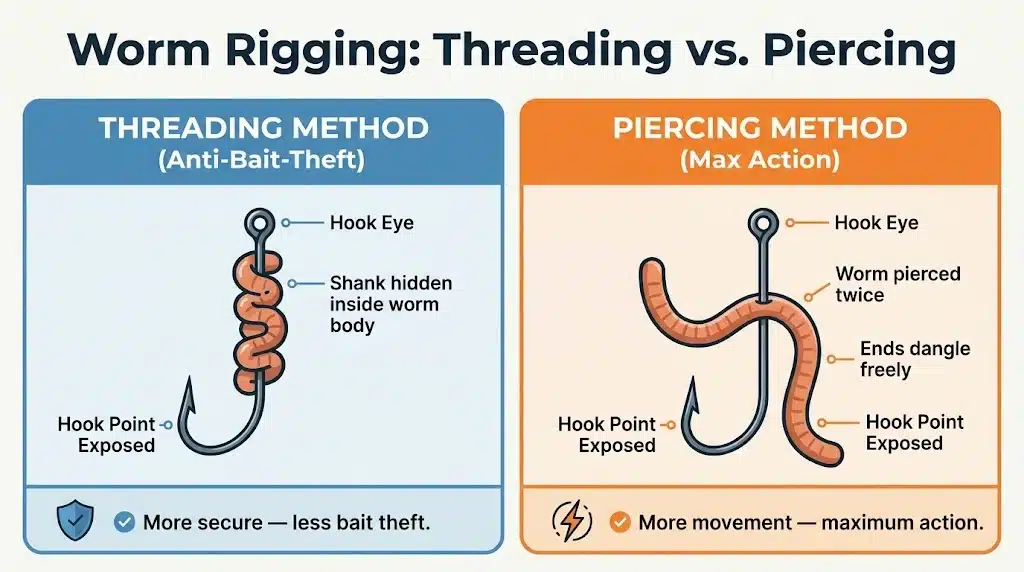
The most common mistake anglers make is hanging a long, dangling worm tail off a tiny hook. Bluegill will grab the trailing end, pull it off the hook, and swim away without ever touching the point.
- The Threading Method (Best for High Hookups): Insert the point of a #8 Carlisle or Aberdeen hook into the cut end of a 1-inch worm segment. Thread the worm up along the shank until it covers the shaft, leaving only the hook point exposed. This forces the bluegill to take the entire hook into its mouth when it bites.
- The Accordion Ball Method: Pierce a red wiggler through its body 3 to 4 times, folding it into a compact ball on the hook bend. This creates a high-action, high-scent cluster that small panfish cannot easily strip off.
Are Crickets the Best Bait for Big Bluegill?
During late spring, summer, and early autumn, terrestrial crickets become a primary food source as they fall from grass banks and trees into the water. Live crickets are widely considered the best bait for catching bluegill when targeting trophy “bull” bluegills hiding around shallow timber or lily pads.
Crickets float naturally and kick their back legs, sending subtle vibrations across the surface. Larger bluegills are territorial and aggressively strike live crickets presented under a light slip bobber.
Pro Tip for Rigging Crickets: Use a long-shank #8 light-wire hook. Slide the point under the hard collar (pronotum) directly behind the cricket’s head and exit near the center of its back. Avoid pushing the hook all the way through the abdomen, as this kills the insect quickly and reduces its leg-kicking action.
Waxworms, Mealworms, and Other Insect Baits
Waxworms and mealworms are excellent choices when bluegill want a smaller, softer meal. Waxworms are especially good in cold water, early spring, and winter because their soft bodies release scent quickly.
- Waxworms (“Waxies”): These cream-colored moth larvae are soft, fatty, and packed with natural juices. They are an absolute staple for cold-water fishing, spring pre-spawn, and ice fishing. Their soft body compresses instantly when a bluegill inhales it, ensuring effortless hook sets.
- Mealworms: Possessing a tougher outer shell (chitin), mealworms hold up better than waxworms against aggressive nibbling from smaller bait-stealers. They are easy to store in wood shavings and work wonderfully when drifted in moving stream currents.
- Maggots and Spikes: Excellent for micro-finesse fishing. Threading two or three colorful spikes onto a #10 fine-wire hook provides just enough visual stimulus and scent to trigger panfish in heavily fished park ponds.
Best Artificial Lures and baits for Bluegill and panfish
What is the best lures for bluegill? While live bait is classic, modern artificial lures allow you to cover water quickly, locate active schools, and eliminate the mess of live bait buckets. Today’s micro-lures are engineered to deliver precise lifelike action.
The best artificial bait for bluegill is usually a tiny jig tipped with a small soft-plastic grub, worm, or scent bait. Artificial options are convenient, reusable, and ideal for anglers who want to search a pond quickly.
Using the best artificial bait for bluegill lets you target aggressive panfish along weed edges and dock posts without constantly re-baiting.
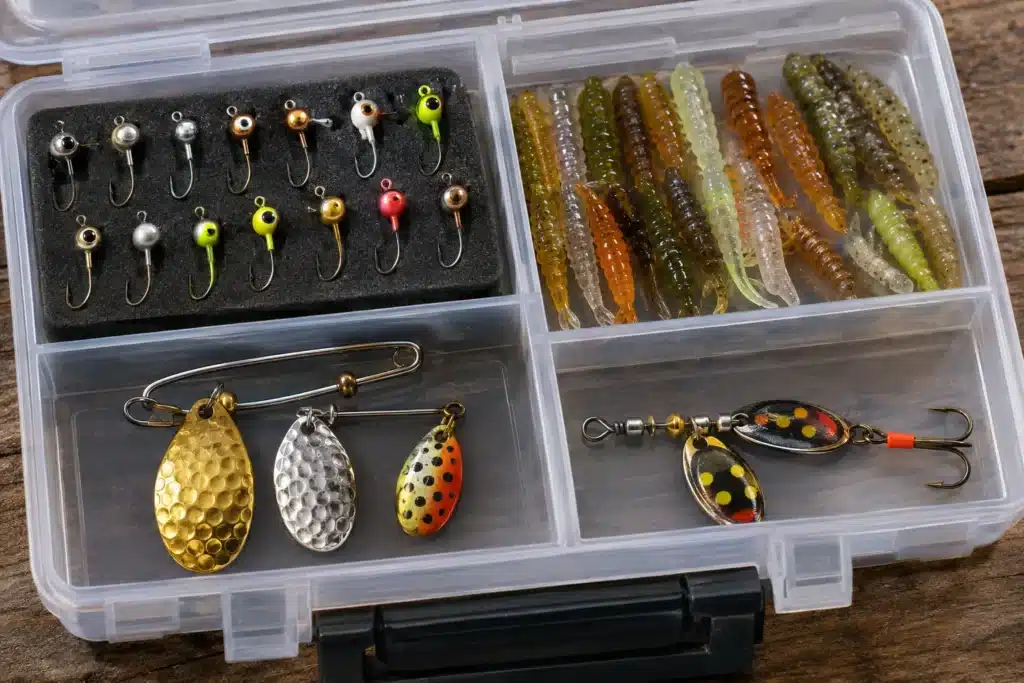
Small Jigs, Soft Plastics, and Micro-Spinners
- Micro Soft Plastic Grubs & Nymphs: 1-inch to 1.5-inch soft plastic bodies (curly-tail grubs, beaver tails, and nymph imitations) paired with a 1/32-oz or 1/64-oz jig head are essential best bluegill lures. Scent-infused soft plastics like Berkley Gulp! Alive! Waxies or Earthworms out-fish traditional unscented plastics by releasing water-soluble attractants.
- Inline Micro-Spinners (Beetle Spins & Rooster Tails): inline spinners likeSmall 1/32-oz inline create flash and thumping blade vibration. They are the premier searching tool when bluegill are scattered across large shallow flats in midsummer.
- Tungsten Micro Ice Jigs: Originally built for ice angling, tiny tungsten jigs paired with a 1-inch soft plastic tail are now popular year-round open-water tools. Tungsten is far denser than lead, allowing you to drop a tiny profile down to deep structure quickly while maintaining direct line contact.
Can You Catch Bluegill With Bread, Corn, or Dough Bait?
Yes, simple household kitchen staples make effective homemade baits—especially in farm ponds, neighborhood retention lakes, and park docks where bluegill are accustomed to humans feeding waterfowl.
Bread, canned corn, and dough bait can catch bluegill, especially in small ponds where fish see these foods often. They are cheap, easy to carry, and useful when live bait is unavailable.
Use very small pieces. Roll bread into a pea-sized ball, place one kernel of corn on a small hook, or mold a tiny ball of dough bait around a size 8 hook. Fish it under a bobber near shallow cover.
These baits attract smaller fish quickly, but they can fall off easily. For consistent action, worms, crickets, waxworms, and small jigs remain more dependable choices.
- Bread Balls: Take a small pinch of fresh, moist white bread. Squeeze it tightly around the eye and shank of a #8 hook, leaving a slightly softer portion over the hook point. Fresh bread forms a dense, doughy ball that stays on during casts, whereas stale bread crumbles and falls off quickly in the water.
- Canned Sweet Corn: Threading one or two sweet corn kernels onto a light-wire hook is an easy, low-cost way to catch panfish. The bright yellow color acts as a strong visual attractor in clear pond water.
- Commercial Panfish Dough Baits: Prepared doughs flavored with garlic, anise, or cheese work well for stationary fishing under a small bobber, though they generally lack the active movement of live insects.
Best Bluegill Bait by Season:
Bluegill behavior changes dramatically as water temperatures shift throughout the year. Adjusting your presentation to match their seasonal metabolism is key to consistent success.
| Season | Where to fish | Best bait options |
|---|---|---|
| Spring | Shallow bays, spawning beds, weed edges | Worm pieces, crickets, small jigs |
| Summer | Docks, shade lines, weed edges, deeper holes midday | Crickets, waxworms, micro-spinners |
| Fall | Transition areas between shallow and deep water | Worms, mealworms, small jigs |
| Winter | Deep basins, slow presentations near bottom | Waxworms, tiny jigs, small soft plastics |
Spring (Water Temp: 55°F – 70°F)
In early spring, hungry bluegill migrate into shallow, sun-warmed bays to prepare for spawning. Red wigglers and waxworms presented under a pencil float work best during this phase. As fish aggressively defend their spawning beds in late spring, small soft-plastic insect imitations or live crickets pitched directly over bedding areas trigger instant reaction strikes.
Summer (Water Temp: 70°F – 85°F+)
As surface waters warm, large bluegill move toward deeper weed edges, submerged timber, and deep dock pilings. Live crickets fished under a slip bobber near overhanging trees provide unmatched summer action. Early mornings and late evenings are ideal for casting best artificial bluegill bait options like micro inline spinners or small topwater poppers around lily pads.
Autumn (Water Temp: 50°F – 65°F)
During the fall transition, panfish feed heavily to store energy for winter. They follow schools of young-of-the-year minnows and cluster around remaining green weed beds or main-lake drop-offs. Cut nightcrawler pieces, small 1-inch soft plastic minnow grubs, and micro jigs with curly tails work exceptionally well during this feeding frenzy.
Winter (Water Temp: 32°F – 40°F)
In cold, ice-covered water, a bluegill’s metabolism slows down significantly. Finesse presentations are essential. Tiny 1/64-oz or 1/32-oz tungsten jigs tipped with a single live waxworm or spike produce consistent bites when gently twitched inches above wintering schools in deep basins.
How to Choose the Right Hook and Bait Size for Bluegill
Matching your terminal tackle to the tiny mouth structure of Lepomis macrochirus is vital. Over-sized hooks result in missed bites, while heavy weights ruin the natural action of your bait.
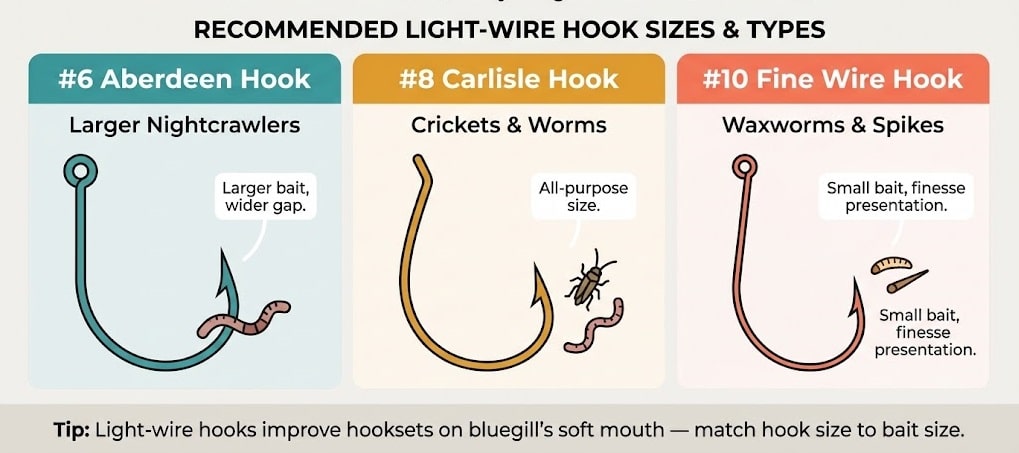
Bluegill have small mouths, so oversized hooks cause missed strikes. Sizes 6 and 8 are the standard starting point; Florida recommends a size 6 or 8 hook with a split shot about 6 inches up the line.myfwc+1
Use these rules:
- Size 8 hook: Best for waxworms, small worm pieces, corn, and dough bait.
- Size 6 hook: Best for crickets, larger worm pieces, and mealworms.
- Long-shank hook: Easier to remove from a bluegill’s mouth.iowadnr
- Thin-wire hook: Keeps live bait lively and improves hookups.iowadnr
- Small bobber: Helps detect subtle bites and keeps bait in the strike zone.
If bluegill keep stealing your bait, use a smaller piece, set the hook a little sooner, or switch to a tougher bait such as a mealworm or small artificial grub.
Terminal Tackle Checklist
- Hook Style: Aberdeen or Carlisle long-shank hooks made of thin wire. Long shanks make hook removal quick and easy, preventing deep-hooking injury to the fish.
- Hook Size: Use #8 or #10 hooks for small insect baits like waxworms and crickets. Step up to a #6 hook only when using larger worm segments to target trophy panfish.
- Weights: Use removable split-shot sinkers (size BB or 3/0) placed 12 to 18 inches above the hook. Use just enough weight to carry your bait down naturally without dragging it down too fast.
- Floats / Bobbers: Choose slender foam or wood pencil floats instead of large round plastic clip-on bobbers. Slender floats offer minimal water resistance, letting bluegill pull the bait under without sensing tension.
Where and How to Fish Your Bait for Bluegill
Finding panfish is easy once you identify key structural cover in your local waterway.
                     HIGH-PERCENTAGE BLUEGILL STRUCTURE

            Overhanging
              Trees        Docks / Pilings     Submerged Weedline
               ||                |||             |||||||||||
  Water Line ~~~~~~~~~~~~~~~~~~~~~~~~~~~~~~~~~~~~~~~~~~~~~~~~~~~~~~~~~~~~~~
              \                  |||             |||||||||||
               \                 |||             |||||||||||
                \ [School]       ||| [School]    ||||||||||| [School]
                 \_______________|||_____________|||||||||||______________
High-Percentage Targets
- Dock Pilings & Boat Hoists: Shade provides safety and holds algae,and small organisms that panfish feed on year-round. Drop your bait vertically along dock posts.
- Weedlines & Lily Pad Edges: Cast along the outer edges of submerged vegetation. Bluegill patrol these edges to ambush insects and aquatic larvae.
- Overhanging Brush and Fallen Trees: Terrestrial insects frequently drop from branches extending over the water. Float a live cricket or red wiggler directly beneath overhanging foliage for rapid strikes.
Presentation Technique: The “Slow Roll & Pause”
When using soft plastic grubs or micro-jigs, cast past your target area and allow the rig to sink to your desired depth. Slowly reel the line in—just fast enough to impart action to the plastic or spin the blade—then pause for 2 to 3 seconds. Most strikes occur on the drop immediately following a pause.
Regulatory Note & Conservation: Always consult your local state wildlife agency (such as the Florida Fish and Wildlife Conservation Commission or your local DNR) regarding live-bait regulations. Regulations vary regarding the transport of live bait, use of native versus non-native fish species, and using small baitfish. Practicing selective harvest—keeping smaller legal panfish for meals while releasing large, prime breeding “bull” bluegills—helps sustain healthy fish populations.
Frequently Asked Questions About Bluegill Bait
What Is the Best Bait for Bluegill in a Pond?
Small pieces of live red wigglers or earthworms are the best bait to use for pond bluegill and other panfish. Pond fish feed heavily on terrestrial worms washed in by rain, making a 1-inch worm segment on a #8 hook under a small bobber virtually foolproof.
What Bait Catches the Biggest Bluegill?
Live crickets and small live grasshoppers consistently catch larger bluegills during the warmer months. Big “bull” bluegills prefer larger insect profiles that offer high nutritional value with minimal effort.
Do Bluegill Prefer Worms or Crickets?
Bluegill enjoy both, but preference shifts with the season. Worms outperform crickets during cool spring and fall conditions when fish feed deeper. Crickets perform better during summer when terrestrial insects are naturally dropping into shallow water.
How Big Should a Hook Be for Bluegill Fishing?
Use small #8 or #10 light-wire Aberdeen or Carlisle hooks. Bluegill have tiny mouths, so smaller freshwater hooks improve your hookup ratio and prevent fish from stripping bait without taking the hook.
What Is the Best Artificial Bait for Bluegill?
A 1-inch scent-infused soft plastic grub or nymph mounted on a 1/32-oz jig head is the most effective artificial bait. It delivers continuous lifelike tail action and natural scent that entices stubborn panfish.
Can Bluegill See Fishing Line?
Yes, bluegill have excellent eyesight, especially in clear water. Using light 2-lb to 4-lb test monofilament or fluorocarbon line keeps your presentation stealthy and natural.
How Do You Prevent Bluegill From Stealing Your Bait?
Thread your worm or soft plastic directly onto the hook shank covering the hook bend, rather than letting long ends hang off. Alternatively, switch to tougher baits like mealworms or scent-infused soft plastics that resist tearing.
Is Corn a Good Bluegill Bait?
Yes, canned sweet corn is a cheap, accessible bait that works well in ponds and lakes. Thread one or two kernels onto a #8 hook for quick action around docks and bank edges.
Conclusion
Finding the best bait for bluegill fish comes down to matching your offering to the season, water clarity, and fish activity. While live red wigglers and crickets remain unbeatable classic choices for quick bites, modern scent-infused micro soft-plastics and tungsten jigs offer unmatched versatility when you want to cover water without re-baiting. By sizing down your hooks to a #8 or #10 Aberdeen style, threading your bait to prevent theft, and using slender pencil and trout magnet floats, you will dramatically increase your hookup ratio on every fly fishing trip. Pack a diverse selection of worms, insects, and micro-jigs on your next outing to discover what the local panfish are craving. Tight lines! https://www.finfeatherfur.com/
You might also like
- Hybrid Bass Bluegill – Can Bass and Bluegill Mate?