
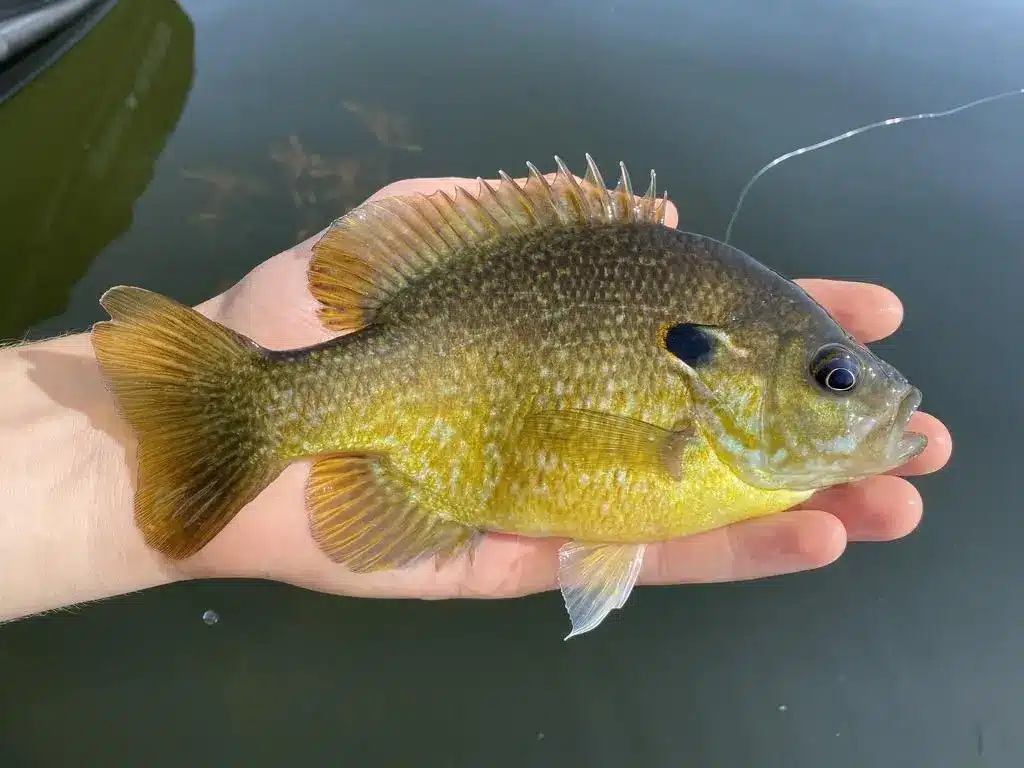
A hybrid bass bluegill usually does not mean a true largemouth bass–bluegill cross. In most pond-fisheries contexts, the term refers to a hybrid bluegill—an F1 cross between bluegill and another sunfish, most often green sunfish—stocked alongside largemouth bass to control reproduction and improve fishing.
This guide clears up the confusion around “bass bluegill hybrids,” explains which sunfish crosses are real, and shows fish farm owners how to stock, feed, identify, and maintain a hybrid bluegill fishery.
What Is Bluegill Bass Hybrid?
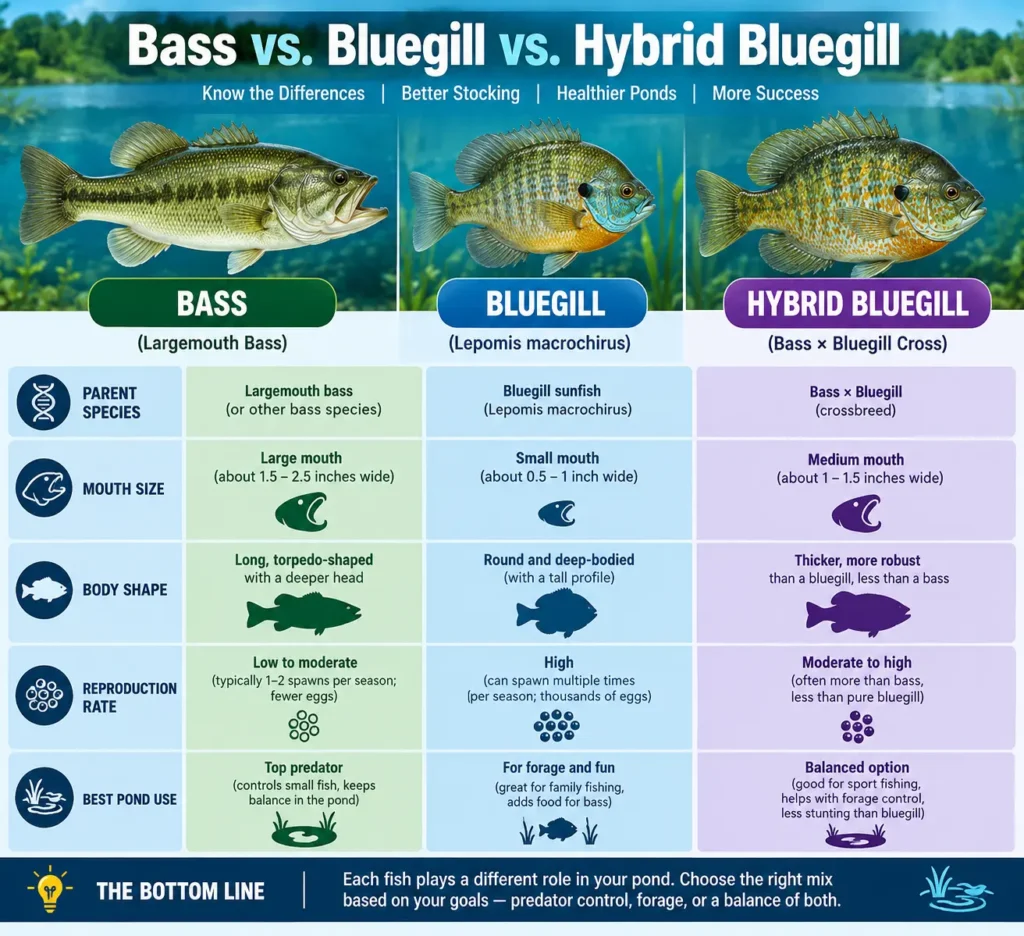
A “bluegill bass hybrid” is commonly a mislabel. Largemouth bass (Micropterus salmoides) and bluegill (Lepomis macrochirus) are both centrarchids, but they are different genera and are not the cross sold as hybrid bluegill. extension.missouri
The fish most people mean is a hybrid sunfish, often produced by crossing a male bluegill with a female green sunfish. This fish has a larger mouth than a normal bluegill, feeds aggressively, accepts floating pellets, and is easier to catch.extension.
Bass still matter in the system. Pond managers often stock largemouth bass with hybrid bluegill because bass eat the limited number of offspring the hybrids produce, preventing overcrowding.extension.missouri+1
Can Bass and Bluegill Breed?
There is no well-established, practical largemouth bass–bluegill hybrid used in pond management. The “bass” in a hybrid bluegill pond is normally a predator species, not a parent of the hybrid.
What anglers sometimes call a bass and bluegill hybrid is usually one of these:
- A hybrid bluegill, typically bluegill × green sunfish.
- A unusually large-mouthed or dark-colored bluegill.
- A pumpkinseed, green sunfish, redear, warmouth, or other sunfish that resembles a bluegill.
- A juvenile bass misidentified because of its shape or markings.
If you catch a fish that looks like a bass-bluegill mix, photograph the mouth, gill flap, fin spines, and body shape before releasing it. Identification from one photo is often unreliable.
Hybrid Bluegill vs Regular Bluegill:
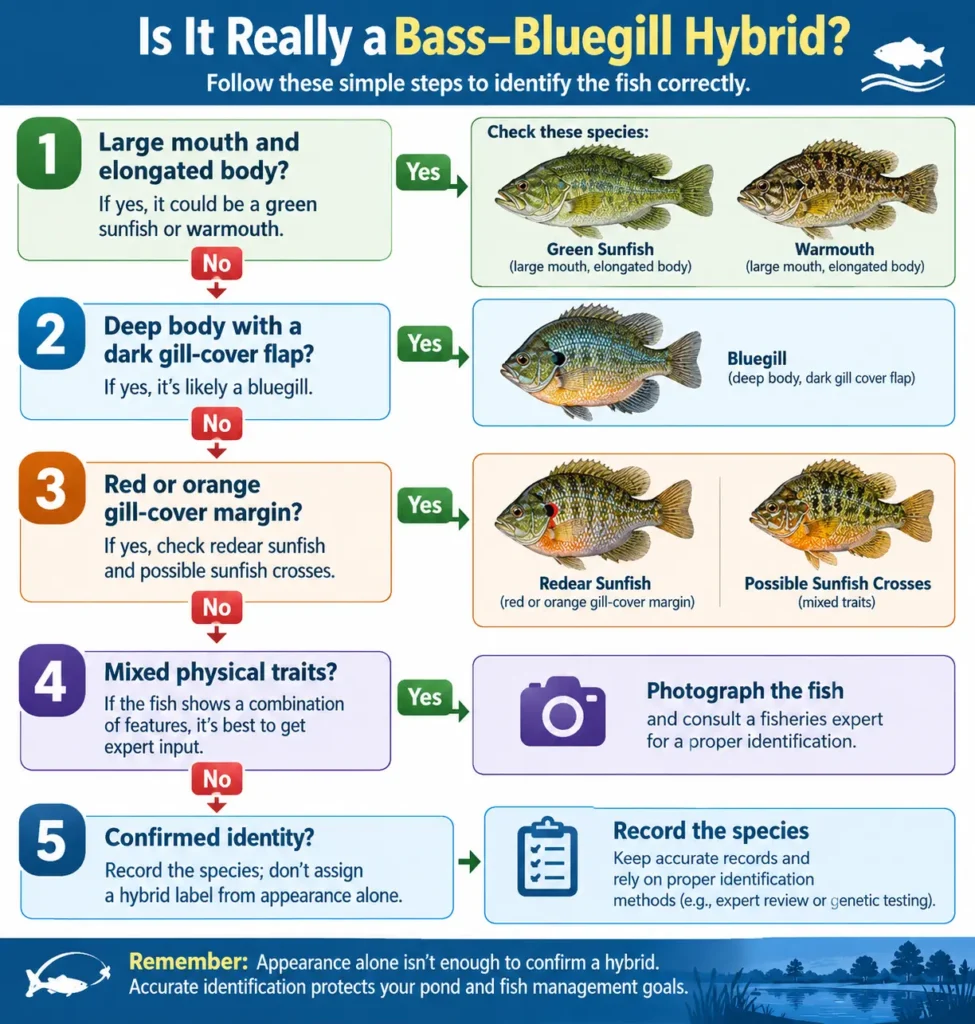
Is It Really a Bass–Bluegill Hybrid? A fish that looks like a bass–bluegill hybrid may actually be a green sunfish, warmouth, or another sunfish species. Check its mouth size, body shape, gill-cover markings, and fin colors before identifying it. If the features seem unusual, take clear photos and consult a fisheries expert for confirmation.
The biggest difference is purpose. Regular bluegill are the backbone of a bass-bluegill pond because they reproduce well and feed young bass. Hybrid bluegill are better for a put-and-take fishing pond because they grow quickly and reproduce very little.
| Feature | Bluegill | Hybrid Bluegill |
|---|---|---|
| Common parentage | Pure bluegill | Usually bluegill × green sunfish; sometimes bluegill × redear |
| Mouth size | Smaller mouth | Larger mouth, takes pellets and larger baits more readily aces+1 |
| Growth | Slower without feeding | Faster, especially with commercial feed mdc.mo+1 |
| Aggression | Moderate | More aggressive and easier to catch mdc.mo+1 |
| Reproduction | Strong; supports bass forage | Greatly reduced; 85–95% are male extension.missouri+1 |
| Best use | Bass-forage base and self-sustaining sunfish fishery | Small recreational ponds, fee fishing, and catch-oriented fisheries extension.missouri+1 |
How Big Do Hybrid Bluegill Get?
Hybrid bluegill grow faster than ordinary bluegill when fed, but they are still sunfish—not trophy bass. Under a proper feeding program, they can average about half a pound after two years; without feeding, they often average about a quarter pound after two years.
In intensive aquaculture settings, research cited by Kansas State University found production of roughly 3,000 pounds per acre of fish averaging one-third pound each in a second growth year.
For a private pond, a realistic goal is a strong population of hand-sized to half-pound fish, with some larger individuals where food, habitat, and harvest pressure are well managed.
How Do You Identify a Bluegill Hybrid?
A hybrid bluegill often looks like a deeper-bodied green sunfish with bluegill coloration. Identification can be difficult because sunfish hybridize naturally and individual variation is high.
Look for these clues:
- Larger mouth: It extends farther back than a typical bluegill’s mouth.
- Body shape: Often somewhere between the round, deep body of a bluegill and the longer body of a green sunfish.
- Color: Bluegill-style blue, purple, or olive tones may mix with green sunfish markings.
- Ear flap: May be shorter or differently shaped than a pure bluegill’s black ear flap.
- Behavior: More willing to chase pellets, lures, and larger baits.
The most reliable identification is genetic testing or buying from a reputable hatchery that documents the cross. The common commercial cross is male bluegill × female green sunfish.extension.missouri+1
Will Hybrid Bluegill Reproduce in a Pond or Lake?
Yes—but not much. Hybrid bluegill are not sterile, despite a common myth. Most are male, so reproduction is limited; extension guidance puts the male share at 85–95%.extension.
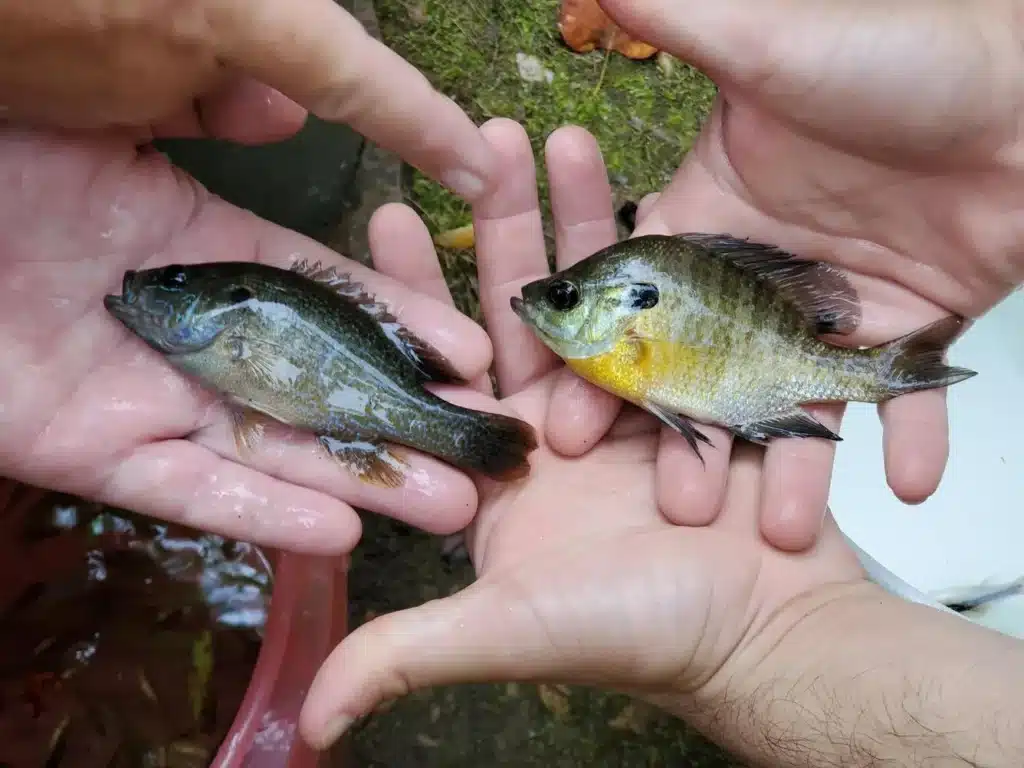
When females do reproduce, the young are usually less desirable. Later-generation hybrids tend to lose hybrid vigor, grow more slowly, and become more like the original parent species.extension.missouri+1
For that reason, hybrid bluegill ponds usually need a predator and a restocking plan:
- Stock largemouth bass fingerlings with hybrid bluegill to eat surplus offspring.
- Avoid adding hybrid bluegill to an established bass-bluegill pond; they can cross with bluegill and weaken future reproduction and growth.
- Restock when 50–75% of the original hybrid bluegill have been caught or removed, commonly after four or five years.
Bluegill vs Hybrid Bluegill: Which Should You Stock?
Choose regular bluegill if your main goal is a self-sustaining bass fishery. Bluegill produce the forage base that young largemouth bass need.
Choose hybrid bluegill if your main goal is frequent, exciting sunfish catching in a small pond. They respond well to feed, bite aggressively, and provide better angling action than many pure bluegill populations.mdc.mo+1
A practical middle path is to stock hybrid bluegill with some regular bluegill and bass, but only in a new or renovated pond and with a clear management plan. Missouri Extension notes that hybrid sunfish work best in ponds of about 3 acres or less.
Other Sunfish Hybrids People Ask About
Bluegill Redear Hybrid
A bluegill-redear cross is a recognized hybrid sunfish option. Missouri Extension lists bluegill × redear among common pond-stocking crosses, alongside bluegill × green sunfish.
These hybrids can add fishing variety because bluegill and redear use pond habitat and food differently. They still need the same basic management: controlled stocking, predator balance, and periodic replenishment.
Warmouth Bluegill Hybrid
Warmouth-bluegill crosses can occur among sunfish, but they are not the standard “hybrid bluegill” sold for ponds. Most commercial hybrid bluegill are bluegill-green sunfish crosses.extension.missouri+1
If you catch a fish you suspect is a bluegill red ear hybrid, note the large mouth, mottled pattern, and warmouth-like body form. Confirmation generally requires expert review or genetic analysis.
Crappie Bluegill Hybrid
White crappie and bluegill have been successfully hybridized in research settings, but this is not the typical pond-stocking hybrid sold as hybrid bluegill.
For most pond owners, a crappie-bluegill hybrid is not a practical management choice. Crappie can overpopulate small ponds and complicate bass-bluegill balance.
Bluegill Perch Hybrid
Bluegill and yellow perch belong to different fish families, so a bluegill-perch hybrid is not a recognized pond-stocking cross. Fish that look like a mix are usually misidentified sunfish, juvenile perch, or another panfish species.
Red Ear Bluegill Hybrid Stocking and Feeding Plan
Missouri Extension provides a useful baseline for hybrid sunfish ponds:
| Pond program | Hybrid sunfish per acre | Largemouth bass per acre | Channel catfish per acre |
|---|---|---|---|
| Unfertilized | 400 | 25–50 | 0–75 |
| Fertilized | 750 | 25–50 | 0–150 |
| Fed | 1,500 | 25–50 | 0–300 |
Feed floating pellets with at least 28% protein once water reaches 60–65°F. Offer only what fish consume in 15–20 minutes, and reduce feeding if food remains after 20 minutes.
Common Mistakes to Avoid
- Stocking hybrids into an established bass-bluegill pond. They may cross with bluegill and reduce future growth and reproduction.
- Assuming hybrids are sterile. They reproduce at low levels, and bass help remove the offspring.extension.missouri+1
- Using hybrids as bass forage. They do not produce enough young to support normal bass growth.mdc.mo+1
- Overstocking without feeding. More fish does not automatically mean bigger fish.
- Ignoring harvest records. Restocking decisions should follow how many fish you actually remove.
Hybrid Bass Bluegill (FAQs)
Is bluegill hybrid aggressive?
Yes. Hybrid bluegill are generally more aggressive feeders than either parent species, which makes them easier to catch on bait, lures, and floating fish food.mdc.mo+1
Can bluegill and bass mate?
No practical largemouth bass–bluegill hybrid is used in pond management. “Hybrid bluegill” normally means a bluegill crossed with another sunfish, especially green sunfish.extension.missouri+1
Are hybrid bluegill sterile?
No. They are not sterile, but most are male, so reproduction is greatly reduced.extension.missouri+1
Can hybrid bluegill live with largemouth bass?
Yes. Bass are commonly stocked with hybrid bluegill to eat the limited offspring and prevent overpopulation.
What is a hybrid bluegill crossed with?
The most common commercial cross is male bluegill × female green sunfish. Bluegill-redear hybrids are also used.extension.missouri+1
How fast do hybrid bluegill grow?
With feeding, they can average about half a pound after two years. Without feeding, they often average about a quarter pound in the same period.
Will hybrid bluegill take fish food?
Yes. They readily train to floating pellets, which is one reason pond owners and fee-fishing operations use them.extension.missouri+1
Can hybrid bluegill reproduce with regular bluegill?
Yes. If regular bluegill are present, hybrid bluegill may cross with them, which can reduce the quality of future generations. content.ces.ncsu
How many hybrid bluegill should I stock per acre?
A common starting range is 400 per acre unfertilized, 750 per acre fertilized, or 1,500 per acre with feeding, along with 25–50 largemouth bass per acre.
How often should I restock hybrid bluegill?
Restock when 50–75% of the original stocked fish have been caught or removed; many managers plan for restocking after four or five years.
Final Thoughts
A fish that looks like a bass and bluegill combined is not necessarily a true hybrid. The best starting point is to compare its physical characteristics with bluegill, green sunfish, warmouth, redear sunfish, and documented sunfish crosses.
Hybrid bluegill can offer fast growth and enjoyable fishing in suitable ponds, but their reduced reproduction can create challenges when managing a self-sustaining bass population. Choose fish based on reliable species identification and a clear stocking plan.
If you catch an unusual fish, take clear photographs and ask a fisheries expert for help before identifying it as a hybrid.
You might also like:
Source references
Texas A&M University — Hybrid Sunfish: production, growth, and stocking considerations. Aquaculture, Fisheries, & Pond Management
University of Missouri Extension — Establishing Hybrid Sunfish in Ponds: hybrid crosses, growth, reproduction, and pond-management limitations. MU Extension
Colorado Parks and Wildlife — Hybrid Sunfish: identification traits, behavior, and common crosses. Colorado Parks and Wildlife
Kansas State University Aquaculture — Hybrid Bluegill: species-specific aquaculture reference. ksuaquaculture.org
NC State Extension — Pond Management Guide: practical information about bluegill, hybrid sunfish, and pond management. NC State Extension Publications