
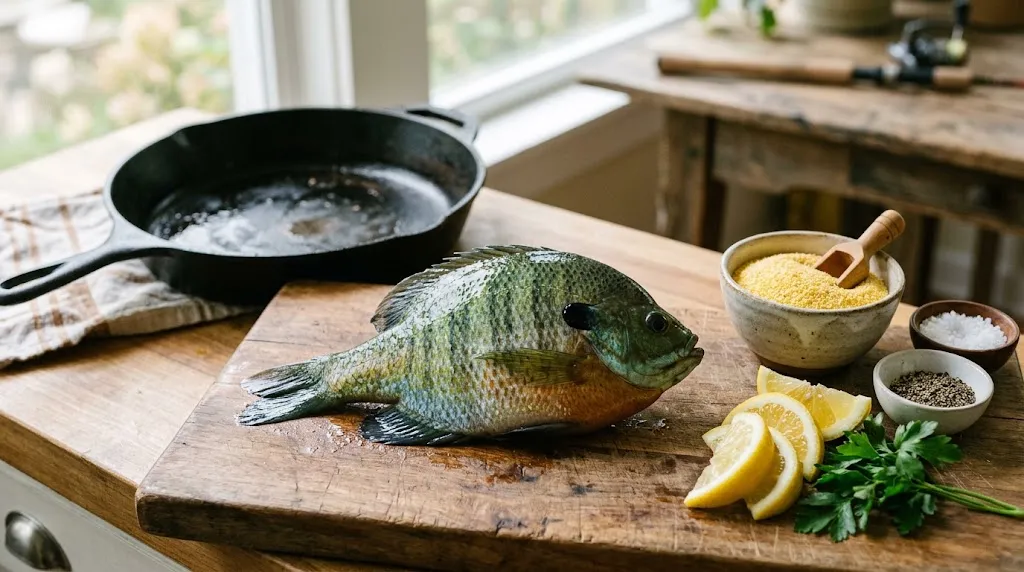
Can you eat sunfish?Yes, you can eat sunfish, but the exact answer depends entirely on whether you are talking about freshwater panfish like bluegill or the massive ocean-dwelling Molas. When people ask can you eat sunfish, they often blur the lines between two completely different families of fish that share a common name.
Freshwater sunfish are a beloved staple for anglers and offer a sweet, flaky meal, whereas ocean sunfish are legally protected, heavily regulated, and rarely eaten in modern kitchens due to toxins and heavy metal accumulation.
You can eat freshwater sunfish, especially bluegill, pumpkinseed, redear, green sunfish, and rock bass. They are popular panfish with mild, sweet, flaky white meat. Ocean sunfish (Mola mola) are a completely different group of fish; people should not target or eat them, and the species is listed as vulnerable by the IUCN.
Quick Jump
ToggleCan You Eat Sunfish from A Lake?
You can eat sunfish from a lake if local rules allow harvest and the waterbody has no fish-consumption advisory. Bluegill and other sunfish are among the more commonly recommended freshwater fish in several state guidelines, though limits vary by state, lake, fish size, and the person eating them.
Before keeping any catch, check your state wildlife or health department’s current advisory map. Advisories may restrict meals because of mercury, PCBs, lead, or PFAS; some locations tell people not to eat sunfish at all.
Quick rule: Keep smaller, legal-size fish, follow the posted meal limits, and release fish from any water with a “do not eat” advisory. Smaller, younger fish generally carry lower contaminant levels than larger, older fish.
What Does Sunfish Taste Like?
What do sunfish taste like? Freshwater sunfish meat taste mild, clean, and slightly sweet. Bluegill has tender, flaky white meat with little strong “fishy” flavor, which makes it a good choice for people who do not usually eat fish.
The exact flavor depends on the water, diet, handling, and freshness. A sunfish caught from cold, clean water and iced immediately usually tastes better than one left warm on a dock.
| Sunfish type | Typical taste | Texture | Best use |
|---|---|---|---|
| Bluegill | Mild, sweet, clean | Flaky and tender | Fried fillets, tacos, chowder |
| Pumpkinseed | Mild and delicate | Soft, flaky | Pan-frying |
| Redear sunfish | Slightly richer than bluegill | Firm, flaky | Frying or grilling |
| Green sunfish | Mild to slightly earthy | Firm | Cornmeal-fried whole or filleted |
| Rock bass | Mild, a little stronger | Flaky | Fried or baked |
Which Types of Sunfish Are Edible?
“Sunfish” means different animals depending on where you are. In North American freshwater fishing, sunfish usually refers to members of the sunfish family, including bluegill, pumpkinseed, redear sunfish, green sunfish, longear sunfish, warmouth, and rock bass. Missouri’s advisory guidance explicitly groups bluegill, green sunfish, longear sunfish, warmouth, and rock bass under “sunfish.”mdc.mo
The most popular eating sunfish are:
- Bluegill — the classic panfish; small fillets and excellent fried.
- Redear sunfish — often called shellcracker; slightly larger and firm.
- Pumpkinseed — delicate, sweet meat.
- Green sunfish — common, hardy, and good when fresh.
- Rock bass — technically a sunfish family member; tasty but bonier.
Can You Eat Ocean Sunfish (Mola Mola)?
Technically, in some cultures sun fish being eaten, but you should not eat or harvest Mola mola. It is a huge, slow-reproducing open-ocean fish listed as vulnerable by the IUCN, and it is frequently injured or killed by drift gillnets and other fishing gear.
Ocean sunfish mainly eat jellyfish, salps, and other gelatinous zooplankton, along with some squid, small fish, and crustaceans. Their unusual diet, massive size, protected status in many places, and conservation concerns make them a poor food choice.
If you see a live ocean sunfish near shore, enjoy it from a distance. If you find one stranded or injured, contact local marine wildlife authorities rather than trying to handle it.
Can You Eat Freshwater Sunfish?
Yes. Freshwater sunfish are one of the most practical wild fish to eat because they are abundant in many lakes and ponds, legal to harvest in many areas, and quick to cook. Bluegill is a mild panfish whose small fillets cook rapidly; frying is especially popular, while air-frying, sautéing, grilling, and adding it to chowder also work well.
The main drawback is yield. A typical bluegill produces only a few small bites of meat, so anglers often keep enough legal-sized fish for a shared meal rather than relying on one fish.
Is Sunfish Safe to Eat?
Freshwater sunfish can be safe when they come from clean water and you follow local advisories. State agencies commonly treat bluegill and other panfish as better choices than large predator fish, but safety is location-specific.
For example, New York lists bluegill and pumpkinseed/sunfish among its “Best Choice Fish,” while Florida advises up to one meal weekly for women who may become pregnant and young children, and up to two meals weekly for the general population for certain sunfish species.
Are There Any Health Risks to Eating Sunfish?
The main risks come from environmental contaminants, not the species itself. Mercury, PCBs, lead, and PFAS can accumulate in freshwater systems, and advisories differ sharply from one lake or river to another.
Reduce risk with these habits:
- Check the exact lake, river, or reservoir before eating your catch.
- Follow the advisory for your group; pregnant people, nursing parents, and children often have stricter limits.
- Keep smaller, legal-size fish rather than the largest ones.
- Eat the fillet; remove skin, organs, and fatty belly tissue.
- Bake, broil, grill, poach, or boil so fat can drain away; avoid reusing cooking oil or liquids.
- Keep fish cold, clean it promptly, and cook it to an internal temperature of 145°F.
How to Clean and Prepare Sunfish for Cooking
Sunfish are small, so clean hands and a sharp fillet knife matter more than fancy equipment.
- Ice the fish immediately. Put them on ice or in a cooler as soon as possible.
- Scale or skin them. For frying whole, scale thoroughly and remove the head, fins, and guts.
- Fillet if you want boneless pieces. Cut behind the gill plate, run the knife along the backbone, then lift the fillet away from the ribs.
- Remove the belly lining and dark bloodline. Rinse briefly and pat dry.
- Season simply. Salt, pepper, paprika, garlic powder, and lemon work well.
- Cook quickly. Small fillets often need only 2–3 minutes per side.
What parts do you eat? Eat the white fillets. For small sunfish cooked whole, people also eat the meat around the backbone after carefully removing bones. Avoid the organs, skin if advised locally, and any fatty trimmings—especially where contamination advisories apply.
Best Ways to Cook Sunfish – Green Sunfish Catch & Cook
Green sunfish make a good catch-and-cook meal when they are fresh and legal to keep. Their firm flesh holds up well to a simple cornmeal crust.
Crispy Pan-Fried Sunfish Recipe
You need:
- Sunfish fillets or dressed whole fish
- Cornmeal
- Flour
- Salt, black pepper, paprika, garlic powder
- Egg or buttermilk
- Oil for frying
- Lemon wedges
Method:
- Pat the fish completely dry.
- Dip it in buttermilk or beaten egg.
- Coat it in a 50/50 mix of cornmeal and flour seasoned with salt, pepper, paprika, and garlic powder.
- Heat about 1/4 inch of oil in a skillet over medium-high heat.
- Fry fillets for 2–3 minutes per side, until golden and the flesh flakes easily.
- Drain on a rack and serve with lemon, tartar sauce, or hot sauce.
Other strong options include air-frying breaded fillets, grilling larger redear sunfish in a foil packet, and folding flaky cooked bluegill into fish tacos or chowder. Bluegill works especially well in soups and chowders because its mild flavor absorbs seasoning without overpowering the dish.
Is Sunfish Good to Eat Compared to Other Fish?
Sunfish is very good to eat if you enjoy mild panfish. It is less meaty than walleye or catfish, but fresher-tasting and easier to cook than many larger species.
| Fish | Flavor | Texture | Fillet size | Best for |
|---|---|---|---|---|
| Bluegill/sunfish | Mild, sweet | Flaky | Small | Frying, tacos, chowder |
| Crappie | Mild, slightly sweet | Very flaky | Small-medium | Frying |
| Yellow perch | Clean, sweet | Firm-flaky | Small-medium | Frying, baking |
| Walleye | Mild, rich | Firm-flaky | Large | Baking, frying |
| Catfish | Mild to strong | Dense | Large | Fried, blackened |
Choose sunfish when you want a light, crisp fried-fish meal. Choose walleye, catfish, or bass when you need larger fillets or plan to grill.
Sunfish Meat Taste (FAQs)
Can you eat sunfish raw?
No. Do not eat raw freshwater sunfish. Cooking to 145°F destroys parasites and harmful bacteria and is the safer choice for wild-caught fish.
Does sunfish taste good?
Yes. Most freshwater sunfish taste mild, slightly sweet, and clean. Bluegill is especially popular because its white meat flakes nicely and takes on seasoning well.extension.
Can you eat ocean sunfish?
Avoid it. Ocean sunfish are vulnerable wildlife, not a practical or responsible food fish, and they are different from the freshwater sunfish anglers commonly eat.
What does an ocean sunfish eat?
Ocean sunfish mostly eat jellyfish and other gelatinous zooplankton. They also eat squid, small fish, crustaceans, and algae at different life stages.
What parts of sunfish do you eat?
Eat the white fillets. If cooking small sunfish whole, remove the head, organs, fins, and scales, then carefully avoid the rib and pin bones while eating.
Are green sunfish good to eat?
Yes. Green sunfish are edible and taste mild when fresh. Their smaller size means you need several fish for a meal, and they fry particularly well.
How many sunfish can you eat?
Follow your state’s advisory. Some states allow frequent meals of bluegill and sunfish from low-risk waters, while other lakes restrict consumption because of mercury, PFAS, PCBs, or lead.
What is ocean sunfish taste like?
People who have tried ocean sunfish describe the meat as bland, gelatinous, and sometimes rubbery rather than appealing. Its thick, leathery skin and unusual body make it very different from the mild, flaky white meat of freshwater sunfish such as bluegill.
Do sharks eat sunfish?
Yes. Sharks do eat ocean sunfish, although documented attacks on large adults are uncommon. Tiger sharks have been recorded preying on sizable sunfish, and bite scars, stomach contents, and sunfish parasites with shark-linked life cycles all point to sharks as occasional predators.
Why don’t people commonly eat ocean sunfish?
People rarely eat ocean sunfish because it is a vulnerable, slow-reproducing species, difficult to handle, and not a dependable food fish. Its gelatinous flesh, thick skin, small mouth, and conservation concerns make it a poor choice compared with common seafood species.
How do giant sunfish defend against predators?
Giant sunfish rely mainly on size, extremely thick skin, and escape rather than fighting back. An adult Mola mola can reach about 10 feet from snout to tail, and its tough skin can discourage smaller predators; it can also swim away or change color when stressed.
Do white sharks eat ocean sunfish?
Yes. White sharks are known predators of ocean sunfish, and researchers have found sunfish remains in a white shark’s stomach. Attacks are not constant, but white sharks can take bites from large molas.
Do tiger sharks eat sunfish?
Yes. Tiger sharks have been observed attacking and eating ocean sunfish in Australian waters. Researchers consider these events opportunistic, since sunfish remains appear only rarely in tiger shark stomach studies.
Can sea lions attack sunfish?
Yes. Sea lions are among the best-documented predators of ocean sunfish, especially in Monterey Bay. They may bite through the tough skin, remove fins, and sometimes toss pieces of the body around; they do not always eat the entire fish.
Do ocean sunfish have a tail?
Not in the usual sense. An ocean sunfish has a short, rounded rear structure called a clavus instead of a long, forked tail. It uses its large dorsal and anal fins to swim and steer.
Is an ocean sunfish a whale?
No. An ocean sunfish is a bony fish, not a whale. Whales are marine mammals, while Mola mola is the largest bony fish in the ocean.
How does an ocean sunfish use its mouth?
An ocean sunfish has a small beak-like mouth with fused tooth plates. It sucks in jellyfish, salps, and other soft-bodied prey, then crushes the food before swallowing it.
Can an ocean sunfish survive a shark attack?
Sometimes. Free-swimming molas have been seen with shark bite scars, which suggests that some can escape an attack. Their size and tough skin help, but a serious attack can still be fatal…
What should you do if you see an ocean sunfish?
Keep your distance and do not touch, feed, or try to move it. If it appears stranded, injured, or entangled, contact local marine wildlife authorities.
Conclusion
Can you eat sunfish? Yes—if you mean freshwater sunfish such as bluegill, pumpkinseed, redear, or green sunfish. They offer mild, sweet, flaky meat that fries beautifully and makes an excellent lakeside meal. The key is to treat every lake as its own food-safety decision: check local advisories, keep only legal-sized fish, eat the fillets, and cook them thoroughly.
Do not confuse these panfish with the ocean sunfish, or Mola mola. That giant, jellyfish-eating open-ocean fish is vulnerable to fishing pressure and should be left in the sea.
For most anglers, a mess of fresh sunfish—cornmeal-crusted, pan-fried, and finished with lemon—is one of the simplest and most rewarding ways to enjoy a day on the water. Check the water, handle the catch well, and you can turn a small bag of panfish into a genuinely great meal.
You might also like
- Can You Eat Sailfish? 9 Quick Answers You (Must-Read)
- Are White Bass Good Eating Fish? – Catch, Clean & (Cook)
- Can You Eat Stingray? – 13 Quick Answers You (SHOULD KNOW)
- What Does Starfish Taste Like? (Can You Eat Starfish!)
- Can You Eat Barracuda Fish? (15 Things You Must Know!)
- Can You Eat Sand Fleas? The Answer May (Surprise You!)
- What Happens If You Eat A Dead Fish? (Can You Eat Dead Fish!)
- Can You Eat Bonita Fish? (Catch, Clean & Cook) Giant Bonito
- Can You Eat Tarpon Fish? Here’s What You (Need-To-Know)