
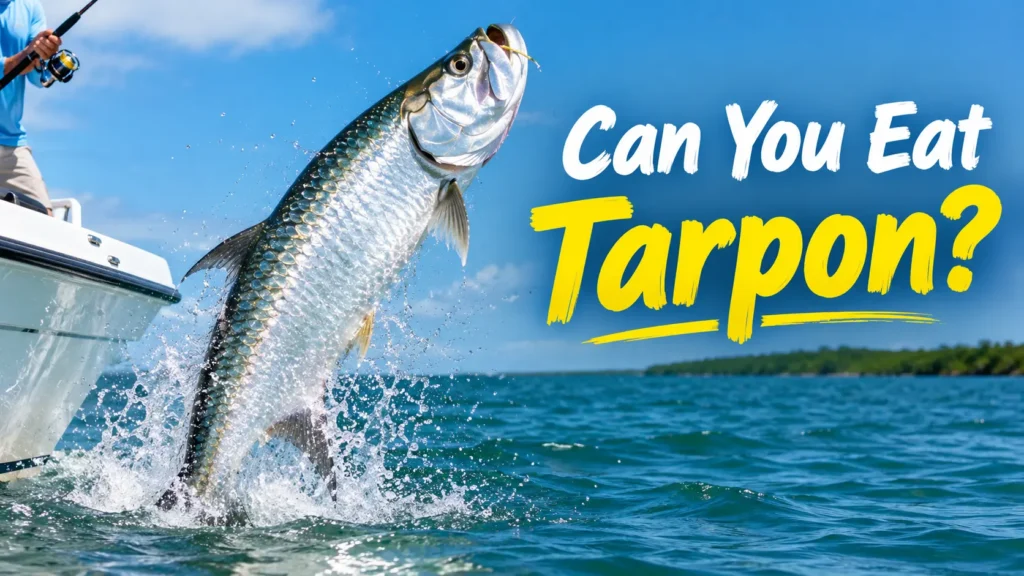
Can you eat tarpon fish? Tarpon is technically edible, and people in parts of the Caribbean, West Africa, and Central America do eat it. But most anglers release it because the flesh is often soft, strongly flavored, and packed with fine bones, while Florida treats tarpon as a catch-and-release game fish with very limited exceptions.
Tarpon, often called the “silver king,” is one of the most exciting inshore game fish in Florida. It can grow to 8 feet and more than 200 pounds, fights hard, and leaps dramatically when hooked. Those qualities make it a prized sport fish—not a common dinner fish.
Can You Eat Tarpon Fish?
You can eat tarpon fish if it is legal to harvest it where you fish and you prepare it properly. The meat is not poisonous, and tarpon has been eaten traditionally in several regions. floridamuseum.ufl
The bigger issue is practicality. Tarpon has poor food value according to the Florida Fish and Wildlife Conservation Commission, and most recreational anglers practice catch and release because the fish is not considered desirable table fare.
So, is tarpon good to eat? For most people, no. It can be cooked, but it takes more work than popular eating fish such as snapper, grouper, or mahi-mahi.
What Does Tarpon Taste Like?
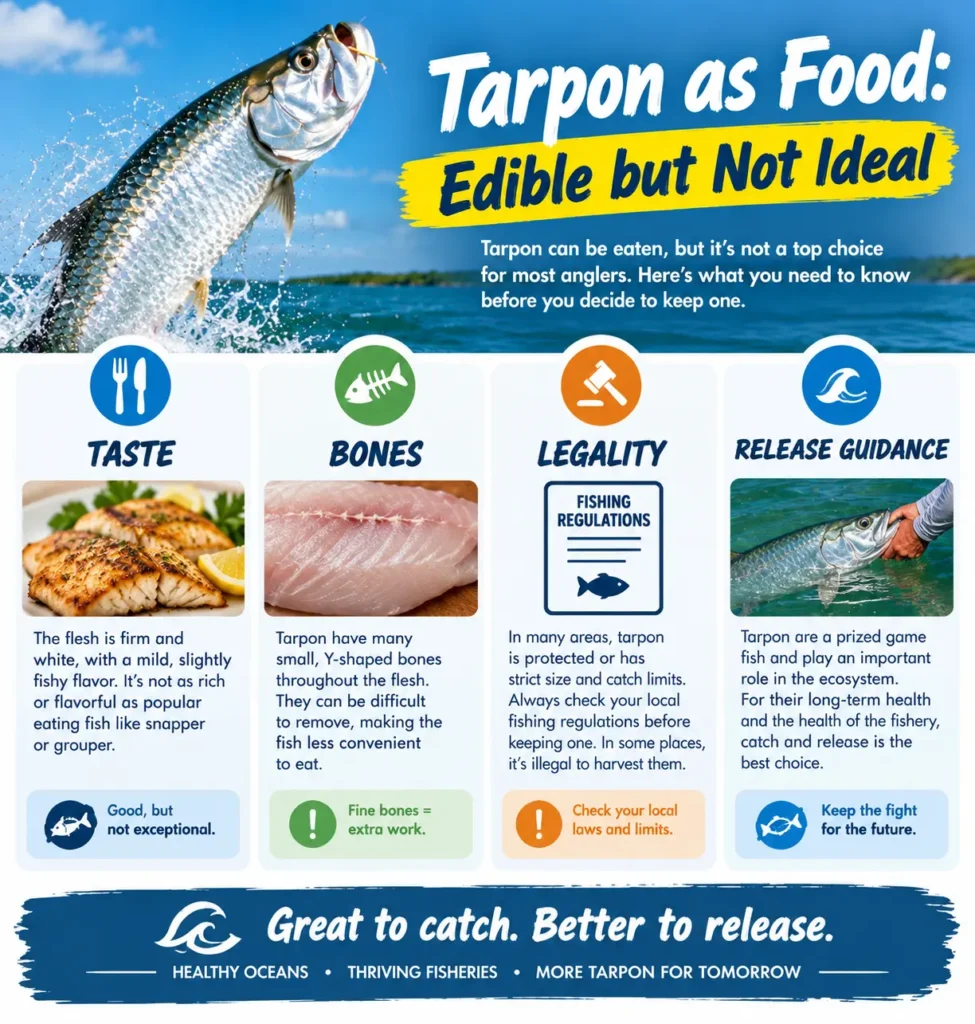
Tarpon has a mild-to-moderate fish flavor, but the taste and texture vary with the fish’s size, diet, water quality, and handling. Many anglers describe the flesh as soft, oily, and less clean-tasting than snapper or grouper.
Large tarpon often have stronger-tasting meat because bigger, older fish accumulate more oils and connective tissue. Smaller fish may taste milder, but they still present the same bone problem.
If someone does cook tarpon, strong preparation methods work better than simple grilling:
- Soaking fillets in milk, lime juice, or saltwater before cooking
- Frying small, boneless portions
- Making fish cakes or croquettes after carefully removing bones
- Using spices, citrus, garlic, and herbs to balance the flavor
Can you cook tarpon? Yes. But treat it like a project fish, not an easy weeknight fillet.
Why Don’t Most Anglers Eat Tarpon?
Most anglers release tarpon for three reasons: the meat quality, the difficult cleaning process, and the fish’s value as a sport fish.
Tarpon are famous for powerful runs, repeated jumps, and long fights. Florida describes them as one of its premier game fish because of that strength and stamina. Many anglers would rather watch a 100-pound tarpon swim away than spend an hour picking bones from a mediocre meal.
There is also a conservation reason. Tarpon grow slowly, mature at 7 to 13 years, and can live more than 50 years. Removing large breeding fish can affect a fishery that depends on adult fish for its most memorable catches.
Does Tarpon Have a Lot of Bones?
Yes. Tarpon have many bones, including numerous fine intramuscular bones that run through the flesh. These small bones do not come out easily with normal filleting.
That is the main reason tarpon is frustrating to eat. Even after removing the spine and rib cage, you may still find thin, needle-like bones throughout each fillet. Eating tarpon without careful preparation can be unpleasant and creates a choking risk, especially for children.
If you ever legally possess and prepare tarpon, use this approach:
- Fillet the fish carefully.
- Remove the skin and dark bloodline.
- Cut the fillet into small sections.
- Pick through each piece by hand under good light.
- Consider grinding the meat for fish cakes, where bones are easier to detect and remove.
Is Tarpon Safe to Eat?
Tarpon is generally safe to eat when it comes from clean water, is fresh, and is cooked thoroughly. It is not known as a venomous or poisonous fish.
However, “safe to eat” does not mean “recommended to eat.” Like many large predatory fish, tarpon may carry higher levels of environmental contaminants because they live long lives and feed on fish and large crustaceans. Pregnant women, young children, and people who eat fish frequently should follow local seafood advisories before eating any large, long-lived wild fish. myfwc
Also, freshness matters. A tarpon that fights for a long time, is handled roughly, or sits warm on a boat deck will not make good eating. If you cannot immediately ice and clean a legally harvested fish, release it.
Is Tarpon a Good Fish to Eat Compared to Other Fish?
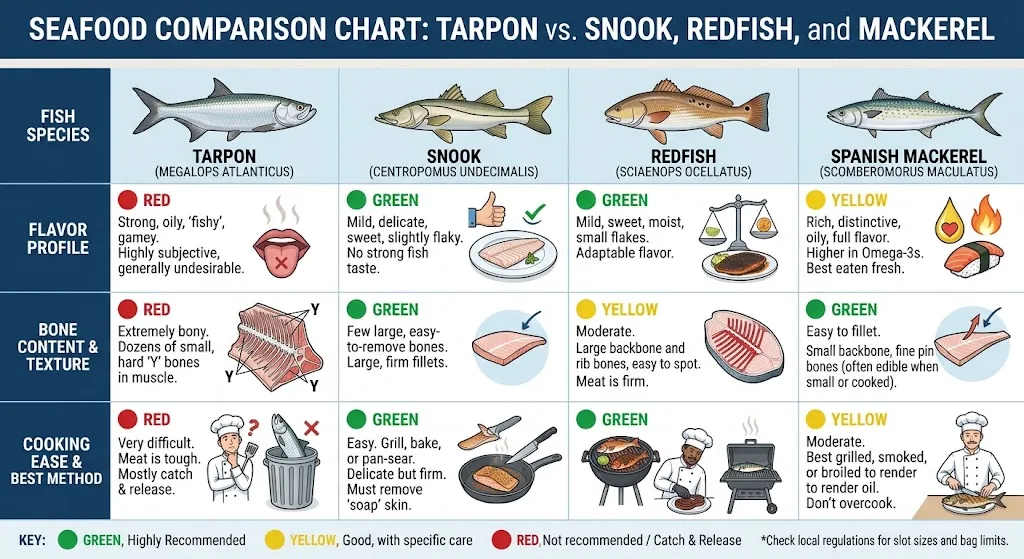
Is tarpon a good eating fish? Compared with common Florida table fish, it ranks low for flavor, texture, and ease of preparation.
| Fish | Eating quality | Bones | Best use |
|---|---|---|---|
| Tarpon | Soft, oily, often strong-tasting | Many fine bones | Traditional regional dishes; fish cakes |
| Snook | Firm, mild, highly regarded | Moderate | Grilling, baking, frying |
| Redfish | Mild, slightly sweet, versatile | Moderate | Blackening, baking, pan-frying |
| Mackerel | Rich, oily, bold flavor | Moderate | Smoking, grilling, strong sauces |
How Does Tarpon Compare to Snook, Redfish, and Mackerel?
Snook and redfish are usually easier to fillet and more pleasant to eat. Mackerel is oily too, but its stronger flavor is often considered desirable, especially when smoked or grilled.
Tarpon sits in an awkward middle ground: it is oily like mackerel but lacks mackerel’s dependable culinary reputation, and it has far more troublesome bones than snook or redfish. That explains why tarpon remains primarily a game fish rather than a food fish.
How Do People Traditionally Prepare and Cook Tarpon?
In parts of Panama, the West Indies, and Africa, tarpon is considered a delicacy and is sold on a small scale. Traditional cooks often rely on methods that soften the flesh, reduce oiliness, and make bones easier to manage.
Common approaches include:
- Frying: Small portions fry quickly and develop a crisp exterior.
- Stewing: Long, gentle cooking helps break down tougher tissue.
- Fish cakes: Ground or finely flaked meat works well with herbs, starch, egg, and seasoning.
- Curries and stews: Bold sauces mask stronger flavors and make small bones less noticeable.
- Drying or salting: In some coastal food traditions, preservation methods change both texture and flavor.
If you are wondering whether you can cook tarpon at home, the safest culinary answer is: only prepare it if it is legal to keep, use small portions, and remove bones carefully.
Is It Legal to Catch and Keep Tarpon?
In Florida, tarpon is a catch-and-release-only fishery, with one narrow exception: an angler pursuing a Florida state or world record may purchase a tarpon tag in advance.
Key Florida rules include:
- No minimum size limit.
- Tarpon over 40 inches must remain in the water unless the angler is pursuing a state or world record with a tarpon tag. myfwc
- One tarpon tag per person per year may be purchased for record pursuits.
- The tag costs $50 per fish, and the fish must be tagged through the lower jaw.
- Commercial sale of tarpon is prohibited in Florida.
- Hook-and-line fishing only; snagging, snatch hooking, spearing, and certain multiple-hook bait setups are prohibited.
Rules differ outside Florida. Before keeping any tarpon, check the regulations for the exact state, country, and waters where you are fishing.
Quick Rule: If the law says release it, release it. If the fish is not fresh, do not eat it. If the water has an advisory, skip it. Tarpon is more valuable as a protected game fish than as an uncertain meal.
Why Is Tarpon Usually a Catch-and-Release Fish?
Tarpon is usually catch-and-release because it is more valuable alive as a sport fish than dead as food. Its size, acrobatics, and fighting ability attract anglers from around the world. myfwc
The species also needs protection. Tarpon mature slowly, may live more than 50 years, and reproduce offshore. A catch-and-release system helps preserve large adult fish while still allowing anglers to enjoy the experience.
Good release practices matter. Florida recommends keeping large tarpon in the water, minimizing handling, using wet hands for smaller fish, and releasing the fish quickly to reduce stress.
FAQs
Can you eat tarpon fish raw?
No. Avoid eating tarpon raw. Like other wild fish, it should be handled carefully and cooked thoroughly to reduce food-safety risks.
Does tarpon have bones?
Yes. Tarpon has many small, fine bones throughout the flesh, which makes it difficult to fillet and eat.
Is tarpon a good fish to eat?
It is edible, but most people do not consider it good eating. The flesh can be soft, oily, and strongly flavored, with many bones.
Can you cook tarpon?
Yes, you can cook tarpon by frying, stewing, or making fish cakes. Careful bone removal is essential.
Is tarpon safe to eat?
Tarpon is not poisonous, but large long-lived fish can accumulate environmental contaminants. Check local advisories and cook the fish thoroughly.
Can you keep a tarpon in Florida?
Usually no. Florida allows tarpon harvest only in limited record-pursuit situations with a $50 tarpon tag purchased before fishing.
Why is tarpon called the silver king?
Anglers call it the “silver king” because of its huge, bright silver scales and its reputation as a spectacular game fish.
Conclusion
Can you eat tarpon fish? Yes, but that does not mean you should plan a tarpon dinner. The fish is edible, and some cultures value it as food, yet most anglers release it because the meat is soft and oily, the flavor can be strong, and the flesh contains many fine bones.
Tarpon’s real value lies in the fight. It is a legendary game fish, capable of reaching 8 feet and living more than 50 years, and Florida manages it as a catch-and-release species except for tightly controlled record attempts. If you catch one, enjoy the jump, take a quick photo if legal, and release it carefully. If you truly want a fish dinner, choose a species with better flavor, fewer bones, and clear harvest rules. For most anglers, the best answer to “Can you eat tarpon fish?” is simple: you can, but you probably should not.
You might also love:
- Is It Good To Fish In The Rain? Quick Answers (Must-Read)
- Can You Eat Barracuda Fish! (15 Things You Must Know!)
- Best Shark Fishing Spots In Tampa Bay (Top 3 Hot Sites)
- 10 Things To Know About Peacock Bass Fishing West Palm Beach
- 23 Things Every Snook Angler Should Know (Snook Fishing Tips)
- Is Snook a Good Eating Fish? Taste, Texture, and Best Cooking Tips