
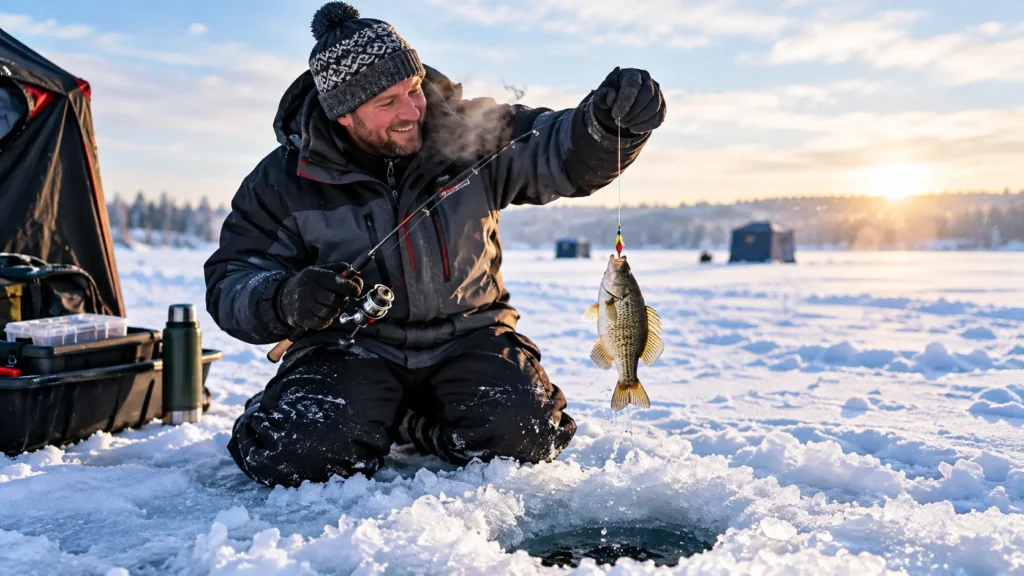
Do fish bite in cold weather? Most species of fish still bite in cold weather, but they usually feed less often, move slower, and prefer an easy meal placed close to them. Cold-water fishing can be productive when you adjust your timing, location, bait size, and retrieve speed.
Many anglers assume winter means dead water. It does not. Fish still need energy, so they continue eating, though their feeding windows shrink. The key is understanding that cold weather changes fish behavior rather than shutting it off.
This guide covers winter fishing tips, what factors that affect fish biting, the best time to fish in cold weather, where fish hold, and how to catch bass, crappie, catfish, trout, and pike when “get cold”.
Get Ready for Your Next Cold-Water Bite? Discover the Right Winter Fishing Lures
Do Fish Bite in Cold Weather?
Fish bite in cold winter days because they still need food to survive. Their activity drops as water cools, but they do not simply stop feeding. Instead, they eat less often and are more likely to take a slow, small, easy-to-catch meal.
The answer depends on the species and the water temperature. Trout, pike, walleye, perch, and some panfish often remain active in cold water. Warm-water species such as largemouth bass, catfish, and bluegill become slower and more selective.
A useful rule: fish may not chase aggressively in winter, but they will often strike when bait sits in front of them long enough.
How Cold Weather Affects Fish Behavior?
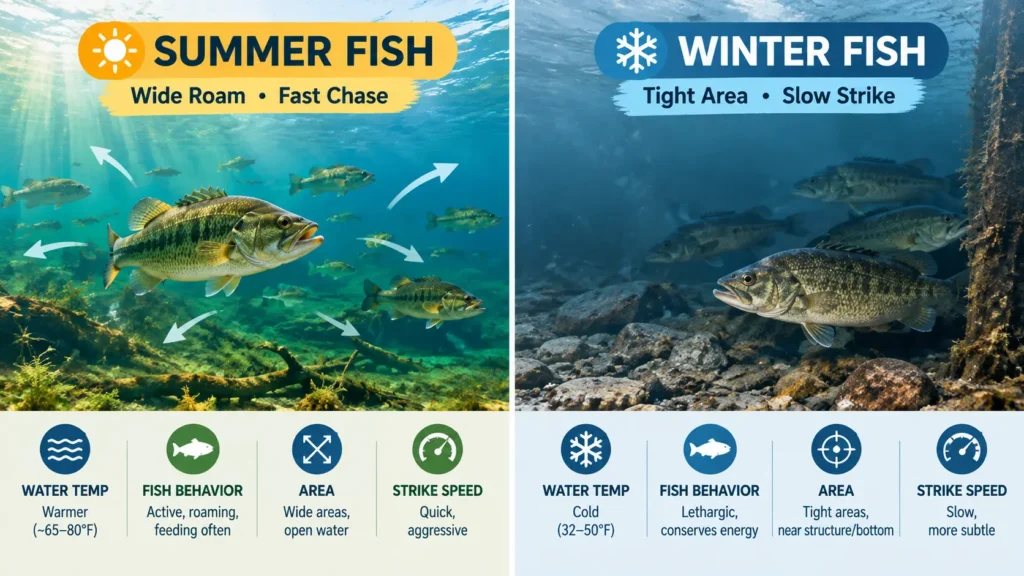
Fish are cold-blooded. Their body temperature follows the surrounding water, so colder water lowers their metabolism, swimming speed, reaction time, and appetite.
In summer, a bass may chase a fast-moving lure across a large area. In winter, that same bass may only move a few inches to eat. It wants food that requires little effort.
Cold weather conditions also changes where fish hold. Many fish species gather near structure, depth changes, current seams, or areas with steadier water temperature. These spots provide shelter, ambush points, and access to food.
What Water Temperature Is Too Cold for Fish to Bite?
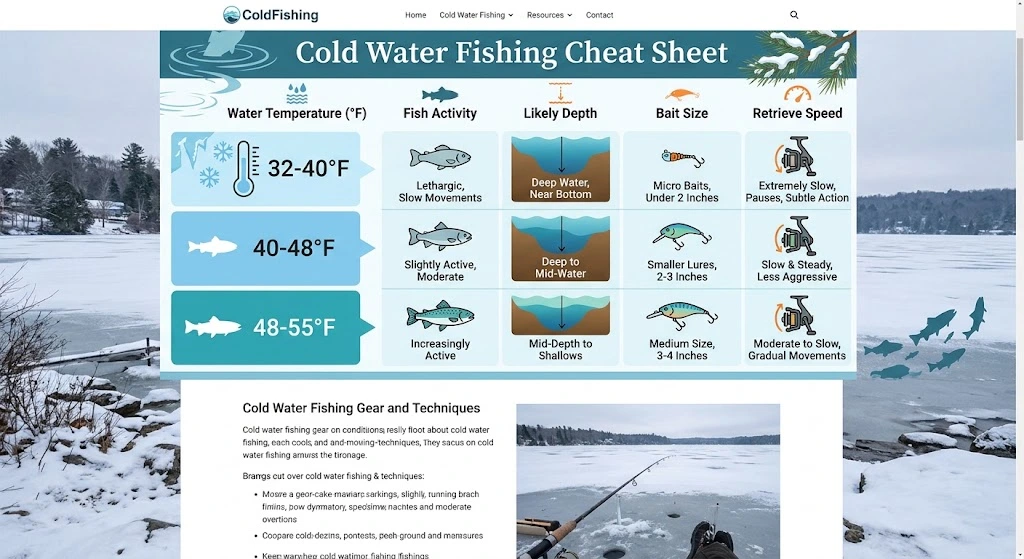
There is no single water temperature where every fish stops biting. A temperature that slows a largemouth bass may still be excellent for trout. Cold-water species such as trout and lake trout remain active in temperatures that make warm-water fish sluggish.link.
| Species | Cold-water behavior | Practical approach |
|---|---|---|
| Trout | Often active in cold water | Small jigs, nymphs, live bait, slow drifts |
| Northern pike | Can still strike in winter | Slow jerkbaits, spoons, larger profile baits |
| Crappie | Feed in schools but become selective | Tiny jigs, live minnows, vertical presentations |
| Largemouth bass | Slower and less aggressive | Jigs, drop-shots, jerkbaits, slow bottom contact |
| Catfish | Feed less as water cools | Fresh cut bait or live bait near deeper holes |
Instead of asking, “What temperature is too cold?” ask, “How has the water temperature changed over the last few days?” A slow, stable cooldown is usually easier to fish than a sudden freeze. A modest warming trend can improve feeding activity.
What Is the Best Time to Fish in Cold Weather?
The best time to fish in cold weather is usually late morning through mid-afternoon. Sunlight has time to warm shallow water, dark bottom, rocks, mud flats, and protected banks.
Early morning can still produce fish, especially for trout or in rivers with steady flow. But in lakes and ponds, fish often need a few hours of sun before they become more comfortable.
Stable weather often beats wild swings. Fish may feed better before a front, then become difficult immediately after a sharp temperature drop. After the water stabilizes—or begins warming—activity can improve again.
Best cold-weather windows
- Late morning: Water begins to warm; fish may move slightly shallower.
- Mid-afternoon: Often the most reliable window on sunny winter days.
- Before a front: Fish may feed more actively ahead of falling pressure and temperature.
- After a warming trend: Two or three days of rising temperatures can improve the bite.
Where Do Fish Go in Cold Weather?
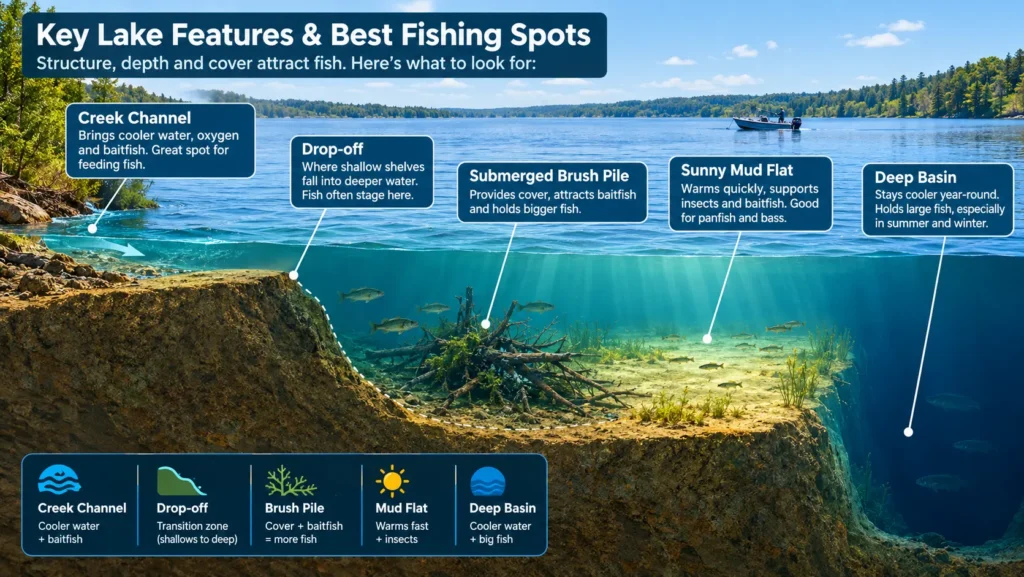
Fish do not always move to the deepest water available. They move to the most comfortable water that still gives them food and safety. In many lakes, that means deeper pools, drop-offs, creek channels, and structure near deeper water.
Look for these winter holding areas:
- Deep pools and basins: Stable temperature and protection from surface cooling.
- Drop-offs and ledges: Fish can hold deep but move up to feed.
- Creek channels: These act like underwater highways and often hold baitfish.
- Submerged timber, rocks, and brush: Structure gives fish cover and ambush points.
- Warm-water inflows: Spring-fed creeks, dam releases, and discharge areas can hold fish when surrounding water is colder.idfg.
Do not ignore shallow water completely. On sunny afternoons, dark mud, rocks, and protected banks can warm quickly. Fish may slide shallow briefly to feed, then retreat when conditions change.
How Location Changes Winter Fish Behavior?
Where do fish go in winter? The answer changes with the type of water you fish. A farm pond, river, reservoir, and tidal creek do not follow the same “fish deep” rule.
- Farm ponds: Fish often hold near the deepest hole, dam face, brush pile, or steep bank. On sunny afternoons, check shallow mud or rock areas that warm first.
- Rivers: Current matters more than depth. Trout and smallmouth often hold behind rocks, in eddies, and along current seams where they can feed without fighting strong flow.
- Reservoirs: Follow creek channels, points, drop-offs, and baitfish schools. Bass may suspend over deeper water or relate to the first major depth change near a channel.
- Tidal creeks: Fish move with tide and temperature. Focus on deeper bends, oyster bars, marsh drains, and protected pockets during outgoing or low-water periods.
This is one of the biggest winter fishing mistakes: assuming every fish must move deep. In cold water bass fishing, depth matters, but warmth, cover, current, and food matter more. Beginners should start by finding one stable area with cover, then fish it slowly from several angles.
What Is the Best Bait for Fishing in Cold Weather?
The best bait for fishing in cold weather is usually something small, natural, and slow-moving. Fish conserve energy in winter, so most species of fish prefer prey that does not make them chase.
Good cold-water bait options include:
- Live minnows: Excellent for crappie, trout, walleye, and perch.
- Worms and nightcrawlers: Reliable for panfish, trout, and occasional bass.
- Small jigs: Hair jigs, marabou jigs, and soft-plastic jigs work well when moved slowly.
- Suspending jerkbaits: Effective for bass, pike, and trout; pause long enough for the bait to hang in the strike zone.
- Blade baits and spoons: Useful for vertical fishing over schools of fish or deeper structure.
- Cut bait: A strong choice for catfish in colder water, especially near deeper holes. fishing
Match the bait to the local forage. If shad are dying or struggling after a cold front, a jerk bait or spoon that imitates a wounded baitfish can trigger strikes.
Best Lures for Cold Water Fishing
The best lures for cold water fishing are small, natural-looking baits that can be worked slowly. Use a suspending jerkbait for bass and pike, a hair jig or small soft-plastic jig for crappie and bass, a blade bait or spoon for deeper schools, and a tiny jig or live minnow for trout and panfish. In clear winter water, natural colors such as shad, ghost, brown, green pumpkin, and white often outperform loud patterns.
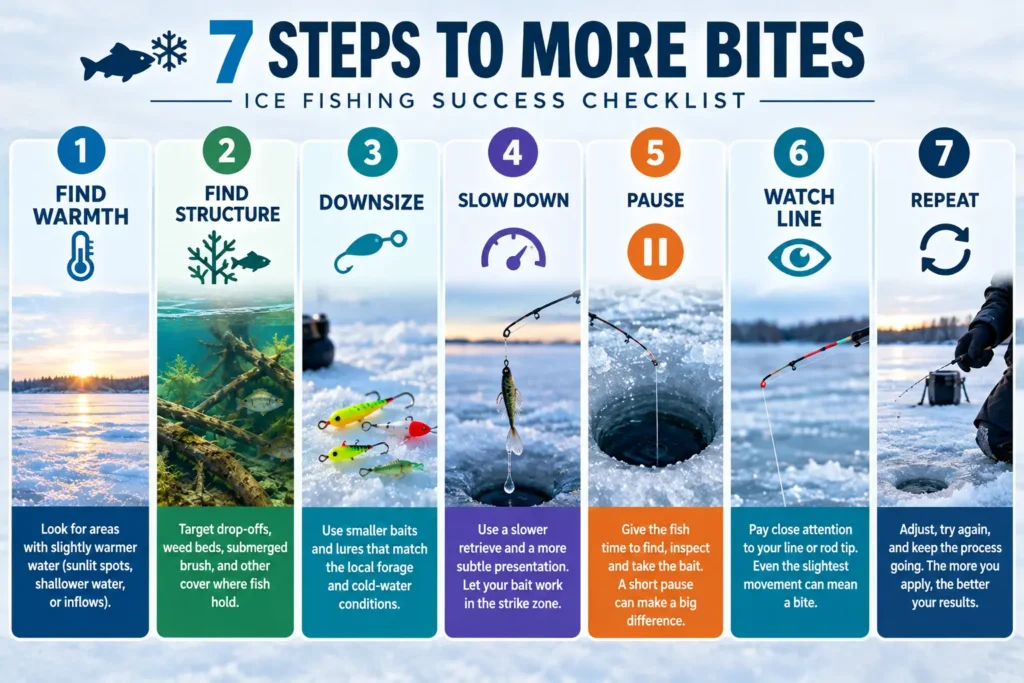
How to Catch Fish in Cold Weather: 7 Proven Tips
Use these winter fishing tips to turn slow conditions into steady action.
1. Fish the warmest water
Find areas that hold heat: sunny banks, dark mud, rocks, protected coves, spring inflows, and dam releases. Even a small temperature change can concentrate fish.
2. Slow your retrieve
Make a cast, let the bait fall, then move it only a short distance. Pause longer than feels natural. A bait sitting still gives a cold fish time to inspect and strike.
3. Downsize your bait
Use smaller jigs, thinner lines, smaller hooks, and more natural colors. Cold water is often clear, and fish may reject oversized or fast-moving offerings.
4. Work depth changes
Do not just cast to open water. Fish ledges, channel edges, drop-offs, and the transition from shallow to deep water. These areas let fish feed without traveling far.
5. Use long pauses
With a jerkbait, crank it down, twitch it once or twice, then let it sit. With a jig, drag it a few inches and stop. Many winter bites happen while the bait is falling or motionless.
6. Detect subtle bites
Winter bites can feel like a soft tap, a slight weight change, or line moving sideways. Watch your line, keep slack minimal, and set the hook on anything unusual. A sensitive rod helps.
7. Stay patient and repeat casts
Fish may ignore a bait several times before committing. Work one promising area from several angles before moving. Once you catch one, slow down and work that spot thoroughly—winter fish often school together.
Do Bass, Catfish, and Crappie Bite in Cold Weather?
– Largemouth bass
Do bass bite in cold weather? Yes. Largemouth bass bite in chilly weather, but they feed less often and hold tighter to structure. In water in the 40s, they may suspend near drop-offs, gather around cover, or relate closely to the bottom.
Try a slow-rolled or paused suspending jerkbait, a football jig, a drop-shot rig, or a blade bait. Keith Poche notes that winter bass can respond to either an extremely slow presentation or a fast vertical reaction bait such as a spoon or lipless crankbait. americansportfish
– Catfish
Will catfish bite in cold weather? They can, but catfishing slows considerably as water cools. Channel catfish may still bite, while flatheads become much less active. Focus on deeper holes, channel bends, and areas near baitfish.
Use fresh cut bait, shad, or live bait. Keep it near the bottom and give it time. Catfish may not move far for food in winter, so precise placement matters. fishing
– Crappie
Crappie bite well in cold weather when you find a school. They often suspend around brush piles, standing timber, bridge pilings, or drop-offs. Tiny jigs and live minnows under a float can produce steady action.
Fish vertically when possible. A small jig worked with gentle lifts and long pauses can stay in front of a school longer than a fast retrieve.
Is Fishing Better Before or After a Cold Front?
Fishing is often better before a cold front, when fish sense the coming change and feed more actively. During the front, falling water temperature and unstable conditions can shut down the bite.
After the front, results depend on how quickly conditions stabilize. Fish may remain difficult for a day or two. Once temperatures level out or begin rising, fish often become more catchable.
A simple plan:
- Before the front: Cover more water and use slightly faster moving baits.
- During the front: Slow down, fish deeper, and target protected areas.
- After the front: Look for warming water, sunny banks, and stable conditions before expecting an active bite.
Fishing after a cold front requires patience. Fish may hold tight to cover or suspend near deeper structure for a day or two. Start with a slower, smaller presentation, then increase lure size or speed only after you mark fish or get follows. A warming trend after the front is often more important than the exact air temperature on the day you fish.
Cold-Weather Safety Fishing Essentials
Winter fishing safety starts before you launch a kayak, walk a bank, or step onto ice. Wear layers, waterproof boots, and gloves you can still cast in. Bring dry clothes, food, water, a charged phone, and a way to warm up. Tell someone where you are going and when you expect to return.
If you plan to fish on ice, treat ice fishing tips as safety rules, not optional advice. Test the ice with an auger or chisel as you move; do not judge safety by appearance alone. For new, clear ice on a lake or pond, many agencies recommend at least 4 inches for one person on foot and about 7 inches for a small group. Ice near inlets, outlets, docks, brush, moving water, and pressure cracks can be much weaker.
Know the early signs of hypothermia: intense shivering, confusion, slurred speech, clumsy movement, exhaustion, and slow or shallow breathing. If someone stops shivering, becomes confused, or has blue skin or rigid muscles, call emergency services immediately, move them out of wet clothing, and warm them gradually with dry blankets. cpw.state.co
When to Leave the Water:
Leave immediately if any of these happen:
- The wind rises sharply or a storm approaches.
- Your hands, feet, or core feel numb.
- You start shivering uncontrollably.
- Ice develops new cracks, standing water, or soft spots.
- You cannot feel your line, reel handle, or rod grip.
- You are fishing alone and conditions become unpredictable.
- A child, older adult, or beginner shows signs of cold stress.
A safe trip ends with you warm and dry—not with one more cast.
Frequently Asked Questions About Cold-Weather Fishing
Do fish bite better when it’s cold?
Some do. Trout, pike, walleye, and perch often handle cold water better than warm-water species. Bass, catfish, and bluegill usually slow down, though they still bite.
Do fish bite when it’s 40 degrees outside?
Air temperature alone does not decide the bite. If the water is around 40°F, fish can still bite, but expect subtle strikes and slow presentations. Bass, crappie, trout, and pike can all be caught in these conditions.
Do fish bite when the water is freezing?
Fish can bite near freezing water, especially cold-water species such as trout, pike, and perch. Warm-water species become much less active. Ice fishing requires separate safety precautions and specialized gear.
Do fish bite better on sunny winter days?
Often, yes. Sunlight warms shallow water, dark bottom, rocks, and protected banks. Late morning and afternoon are usually better than dawn on cold, clear winter days.
Do fish feed at night in cold weather?
Some do, especially trout, walleye, and catfish. Night fishing can work, but cold nights reduce overall activity. If you fish after dark, use glow jigs, lights, or slow-moving natural bait.
Should you fish deep or shallow in winter?
Start deep, especially around channels, drop-offs, and structure. Then check nearby shallow areas during sunny afternoons. Fish use both zones, depending on warmth, oxygen, cover, and food.
Do trout bite in the winter?
Yes. Trout are cold-water fish and often remain active through winter. In streams, try nymphs, small jigs, worms, or a slow drift. Spring-fed rivers and tailwaters can be especially productive because their temperatures stay more stable.
Do pike bite in the winter?
Yes. Northern pike bite in winter and can be caught through the ice or in open water. Slow jerkbaits, spoons, and large minnow imitations work well near weed edges, points, and drop-offs.
What fish bite in the winter?
Common winter targets include trout, pike, walleye, perch, crappie, bluegill, bass, and catfish. The best choice depends on your region, water type, and local regulations.
How long does it take to catch a fish in cold weather?
It varies. You may get a bite within minutes if you find a school, or you may need hours of patient, methodical fishing. Slow down, repeat casts, and focus on high-percentage areas rather than racing across the lake.
How Cold Is Too Cold to Fish?
How cold is too cold to fish? There is no universal cutoff because species respond differently. Trout and pike can stay active in water that makes bass and catfish sluggish. For people, however, dangerous wind chill, numb hands, unstable ice, or hypothermia symptoms mean it is too cold to keep fishing.
Is Winter Fishing Good for Beginners?
Yes—winter fishing for beginners can be rewarding if you keep it simple. Choose a protected bank, use live bait or a small jig, fish during the warmest part of the day, and focus on one or two high-percentage spots. Do not try to cover the entire lake; find fish first, then slow down.
Conclusion
Do fish bite in cold weather? Absolutely. Fish may move less, eat less often, and ignore fast-moving lures, but they still feed. The difference between a slow day and a successful winter trip usually comes down to presentation and location.
Focus on water temperature instead of air temperature. Look for stable, warmer water near drop-offs, creek channels, submerged cover, and sunny banks. Downsize your bait, slow your retrieve, and give fish time to find your offering. Watch for light taps, line movement, and small pressure changes—winter bites rarely feel like summer strikes.
Cold weather does not end the fishing season. It creates a different one. Trout, pike, crappie, bass, catfish, and panfish all remain catchable when you match their winter behavior. Dress properly, fish safely, stay patient, and let the fish tell you how fast to move. With the right approach, cold-water fishing can produce some of the most rewarding bites all year round.
You might also like: