
Can You Use Shrimp as Bait? Shrimp ranks among the most effective natural baits for catching freshwater and saltwater fish, but can you use it in freshwater, too? Whether you’re targeting redfish, snapper, speckled trout, or catfish, shrimp can attract a wide variety of hungry predators.
Using shrimp as bait is one of the simplest ways to catch more fish because shrimp appeal to both saltwater and freshwater predators through scent, movement, and familiar food value. Whether you use live shrimp, fresh dead shrimp, or frozen shrimp, the right hook placement and rig can turn an ordinary bait shrimp into a dependable fish catcher.
This guide covers everything you need for fishing with shrimp bait: how to hook shrimp for fishing, which rigs work best, what fish you can catch, and how to keep bait shrimp alive or fresh. It also explains when grocery store shrimp for bait makes sense—and when local bait shops are the better choice.
Why Is Shrimp Such an Effective Fishing Bait?
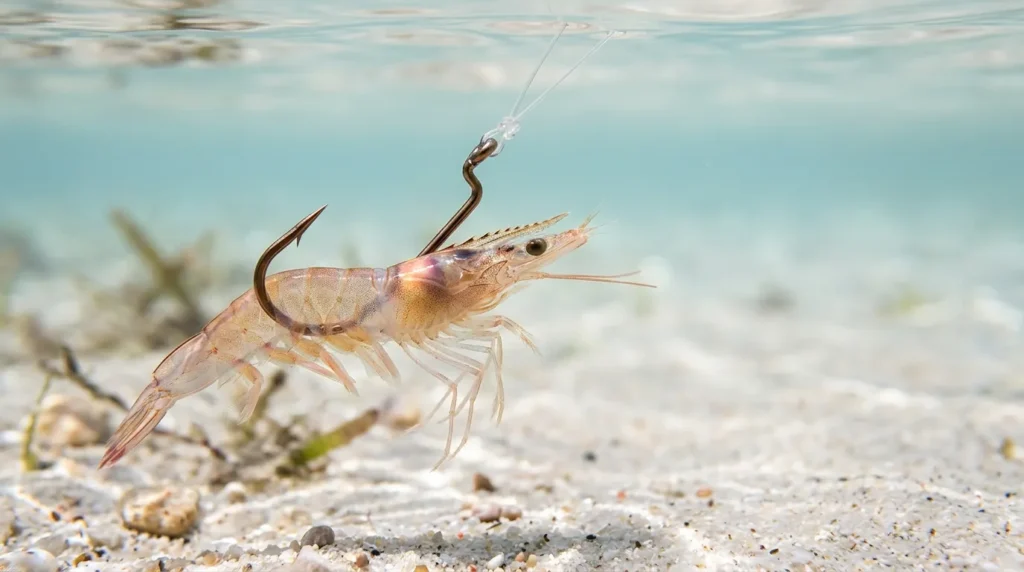
Shrimp for bait works because it is a natural food source for many game fish. A shrimp releases scent into the water, moves with the current, and looks like the real prey fish already feed on.
What Makes Shrimp Attractive to Fish?
Fish use sight, vibration, and scent to find food. In clear water, a live shrimp’s kicking tail and swimming motion attract attention; in murky water, its scent becomes even more important.
A shrimp’s shell, legs, and tail all help release odor as it moves. Dead shrimp and frozen shrimp can still attract fish because the meat continues to give off scent, especially when fished slowly near the bottom.
Which Fish Species Eat Shrimp?
Shrimp are part of the diet of many saltwater species, including redfish, spotted seatrout, flounder, snook, sheepshead, black drum, pompano, tarpon, and whiting.
In freshwater, shrimp can attract catfish, bass, trout, bluegill, and other opportunistic species. Freshwater shrimp bait is especially useful when fish are feeding near the bottom or around cover.
Live Shrimp vs. Dead Shrimp: Which Is Better for Bait?
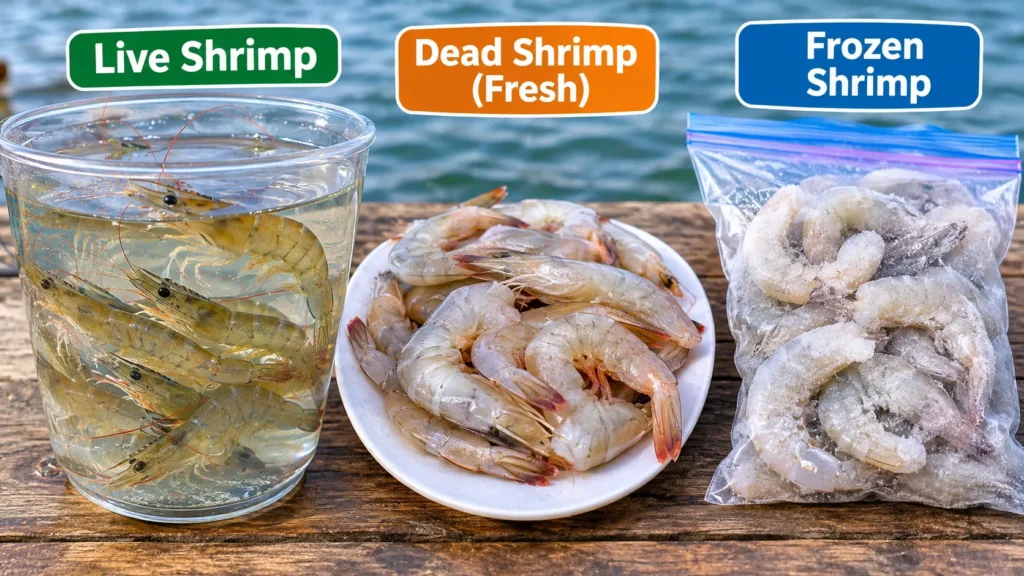
Live shrimp usually produce the most natural presentation, while dead shrimp offer convenience, stronger scent, and easier hook retention. The best choice depends on the species you target, water clarity, and how you plan to fish.
| Bait type | Best use | Main advantage |
|---|---|---|
| Live shrimp | Clear water, drifting, popping corks, sight-fishing | Natural movement |
| Fresh dead shrimp | Bottom fishing, piers, surf, catfish | Strong scent, stays on the hook well |
| Frozen shrimp | Backup bait, inshore fishing, jig tipping | Affordable and easy to store |
| Salted shrimp | Rough current, long casts, bait stealers | Tough texture and better hook retention |
Benefits of Using Live Shrimp
Live bait gives you movement that artificial lures cannot fully copy. A healthy live shrimp can swim, dart, and kick, which makes it especially effective for trout, redfish, snook, and other inshore game fish.
Live shrimp also work well under a popping cork because the cork creates noise while the shrimp struggles naturally below it. This combination is a classic setup for shallow bays, grass flats, and dock fishing.
When to Use Dead or Frozen Shrimp
Use dead shrimp when fish are feeding on the bottom, when you need a durable bait, or when live shrimp are unavailable. Dead shrimp release more scent as they break down, which can help in stained water or around structure.
Frozen shrimp for bait is a strong backup option when you cannot catch or buy live bait. Rig it on a jig head and slowly drag it across the bottom, lifting the rod tip a few inches, pausing, and repeating the retrieve.
How to Choose the Best Shrimp for Fishing
The best shrimp for fishing matches the size of the fish you want to catch and the rig you plan to use. A bait shrimp that is too large can be difficult for small fish to eat, while one that is too small may fall off or attract bait stealers.
Best Shrimp Sizes for Different Fish
- Small shrimp, about 1 to 2 inches: Trout, panfish, whiting, and smaller inshore fish.
- Medium shrimp, about 2 to 3 inches: Redfish, flounder, snook, sheepshead, and bass.
- Large shrimp, 3 inches or more: Tarpon, black drum, grouper, catfish, and larger game fish.
Match the hook to the shrimp, not just the fish. A size 4 or 6 hook suits small shrimp, while a 1/0 to 3/0 hook works better for larger bait shrimp.
Fresh, Frozen, or Live Shrimp?
Buy live shrimp from a local bait shop when possible, especially if you plan to fish them under a cork or free-line them. Local bait shops often carry shrimp suited to nearby waters, which can matter for both bait quality and local regulations.
Frozen shrimp is practical when you go fishing on short notice. Choose raw shrimp rather than cooked shrimp, keep it cold, and avoid shrimp that smells overly strong or feels mushy.
How to Hook Shrimp as Bait Properly
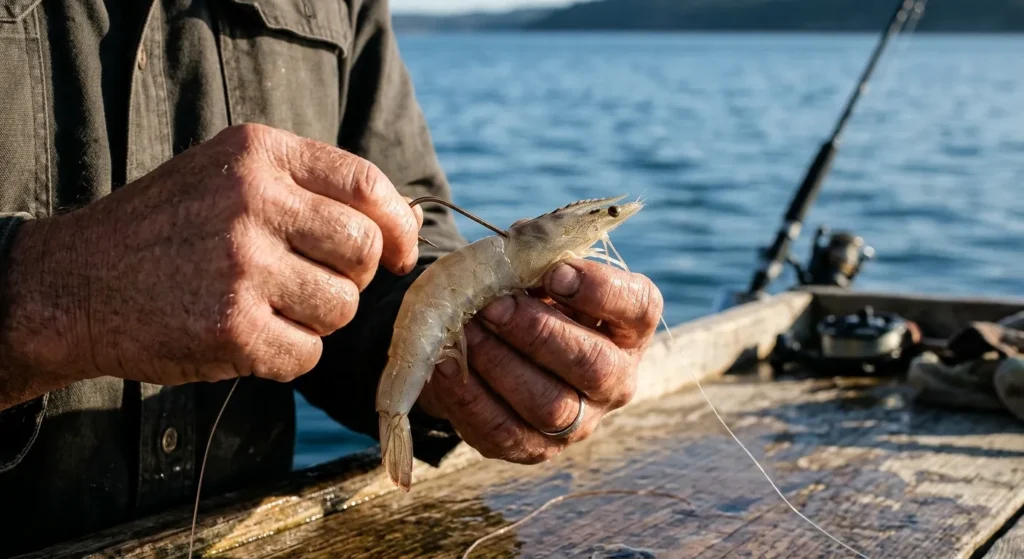
To hook shrimp as bait, insert the hook through a firm part of the body while keeping the shrimp straight and streamlined. For live shrimp, avoid the dark spot in the head, which contains vital organs; for dead shrimp, thread the hook through the tail or body so the bait stays secure.
How to Hook Live Shrimp Without Killing Them
- Hold the shrimp gently behind its head.
- Insert the hook under the hard shell at the front of the body.
- Push the hook point through the top of the shell, avoiding the dark organ spot.
- Leave the hook point exposed.
- Cast smoothly and let the shrimp swim naturally.
For drifting or float fishing, hook the shrimp crosswise through the shell behind the head. This lets it kick and swim while remaining securely attached.
How to Hook Dead Shrimp for Better Hook Retention
For dead shrimp, remove the head if it is soft, then thread the hook through the tail or meaty body section. Keep the bait compact so a fish can take the entire shrimp into its mouth.
A useful method for frozen shrimp is to tear off the tail, insert the hook into the opening, and push the point out through the top of the shell. This creates a streamlined bait that stays on the hook better during a slow bottom retrieve.
Image suggestion: A step-by-step shrimp hooking infographic showing three methods: head hook, cross-shell hook, and tail hook.
Best Fishing Rigs for Using Shrimp as Bait
The best fishing rigs for shrimp bait depend on depth, current, and whether you want the shrimp to swim, drift, or sit on the bottom. A simple rig often outperforms a complicated one, especially for a beginner angler.
– Carolina Rig
A Carolina rig keeps your shrimp just above weeds, shell bottom, or debris. Slide a sinker onto your main line, add a bead and swivel, then tie on a 12- to 24-inch leader and hook.
This rig works well for flounder, redfish, catfish, and bass. Let the shrimp rest on the bottom, then move it slowly with short lifts of the rod tip.
– Popping Cork Rig
A popping cork suspends shrimp above the bottom and creates noise that draws fish from a distance. Tie the cork to your main line, add an 18- to 36-inch fluorocarbon leader, then attach a hook or small jig head.
This is one of the best shrimp bait jigs setups for trout, redfish, and snook in shallow bays. Pop the cork sharply every few seconds, then let the shrimp settle.
– Free Line and Bottom Fishing Rigs
A free-line rig uses little or no weight, letting a live shrimp swim naturally with the tide. It works best in shallow water, around docks, and near mangroves or grass edges.
For bottom fishing, add just enough weight to hold the bait in place. A small egg sinker above the hook is enough in light current; use more weight in deeper water or stronger tide.
Image suggestion: A labeled rig diagram comparing Carolina rig, popping cork rig, and free-line shrimp setup.
What Fish Can You Catch Using Shrimp as Bait?
You can catch a wide range of species with shrimp, from small panfish to powerful saltwater game fish. Shrimp fishing works best when you match bait size, rig style, and location to the fish you want to target.
Saltwater Fish That Love Shrimp
Shrimp bait for fishing is especially productive inshore. Common targets include:
- Redfish
- Spotted seatrout
- Flounder
- Snook
- Sheepshead
- Black drum
- Pompano
- Whiting
- Tarpon
- Grouper
Around piers and jetties, dead shrimp can attract sheepshead, drum, and whiting. In grassy bays, live shrimp under a cork often produces trout and redfish.
Freshwater Fish That Eat Shrimp
Freshwater anglers can use shrimp for catfish, bass, trout, sunfish, and carp in some waters. Catfish respond strongly to the scent, while bass may strike a shrimp fished around wood, rocks, or weed edges.
For trout, use smaller pieces of shrimp on a light hook or tip a small jig. For catfish, use a larger chunk of shrimp on a bottom rig and wait for a steady pull.
Best Places and Conditions for Fishing With Shrimp
Shrimp produce best around places where fish already hunt small crustaceans. Focus on current seams, structure, and areas where bait collects.
Fishing Around Piers, Docks, and Inshore Structures
Piers, docks, bridge pilings, oyster bars, and rock jetties hold bait and give fish ambush points. Drop a shrimp close to the structure, then let the current carry it naturally.
From a boat, cast toward the structure before drifting away. Fish often gather where current pushes food past cover, so a well-placed shrimp can draw quick strikes.
Best Tides, Water Depths, and Weather Conditions
Moving tide is usually more productive than slack tide because it carries scent and food. Fish shallow flats on a rising tide and deeper edges, channels, or dock lines as the water drops.
In muddy water, rely more on scent and fish slower. In clear water, use live shrimp and lighter tackle so the bait looks natural.
How to Keep Shrimp Alive and Fresh for Fishing
Keeping shrimp in good condition protects your fishing experience. Live shrimp need cool, oxygenated water; dead and frozen shrimp need cold, clean storage to preserve their scent and texture.
How to Store Live Shrimp
Use a bait bucket or livewell with an aerator. Keep the water cool, change it when it becomes dirty, and avoid overcrowding the shrimp.
Do not drop ice directly into the water. Instead, use a frozen water bottle to cool the bucket slowly without diluting saltwater or shocking the shrimp.
How to Preserve Fresh and Frozen Shrimp
Keep fresh dead shrimp on ice in a sealed container. Drain meltwater often so the shrimp do not sit in moisture, which can soften the meat and reduce hook retention.
To make shrimp tougher, salt them before your session. Layer shrimp pieces and salt in a container, refrigerate them, and use the firmer bait when fish are nibbling or stealing bait.
Image suggestion: A comparison image of live shrimp, fresh dead shrimp, and frozen shrimp, with storage tips beside each.
Common Mistakes to Avoid When Using Shrimp as Bait
Most anglers lose shrimp because of hook placement, oversized hooks, or aggressive casting. Small adjustments can help your bait stay on the hook and catch more fish.
– Incorrect Hook Placement
Do not hook a live shrimp through the middle of the head if you want it to stay lively. Avoid the dark organ area and choose a hook position that keeps the shrimp straight.
For dead shrimp, avoid leaving a long piece of bait hanging off the hook. Smaller, secure pieces are easier for fish to swallow and harder for bait stealers to pull away.
– Using the Wrong Hook Size
A hook that is too large kills the shrimp’s action; one that is too small may bend or fail to penetrate a fish’s mouth. Start with a size 2 to 1/0 hook for medium shrimp and adjust based on the species and bait size.
– Casting Too Hard and Losing Your Bait
A hard cast can tear soft shrimp off the hook. Use a smooth sidearm or overhead cast, and wrap a small piece of bait thread around the shrimp if needed.
If you are fishing frozen shrimp on a jig, keep the bait streamlined and retrieve it slowly along the bottom instead of making violent snaps.
Extra Fishing with Shrimp Tips Most Anglers Overlook
- Use a cast net responsibly: If shrimping is legal in your area, a cast net can supply fresh bait, but always follow local rules.
- Salt leftover shrimp: Salt draws out moisture, firms the meat, and helps the bait stay on the hook longer.
- Keep bait separated: Store bait shrimp away from food and label the container clearly.
- Use scent strategically: Garlic and shrimp fishing bait can add scent, but natural shrimp scent is usually enough.
- Check regulations: Some states restrict imported shrimp as bait because non-native shrimp can carry diseases that threaten local crustaceans. Texas, for example, prohibits imported shrimp in its waters.
- Fish the retrieve: With frozen shrimp, drag it 6 to 8 inches, pause, reel up slack, and repeat to cover more water.
Frequently Asked Questions About Using Shrimp as Bait
Can You Use Grocery Store Shrimp as Fishing Bait?
Yes, you can use grocery store shrimp for bait if local rules allow it. Choose raw, unfrozen or frozen shrimp, keep it cold, and avoid cooked shrimp because it is softer and less durable.
Is Peeled or Unpeeled Shrimp Better for Fishing?
Unpeeled shrimp usually stays on the hook better because the shell adds structure. Peeled shrimp releases more scent but can fall apart faster, so use small pieces and a bait holder hook.
Can You Catch Catfish With Shrimp?
Yes. Catfish readily eat shrimp, especially fresh or dead shrimp fished on the bottom. Use a circle hook or J hook with enough weight to hold the bait near structure.
Does Frozen Shrimp Work as Well as Live Shrimp?
Frozen shrimp can work very well, particularly for bottom fishing and in stained water. Live shrimp usually has an advantage in clear water because it moves naturally, but frozen shrimp remains a reliable backup.
What Is the Best Hook Size for Shrimp Bait?
For small shrimp, use size 4 to 6 hooks. For medium bait shrimp, use size 2 to 1/0. For large shrimp or bigger fish, use 1/0 to 3/0.
What Is Dead Shrimp and 10 lb Mono Good for Catching?
Dead shrimp on 10 lb monofilament is good for trout, redfish, flounder, whiting, sheepshead, and catfish. It is a versatile setup for pier, jetty, bay, and light inshore fishing. wikihow
Can You Use Shrimp as Bait in Freshwater?
Yes, you can use shrimp as bait in freshwater where regulations permit. It works for catfish, bass, trout, bluegill, and other fish that feed on crustaceans or scavenge meaty bait.
How Do I Catch Shrimp to Use as Bait?
You can catch shrimp with a cast net, shrimp trap, or dip net where legal. Check local shrimping seasons, size limits, and gear rules before you collect bait.
Is Shrimp a Good Bait for Fishing?
Yes. Shrimp is one of the most versatile natural baits because it attracts many species through scent and movement. It works in saltwater, brackish water, and many freshwater fisheries.
Can I Use Frozen Shrimp for Fish Bait?
Yes. Thaw only what you need, keep the rest cold, and rig it on a jig head or hook. Frozen shrimp works especially well when slowly dragged across the bottom.
When Using Shrimp for Bait, Is It Good to Dip the Shrimp in Soy Sauce?
You can try it, but soy sauce is not necessary. Its salt and scent may add attraction, but it can also soften the shrimp. A simple salt treatment is usually more practical.
Can I Catch Largemouth Bass With Store-Bought Large Frozen Shrimp?
Yes, largemouth bass can eat store-bought frozen shrimp, especially around docks, fallen trees, and weed lines. Fish it slowly on a jig head or Carolina rig near cover.
What is the best sea worms or shrimp as bait for fishing?
Shrimp is usually the better all-around bait because it attracts more species and works in both saltwater and freshwater. Sea worms excel for bottom feeders like flounder, drum, and whiting, especially in sandy or muddy areas.
How Do I Catch Fish From the Gulf With Shrimp?
In the Gulf, fish live shrimp under a popping cork for trout and redfish, or fish dead shrimp on the bottom for flounder, drum, whiting, and sheepshead. Use local bait shrimp when possible and follow regional bait regulations.
Conclusion
Using shrimp as bait remains one of the most reliable ways to catch fish because it combines natural scent, realistic movement, and broad appeal across species. Whether you prefer live shrimp under a cork, dead shrimp on the bottom, or frozen shrimp on a jig, success comes from matching the bait to the fish, water, and rig.
Start with a simple setup: a sharp hook, the right shrimp size, and a slow, natural presentation. Keep live bait cool and oxygenated, store dead bait on ice, and use salted or frozen shrimp when durability matters. Check local regulations before using store-bought or imported shrimp, since some areas restrict non-native bait to protect native ecosystems. tpwd.texas
With the right hook placement, a productive rig, and attention to tide and structure, using shrimp as bait can turn a beginner fishing trip into a consistently rewarding adventure.
You will also love:
- How To Attract Fish To Your Bait? 5 Proven (Hacks & Tips)
- What Fish Can You Catch With Squid! – Cut Bait (Must-Read)
- What Do Carp Eat In Summer! (Best Baits, Tactics & Tips)
- What Is The Best Catfish Bait For Lakes – Top 7 Bullhead Baits
- Are Minnows Good Bait For Bass Fishing? (21 Facts About Minnows)
- How To Use Chicken Gizzards For Catfish? (Detailed-Guide)