
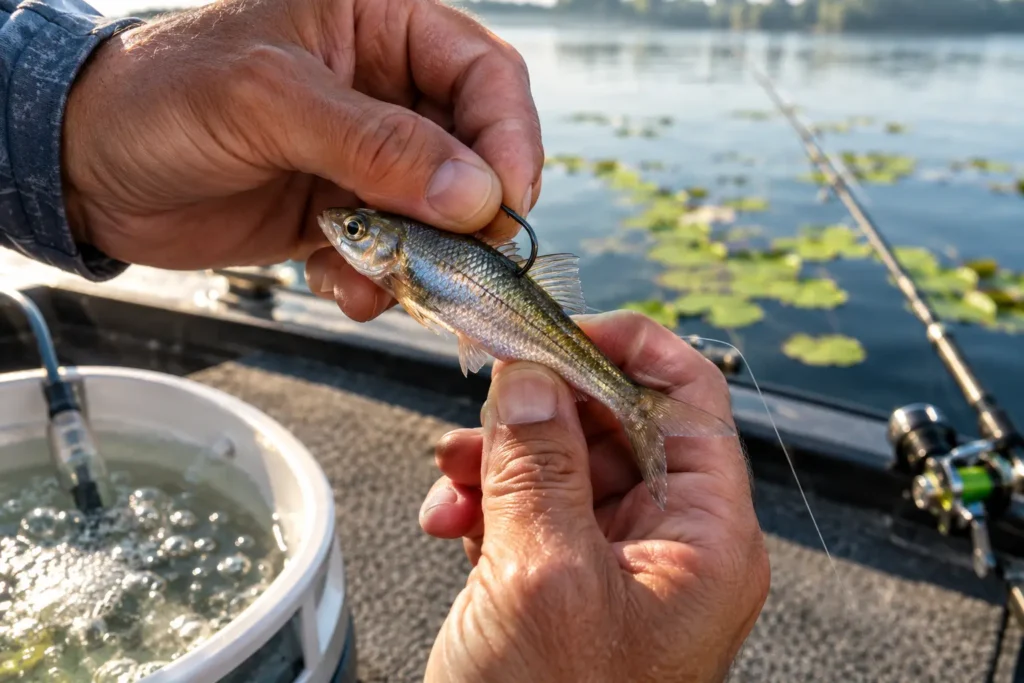
Are minnows good bait for bass? Yes, minnows make excellent bait for bass, especially when bass feed on shad, shiners, and other small baitfish. Live minnows offer natural movement and scent that can trigger strikes, while anglers can also use dead minnows or minnow-imitating lures.
Bass fishing experts such as Glenn May of BassResource emphasize understanding bass feeding habits and matching your bait to local forage.
From choosing the right minnow species and hook size to selecting the best fishing locations and presentation techniques, a few details can make a big difference. You’ll also discover when live minnows outperform artificial lures and how to keep your bait lively. Ready to put more bass in your boat? Let’s explore how to fish minnows effectively!
Quick Jump
ToggleAre Minnows Good Bait for Bass?
Are minnows good bait for bass? Yes. Minnows are one of the most reliable forms of live bait for bass because largemouth bass and smallmouth bass naturally feed on small fish, especially shiners, shad, and other baitfish. A fresh, lively minnow gives bass a realistic meal with natural movement, scent, and a familiar profile—three things that can entice fish when a lure will not.
Using live baits gives you a natural way to attract largemouth and smallmouth bass. These baits produce natural movement and scent that can trigger strikes, even when bass ignore artificial presentations.
For most bass anglers, a 3- to 4-inch minnow is the sweet spot. Fish it slowly near weeds, wood, docks, drop-offs, or rocky banks, and you give bass an easy opportunity to eat. Live minnows work especially well in colder water, around heavy cover, and when bass are pressured by constant lure presentations.
Why Do Bass Eat Minnows?
Bass are opportunistic predators. They eat whatever prey is available in their body of water, and minnows are a major part of the forage base in many ponds, lakes, rivers, and reservoirs.
A bass sees a minnow as food because it matches several key traits:
- Realistic size: Small fish are easy to swallow and require less energy to catch.
- Natural action: A live minnow flicks, darts, and struggles in a way that triggers a predator’s instincts.
- Scent and vibration: Live bait produces subtle movement and scent that a soft plastic lure cannot fully copy.
- Familiar profile: Golden shiners, emerald shiners, spot-tail shiners, and similar baitfish are common bass forage.
Bass eating minnows traits include an ambush-style attack, a preference for wounded or vulnerable prey, and a willingness to feed near cover. That is why a minnow fished close to a weed edge, laydown, dock post, or rock pile can work great when conditions are tough.
What Types of Minnows Are Best for Bass?
The best minnow is usually the one that matches the natural forage in the water you are fishing. Check local bait stores or your local bait shop, then choose a species and size that looks like what bass already eat.
| Minnow type | Best use | Why it works |
|---|---|---|
| Golden shiner | Largemouth bass in lakes and ponds | A larger, durable baitfish that draws attention from bigger bass. |
| Fathead minnow | Ponds, small lakes, and pressured water | Easy to keep, widely available, and effective for average-size bass. |
| Emerald shiner | Rivers, clear lakes, and smallmouth water | A natural baitfish profile for bass that feed on schooling minnows. |
| Shad | Reservoirs and lakes with shad forage | Matches a major seasonal food source; use only where legal and appropriate. |
| Creek minnows | Streams and small rivers | Can match local forage, but collection rules vary by state. |
Golden shiners and fathead minnows are the easiest starting choices for most anglers. They are easy to keep alive in an aerated bucket, available at many bait shops, and effective for both largemouth and smallmouth bass.
Ready to catch more bass? Shop the best minnow lures for clear water, deep rocks, and pressured fish.
Live Minnows vs. Dead Minnows for Bass
Live minnows are usually better for bass because they swim, flee, and create the vulnerable movement that encourages a strike. Dead minnows can still catch fish, but they work best when you add action with a jig, slow retrieve, or bottom presentation. bassforecast
Use live minnows when:
- Bass are holding near shallow cover.
- The water is cold and fish are less active.
- You are fishing a bobber around docks, weeds, or brush.
- You want the most natural presentation possible.
Use dead or preserved minnows when:
- You are fishing deeper water with a jig.
- You want to add scent to a lure.
- Live bait is difficult to keep fresh and lively.
- You are casting repeatedly to the same target.
A dead minnow on a jig head can imitate a wounded baitfish. Cast it out, let it sink, then use a gentle lift-and-fall retrieve. This can be especially useful around rocks, brush, and channel edges.
What Size Minnow Should You Use for Bass?
For most bass fishing situations, choose a 3- to 4-inch minnow. That size is large enough to interest a quality bass but small enough that panfish, sunfish, and smaller bass will not steal it constantly.
| Target fish | Recommended minnow size |
|---|---|
| Bluegill, crappie, and panfish | 1 to 2 inches |
| Average largemouth bass | 2.5 to 4 inches |
| Bigger largemouth and smallmouth bass | 3 to 5 inches |
| Catfish and larger predators | 4 inches and up |
A 3- to 4-inch long minnow fished slowly along the bottom is difficult for a feeding bass to ignore. If you are targeting really big bass, step up to a larger shiner, but do not automatically use the biggest bait available—match the size of the forage in that fishery.
Stop guessing which bait to tie on—browse top-rated minnow lures that produce bites when live bait is not an option.
How to Rig a Live Minnow for Bass
The best way to rig live bait for bass depends on depth, cover, and how active the fish are. Keep the rig simple: a light-wire hook, a small split shot when needed, and enough weight to reach the strike zone without killing the minnow’s action.
Lip-hook rig
Hook the minnow once through the bottom lip or through both lips. This keeps the bait able to swim naturally and works well for casting, drifting, and bobber fishing.
Best setup: Size 4 to 1/0 light-wire Aberdeen or octopus hook, small split shot 6 to 12 inches above the hook, and 6- to 10-pound monofilament or fluorocarbon line.
Dorsal-hook rig
Insert the hook just beneath the front of the dorsal fin, taking care not to hit the spine. This hook placement makes the minnow swim horizontally and is useful under a bobber or when still-fishing near cover.
Important: Do not pierce the spine. A damaged minnow may lose its ability to swim and die quickly.
Tail-hook rig
Hook the minnow lightly through the fleshy area just ahead of the tail. This creates a frantic, fleeing action that can entice a reaction strike from a bass. It is best for short presentations near visible cover because the bait can work loose.
Bottom rig
For deeper water, use a slip-sinker or three-way rig. Keep the minnow a few inches to about a foot off the bottom so it remains visible to nearby fish. A 10-pound fluorocarbon leader and a size 1/0 octopus hook are a solid starting point for larger minnows.
How to Fish Minnows With a Bobber
Have you tried fishing with minnows for bass but struggled to get consistent bites? Minnows make excellent live bait because they closely resemble the small forage fish that largemouth and smallmouth bass naturally hunt. Their natural swimming action can attract hungry bass, especially around weed beds, submerged timber, rocky points, and drop-offs.
To catch bass with minnows, choose lively baitfish measuring around 2–4 inches for smaller bass and 4–6 inches for larger fish. Hook them through the lips or behind the dorsal fin, then fish them under a bobber, on a drop-shot rig, or with a free-line presentation. Adjust your depth and retrieve speed to match where bass feed.
A bobber is one of the easiest ways to fish minnows for bass, especially around shallow cover. It keeps the bait off the bottom, lets it swim naturally, and gives you a clear visual bite signal.
Simple bobber setup
- Thread the line through a slip bobber stop, bead, and bobber.
- Add a small split shot about 6 inches above the hook.
- Tie on a size 4 to 1/0 hook.
- Hook the minnow through the lips or just below the dorsal fin.
- Set the depth so the minnow swims just above weeds, brush, or structure.
- Cast close to cover and let the bait do the work.
A slip bobber is better than a fixed round bobber when you need to fish deeper water. It lets you adjust depth quickly while still casting effectively.
When to use it
This method shines in spring and fall, when bass often move shallow to feed. Let the minnow sit beside a dock, weed pocket, laydown, or rocky bank. If the bobber twitches, dips, or moves sideways, give the fish a moment, then set the hook with a smooth upward rod-tip motion.
Best Places to Fish Minnows for Bass
Bass use cover and changes in the water column to ambush small fish. Focus on places where a minnow can be trapped, injured, or forced into the open.
- Weed edges: Cast along the outside edge, then let the minnow swim into openings.
- Docks and piers: Target shaded corners, pilings, and gaps between boats.
- Laydowns and brush: Keep the bait just outside the cover, then let it drift closer.
- Rock banks and riprap: Fish slowly, especially in cooler water.
- Creek channels and drop-offs: Use a split-shot or bottom rig to keep the bait in the strike zone.
- Pond shorelines: Work the edges of vegetation, especially early and late in the day.
For bank anglers, a pond can be one of the best places to learn this technique. Start along the wind-blown bank, fish parallel to cover, and avoid making loud casts that can spook shallow bass.
Best Time of Year to Use Minnows for Bass
Minnows work year-round, but they are especially effective when bass are less willing to chase a fast-moving lure. Early spring, late fall, and winter are prime periods for a slow, natural live-bait presentation.
| Season | Best approach |
|---|---|
| Early spring | Fish a minnow slowly near staging areas, weed edges, and transition banks. |
| Late spring and summer | Target shade, docks, weed edges, and deeper cover during bright conditions. |
| Fall | Follow baitfish and fish minnows near points, channels, and remaining vegetation. |
| Winter | Slow down even more; use a small split shot or bottom rig and give bass time to find the bait. |
Cold water slows a bass’s metabolism. A live minnow that stays in one small area longer can outproduce a lure that moves too quickly.
Are Minnows Better Than Artificial Bass Lures?
Minnows are not always better than artificial lures, but they are better in certain situations. Live bait gives you realism, scent, and natural action; lures give you speed, coverage, durability, and more presentation options.
| Situation | Better choice | Reason |
|---|---|---|
| Cold, slow water | Live minnow | A subtle, natural presentation can entice inactive bass. |
| Heavy cover | Live minnow or jig | The bait can sit in the strike zone longer. |
| Searching large water | Crankbait, spinnerbait, or swimbait | Lures cover water faster. |
| Pressured fish | Finesse minnow lure or live bait | A smaller, subtler offering can get more bites. |
| Beginner learning structure | Live minnow | The bobber makes bites easy to see. |
A minnow lure, such as a Rapala-style jerkbait or a soft-plastic minnow bait, can be excellent when bass are suspended or spread out. Modern minnow-style baits work well for largemouth, smallmouth, and spotted bass, particularly when fished with a slow roll or a twitch-and-pause retrieve.
Best minnow lures for bass
- Jerkbait: Good for clear water, suspended fish, and a cast-and-retrieve presentation.
- Soft-plastic minnow: A versatile minnow lure for trout, bass, walleye, and other species; rig it on a jig head or drop-shot rig.
- Jighead minnow: Excellent for targeting bass that suspend off bottom or hold near rocks.
- Hard minnow bait: A classic Rapala-style lure can work great around wood, weeds, and rocks.
A soft plastic minnow on a jig head is one of the best minnow lures for bass when you need to fish deeper water or present the bait with more control. Keep the knot centered at the top of the jig’s eye so the bait maintains a natural horizontal posture. wired2fish
Legal and Ethical Baitfish Tips
Before you collect minnows, confirm that it is legal to fish with them in that body of water. Rules differ by state, lake, and species, and moving baitfish between waters can spread invasive species or disease.
- Buy bait from licensed bait shops when possible.
- Never release unused baitfish into a new body of water.
- Keep live minnows cool, aerated, and fresh.
- Use only the baitfish species allowed by local regulations.
- Dispose of dead bait responsibly; do not dump it into the lake or pond.
Fishing Bass With Minnows FAQs
Are minnows good bait for bass?
Yes. Minnows are excellent live bait for bass because they match a common food source and provide realistic movement, scent, and a natural baitfish profile.
What is the best minnow for largemouth bass?
Golden shiners are a top choice for larger largemouth bass. Fathead minnows are also a practical option for ponds and smaller lakes.
Do bass eat minnows in ponds?
Yes. Bass commonly eat minnows, small sunfish, bluegills, crayfish, insects, and other forage in ponds. A 3- to 4-inch minnow is often a strong choice for pond bass.
Should I use a bobber with a minnow?
Use a bobber when you want to suspend the minnow above weeds, brush, or other cover. A slip bobber is especially useful because you can adjust the depth.
Can you catch smallmouth bass with minnows?
Yes. Smallmouth bass eat minnows readily, particularly in rivers, clear lakes, and rocky areas. A live minnow or a minnow-style lure can catch smallmouth effectively.
Are minnows better than worms for bass?
Minnows are often better when bass are feeding on baitfish. Worms, nightcrawlers, and crawlers remain excellent choices around shallow cover, especially when bass are feeding on bottom-oriented prey.
Can I use dead minnows for bass?
Yes. Dead minnows can work on a jig, drop-shot rig, or slow bottom presentation. They lack the movement of live bait, so add action with your rod tip. bassforecast
What hook should I use for live minnows?
Use a light-wire Aberdeen or octopus hook in sizes 4 through 1/0, depending on the size of the minnow. Light-wire hooks help preserve the bait’s natural action.
What is the #1 best bait for bass?
There is no single #1 bait for every situation, but a soft plastic worm is the most reliable all-around choice. It catches largemouth and smallmouth bass in clear or muddy water, around weeds, docks, rocks, and wood. For live bait, a lively shiner or minnow is often the best option.
Conclusion
Are minnows good bait for bass? Absolutely. A fresh, lively minnow is one of the most dependable ways to catch bass when you match the bait to local forage and present it near the right cover. For most anglers, a 3- to 4-inch shiner or fathead minnow under a bobber is an easy starting point; a split-shot or bottom rig is the better choice when fish hold deeper.
Live minnows excel in cold water, around weeds and wood, and when bass have seen plenty of artificial lures. Dead minnows still have a place on a jig or drop-shot presentation, especially when you need scent and a slower, more controlled action. Check local baitfish rules, keep your bait healthy, and let the minnow’s natural movement do the work. With the right rig and patience, minnows can help you catch more bass throughout the season.
Upgrade your tackle box with proven minnow lures—built to imitate the baitfish bass chase every day.
You might also like:
- What Is The Best Time To Fish For Trout In Winter?
- Do You Need A Bite Alarm For Carp Fishing? (Bite Alarms For Beginners Guide)
- Essential Fishing Tips For Beginner (Complete How To Fish Guide)
- All You Need To Know About Fishing With Minnows For Bass
- Are Bream Good Eat Fish? Taste, Bones & Best Recipes