

Surf fishing with sand fleas gives saltwater anglers a natural way to catch popular beach species such as pompano, whiting, redfish, and black drum. Have you ever wondered why fish often prefer these small crustaceans over artificial lures? Sand fleas, also called mole crabs, live in the wet sand along the surf zone and provide an easy meal for hungry fish.
The best way to catch fish with sand fleas involves collecting fresh bait from the beach, hooking it securely, and presenting it near breaking waves where feeding fish search for food.
You can use whole sand fleas, peeled sand fleas, or sand fleas with eggs, depending on your target species and bait size. A light surf rod, suitable hooks, and a simple bottom rig can help you get more bites.
Want to turn sand fleas into your secret weapon for beach fishing? This guide covers where to find them, how to collect and hook them, the best rigs to use, and which fish respond to this natural bait. We’ll also explore practical surf-fishing techniques.
Why Sand Fleas Are One of the Best Baits for Surf Fishing
What are sand fleas (mole crabs)?
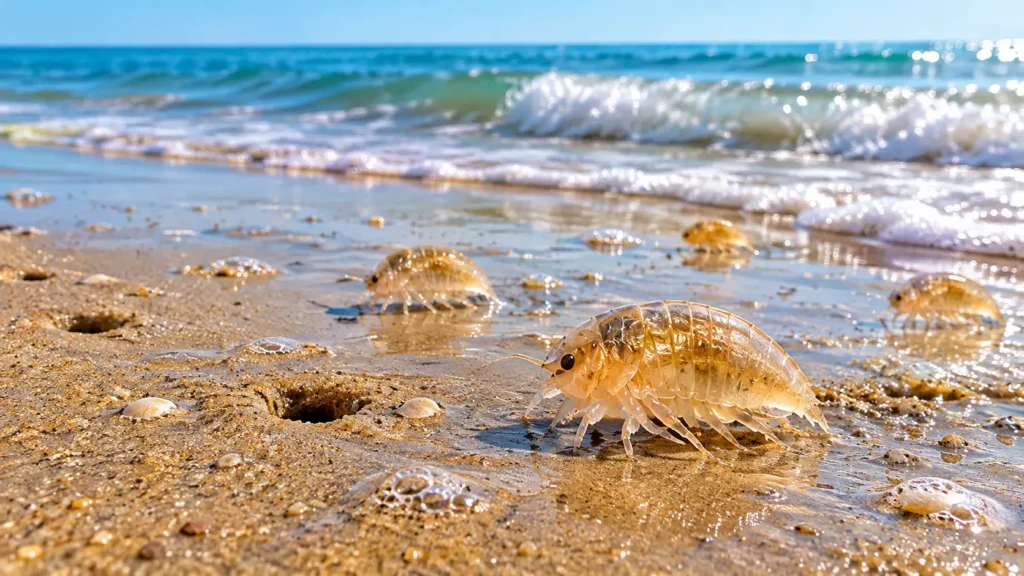
Sand fleas, or mole crabs, are tiny shellfish-like creatures that live in colonies in the surf zone. They use a digging appendage, often called a “digger,” to bury quickly into wet sand as waves retreat.
They do not bite people like true fleas. They have no claws, so you can grab them safely by hand once you find them in the sand.
Why saltwater fish naturally eat sand fleas
Pompano, red drum, black drum, and sheepshead regularly hunt mole crabs in shallow water. That makes sand fleas for bait more selective than shrimp: they attract the species you want while drawing fewer ladyfish, hardtails, and catfish.
Egg-bearing females are especially effective because the orange eggs create scent, movement, and visual appeal. Many anglers consider them the best sand flea fishing bait during a pompano run.
Live vs. frozen sand fleas
Live sand fleas for fishing usually outperform frozen ones because they stay firmer, move naturally, and remain on the hook better during a cast. Freshly caught fleas are ideal; frozen fleas still catch fish but can turn soft and fall off more easily.
| Bait type | Best use | Main drawback |
|---|---|---|
| Live sand fleas | Pompano, drum, sheepshead, whiting | Must be kept cool, damp, and shaded |
| Freshly dead sand fleas | Good all-around surf bait | Slightly less natural action |
| Frozen sand fleas | Backup bait or when live fleas are unavailable | Can be mushy and hard to keep hooked |
What Fish Can You Catch With Sand Fleas in the Surf?
– Pompano
Pompano are the classic target for sand flea surf fishing. Their diet centers on small crustaceans and shellfish, including mole crabs and shrimp, so a fresh sand flea on a pompano rig is hard to beat.
– Whiting (Southern Kingfish)
Whiting feed along the bottom and readily take small sand fleas. Use a smaller piece or a single small flea when whiting are the main target.
– Red Drum and Black Drum
Redfish and black drum eat mole crabs, shrimp, crabs, and other bottom food. A sand flea can produce redfish, though many surf anglers use larger fleas or combine them with shrimp or Fishbites for a bigger bait profile.
– Sheepshead and Striped Bass
Sheepshead readily eat sand fleas, especially around structure and troughs. In colder Atlantic surf fisheries, striped bass may also take sand fleas, along with flounder, croakers, and ground mullet.
How to Find and Catch Sand Fleas on the Beach
Identifying V-shaped marks in wet sand
How to catch sand fleas for bait? Look for tiny bumps and V-shaped ripples in the wet sand after a wave pulls back. Those marks form as sand fleas use their antennae and diggers to burrow; a larger V often signals a bigger colony underneath.
Best places to look along the surf zone
Search the area where waves break and recede, especially during an outgoing tide. As the water drops, sand fleas are left in shallower water near the shoreline, making them easier to spot and capture.
Early morning is often best because the beach has less foot traffic and the fleas are easier to find. Walk slowly along the water line and watch for the V marks after each retreating wave.
Using a sand flea rake vs. catching them by hand
A sand flea rake is the fastest tool when you need a larger supply. Scoop wet sand at the surf line, sift it, and collect the fleas before they dig away.
You do not need a rake. Place a handful of sand on a bucket lid or use a colander, then sift through it by hand. This works well when you only need enough bait for a short session.
How to Keep Sand Fleas Alive and Fresh for Fishing
Best containers for storing live sand fleas
Use a ventilated bait bucket, cooler, or perforated container. Keep the fleas in cool, damp sand—not standing water—so they can breathe and stay lively.
Keeping bait cool, damp, and shaded
Store the container in the shade and add a little seawater or damp sand as needed. Keep them cool but do not pack them in ice directly; extreme cold and freshwater can harm them.
Common storage mistakes to avoid
- Leaving them in direct sunlight
- Keeping them submerged in freshwater
- Storing them in a sealed, airtight container
- Letting the sand dry out
- Collecting far more than you can use in one trip
How to Hook Sand Fleas for Surf Fishing
Step-by-step bait-hooking techniques
- Hold the sand flea with its underside facing you.
- Choose a hook that matches the flea’s size—usually a 1/0 or 2/0 baitholder or circle hook for average fleas.
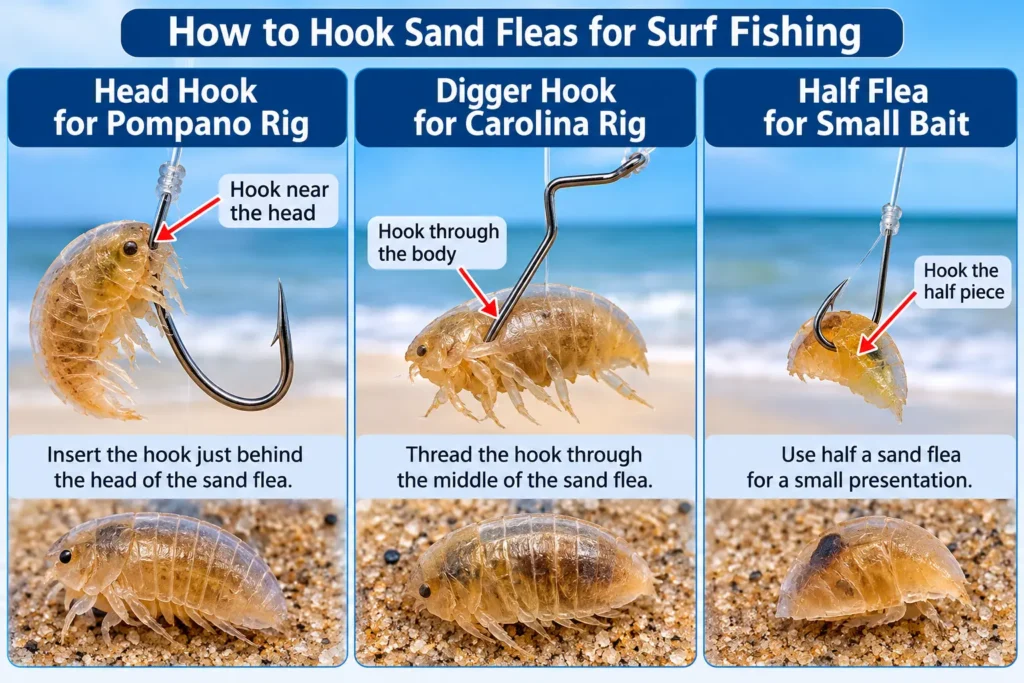
- Insert the hook point through the side of the head or shell.
- Slide it out through the opposite side so the hook point is exposed.
- Cast smoothly; avoid whipping the bait through the air.
This head-hooking method works well on pompano rigs and hook-drop rigs because the bait hangs naturally in the current.
Where to insert the hook
For a Carolina or fish finder rig, hook through the base of the digger. Open the digger, insert the hook at its base, and push the point through the other side. This limits the flea’s digging motion and exposes any eggs, which fish target.
How many sand fleas to put on one hook
Use one sand flea for most situations. Put two small fleas on a hook only when the bait is tiny, the current is strong, or you are targeting larger drum, trout or redfish.
Hooking egg-bearing sand fleas
Hook egg-bearing fleas gently so the orange egg cluster stays visible. Position the eggs near the hook bend or let them protrude slightly; they act like a built-in attractor.
Best Surf Fishing Rigs for Sand Fleas
Pompano rig (two-hook setup)
The pompano rig is the best default Sand flea rig for pompano fishing. It uses two dropper loops above a pyramid sinker, letting you present two baits off the bottom while the sinker holds in the sand.
Use 1/0 or 2/0 hooks for standard sand fleas. This setup is widely available at tackle shops and works especially well for pompano and whiting. text
Surf Fishing Pompano Rig Rod tip | |-- Swivel | |-- 6-8 inches -- Hook #1 -- Sand flea | |-- 6-8 inches -- Hook #2 -- Sand flea | |-- 12-18 inches | Pyramid sinker
Fish finder rig
A fish finder rig lets the line slide through the sinker, so a fish can pick up the bait without immediately feeling the weight. It is a strong choice for redfish, black drum, and sheepshead.
Use one flea through the digger, or half of a large flea when you want more scent. text
Fish Finder Rig Main line -- sliding sinker -- bead -- swivel | Leader | Hook -- Sand flea
Carolina rig
The Carolina rig is similar to a fish finder rig but usually uses a longer leader. It keeps the bait near the bottom while allowing some natural movement in the surf.
For sand fleas, use a 12- to 24-inch fluorocarbon leader and hook through the digger. This presentation works well when fish are feeding cautiously.
Hi-Lo rig and hook recommendations
A hi-lo rig places two hooks at different heights, which helps you test where fish are feeding in the water column. Use smaller hooks and flea pieces for whiting; use 1/0 to 2/0 hooks for pompano and drum.
| Rig | Best species | Hook size | Sinker |
|---|---|---|---|
| Pompano rig | Pompano, whiting | 1/0–2/0 | 2–4 oz pyramid |
| Fish finder rig | Redfish, black drum, sheepshead | 2/0–4/0 | 2–5 oz |
| Carolina rig | Cautious feeders, drum | 1/0–3/0 | 1–3 oz egg sinker |
| Hi-Lo rig | Whiting, croaker, mixed bag | 1/0–2/0 | 2–4 oz |
Best Rod, Reel, Line, and Hook Setup for Sand Flea Fishing
Recommended surf rod length and power
A 9- to 11-foot medium or medium-heavy surf rod suits most beach fishing. It gives you enough casting distance to reach the first trough while remaining manageable for repeated casts.
Spinning reel size and fishing line
Choose a 4000 to 6000 size spinning reel. Spool it with 20- to 30-pound braided line and add a 20- to 30-pound fluorocarbon leader for most sand flea presentations.
Best hook sizes and sinker weights
Best hook for sand fleas: Use 1/0 to 2/0 hooks for average sand fleas and pompano. Step up to 3/0 or 4/0 for large fleas, drum, or redfish.
Sinker weight depends on current and wave action:
- 1–2 ounces: calm surf or close-range fishing
- 2–4 ounces: typical beach conditions
- 4–6 ounces: strong current, heavy waves, or long casts
Choosing the right tackle for surf conditions
Match your sinker to conditions, not to the fish. If your rig rolls down the beach, increase weight; if it digs in too hard, reduce it. A sand spike keeps your rod secure while you wait for a bite.
Where and When to Fish Sand Fleas in the Surf
Finding troughs, sandbars, and beach cuts
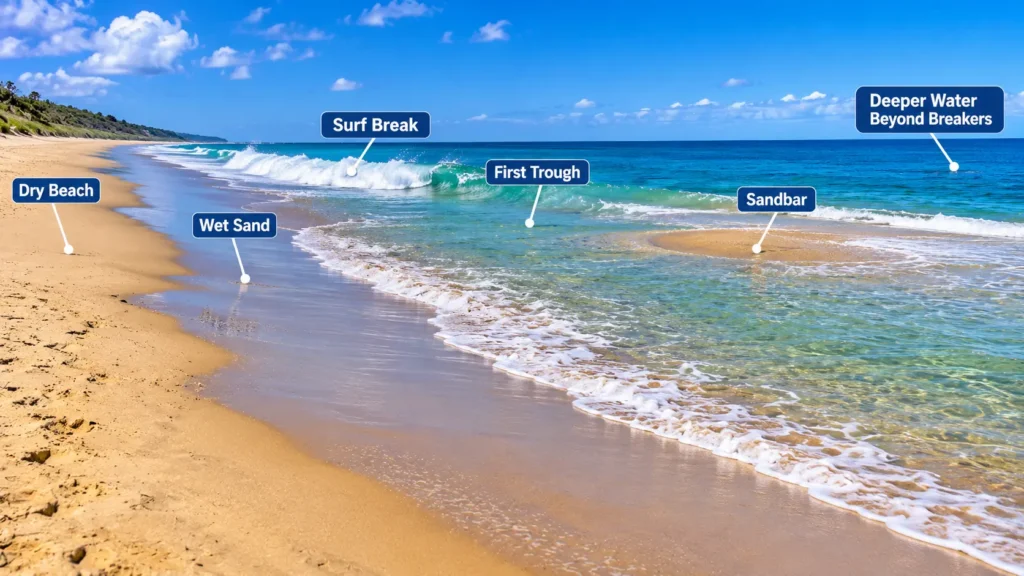
Fish the first trough just beyond the breaking waves. Pompano, whiting, and drum use these deeper lanes to move along the beach and feed on mole crabs.
Look for:
- A darker channel between the beach and first sandbar
- Waves breaking farther offshore over a sandbar
- A cut or gap where water funnels through the bar
- Birds feeding close to shore
- Fleas, coquina clams, or small crabs in the wash
Best tides for sand flea fishing
Incoming tide often pushes bait and fish closer to shore, while outgoing tide exposes sand flea colonies along the water line. For collecting bait, outgoing tide is especially productive.
Dawn, dusk, and seasonal fishing patterns
Fish early morning and late afternoon when light is lower and fish move into shallow water. On the Gulf Coast, pompano runs often occur around mid-April and early October, though local timing varies.
Fishing the incoming vs. outgoing tide
Fish the incoming tide when you want bait and fish pushed toward the beach. Fish the outgoing tide when you need to gather sand fleas or target fish holding in the deeper outer trough.
Proven Tips for Catching More Fish With Sand Fleas
How far to cast your bait
Start with a cast just past the first breaker or into the first trough. Many pompano and whiting feed close to shore, so do not assume you need to launch bait beyond the second sandbar.
When to use one or multiple sand fleas
Use one flea for pompano and whiting. Use two small fleas, or half of a large flea, when targeting drum or when you need extra scent in rough surf.
Adding Fishbites or other bait combinations
Add a small piece of Fishbites, shrimp, or squid when fleas are scarce or bait thieves are active. A sand flea plus a small shrimp strip can improve scent while keeping the presentation natural.
Detecting subtle bites and avoiding bait theft
Watch the rod tip for small taps, slow bends, or line movement. Check bait every 10 to 15 minutes; replace mushy fleas, empty shells, or bait that has stopped producing.
Common Sand Flea Surf Fishing Mistakes to Avoid
Avoid these mistakes to get more from surf fishing with live sand fleas:
- Casting too far. Pompano, whiting, and drum often feed in the wash and first trough, not beyond the second sandbar.
- Using the wrong sinker weight. If waves roll your rig down the beach, your bait moves unnaturally; add weight until it holds. hookwake
- Using a hook that is too large. Match a 1/0–2/0 hook to average fleas so the point stays exposed.
- Hooking the flea incorrectly. For a pompano rig, hook through the head; for a bottom rig, hook through the base of the digger to expose the eggs.
- Letting bait dry out or overheat. Keep fleas in damp sand, shade, and a ventilated container—not submerged in water.
- Fishing empty shells. Crabs and baitfish strip fleas quickly; check and replace bait regularly.
- Setting the hook too hard. With circle hooks, let the fish load the rod and hook itself instead of jerking immediately.
- Ignoring crabs. If crabs steal bait, raise the bait slightly with a small float or switch to a more protected presentation.
- Using old or mushy bait. Fresh fleas stay on the hook better and produce more scent; replace soft bait promptly.
- Not rinsing gear. Saltwater damages reels and rods; rinse tackle with freshwater after every trip.
FAQs
Are sand fleas good bait for fishing?
Yes. Sand fleas are excellent bait because they are free, natural, easy to find in the surf, and eaten by many popular saltwater species.
Do fish eat sand fleas?
Yes. Pompano, sheepshead, redfish, black drum, whiting, croakers, flounder, and striped bass all eat sand fleas or mole crabs.
How do you hook a sand flea as bait?
For a pompano rig, insert the hook through the side of the head and out through the shell. For a bottom rig, hook through the base of the digger so the eggs are exposed.
Can you use sand fleas from the beach?
Yes. Collect them from the wet sand at the surf line, keep them cool and damp, and use them the same day for best results.
Are sand fleas safe to handle?
Yes. Mole crabs do not have claws and cannot sting or bite like actual fleas. Handle them gently and rinse your hands afterward.
Can you fish sand fleas on a pier?
Yes. Sand fleas work from a pier, jetty, kayak, boat, or shore. They are most effective where current moves bait along the bottom and fish have access to the surf zone.
How to catch inshore black drum using sand fleas?
How to fish with sand fleas? Find black drum around oyster beds, docks, or shallow flats. Hook one or two sand fleas on a 1/0–3/0 hook or light jig head, keep the bait on the bottom, and fish slowly with the current.
What smell do sand fleas hate?
For biting sand flies—not fishing mole crabs—oil of lemon eucalyptus is a commonly recommended repellent scent; citronella may offer limited, shorter-lasting protection.
Are live sand fleas better than frozen ones?
Yes. Live or freshly caught fleas usually stay on the hook better and produce more natural action. Frozen fleas still work, especially when rigged carefully through the digger.
Can you catch pompano with dead sand fleas?
Yes. Freshly dead sand fleas catch pompano, particularly when they are firm and rigged on a pompano rig. Frozen fleas are a usable backup, but handle them gently.
Do redfish and black drum eat sand fleas?
Yes. Redfish and black drum naturally eat mole crabs, along with shrimp and other crustaceans. Larger fleas or combined baits can help attract them.
Should sand fleas be fished on the bottom?
Usually, yes. Most surf species that eat sand fleas feed near or on the bottom. A pompano rig holds the bait slightly above the sand, while a fish finder or Carolina rig keeps it closer to the bottom. saltstrong
How often should you replace sand flea bait?
Replace bait whenever it becomes soft, loses its shell, stops producing bites, or gets picked clean. In warm water, check it every 10 to 15 minutes.
What can you catch with sand fleas?
You can catch pompano, whiting, redfish, black drum, sheepshead, croaker, flounder, striped bass, and ground mullet. Sand fleas are especially effective for bottom-feeding saltwater species.
What size sand fleas work best?
Medium fleas around 1 to 2 inches work for most surf fishing. Use small fleas for whiting and pompano; use large fleas or halves for drum and redfish.
How many sand fleas do you need per trip?
Bring 20 to 40 fleas for a half-day trip, depending on bait theft and fishing pressure. A sand flea rake helps when you need a larger supply.
Conclusion
Saltwater fishing with sand fleas gives anglers a simple, natural, and highly effective way to catch pompano, whiting, redfish, black drum, and sheepshead. Find the V-shaped marks in the wet sand, collect a handful of fleas, keep them cool and damp, and rig them on a pompano rig or fish finder rig.
Hook through the head for a suspended pompano presentation, or through the digger for a bottom presentation that exposes the eggs. Start with one flea, cast into the first trough, and adjust your sinker until the bait holds in the strike zone. Whether you fish the Florida Gulf Coast, the Carolinas, Texas, or another sandy shoreline, sand fleas for bait can turn an ordinary beach trip into a productive day of surf fishing.
You might also like