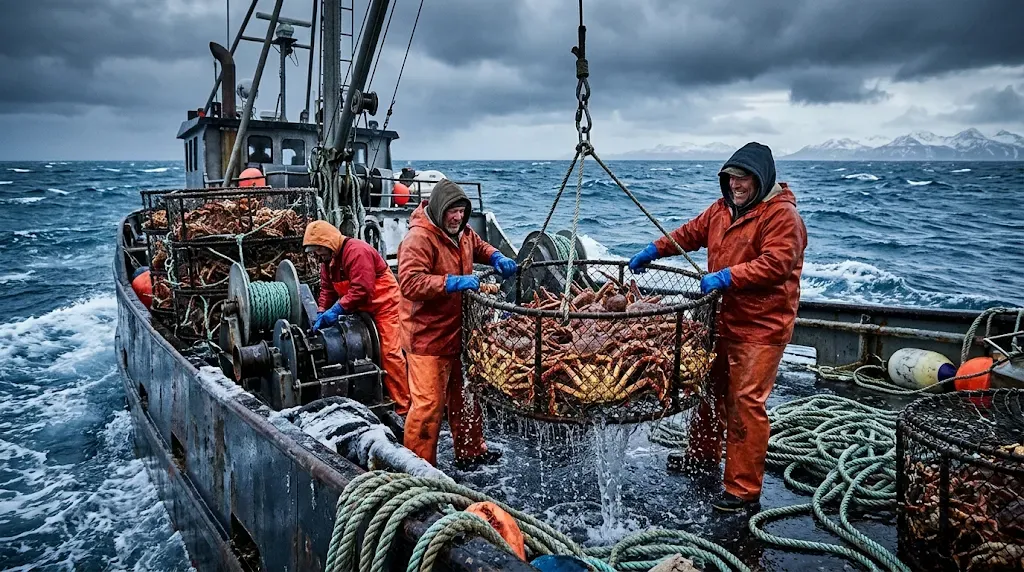
How long is Alaskan crab season, and when can you catch fresh king, snow, and Dungeness crab? Alaska’s commercial crab seasons vary by species, fishing region, and annual harvest limits. Some fisheries open in fall, while others run through winter or spring. so, when does king crab season start?
Alaskan crab season typically runs from October through May, depending on the species and fishery. Red king crab and snow crab seasons often take place in fall and winter, while Dungeness crab fisheries can extend into spring or summer in certain areas. The Alaska Department of Fish and Game (ADF&G) sets opening dates and harvest limits based on crab populations and conservation needs.
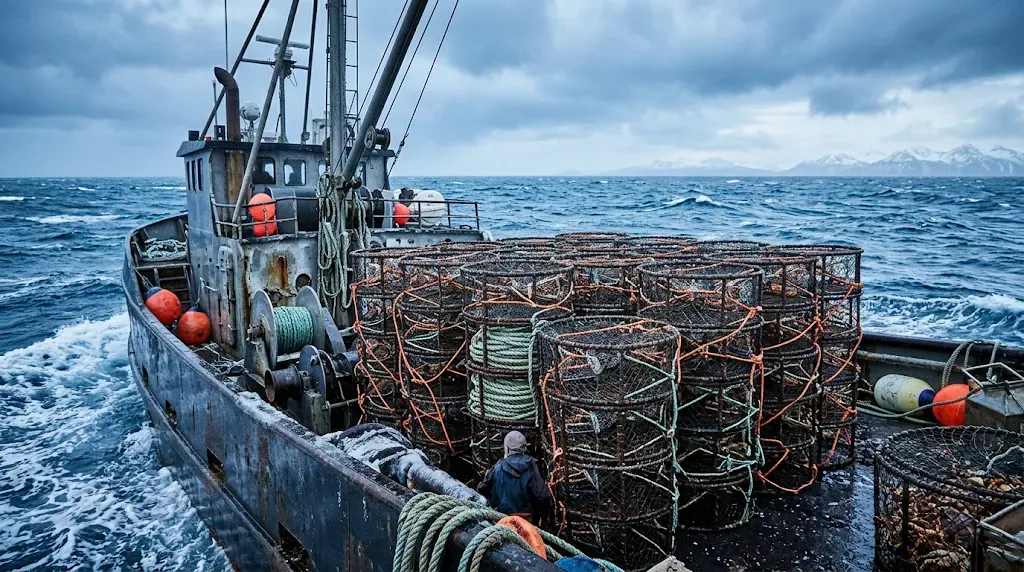
Want to know the best months to enjoy fresh Alaskan crab? This guide breaks down the seasons for king, snow, and Dungeness crab, explains why opening dates change, and highlights the major fishing regions. Keep reading to discover when each crab season opens and how Alaska manages its valuable crab fisheries.
How Long Does Alaskan Crab Season Last?
For most people asking how long is Alaskan crab season, the practical answer is: a few weeks to several months, depending on what crab you mean and whether you are talking about commercial fishing or personal-use crabbing.
Commercial Alaska crab fishing is highly regulated. Managers set opening and closing dates, catch limits, gear rules, size limits, and reporting requirements. A fishery may also close early once vessels reach the quota or when managers need to protect a weak crab stock.
| Crab fishery | Typical commercial season | Current example |
|---|---|---|
| Bristol Bay red king crab | Mid-October to mid-January | Oct. 15, 2026–Jan. 15, 2027 |
| Bering Sea snow crab | Mid-October to mid- or late May | Oct. 15, 2026–May 15 or 31, 2027 |
| Bering Sea Tanner crab | Mid-October to end of March | Oct. 15, 2025–Mar. 31, 2026 |
| Southeast Alaska commercial Dungeness crab | Summer and fall windows; some winter fisheries | June 15–Aug. 15 and Oct. 1–Nov. 30 in much of Southeast |
| Southeast Alaska personal-use Dungeness crab | No closed season in many areas | Open year-round, subject to emergency orders |
So, how long is crab season in Alaska? It can be as short as 24 hours for one small Southeast red king crab area, or as long as roughly seven months for Bering Sea snow crab.
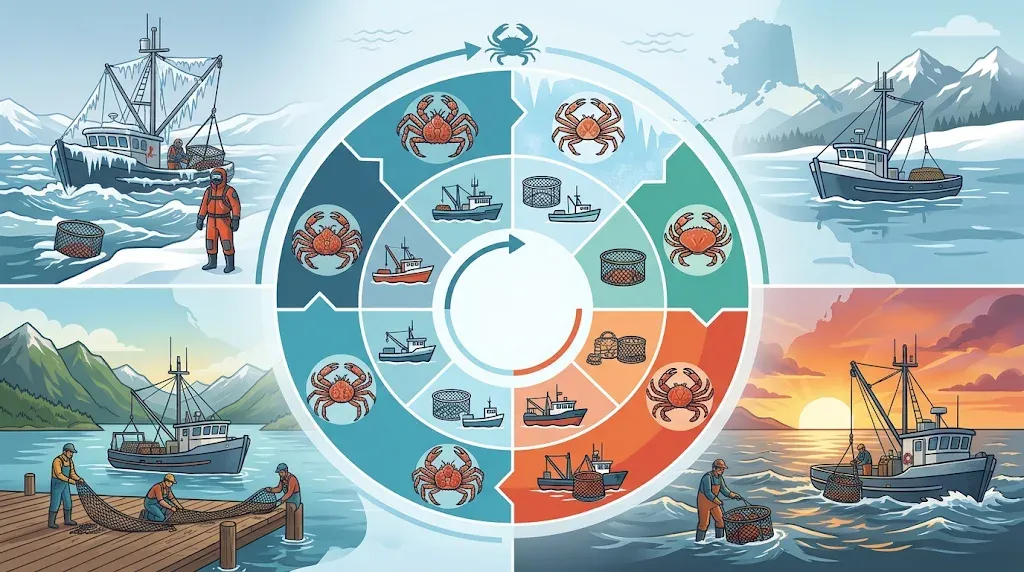
When Does Alaskan King Crab Season Start and End?
When does king crab season start? The best-known king crab season in Alaska is the Bristol Bay red king crab fishery. For the 2026/27 season, it opens at noon on October 15, 2026 and closes at 11:59 p.m. on January 15, 2027—a scheduled window of about three months.fisheries.noaa
That does not mean every vessel fishes for all three months. A fisherman may finish a trip once the vessel’s quota is taken, weather becomes unsafe, or the fleet reaches its share of the total allowable catch. In other words, the calendar season can be long, but actual king crab fishing may last only days or weeks for an individual crew.
Red king crab season
The red king crab season in Bristol Bay is the major commercial fishery associated with Deadliest Catch. The 2026/27 total allowable catch is 3.41 million pounds, split between individual fishing quota and community development quota allocations.
Blue king crab
Blue king crabs are managed separately in some areas. For example, waters around the Pribilof Islands are closed to commercial king and Tanner crab pot gear to protect the Pribilof Islands blue king crab stock.
Southeast Alaska king crab
Southeast Alaska has a different commercial red and blue king crab structure. The 2026/27 fishery opened on November 1, 2026, with area-specific guideline harvest levels; one surveyed area, Section 11-A near Juneau, was scheduled to remain open for only 24 hours. adfg.alaska
How Long Is Snow Crab Season in Alaska?
Snow crab season in the Bering Sea is one of the longest commercial crab fisheries. For 2026/27, the fishery opens west of 165° W longitude on October 15, 2026 and closes on May 15, 2027 in the eastern subdistrict or May 31, 2027 in the western subdistrict.
That makes the scheduled Bering Sea snow crab season about seven months long. Yet the actual fishing period is often shorter because vessels harvest against quota, weather can limit operations, and managers may adjust the fishery in season.
The 2026/27 snow crab total allowable catch is 5.1 million pounds. That is lower than the 2025/26 allocation of 9.3 million pounds, showing how quickly crab availability can change from one year to the next.
When Is Dungeness Crab Season in Alaska?
Dungeness crab season Alaska rules differ sharply from Bering Sea crab rules. In much of Southeast Alaska, commercial Dungeness fishing uses a summer fishery from June 15 to August 15 and a fall fishery from October 1 to November 30.
Some areas have a longer winter fishery. Districts 1 and 2, plus part of Section 13-B outside the Sitka Sound Special Use Area, have a fall/winter commercial season from October 1 through February 28.
For personal-use crabbers, Southeast Alaska Dungeness crabbing has no closed season in the general regulation. However, the Alaska Department of Fish and Game can issue an emergency order that closes an area, reduces bag limits, or changes rules at any time.
Personal-use Dungeness rules
- The daily bag and possession limit is generally 20 male Dungeness crab.
- Male crabs must measure at least 6.5 inches across the carapace, or shell.
- Female Dungeness crab and undersized males must be returned to the water unharmed.
- Crab pots must include escape rings, and pot limits apply.
What Are the Best Months for Alaskan Crab Fishing?
The best time to catch king crab depends on your goal. For commercial king crab fishing, the main Bristol Bay season generally runs from October through January, with the fleet often concentrating effort after the October opening. fisheries.noaa
For fresh Dungeness crab, summer and fall are the main commercial windows in Southeast Alaska. For personal-use crabbing, Dungeness can be available year-round in permitted areas, but local emergency orders and weather matter.
| If you want… | Best window | Why |
|---|---|---|
| Commercial red king crab action | October–January | The Bristol Bay fishery opens in mid-October. |
| Bering Sea snow crab | October–spring | The scheduled season extends into May. |
| Fresh Dungeness crab in Southeast Alaska | June–August or October–November | These are the main commercial fishing windows. |
| Personal-use Dungeness crab | Often year-round | No general closed season, but check local rules first. |
Why Do Alaskan Crab Season Dates Change Every Year?
Alaska crab seasons are not simply fixed dates on a calendar. The state and federal managers use stock assessments, survey data, catch performance, and conservation rules to decide whether a fishery opens, how much crab may be taken, and when it must stop.
A closure can protect a crab population during a rapid decline in abundance. The Bering Sea snow crab fishery, for example, was closed during the 2022/23 and 2023/24 seasons because of low stock abundance, then reopened in 2024 and 2025 with a conservative total allowable catch.
Other reasons seasons change include:
- Biomass estimates from bottom-trawl surveys.
- Molt timing, because soft shell crabs are more vulnerable and less desirable.
- Spawn protection and mating-season avoidance.
- Bycatch of non-target species.
- Market timing and processing capacity.
- Weather, ice, vessel safety, and in-season catch rates.
Which Areas in Alaska Have Crab Fishing Seasons?
Alaska has several separate crab fisheries, and each has its own rules. The major commercial crab fisheries are concentrated in the Bering Sea and Aleutian Islands, while Dungeness and some king crab fisheries occur in Southeast Alaska.
Bering Sea crab season
The Bering Sea crab season includes Bristol Bay red king crab, snow crab, and Tanner crab. These fisheries open in mid-October in many recent seasons, but closing dates and catch limits differ.
Southeast Alaska
Southeast Alaska supports commercial and personal-use Dungeness, Tanner, red king, and blue king crab fisheries. Rules vary by district, section, and species, so a crabber in Juneau may face different limits than one near Ketchikan or Sitka.
Other Alaska waters
Some areas have local personal-use or subsistence opportunities. In Yakutat, for example, the personal-use and subsistence golden king crab fishery is male-only, has a 7-inch minimum size, and allows two king crab per person.
Are Alaskan Crab Seasons Open to Commercial and Recreational Fishermen?
No. Commercial fishing and personal-use or sport crabbing follow different systems.
Commercial crabbers need permits, vessel registrations, quota or harvest allocations where applicable, reporting tools, and approved gear. The Bristol Bay red king crab fishery, for instance, requires a Commercial Fisheries Entry Commission permit card, vessel registration, and compliance with pot and safety rules.
Recreational and personal-use crabbers usually face simpler rules, but they still must follow bag limits, size limits, gear restrictions, licensing requirements, and emergency orders. In Southeast Alaska, sport and personal-use Dungeness limits differ for residents and nonresidents.
Important distinction
A commercial fishery may be closed even when personal-use crabbing remains open, or the reverse. Never assume that a commercial closure means every type of crabbing is closed.
What Happens When Alaska Closes a Crab Fishing Season?
When the Alaska Department of Fish and Game or NOAA Fisheries closes a crab fishery, vessels must stop directed fishing for that stock. A closure may be planned before the season or issued during the season if managers determine that the catch limit, conservation threshold, or stock-protection requirement has been reached.
Closures to protect crab stocks can last one season or several. The snow crab fishery’s two-year closure demonstrates that a shortage is due not only to fishing pressure but also to environmental conditions, survival rates, and changes in the crab population.
For a fisherman, a closure can mean lost income and a sudden change in plans. For consumers, it can reduce supply and raise prices at fish markets. For the resource, it gives the stock a chance to recover.
How Can You Find Current Alaskan Crab Season Dates?
The safest way to find current dates is to check the Alaska Department of Fish and Game and NOAA Fisheries before you go. The state publishes commercial season announcements, personal-use regulations, emergency orders, and management reports.
Before crabbing, confirm:
- The exact body of water and registration area.
- Whether the fishery is open, closed, or operating under an emergency order.
- Legal size limits and sex restrictions.
- Pot limits, buoy marking rules, and escape-ring requirements.
- Bag, possession, and reporting rules.
- Weather and marine-safety conditions.
The state of Alaska can change rules quickly. A fishery that was open last week may close before your trip, especially in a small personal-use area or a stock under close management.
Alaskan King Crab Fishing Season – FAQs
How long is king crab season in the Bering Sea?
The 2026/27 Bristol Bay red king crab fishery is scheduled from October 15, 2026, through January 15, 2027. Actual fishing time for an individual vessel may be much shorter because of quota, weather, and catch rates.
When is king crab season in Alaska?
When is Alaskan king crab season? For Bristol Bay red king crab, the commercial season generally starts around mid-October. Southeast Alaska’s 2026/27 commercial red and blue king crab fishery opened on November 1, 2026.
How long is king crab fishing season in Alaska?
The scheduled Bristol Bay season lasts about three months, but the fleet may finish earlier if it reaches its allocation. Some small Southeast areas may remain open for only hours or days.
When does crab season start in Alaska?
Many major Bering Sea commercial fisheries begin around October 15. Southeast commercial Dungeness has both a summer opening in mid-June and a fall opening on October 1.
When does crab season end in Alaska?
It depends on the species. Bristol Bay red king crab closes in mid-January, Bering Sea Tanner crab closes at the end of March, and Bering Sea snow crab can remain open into mid- or late May.
How long is crab season on Deadliest Catch?
Deadliest Catch often shows the most intense part of the Bering Sea crab fisheries, especially the October opening period. The television season may compress weeks of fishing into episodes, while the actual regulatory season can run for months.
Can you buy live Alaskan king crab year-round?
You may find live or fresh crab at some fish markets, but availability depends on landings, processing, cold storage, imports, and market demand. A closed Alaska fishery does not necessarily mean crab disappears from store shelves.
Can you crab in Alaska as a visitor?
Yes, in some areas, but rules differ for residents and nonresidents. In Southeast Alaska, for example, nonresidents may keep a combined total of three male Tanner and Dungeness crab, subject to size and area rules.
Is it cheaper to eat king crab in Alaska?
Sometimes. Local availability can reduce shipping costs, but king crab remains expensive because of limited quotas, remote harvesting, and processing. Dungeness crab is usually the more affordable local choice.
When is the best time to eat crab in Alaska?
For fresh Alaska king crab, aim for October through January. For Southeast Dungeness, summer and fall are prime commercial windows; frozen crab is available year-round.
Is snow crab high in mercury?
No. Snow crab is generally considered a low-mercury seafood, but pregnant people and young children should still follow current seafood-serving guidance.
What types of crab are caught during Alaska’s crab seasons?
Alaska’s major commercial fisheries harvest red, blue, and golden king crab; snow crab; Tanner crab; and Dungeness crab.
Conclusion
How long is Alaskan crab season? The honest answer is that Alaska does not have one crab season. Bristol Bay red king crab generally runs from mid-October through mid-January, Bering Sea snow crab can remain open into May, and Southeast Dungeness crab may be available during summer, fall, or even year-round for personal-use harvesters.
The exact dates depend on the species, location, quota, stock condition, and emergency management decisions. Before planning a trip or buying fresh crab, check the latest Alaska Department of Fish and Game and NOAA announcements.
Regulations exist to protect crab populations, support sustainable fisheries, and keep harvesters safe in some of the most demanding waters in the world. Whether you follow Deadliest Catch, plan a personal-use crabbing trip, or simply want to know when fresh Alaskan crab reaches the market, the key is to match the species and region to the correct season—not to assume every Alaskan crab fishery follows the same calendar.
You might also like:
- Black Drum Vs Sheepshead – Know What Is Biting! (Explained)
- Do Seagulls Eat Starfish? 9 Facts About (Seagull-Birds)
- Does Sardines Have Fins And Scales? Here’s The (Full-Answer)
- Speckled Trout Fishing At Night: (Best Baits, Tips & Spots)
- Do Tarpon Attack Humans? Myths & Facts (Should-Know)
- Does Shrimp Have Fins And Scales? 19 Answers (Must-Read)