
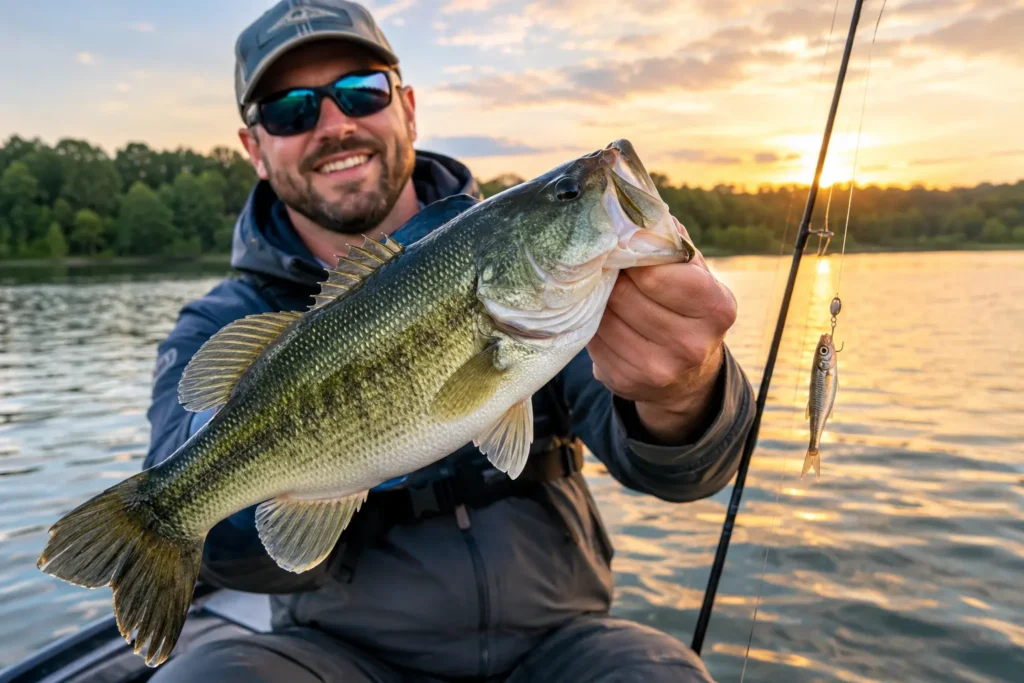
Fishing with minnows for bass remains one of the most reliable ways to catch largemouth, smallmouth, spotted, and white bass. A live minnow gives bass the exact combination they instinctively respond to: natural swimming action, flash, vibration, and scent. Unlike bass fishing artificial lures, a live bass minnow can be fished slowly through cold water, suspended over cover, free-lined into shallow ambush zones, or worked near the bottom where big bass feed. The key is matching the right minnow size, hook, weight, and rig to the conditions.
This live bait fishing guide – covers how to bass fish with live minnows, the best live minnows for bass, hook placement, proven live minnow rigs, seasonal tactics, white bass strategies, bait care, and the minnow fish bass tackle mistakes that cost every fisherman when going to fish for bass.
Why Fish With Minnows for Bass?
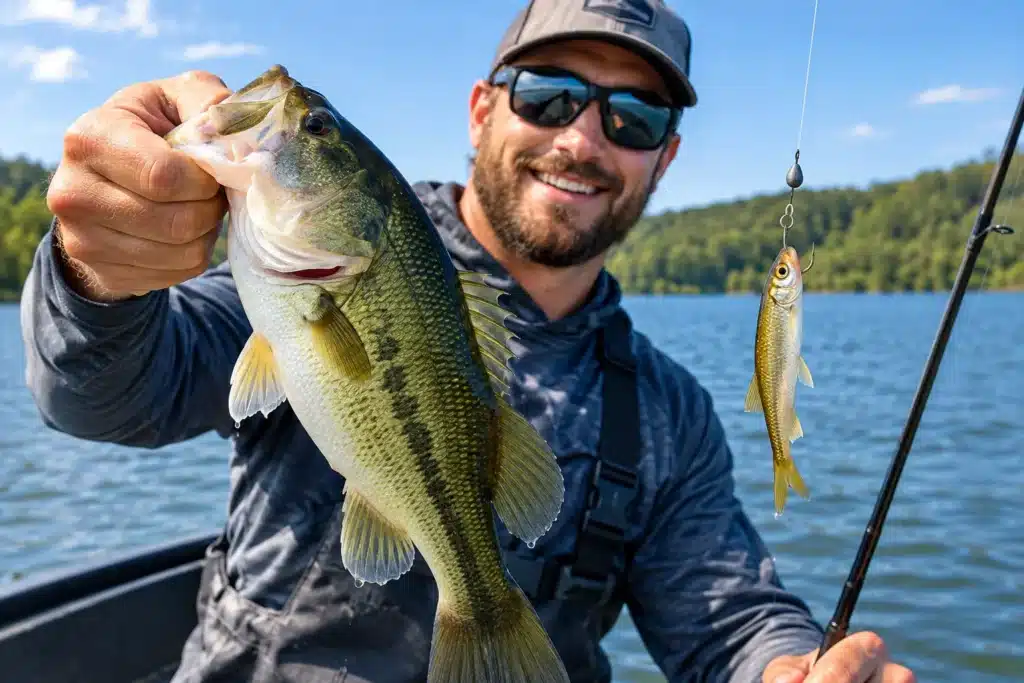
Bass are opportunistic predators, and minnows are a core part of their diet in many lakes, rivers, and reservoirs. Fishing bass with minnows is especially effective when fish are neutral, cold, pressured, or holding tight to cover.
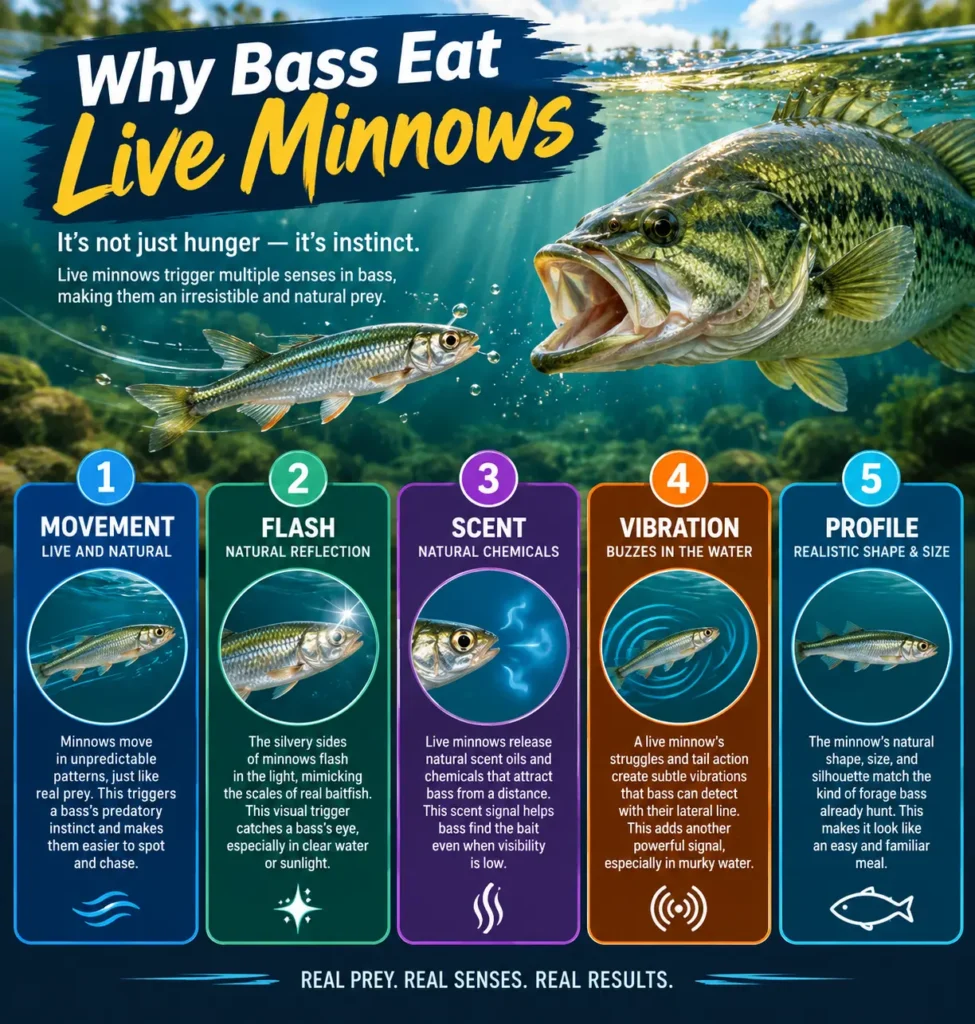
A live minnow offers advantages that artificial baits cannot fully replicate:
- Natural swimming motion
- Realistic flash and scale reflection
- Scent and taste
- Erratic wounded-baitfish action
- The ability to fish extremely slowly without looking unnatural
Live minnows are particularly productive in early spring, late fall, and winter, when bass metabolism slows and they prefer an easy meal. They also excel around docks, weed edges, brush piles, rocky points, and baitfish schools.
Golden shiners, emerald shiners, spot-tail shiners, fathead minnows, and small shad are common live minnow choices for bass, depending on regional availability and local regulations. Golden shiners are widely recognized as a productive forage species for largemouth bass.
Best Minnows for Bass
The best minnow for bass is usually the one that closely matches the local forage. However, several species consistently produce bass across North America.
Golden Shiners
Golden shiners are one of the best live minnows for largemouth bass. They have a broad profile, bright flash, and hardy constitution, making them excellent for free-lining, float fishing, and slow presentations around vegetation.
Best sizes:
- 2–3 inches for numbers of bass
- 3–5 inches for quality largemouth
- 5–6 inches for trophy hunters
Use live golden shiners around weed lines, lily pads, dock shadows, laydowns, and shallow flats.
Fathead Minnows
Fathead minnows are a dependable all-purpose largemouth bass minnow. They are usually 1–3 inches long, affordable, easy to keep alive, and effective for largemouth, spotted bass, smallmouth, and white bass.
Their smaller profile makes them ideal when bass are feeding on young-of-the-year baitfish or when fishing pressure makes larger baits less effective.
Emerald Shiners and Spot-Tail Shiners
Emerald shiners and spot-tail shiners are outstanding where available, especially for smallmouth bass and white bass. identifies golden shiners, emerald shiners, and spot-tail shiners as common live baits for bass, noting that spot-tail shiners are often easier to keep on the hook.
These minnows work especially well in clear water, around rocky structure, and along current seams.
Shad
Where legal, small live shad can be exceptional when bass are keyed in on schooling baitfish. Match the hatch carefully: if bass are chasing 2-inch shad, a 4-inch minnow may draw fewer strikes.
Shad are best for:
- Schooling bass
- Creek mouths
- Main-lake points
- Wind-blown banks
- Deep baitfish schools
Suggested media: Comparison graphic of golden shiner, fathead minnow, emerald shiner, and shad with recommended bass species and rig for each.
Minnow Size and Hook Size Chart:
Choosing the right hook is just as important as choosing the right minnow. A hook that is too large restricts the bait’s movement; a hook that is too small can result in poor hooksets or swallowed baits.
| Minnow length | Best bass application | Recommended hook size | Best rig |
|---|---|---|---|
| 1–2 inches | White bass, spotted bass, pressured fish | No. 6 to No. 2 | Split-shot rig, small float, tiny jighead |
| 2–3 inches | All-around largemouth and smallmouth | No. 2 to No. 1 | Float rig, split-shot rig, free line |
| 3–4 inches | Largemouth, smallmouth, larger white bass | No. 1 to 1/0 | Slip bobber, bottom rig, three-way rig |
| 4–6 inches | Trophy largemouth, golden shiners | 1/0 to 3/0 | Free line, weedless hook, slip float |
For larger shiners, many anglers use hooks around No. 1 or 1/0, with hook selection depending on bait thickness and presentation.
Suggested media: Downloadable chart: “Minnow Size, Hook Size, and Best Bass Rig.”
Best Live Minnow Rigs for Bass
There is no single best live minnow rig for bass. The right setup depends on depth, cover, current, bait size, and how actively the fish are feeding.
1. Split-Shot Rig
The split-shot rig is the simplest and most versatile live minnow rig for bass. It is ideal for shore anglers, kayak anglers, and anyone fishing visible shallow cover.
Rig setup:
- Main line
- One or two small split shots, 12–24 inches above the hook
- Light-wire octopus or Aberdeen hook
- Live minnow hooked through the lips
Best places to use live bait for bass fishing:
- Shorelines
- Docks
- Rocky points
- Laydowns
- Shallow weed edges
- Spawn flats
Cast beyond the target, let the minnow settle, and retrieve it slowly. A split-shot rig with a lip-hooked minnow is a proven setup for working shoreline structure.
2. Slip-Bobber Rig
A slip-bobber rig lets you fish a minnow at a precise depth while still making long casts. It is one of the best live minnow rigs for bass around cover where a bottom rig would snag.
Rig setup:
- Bobber stop
- Small bead
- Slip float
- Small split shot
- Hook
- Live minnow
Best places to use it:
- Weed lines
- Docks
- Brush piles
- Submerged timber
- Isolated cover
- Suspended bass
For many shallow-water applications, set the minnow roughly 18 inches below the float. When fish are suspended, adjust the bobber stop until the bait runs just above the bass’s marked depth.
Suggested media: Labeled diagram of a slip-bobber rig with bobber stop, bead, float, split shot, hook, and minnow.
3. Free-Line Rig
The free-line rig is the most natural presentation because it uses little or no weight. This makes it ideal for shallow, spooky bass and fish holding under overhead cover.
Rig setup:
- Hook tied directly to main line
- Optional tiny split shot
- Live minnow hooked through the lips
Best places to use it:
- Shallow docks
- Laydowns
- Lily pads
- Spawn flats
- Sight-fishing situations
- Surface-feeding bass
Cast gently and allow the minnow to swim on its own. This is especially effective with a 4–6 inch golden shiner around vegetation or dock shadows.
4. Bottom Bouncing Rig
When bass relate to the bottom, a slowly moving minnow just off the substrate can be deadly. This is one of the best cold-water bass fishing with live minnows presentations.
Rig setup:
- Egg sinker or walking sinker on the main line
- Barrel swivel
- 12–24 inch fluorocarbon leader
- Hook
- Live minnow
Best places to use it:
- Rocky points
- Gravel flats
- Channel edges
- Deep weed lines
- Ledges
- Cold-water smallmouth areas
Keep the minnow a few inches to about a foot off bottom. Fishing 411 recommends this range because a bait dragging directly on bottom is less visible to nearby fish.
5. Three-Way Swivel Rig
The three-way rig is one of the best live minnow rigs for bass in deeper water, around snaggy bottom, or in current.
Rig setup:
- Main line tied to a three-way swivel
- Short dropper line with weight
- Longer leader with hook
- Live minnow
A practical starting point is a 12–18 inch weight dropper and a 48–60 inch hook leader, using 10-pound fluorocarbon and a 1/0 octopus hook for larger minnows.
Best places to use it:
- Deep rock
- Ledges
- Humps
- Channel swings
- Current seams
- Deep brush
Suggested media: Diagram comparing bottom rig and three-way rig, with depth zones labeled.
6. Jighead Minnow Rig
A jighead minnow rig adds casting distance, depth control, and a subtle vertical action. It is especially useful when bass are suspended or holding around vertical cover.
Rig setup:
- Light ball jighead or minnow-style jighead
- Live minnow hooked through the nose or lips
- Optional small trailer hook for short-striking fish
Best places to use it:
- Docks
- Brush piles
- Deep weed edges
- Suspended bass
- Baitfish schools
- Bridge pilings
This presentation can be fished vertically, slowly dragged, or cast and retrieved with a gentle swimming action. Modern minnow-style presentations are especially popular for suspended largemouth, smallmouth, and spotted bass.
How to Hook a Minnow for Bass Fishing? Using live minnows
Hook placement changes how the minnow swims, how long it stays alive, and how well it works in a particular situation.
Lip Hook
Insert the hook through the bottom lip and out through the top lip, or hook once through the upper lip.
Best for:
- Casting
- Retrieving
- Trolling
- Free-lining
- Long casts
Lip hooking keeps the minnow streamlined and helps it swim naturally through the water.
Dorsal Hook
Insert the hook just behind the dorsal fin, above the spine.
Best for:
- Bobber fishing
- Still-fishing
- Fishing around cover
- Keeping bait active longer
This placement keeps the minnow upright and creates a natural struggling action. It is commonly recommended for live minnows fished under a float.
Tail Hook
Insert the hook through the tail or just ahead of the tail.
Best minnow fish bass tackle for:
- Current
- Active fish
- Adding action
- Fleeing-baitfish presentations
Tail hooking creates more movement but can reduce bait survival. Use it only when your minnows are hardy and active.
Suggested media: Three-panel illustration showing lip hook, dorsal hook, and tail hook placements.
How to Fish Minnows for Bass by Depth:
Shallow Water: 0–6 Feet
In shallow water, bass often spook easily. Use a free-line rig, minnow fish bass tackle, small split-shot rig, or compact float rig.
Target:
- Docks
- Laydowns
- Lily pads
- Shallow rock
- Grass pockets
- Spawn flats
Make quiet casts past the cover and let the minnow swim into the strike zone.
Mid-Depth Water: 6–15 Feet
This depth range is ideal for slip bobbers, split-shot rigs, and light jigheads.
Identify the depth of grass, wood, or baitfish, then keep the minnow slightly above it. Bass often look upward at baitfish rather than downward.
Deep Water: 15 Feet and Deeper
For deep bass, use a bottom rig, three-way rig, or jighead minnow rig. Move slowly and make repeated passes over likely structure.
A 3–4 inch minnow fished slowly along the bottom is especially effective in cold water.
Fishing Minnows for White Bass
White bass are often more aggressive than largemouth or smallmouth, making them excellent targets for a white bass minnow presentation. They commonly relate to current, wind, baitfish schools, and shoreline eddies.
Best White Bass Minnow Tactics
- Free-line a small minnow into schooling fish. Let it fall naturally through the school.
- Fish a minnow under a bobber near shoreline eddies. This is especially productive during spring runs.
- Use a three-way rig in current. Keep the bait off bottom and in the strike zone.
- Add a small jighead when fish are deeper. This improves depth control and castability.
- Match the baitfish size. White bass often prefer smaller, thinner minnows.
During spring runs, white bass often gather in current seams and shoreline eddies, where a live minnow under a bobber can produce fast action.
Suggested media: Map-style illustration of a river current seam showing eddies, current breaks, and where to cast a largemouth bass minnow.
Seasonal Minnow Strategy for Bass:
| Season | Where bass hold | Best minnow rig | Presentation |
|---|---|---|---|
| Late winter / early spring | Deep breaks, staging areas | Three-way rig, bottom rig | Very slow, near bottom |
| Prespawn | Flats, channels, staging cover | Free line, slip float | Slow and natural |
| Spawn | Shallow cover, beds | Free line | Light cast, minimal movement |
| Summer | Shade, weeds, docks, deep structure | Slip float, jighead, bottom rig | Match depth and cover |
| Fall | Baitfish schools, points, creek mouths | Free line, jighead, three-way rig | Follow the bait |
| Late fall / winter | Deep rock, channel swings | Bottom rig, three-way rig | Dead-slow presentation |
Spring
Spring is one of the best times for catching bass with minnows. As water warms, bass move toward staging areas, spawning flats, and shallow cover.
Use smaller minnows early, then increase bait size as bass become more active. A free-lined minnow can be deadly around spawning fish, but always follow local rules regarding fishing near beds.
Summer
In summer, bass often relate to shade, current, vegetation, docks, and deeper structure. Early and late in the day, fish minnows around shallow cover. During bright midday conditions, move deeper or target shaded areas.
A slip-bobber rig is excellent for suspending a minnow over weeds or brush. A jighead minnow works well around deeper docks and baitfish schools.
Fall
Fall is a prime time to fish minnows because bass follow migrating baitfish. Look for shad flickering on the surface, bait pushed against banks, and bass feeding under diving birds.
Use a free-line minnow when fish are shallow and a jighead or three-way rig when they move deeper.
Winter
Cold water calls for patience. Bass often hold deeper and feed less frequently, but a live minnow fished extremely slowly can still trigger strikes.
Use a bottom rig or three-way rig, keep the bait near structure, and allow long pauses between movements.
How to Keep Minnows Alive All Day?
How to use artifical minnows for bass fishing? Healthy minnows catch more bass. Weak, stressed bait does not swim naturally and often dies quickly.
Use an Aerated Bait Bucket
A battery-powered aerator is one of the best investments for bass fishing with live bait. Place the air stone near the bottom of the bucket so bubbles circulate the entire water column.
Keep the Water Cool
Keep the bucket shaded and out of direct sun. Sudden temperature changes can kill bait, so avoid dumping ice directly into the bucket; use frozen water bottles instead.thefishingmanual+1
For many freshwater baitfish, water in the 50s Fahrenheit is a comfortable holding range, while temperatures above the low 70s can cause losses.
Avoid Overcrowding
Too many minnows in too little water reduces oxygen and increases waste. Use a larger bucket or livewell when carrying a full day’s supply of bait.
Change Water Gradually
Replace a portion of the water every couple of hours with clean, similar-temperature lake water. A partial water change helps reset oxygen levels and remove waste without shocking the bait.wired2fish+1
Remove Dead Minnows
Dead bait can degrade water quality quickly. Remove it immediately and replace it with a healthy minnow.
Suggested media: Checklist graphic: “Keep Minnows Alive: Aerate, Shade, Cool, Don’t Overcrowd, Change Water Gradually.”
Common Mistakes When Catching Bass With Minnows
Using Too Large a Hook
A large hook restricts the minnow’s movement and can make it die quickly. Match the hook to the bait’s thickness and length.
Adding Too Much Weight
Excess weight makes the minnow sink unnaturally and increases snags. Start light and add weight only when necessary.
Setting the Hook Too Fast
Bass often grab a minnow sideways before turning it. Give them a moment to position the bait, especially with larger shiners.
Ignoring Baitfish Location
Bass often position where shad or minnows are concentrated. Watch for surface activity, bait flickers, birds, and bait clouds on your electronics.
Using the Same Rig Everywhere
Shallow cover, deep rock, and current require different presentations. Carry hooks, split shot, floats, jigheads, and sinkers so you can adapt.
Releasing Leftover Baitfish
Never dump unused minnows into a new body of water. In some states, releasing live baitfish is illegal because it can spread invasive species and diseases. Minnesota, for example, prohibits releasing bait into state waters. Pennsylvania also prohibits releasing or disposing of live baitfish except when baited on a hook for angling.fishing
Catch-and-Release Tips for Bass Caught on Minnows
Live bait can be swallowed more deeply than artificial lures, so fish care matters.
- Use circle hooks or wide-gap hooks when appropriate.
- Set the hook promptly rather than allowing deep ingestion.
- Carry long-nose pliers or hook cutters.
- Cut the line rather than removing a deeply swallowed hook.
- Support the bass horizontally when lifting it.
- Minimize air exposure, especially in warm water.
- Revive the fish until it swims away strongly.
Black bass experience greater catch-and-release stress in warm water; Texas Parks and Wildlife notes that stress increases above 70°F and becomes very stressful above 80°F.
Live Minnows vs. Artificial Minnows for Bass
| Factor | Live Minnows | Artificial Minnows |
|---|---|---|
| Action | Natural, unpredictable | Controlled by angler |
| Scent | Strong natural scent | None unless scent is added |
| Cold-water effectiveness | Excellent | Good with slow presentation |
| Convenience | Requires bait care | Easy to store and reuse |
| Snagless options | Limited | Many weedless options |
| Cost over time | Ongoing bait cost | One-time lure purchase |
| Best use | Tough bites, cold water, big-fish hunting | Covering water, active fish, finesse presentations |
using gulp artificial minnows for bass: Live minnows are usually the better choice when bass are neutral or negative. Bass fishing artificial minnows-style baits are better when you need to cover water quickly or fish around heavy cover.
FAQs About Fishing With Minnows for Bass
Can you catch bass with live minnows?
Yes. Live minnows are highly effective for largemouth, smallmouth, spotted, and white bass because they provide natural movement, flash, and scent. They are especially useful in cold water, around heavy cover, and when bass are pressured.
What size minnow is best for bass?
A 2–4 inch minnow is the best all-around size for bass. Use 1–2 inch minnows for white bass or finicky fish, and 4–6 inch golden shiners when targeting larger largemouth.
What is the best live minnow rig for bass?
The best rig depends on conditions: use a split-shot rig for shallow shorelines, a slip-bobber rig for suspended fish or cover, a free-line rig for spooky shallow bass, and a three-way or bottom rig for deep water.
How do you hook a minnow for bass?
Hook through both lips for casting and retrieving, or just behind the dorsal fin for float fishing. Lip hooking keeps the minnow streamlined, while dorsal hooking keeps it upright and active.
What hook size should I use for bass minnows?
Use No. 6 to No. 2 hooks for 1–2 inch minnows, No. 2 to No. 1 for 2–3 inch minnows, and 1/0 to 3/0 for larger shiners. Match the hook gap to the minnow’s body thickness.
Do bass prefer shiners or fathead minnows?
Largemouth bass often favor golden shiners because of their larger profile and natural forage value. Fathead minnows are better for smaller bass, white bass, and situations where a subtle presentation is needed.
How deep should I fish a minnow for bass?
Fish shallow minnows within a few feet of the surface, suspend them just above weed lines or structure in mid-depth water, and keep deep-water baits a few inches to a foot off bottom. Adjust depth until you find where bass are holding.
Can you use minnows for bass fishing?
Yes. Small live minnows are excellent for white bass. Free-line them into schools, fish them under a bobber near shoreline eddies, or use a small jighead when white bass are holding deeper.
Final Tip: Let the Minnow Do the Work
The biggest advantage of fishing bass with minnows is adaptability. Start with a 2–4 inch minnow, choose the rig that matches the depth and cover, and let the bait’s natural action do the work.
When bites slow down, change one variable at a time:
- Depth
- Hook placement
- Bait size
- Weight
- Retrieve speed
- Cover type
A live minnow will not catch bass if it is presented in the wrong zone, but when you match the bait to the conditions, it becomes one of the most dependable bass baits you can use.
Want to fish for bass? Download the free Bass Minnow Rig Cheat Sheet with hook sizes, rig diagrams, bait-size recommendations, and seasonal tactics.
You might also love: