
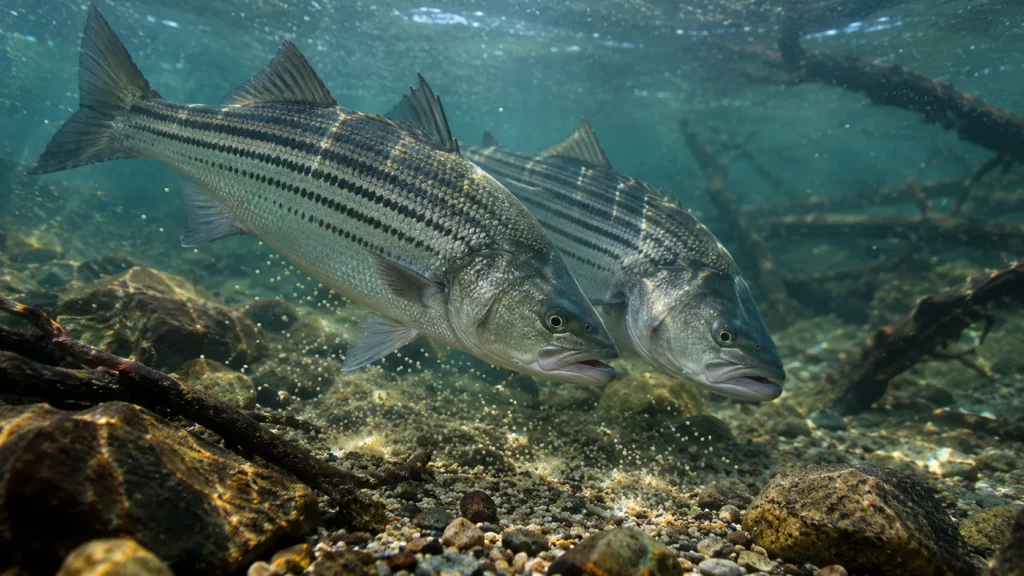
When do striped bass spawn? Freshwater striped bass spawn in spring, generally from February through June, when rising water temperatures reach roughly 60–67°F. The exact timing depends on the river system: southern fish start earliest, while northern populations may not spawn until late spring or early summer.
Striped bass are anadromous. They spend much of their lives in the ocean or estuaries, then return to freshwater or slightly brackish rivers to reproduce. For anglers, that spring movement—often called the striped bass spawning run—creates one of the most predictable striper fishing windows of the year.
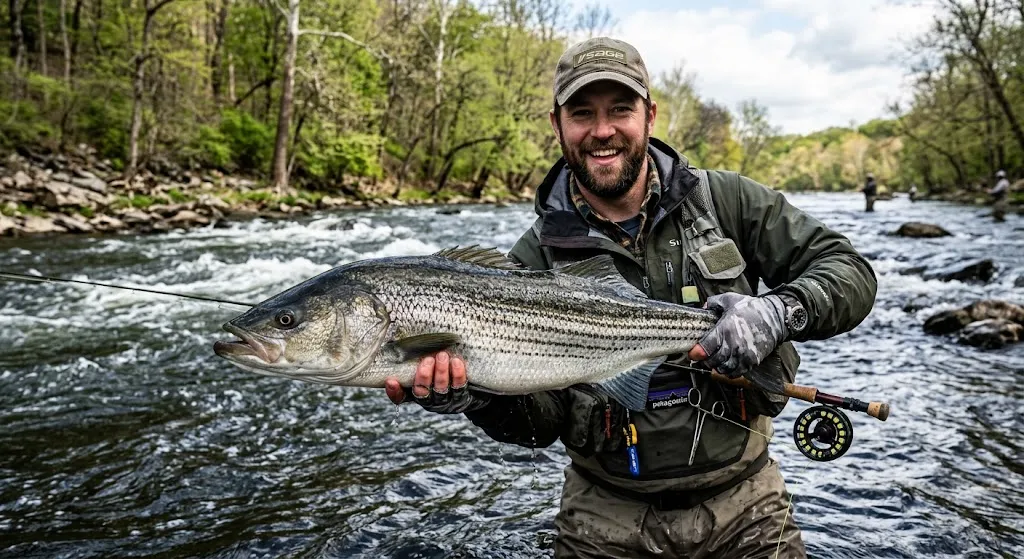
When Do Striped Bass Spawn? (Quick Answer)
Most striped bass spawn between February and June. In Florida, spawning can begin as early as mid-February; in the Mid-Atlantic, April and May are usually the busiest months; farther north, spawning can continue into June or July.
The most useful trigger is not the calendar. It is water temperature. Spawning usually begins when water approaches 60°F and peaks around 61–67°F.
| Region | Typical striped bass spawning months | Common peak temperature |
|---|---|---|
| Florida / Southeast | February–early June | 64–70°F nrc |
| North Carolina / Roanoke River | Late March–early June | 62–67°F |
| Chesapeake Bay tributaries | April–early June | About 60–67°F |
| Hudson and Delaware rivers | April–May, sometimes into June | About 60–65°F |
| Sacramento–San Joaquin Delta, California | April–mid-June | 61–69°F |
| Northern rivers / Canada | May–July | Above 50°F, often later |
What Months Do Striped Bass Spawn?
The striped bass spawning months follow a north-to-south pattern. Warm water arrives earlier in southern rivers, so fish there spawn first. Northern spawning stocks wait for spring warming to reach their spawning grounds.
- February–March: Early spawning can occur in Florida and other southern systems.
- March–May: North Carolina’s Roanoke River run is a major spring event.
- April–early June: Chesapeake Bay, Hudson River, Delaware River, and California’s Delta systems see much of their spawning activity.
- May–July: Colder northern rivers, including some Canadian systems, can spawn latest.
A cold spring can delay the run. A warm, stable spring can compress it into a shorter window.
What Water Temperature Triggers Striped Bass Spawning?
Striped bass spawning temperature generally falls between 55°F and 70°F, with peak activity near 65°F. California fisheries managers report that spawning begins around 60°F and occurs most often between 61°F and 69°F.
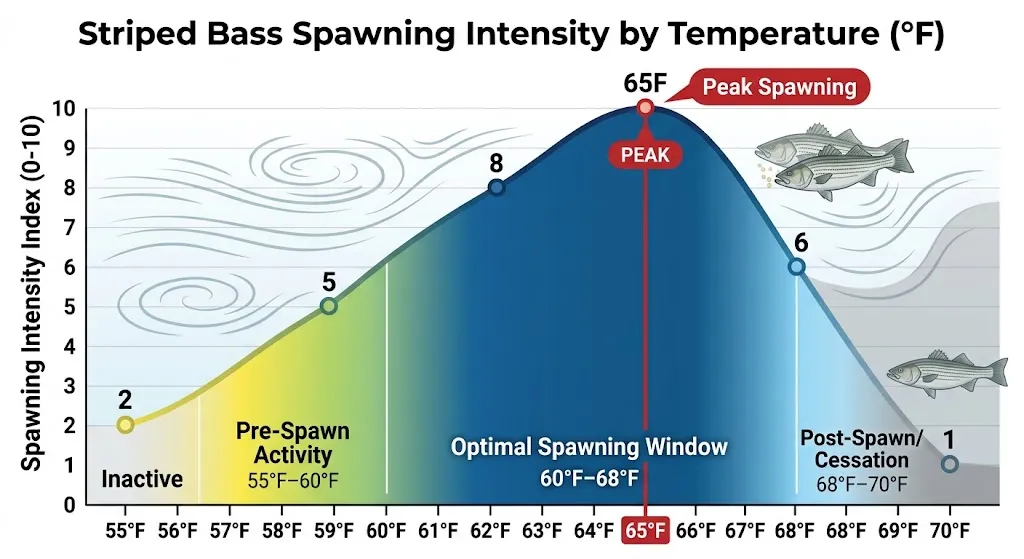
Temperature matters because it signals the fish that winter is ending. Males usually arrive at the spawning grounds first, followed by larger females. Once temperatures stabilize in the ideal range, spawning can happen in bursts rather than continuously—especially when river temperatures rise and fall with weather changes.
For anglers, a rising thermometer is often more important than a single “magic number.” Fish may stage below dams, near river mouths, or along current seams before the actual spawn begins.
Where Do Striped Bass Spawn?
Striped bass spawn in freshwater or slightly brackish sections of large rivers, usually where there is moderate to swift current. They often travel far upstream from tidal water, with some fish moving as much as 100 miles or more inland.
The key habitat requirement is moving water. Striped bass eggs are semi-buoyant and must stay suspended in the current until they hatch. In still water, eggs can sink into silt and fail to develop.
Major spawning areas include:
- Chesapeake Bay tributaries, especially tidal freshwater rivers in Maryland and Virginia.
- Hudson River and Delaware River, two other major Atlantic Coast spawning systems.
- Roanoke River and Albemarle Sound in North Carolina.
- Sacramento River and San Joaquin Delta in California.wildlife.ca
- Reservoir tributaries for freshwater striped bass, including rivers feeding lakes such as Lake Texoma.
When Do Striped Bass Spawn by Region?
Striped bass typically spawn in spring, from February through June, depending on the region and water temperature.
– Chesapeake Bay and Its Tributaries
Chesapeake Bay is the most important spawning area for Atlantic Coast striped bass. Maryland reports that mature fish move into tidal freshwater in early spring, with spawning generally occurring in April, May, and early June.
The bay and its tributaries produce an estimated 70–90% of the Atlantic coast stock, which makes spring conditions there especially important for the overall fishery. After spawning, many migratory adults return to coastal waters.
– Hudson River and Delaware River
The Hudson and Delaware rivers are the other major East Coast spawning systems. Mature fish move upstream as water warms in spring, and spawning commonly peaks from mid-April through mid-May in the Mid-Atlantic.
These systems may not produce as many young fish as the Chesapeake in a given year, but they remain essential to the regional population. ASMFC identifies the Chesapeake, Hudson, and Delaware as the principal spawning grounds for the coastal migratory stock.
– California Rivers and the Sacramento–San Joaquin Delta
California’s striped bass population spawns later in spring than many southern East Coast fish. The California Department of Fish and Wildlife says spawning usually runs from April to mid-June, beginning when water reaches about 60°F.
Important spawning areas include the San Joaquin River near Antioch and the Sacramento River from Sacramento upstream toward Princeton. About one-half to two-thirds of eggs are produced in the Sacramento River, with the remainder in the Delta.
How Do Striped Bass Migrate Before Spawning?
Striped bass migration is driven by season, water temperature, and the need to reach suitable spawning habitat. In spring, ocean-running fish move from wintering areas toward their natal rivers.
A typical spring sequence looks like this:
- Fish winter offshore or in southern coastal waters.
- Warming water triggers movement north and toward river mouths.
- Adults enter freshwater or brackish tidal rivers.
- Males arrive first, followed by females.
- Fish stage in current breaks, channels, and below dams.
- Spawning occurs when temperatures and flows align.
- Adults move back toward saltwater; young fish remain in estuary nursery areas.
Freshwater or landlocked stripers follow a similar pattern on a smaller scale. They move from the main lake into tributaries with flowing water when spring temperatures rise.
What Are the Signs That Striped Bass Are Spawning?
You may not see the spawn itself, but the signs are easy to recognize if you know what to watch for.
- Fish stack up near river mouths and dams. Pre-spawn stripers often hold where current slows or funnels.
- Males show up first. Smaller males commonly arrive before the largest females.
- Fish hold tight to current seams. Look for edges between fast and slow water.
- Surface splashes occur at dusk or dawn. Spawning often happens near the surface around twilight.
- Bites become erratic. Fish may feed heavily before the spawn, then become difficult to catch during peak spawning activity.
- Water temperature reaches the low 60s. That is when many river systems see their strongest activity.
How Do Striped Bass Reproduce?
During spawning, one female is usually accompanied by several males. The female releases eggs into the water column, and males release milt to fertilize them.
A large female can release millions of eggs—some sources estimate up to five million. The eggs drift downstream with the current. After hatching, larvae continue drifting toward downstream nursery areas in river deltas, sounds, and estuaries.fisheries.
Young striped bass commonly remain in these estuary nurseries for several years before joining coastal migrations.
How Long Does Striped Bass Spawning Last?
The overall striped bass spawning season can last several weeks to a few months across a region. Individual spawning activity, however, is shorter and often happens in several peaks.
When many fish gather on the spawning grounds, spawning may last three to four weeks, with separate bursts of activity as temperatures fluctuate. Across the full species range, the striper season stretches from February in Florida to June or July in the northernmost rivers.
Can You Catch Striped Bass During Spawning Season?
Yes—but timing and local rules matter. The best time to catch striped bass is often just before and after the peak spawn, when fish are staging, migrating, or feeding again.
During the actual spawn, feeding can slow because reproduction takes priority. Still, the striper migration concentrates fish along predictable routes, making river mouths, current seams, dam tailraces, and channel edges productive places to fish.
Good spawn-season approaches include:
- Fish current breaks and eddies rather than open, featureless water.
- Target dawn and dusk, especially when fish are near the surface.
- Use shad-imitating swimbaits, bucktails, jerkbaits, or jigs.
- Move often until you find active fish.
- Follow state regulations carefully; many spawning rivers have seasonal closures, gear restrictions, or slot limits.
Handle any fish you plan to release quickly and gently. Spawning females carry the next generation, so careful handling protects the future fishery.
FAQs About Striped Bass Spawning Season
What month do striped bass spawn?
Most striped bass spawn from April through June, though southern populations can begin in February and northern populations may continue into July.
What temperature do striped bass spawn at?
Spawning usually starts near 60°F and peaks around 61–67°F. Some fish may spawn across a broader 55–70°F range.
Where do freshwater stripers spawn?
Freshwater stripers spawn in long, flowing river tributaries above reservoirs. They need enough current to keep their semi-buoyant eggs suspended until hatching.
Do striped bass spawn in saltwater?
No. Striped bass live in saltwater, brackish water, and freshwater, but they spawn in freshwater or slightly brackish river sections.
How far upstream do striped bass travel to spawn?
Coastal striped bass can travel up to 100 miles or more inland to spawn. Some historical accounts describe movements approaching 200 miles in certain river systems.
Do striped bass bite while spawning?
Feeding often decreases during the peak spawn, but pre-spawn and post-spawn fish can bite aggressively. Migration routes and staging areas still create strong striped bass fishing opportunities.
What is the best time to catch striped bass in spring?
The best window is usually late pre-spawn through early post-spawn, when water is in the 50s to mid-60s and fish are moving along current seams. Exact timing depends on your river and local temperature.
Conclusion
When do freshwater stripers spawn? The short answer is spring—but the better answer is “when your local river reaches the right temperature.” Across most of the United States, that means February through June, with peak activity commonly occurring from April through early June. Southern fish spawn first, Mid-Atlantic and California fish peak in late spring, and northern populations can spawn into early summer.
If you want to catch more stripers this spring, watch water temperature, river flow, and fish movement rather than relying only on dates. Target the striped bass spawning run before the peak, fish current seams and staging areas, and release large females with care. Understanding when do striped bass spawn helps you fish smarter, protect the resource, and make the most of one of the year’s best striper opportunities.
Recommended posts
- Can You Go Bass Fishing at Night? (The Ultimate Bass Fishing Guide)