
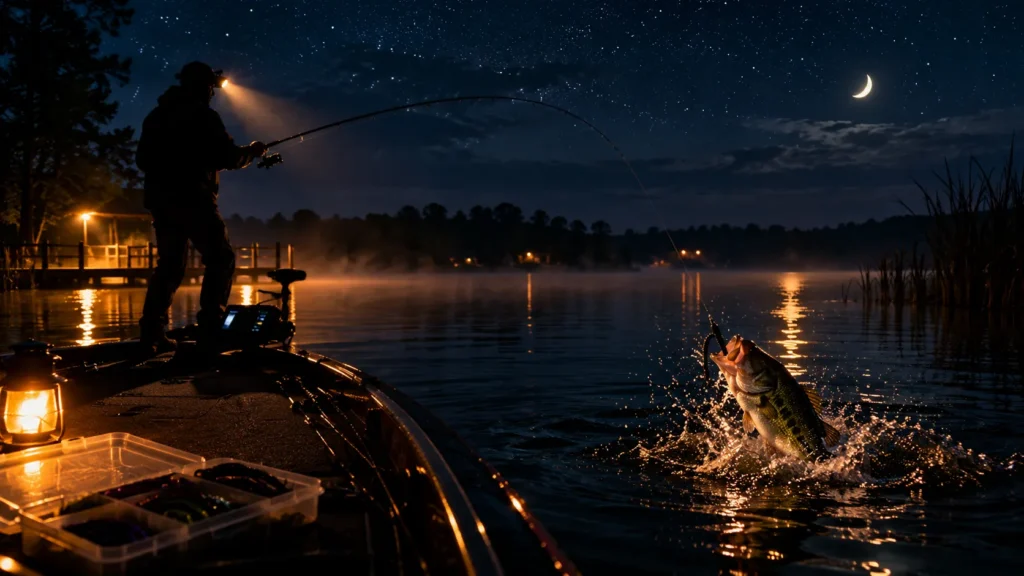
Can you go bass fishing at night? Night Time Bass Fishing is one of the most reliable ways to hook a personal best. Fly fishing for Bass at night offers a thrilling escape from daytime crowds, blistering heat, and heavy boat traffic, giving you a distinct advantage when targeting big, wary lunkers.
Bass often move shallow after dark to feed, so night fishing rewards anglers who slow down, use sound and vibration, and fish close to cover. Bass fishing at night is not complicated, but it does require different habits than daytime fishing. You cannot rely on sight, so your lure choice, retrieve speed, boat control, and safety plan matter more.
This night tournament guide covers the best time to fish for bass at night, where bass go after dark, the best lures for night bass fishing, and practical nighttime bass fishing techniques you can use from a bass boat or the shore.
Why Bass Fishing at Night Can Be So Productive?
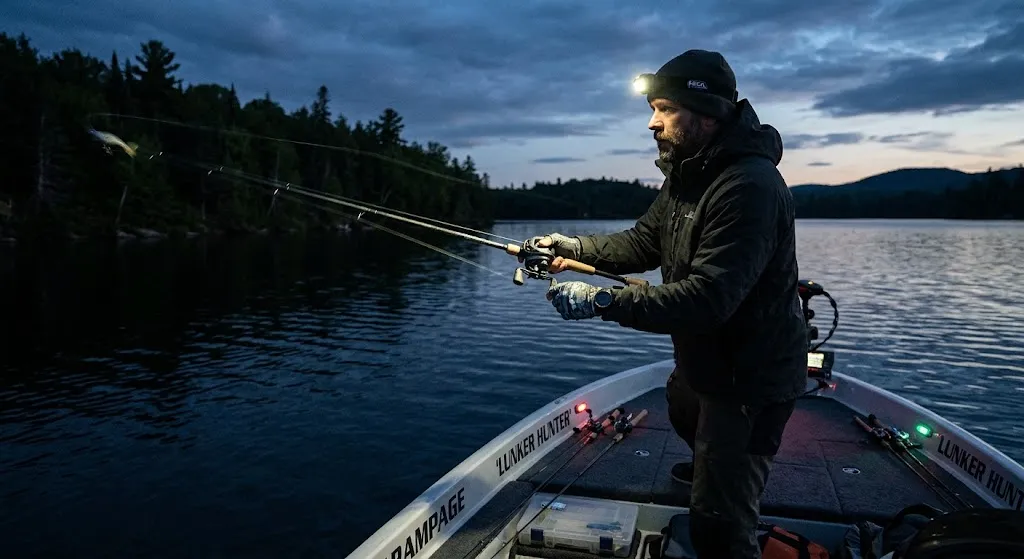
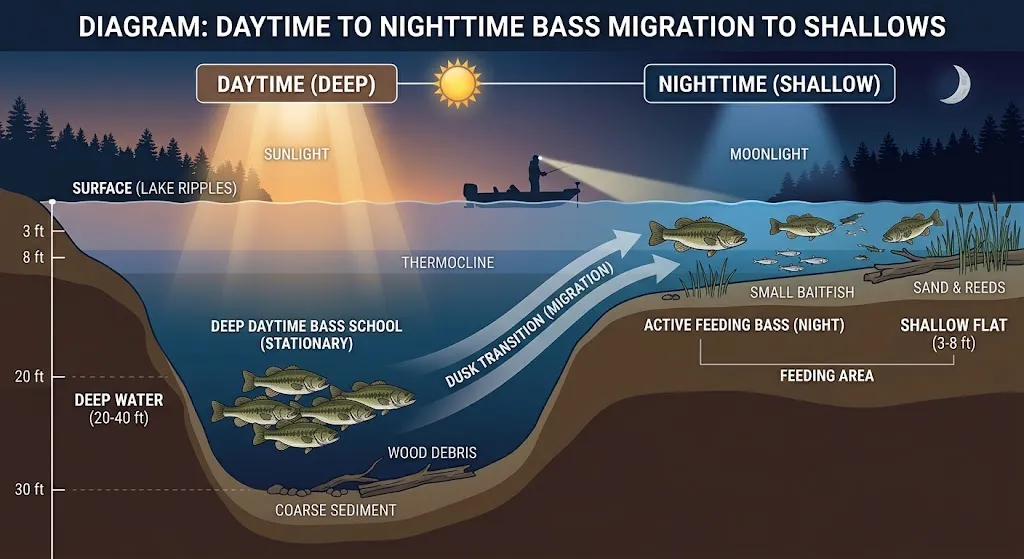
Bass fishing at night works because bass become more comfortable moving shallow when the sun disappears. In summer, daytime heat can push bass into deeper, cooler water. After dark, they often slide onto flats, points, banks, and near-shore cover to hunt baitfish, bluegill, crawfish, and other prey.
Night also reduces fishing pressure. Many anglers leave the water at sunset, which means bass may see fewer lures and act less cautious. That is one reason nighttime bass fishing can produce bigger fish, particularly for anglers targeting largemouth bass with large worms, jigs, or topwater baits.
The tradeoff is simple: you lose visibility. Bass may find your bait through vibration, water movement, sound, and silhouette rather than detailed color. This makes slow, steady presentations and baits with a strong thump especially effective.
Best Time to Catch Bass at Night
The best time to fish for bass at night is usually from the last hour before sunset through the first few hours after dark. Bass often feed aggressively during the “sunset bite,” then may pause briefly as they adjust to the darkness.
A practical schedule looks like this:
- One hour before sunset: Start fishing shallow cover, points, and banks while you can still see your surroundings.
- First hour after dark: Expect a possible lull. Keep casting, but slow your retrieve.
- Two to four hours after dark: This is often a prime window for larger bass, especially on warm summer nights.
- Before sunrise: Another strong period, particularly when baitfish move shallow.
For summer bass fishing at night, arrive before full darkness. You can locate cover, plan your casts, and avoid hazards before visibility drops. Many successful night anglers start in daylight, then stay through the transition period.
Where to Find Bass After Dark?
A common question is: where bass go at night. They do not disappear. They often move from deeper daytime areas toward shallow feeding zones, especially if deeper water is nearby.
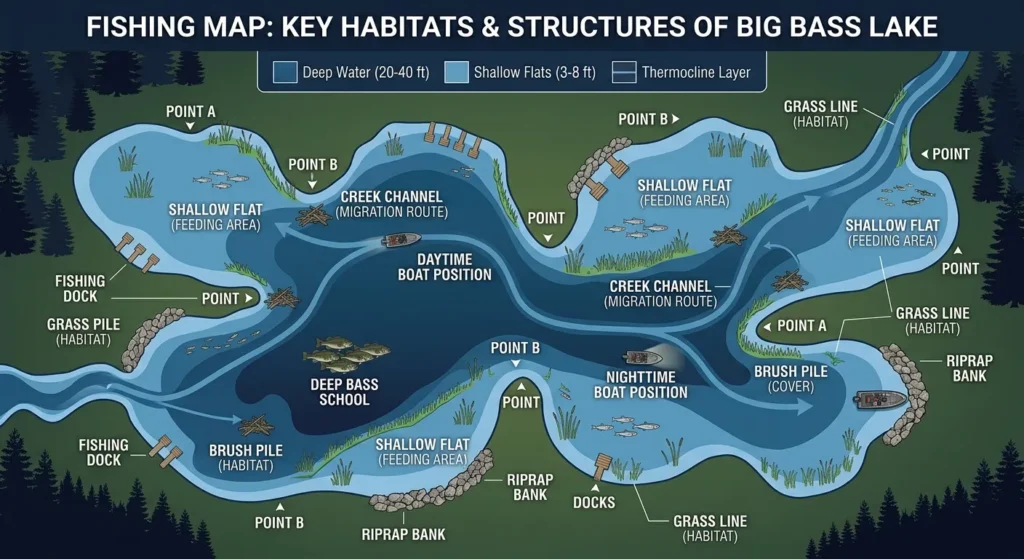
Explore new waters and focus on these high-percentage spots:
- Points near creek or river channels: Bass use them as travel routes between deep and shallow water.
- Shallow flats beside deeper water: Great places for cruising bass after dark.
- Rock banks and riprap: Rocks hold baitfish and crawfish, and they absorb heat during the day.
- Docks, bridges, and marinas: Permanent lights attract plankton, baitfish, and then bass. Fish the shadow lines just outside the brightest light.
- Laydowns, brush, and shoreline wood: Bass use this cover to ambush prey.
- Vegetation edges: Try frogs or buzzbaits over matted grass and along weed lines.
For night fishing for bass from shore, choose a safe, familiar bank with easy access, firm footing, and nearby deep water. A public boat ramp, park shoreline, bridge area, or riprap bank can be excellent starting points.
Best Lures for Nighttime Bass Fishing
The best lures for night bass fishing create vibration, make noise, or give bass a clear silhouette. You do not need a huge tackle box. A few proven baits will cover most situations.
| Lure | Best use | Retrieve |
|---|---|---|
| Black buzzbait | Shallow banks, grass, docks | Steady, slow retrieve |
| Jitterbug or gurgle-style topwater | Calm nights, shallow flats | Slow, steady wobble |
| Walking topwater bait | Points, seawalls, open flats | Walk-the-dog with long pauses |
| Single Colorado-blade spinnerbait | Wind, stained water, brush, points | Slow roll near bottom or cover |
| Black and blue jig | Wood, rocks, docks, brush | Drag, hop, or crawl slowly |
| Texas-rigged worm | Bottom contact, brush, points | Slow drag with occasional pauses |
| Frog | Matted vegetation and slop | Steady walk or stop-and-go |
| Large swimbait | Moonlit nights, baitfish areas | Slow, straight retrieve |
A black single-Colorado-blade spinnerbait is one of the most reliable nighttime bass fishing tools because the large blade sends a strong vibration through the water. Slow-roll it over points, brush, and bluff banks.
For bottom fishing, a Texas-rigged ribbon-tail worm or a jig with a bulky trailer gives bass time to locate and eat the bait. Many anglers size up at night—such as a 10-inch power worm or a larger jig trailer—because bass may be hunting a bigger meal.
Should You Use Black or Dark-Colored Lures at Night?
For most night fishing, black is the best color for night fishing. A black bait creates a strong silhouette against moonlight, surface glare, or a lighter sky. That is why black buzzbaits, black spinnerbaits, black frogs, and black/blue jigs are so popular.
That said, color is not the only factor. On very dark nights, vibration and sound often matter more than color. On bright, moonlit nights, a bait with a visible profile—black, white, or a natural baitfish pattern—can work well.reddit
Use this simple rule:
- Dark or moonless night: Black, black/blue, black/red, or junebug.
- Bright moonlit night: Black still works, but try white, bone, chrome, or a natural shad pattern.
- Stained water: Choose black or black/blue with added vibration.
- Clear water with dock lights: Match the local baitfish, but fish the shadows first.
Best Bass Fishing Techniques for Night Fishing
The best nighttime bass fishing techniques share one theme: give bass time to find the bait. Erratic, fast retrieves can work during the day, but a steady presentation is often better after dark.
– Topwater Bass Fishing at Night
Topwater bass fishing at night is exciting and highly effective on calm evenings. Cast a black buzzbait, Jitterbug, walking bait, or frog along shorelines, grass edges, docks, and shallow flats. Keep the retrieve slow and consistent so bass can track the sound.
Throw your bait, and do not set the hook at the first splash. Bass frequently miss topwater lures at night. Wait until you feel the fish pulling or surging, then set firmly. This also keeps treble hooks from flying back toward you in the dark.lurenet
– Slow-Roll a Spinnerbait
Choose a spinnerbait with one large Colorado blade. Cast to a point, brush pile, rock bank, or dock, let it sink, then slow-roll it just above the bottom or through cover. The blade creates a heavy thump that bass can feel.
– Drag a Jig or Worm
When the water is calm, switch to a jig or Texas-rigged worm. Make long casts, keep contact with the bottom, and move the bait slowly. Pause after it crawls over a rock, limb, or brush limb. Many strikes happen as the bait falls or pauses.
– Fish the Light Lines
Around docks and bridges, cast parallel to the light line rather than directly into the brightest area. Baitfish gather in the light, while bass often wait in the nearby shadows to ambush them.
How Weather, Moonlight, and Water Temperature Affect Night Bites
Weather and moonlight can change the night bite quickly.
- Warm summer nights: Usually the best conditions. Bass feed more confidently and move shallow.
- Calm nights: Excellent for topwater lures because bass can hear surface commotion from a distance.lurenet
- Wind and ripple: Good for spinnerbaits, chatterbaits, and moving baits because the water disturbance helps hide your presentation.bassmaster
- Full moon: Often improves visibility for both bass and anglers. Dark lures can stand out well against the moonlit surface.
- New moon or heavy clouds: Rely more on vibration, noise, and bottom contact. Slow down.
- Cold fronts: Bass may become less active. Fish tighter to cover and use a jig, worm, or slow-moving bait.
Water temperature matters too. Night fishing is most valuable when daytime temperatures are high and bass seek cooler, low-light conditions. In early spring or late fall, the night bite may be shorter and more dependent on stable weather.
Best Rods, Reels, and Line for Nighttime Bass Fishing
You do not need special gear, but your setup should help you feel bites and control fish around cover.
- Rod: A 7-foot to 7-foot 6-inch medium-heavy or heavy-power casting rod works for jigs, worms, spinnerbaits, and topwater.
- Reel: A 6.3:1 or 7.1:1 baitcasting reel is versatile. Use a slower gear ratio if you want maximum control for slow-rolled spinnerbaits.
- Line: 15- to 20-pound fluorocarbon works well for jigs, worms, and spinnerbaits. Use 30- to 50-pound braid for frogs, thick vegetation, or heavy cover.
- Leader: Add fluorocarbon leader if bass are line-shy in clear water.
Choose a rod with enough sensitivity to detect a subtle bite, since you cannot always see your line move at night. A heavier rod also helps pull bass away from brush, docks, and rocks.
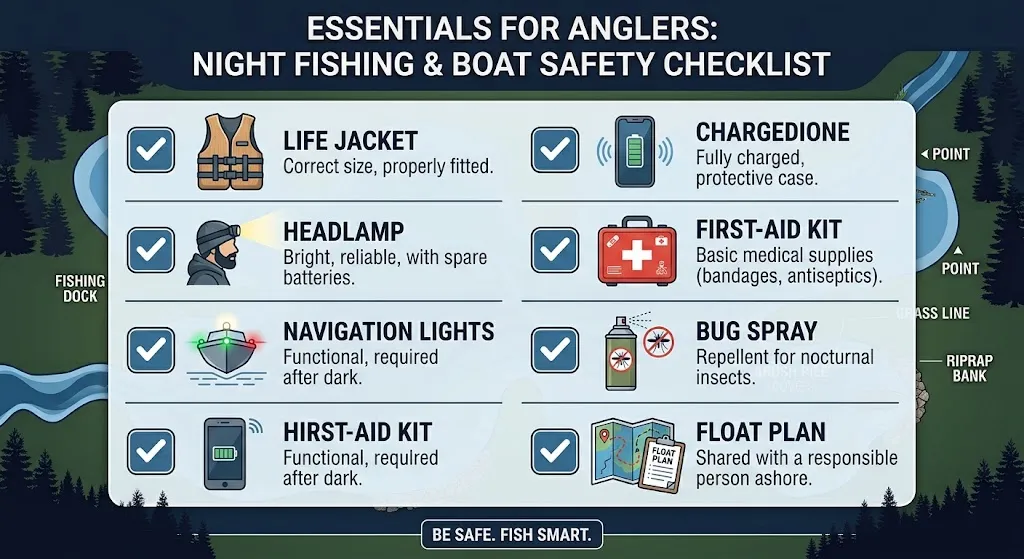
Night Fishing Safety Tips Every Angler Should Know
Night fishing is safe when you prepare, but darkness turns small problems into big ones.
- Tell someone where you are going and when you expect to return.
- Wear a life jacket when boating, especially if you are alone or running after dark.
- Use a headlamp sparingly. Turn it on to tie knots, unhook fish, or check hazards, then turn it off to protect your night vision.
- Bring a backup light, spare batteries, and a fully charged phone.
- Scout in daylight. Learn the ramp, shoreline, stumps, rocks, and shallow areas before dark.
- Slow the boat down. Avoid running long distances at night; fish a smaller area thoroughly instead.
- Carry bug spray. Mosquitoes can ruin an otherwise great night.
- Watch the weather. Lightning, rising wind, or sudden temperature drops are reasons to leave early.
- Keep the deck clear. Put pliers, line clippers, and extra lures in the same place every time.
Common Night Bass Fishing Mistakes to Avoid
Many anglers struggle with night fishing because they fish too fast or leave too early. Avoid these mistakes:
- Retrieving too quickly: Bass need time to locate and track the bait.
- Leaving during the post-sunset lull: Give the water 30 to 60 minutes to settle after dark.
- Using tiny, quiet baits only: Add vibration with a spinnerbait, buzzbait, or larger soft plastic.
- Overlooking shallow water: Bass may be in water shallow enough that their backs are nearly exposed.
- Fishing only bright dock lights: The shadow line beside the light is often better than the center of the light.
- Setting the hook on every splash: Wait until you feel weight or a surge.
- Ignoring safety gear: Navigation lights, a headlamp, life jacket, and communication plan are essential.
- Changing lures too often: Pick two or three baits and learn how bass want them presented that night.
9 Quick Tips to Catch More Bass at Night
- Start fishing one hour before sunset.
- Fish shallow flats, points, and banks near deeper water.
- Use black lures for a clear silhouette.
- Add vibration with a single Colorado-blade spinnerbait.
- Slow down your retrieve.
- Target dock lights, but cast to the shadows.
- Try topwater on calm nights.
- Use a jig or Texas-rigged worm when the surface is quiet.
- Put safety first: lights, life jacket, bug spray, and a float plan.
Night Time Bass Fishing FAQs
Can you go for bass fishing at night?
Yes. Bass fishing at night is legal in many places, but local rules can vary by lake, park, or state. Check local regulations before you go. Night fishing can be especially productive in summer when bass feed after dark.
What is the best time to fish for bass at night?
The best window is usually from one hour before sunset through the first few hours of darkness. The period just before sunrise can also be strong.
What color lure is best for night bass fishing?
Black is usually the best starting color because it creates a clear silhouette. Black/blue, black/red, junebug, and dark green pumpkin are also dependable choices.
Do bass bite topwater lures at night?
Yes. Topwater bass fishing at night can be outstanding, especially on calm summer nights. Black buzzbaits, Jitterbugs, walking baits, and frogs are all strong options.
Can you catch largemouth bass at night from shore?
Absolutely. Night fishing for bass from shore works well around riprap, points, grass lines, bridges, and public docks. Choose a safe, familiar spot and focus on areas with nearby deep water.
Do bass go shallow at night?
Often, yes. In summer, bass commonly move from deeper water to shallow flats, banks, points, and cover after dark to feed.
Conclusion
Bass fishing at night as much fun as fishing during the day, it gives you a real chance to catch more bass—and often bigger bass—when daytime heat, boat traffic, and fishing pressure make the fish difficult to catch. The key is to adjust your approach: fish shallow areas near deeper water, use black or dark lures, add vibration, and slow your retrieve so bass can find the bait.
Start before dark, learn the water, and give the post-sunset lull time to pass. Then rotate between a topwater bait, a slow-rolled spinnerbait, and a jig or Texas-rigged worm. Whether you are night fishing for bass from shore or working docks from a boat, focus on cover, shadow lines, points, and shallow flats. With the right lures, a patient presentation, and strong safety habits, Texas bass fishing at night can become one of your most productive and memorable ways to catch largemouth bass.
You might also like: