
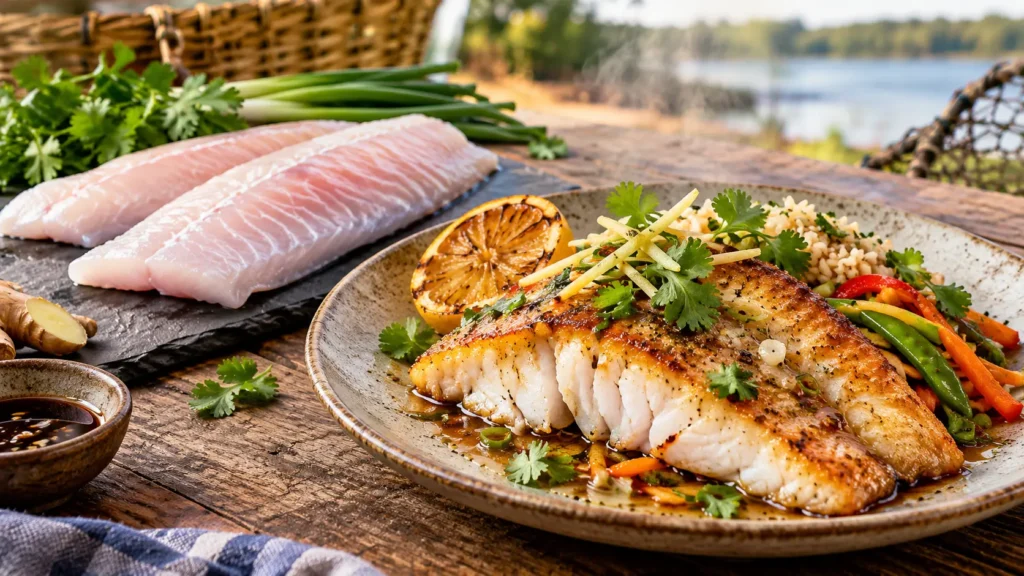
Is Asian carp good to eat safely? Yes, Asian carp is good to eat. Its flesh is mild, white, and firm, making it suitable for frying, baking, and fish cakes. The main challenge is its numerous small bones, so proper filleting and preparation are essential. Always check local advisories before eating fish caught in the wild.
You might wonder why a fish taking over local rivers is not on every dinner table. For years, people ignored these freshwater swimmers, viewing them purely as a nuisance. Yet, curiosity grows as anglers and chefs realize what a remarkable resource swims in our lakes and streams.
Can you eat Asian carp in north America? Absolutely. Catching them offers a thrilling experience for any fisherman, and taking them home turns an environmental headache into a delicious meal.
Is Asian Carp Good to Eat?
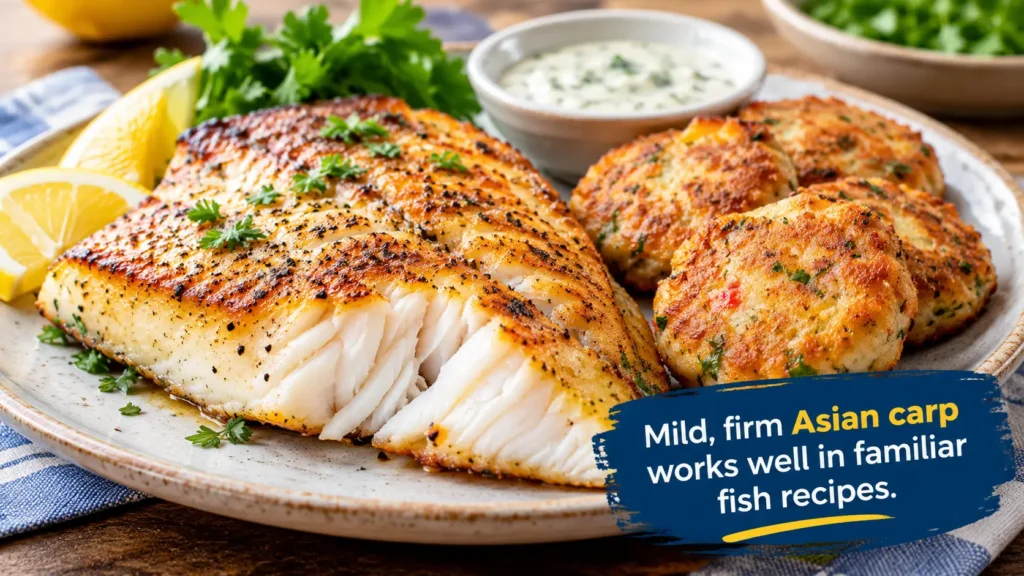
Asian carp is good to eat when it comes from clean water and is prepared correctly. The fish has mild, white, firm flesh that many people compare to a cross between catfish and a lighter freshwater whitefish. It does not taste muddy by nature; poor flavor usually comes from dirty water, poor handling, or leaving the bloodline in the fillet.
The U.S. Geological Survey describes invasive carp as “excellent table fare,” noting that their flesh is white, firm, and mild. The same agency cautions that these fish contain small intramuscular bones that many cooks find frustrating. usgs
So, can you eat Asian carp? Absolutely. The better question is: how do you prepare it so the bones do not ruin the meal? With the right cleaning method and recipes, eating Asian carp can be both practical and enjoyable.
What Does Asian Carp Taste Like?
Asian carp taste is mild, slightly sweet, and clean—not strongly “fishy.” The texture is firm and flaky when cooked, similar to catfish, tilapia, or striped bass. Silver carp and bighead carp tend to have especially pleasant, light-flavored meat because they feed low on the food web rather than scavenging from the bottom.
A common misconception is that every carp is a bottom feeder. Common carp often feeds along the bottom, but Asian carp such as silver carp and bighead carp are filter feeders. They eat plankton and tiny organisms in the water column, which helps explain why their flesh can taste good when the water is clean.
Flavor also depends on handling:
- Bleed the fish immediately after catching it.
- Keep it on ice.
- Remove the dark bloodline from each fillet.
- Avoid fish from polluted or stagnant water.
- Cook it soon after cleaning for the freshest flavor.
Are Asian Carp Safe to Eat?
Asian carp can be safe to eat, but safety depends on the waterway. Because these fish are freshwater species and often feed low on the food web, they can contain fewer contaminants than some larger predatory fish. Still, every wild fish carries some risk of pollutants such as mercury, PCBs, or other chemicals depending on where it lived.
Before you eat Asian carp, check your state or local fish-consumption advisory. Agencies issue advice based on the specific river, lake, fish species, and fish size. Larger, older fish generally accumulate more contaminants, so many anglers prefer smaller to medium-sized fish.
Follow these safety rules:
- Check local advisories for the exact waterbody.
- Avoid fish from obviously polluted water.
- Keep caught fish cold and clean.
- Cook fish to an internal temperature of 145°F.
- Freeze fish before pickling if your recipe calls for raw or lightly cured fish.
Is Asian Carp Healthy? Nutrition and Benefits
Asian carp nutrition is another reason to consider this fish. It is a lean source of protein and provides omega-3 fatty acids. LSU AgCenter notes that Asian carp are low in fat and a good source of omega-3s, making them a nutritious choice compared with many heavily processed proteins.
The fish is also high in protein, which supports muscle repair and helps meals feel filling. Because the fillets are relatively low in fat, Asian carp can fit well into grilled, baked, or air-fried meals.
| Nutrient benefit | Why it matters |
|---|---|
| Lean protein | Supports fullness and muscle maintenance |
| Omega-3 fatty acids | Supports heart and brain health |
| Low fillet fat | Works well for lighter cooking methods |
| Wild-caught source | Uses an abundant freshwater fishery resource |
Nutrition can vary by species, size, season, and waterway, so treat these as general benefits rather than exact numbers for every fish.
Do Asian Carp Have a Lot of Bones?
Yes. Asian carp bones are the biggest drawback. These fish have many small, Y-shaped intramuscular bones running through the fillet. They are not dangerous if cooked, but they can make eating a normal fillet unpleasant if you do not remove or soften them first.
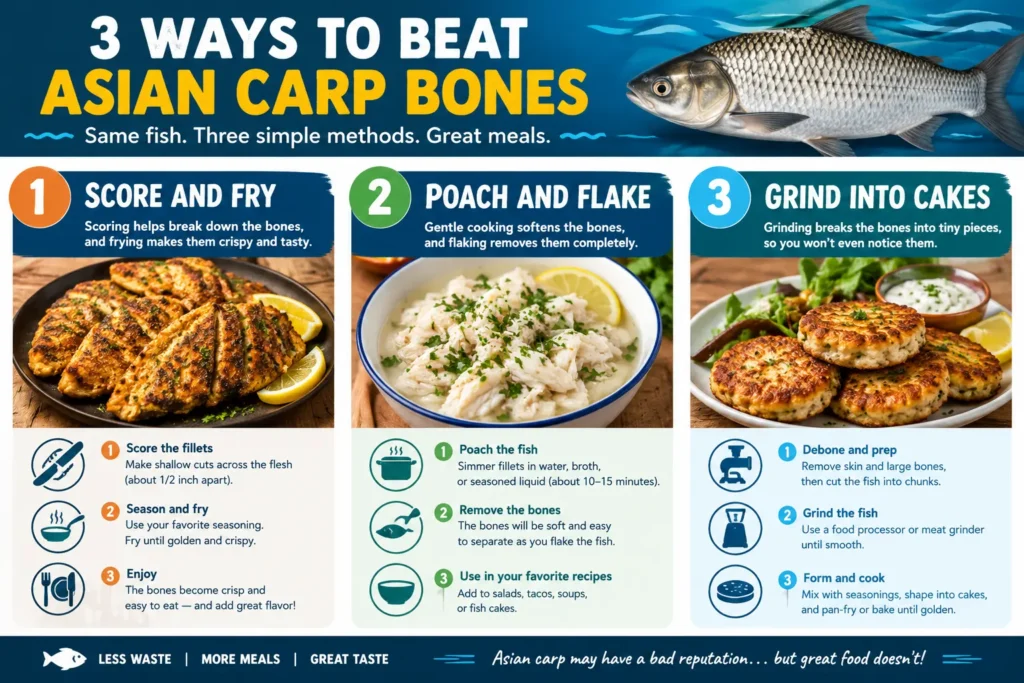
There are three practical ways to deal with the bones:
- Score and fry: Cut shallow scores across the fillet about 1/4 inch apart. Hot oil helps soften the small Y-bones, making them easier to eat around.
- Poach or steam: Gentle cooking makes the flesh flake away from the bones. After cooking, pick through the meat before using it in fish cakes or tacos.
- Grind or mince: Turn cooked carp meat into fish cakes, patties, dumplings, or spreads. This removes the bone problem almost completely.
A skilled fisherman can also use specialized filleting cuts that remove much of the bone structure, but beginners will get better results with scoring, poaching, or grinding.
How to Clean and Prepare Asian Carp
Learning how to cook Asian carp starts with proper cleaning. The goal is to remove the bloodline, reduce the bone problem, and keep the flesh cold.
Step-by-step cleaning
- Bleed the fish immediately. Cut the gills and place the fish in clean, cold water or on ice.
- Scale thoroughly. Carp scales are large and stubborn, so use a firm scaler or the back of a knife.
- Fillet the fish. Cut behind the gill plate, run the knife along the backbone, and remove each fillet.
- Remove the bloodline. Cut a thin V-shaped strip from the center of each fillet; this reduces strong flavor.
- Check for rib bones. Trim away the belly lining and rib cage.
- Choose a bone-control method. Score the fillet for frying, poach it for flaked meat, or grind it for fish cakes.
LSU AgCenter and USGS both point to specialized cleaning methods for Asian carp because its unusual bone structure requires more attention than a typical fillet.
5 Best Ways to Cook Asian Carp
The best cooking method depends on how much time you have and how concerned you are about bones. For a first-time cook, fried Asian carp or carp fish cakes are the easiest wins.
– Fried Asian carp
Score the fillets, season them with salt, pepper, paprika, and garlic powder, then dredge them in cornmeal or seasoned flour. Fry until golden and crisp. This is one of the most reliable silver carp recipes because the scoring helps soften the Y-bones.
– Asian carp fish cakes
Poach or steam the fillets, flake the meat, and remove any visible bones. Mix the fish with egg, breadcrumbs, green onion, garlic, and a little mustard or hot sauce. Form patties and pan-fry them until browned. This is an excellent way to eat carp without worrying about tiny bones.
– Baked or grilled Asian carp
Marinate fillets in lemon juice, olive oil, garlic, and herbs. Bake at 400°F or grill over medium heat until the flesh flakes easily. Remove the meat from the bones before serving if needed.
– Smoked Asian carp
Smoke the fish until it flakes apart, then use the meat in tacos, dips, salads, or spreads. Smoking adds depth and makes the mild flavor more interesting.
– Pickled Asian carp
Cut boneless cubes of fish, freeze them first for parasite safety, then pickle them in a vinegar-based brine. Pickling can soften small bones and creates a firm, tangy dish that works well on bread or crackers.
What Does Asian Carp Taste Best With?
Asian carp has a neutral flavor, so it takes on seasoning well. Use bright, bold ingredients to make the most of its firm texture.
Good pairings include:
- Lemon, garlic, dill, parsley, and black pepper
- Cajun seasoning, paprika, cayenne, and thyme
- Ginger, soy sauce, sesame oil, and green onion
- Cornmeal, hot sauce, and tartar sauce for a classic fish fry
- Mango salsa, cabbage slaw, and lime for fish tacos
Because the flesh is mild, avoid drowning it in heavy sauces. A crisp crust, fresh herbs, or a tangy sauce will make the natural flavor stand out.
Is Asian Carp the Same as Silver Carp, Bighead Carp, and Grass Carp?
“Asian carp” is a broad term, and it does not always mean the same fish. In North America, people often use it for several invasive species, including silver carp, bighead carp, grass carp, and black carp. Common carp is a different, long-established species and should not be confused with the bigheaded invasive carp.
| Fish | Feeding style | Eating notes |
|---|---|---|
| Silver carp | Filter feeder | Mild, white flesh; famous for jumping |
| Bighead carp | Filter feeder | Large, mild-fleshed fish; popular for food |
| Grass carp | Mostly plant eater | Edible, but flavor and texture can vary |
| Black carp | Eats snails and mollusks | Edible where regulations allow |
| Common carp | Often a bottom feeder | Edible, but stronger flavor and muddier reputation |
Silver carp and bighead carp are the species most often promoted as food in the United States. They are fast-growing filter feeders, not typical bottom feeders, and their flesh is generally mild and firm.
Can Eating Asian Carp Help Control Invasive Fish Populations?
Yes, creating demand for Asian carp can support invasive species management. These fish are invasive in many U.S. waterways, especially throughout the Mississippi River basin. They compete with native fish for food and can disrupt freshwater ecosystems and local fisheries.
Eating Asian carp will not solve the problem alone, but it can help. Commercial harvest, restaurant menus, fish cakes, frozen fillets, and pet-food markets can all create economic reasons to remove more fish from the water. LSU AgCenter specifically promotes consumption as one way to help control the species.
A responsible approach is simple: follow local rules, harvest where it is legal, support processors that use invasive carp, and avoid releasing live fish into new waters.
FAQs
Can you eat Asian carp raw?
No. Do not eat raw Asian carp unless it has been properly frozen and prepared for raw consumption under food-safety guidance. Wild freshwater fish can carry parasites, so cooking is the safest option.
Does Asian carp taste muddy?
Muddy taste Not necessarily. Clean-water Asian carp usually tastes mild and pleasant. A muddy flavor is more likely from poor water quality, stress, or improper cleaning than from the species itself.
Is Asian carp better than catfish?
It depends on preference. Asian carp is leaner and often milder; catfish has a richer, more distinctive flavor. Both can taste good when fresh and cooked well.
Are silver carp and bighead carp safe to eat?
They can be, provided you follow local consumption advisories. Both species have mild, firm flesh, but they also contain the same troublesome small bones.
What is the easiest Asian carp recipe for beginners?
Make fish cakes. Poach the fillets, flake the meat, remove bones, mix with binding ingredients, and pan-fry. It is forgiving, delicious, and solves the bone issue.
Is Asian carp an invasive species?
Yes. Silver carp, bighead carp, grass carp, and black carp are considered invasive in parts of North America, where they can harm native fish and freshwater habitats.
What do Asian carp eat?
Asian carp eat different foods depending on the species. Silver carp and bighead carp are filter feeders that eat plankton, algae, and tiny organisms in the water. Grass carp mainly eat aquatic plants, while black carp eat snails and other mollusks. Their varied diets help them grow quickly, which is one reason they can become invasive in new waterways.
Is carp the same as tilapia?
No. Carp and tilapia are different fish. Carp are usually larger freshwater fish with more bones, while tilapia is a milder, widely farmed fish with fewer bones and a softer texture. Both can taste mild, but tilapia is easier to fillet and cook, while carp needs more careful preparation because of its small Y-shaped bones.
Are Asian carp safe and nutritious to eat?
Yes, Asian carp can be safe and nutritious when it comes from a clean waterway and is handled properly. It provides lean protein and omega-3 fatty acids. However, wild fish can collect contaminants depending on where they live, so always check your state or local fish-consumption advisory before eating it.
Will a carp eat a hotdog?
Yes, some carp will eat a hotdog, especially common carp. Anglers sometimes use small pieces of hotdog as bait because its scent and soft texture can attract fish. That said, it is not the best bait for every carp species; corn, dough bait, bread, boilies, and worms are often more reliable choices.
Conclusion
So, is Asian carp good to eat? Yes—when you choose fish from a clean waterway, handle it well, and prepare it with its bones in mind. Asian carp offers mild, white, firm flesh that works beautifully in fried fish, fish cakes, tacos, chowder, and smoked spreads. It is a lean freshwater protein with omega-3 fatty acids, and it gives anglers and cooks a practical way to use an abundant invasive species.
The key is not to treat Asian carp like a typical fillet. Score it before frying, poach it before flaking, or grind it into patties. Check local fish advisories, keep the fish cold, and remove the bloodline for the cleanest flavor. Once you learn those steps, eating Asian carp stops feeling like a compromise and starts feeling like a smart, tasty choice. It is good for your plate, good for local fishery efforts, and potentially helpful in reducing the impact of invasive carp.
Recommended posts
- Asian Carp in Illinois – Species, Best Spots & Fishing Guide