
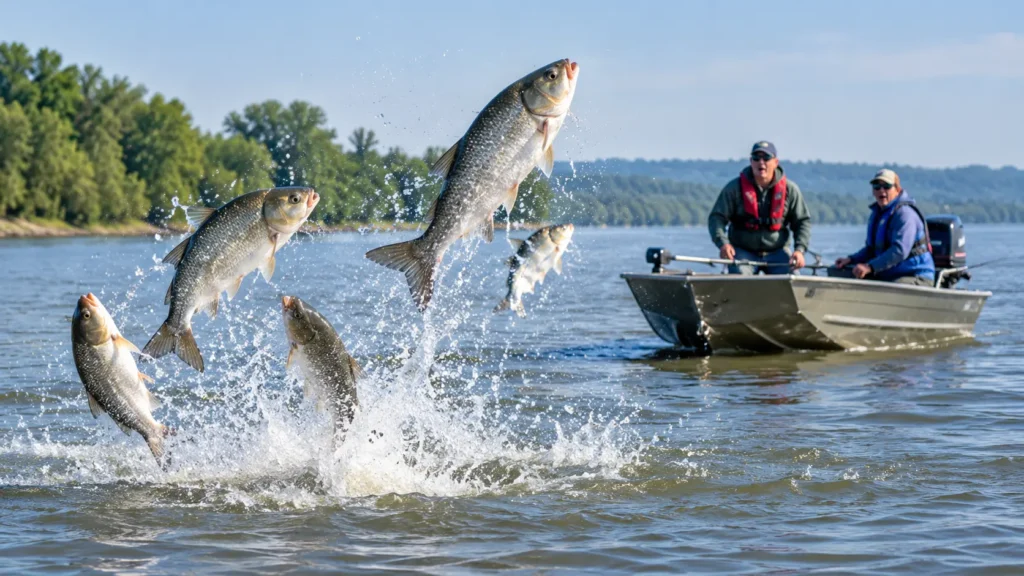
Asian carp in Illinois are four nonnative fish species—silver, bighead, grass, and black carp—that live mainly in the Illinois, Mississippi, and Kaskaskia river systems. Anglers can legally harvest them in Illinois, but they cannot keep any of these fish alive or release them back into the water.
This guide explains the types of carp in Illinois, where to look, how to fish for them safely, what they taste like, and the current rules every Illinois angler should know.
What Are Asian Carp in Illinois?
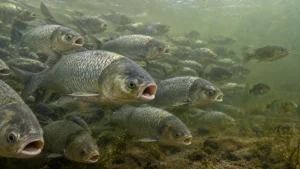
“Asian carp” is a broad name for several carp species originally from Asia. In Illinois, it usually means silver carp, bighead carp, grass carp, and black carp—not the common carp many anglers catch in ponds and lakes.
Silver and bighead carp are the species people most often mean when they discuss Illinois River Asian carp. They are large filter feeders that eat tiny plants and animals floating in the water, which puts them in direct competition with native fish.
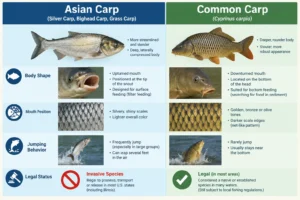
The term can confuse new anglers. Common carp have thick, bronze-colored scales and a smaller mouth; they are widespread across Illinois but are not part of the invasive “Asian carp” group. govinfo
Which Asian Carp Species Are Found in Illinois?
Illinois has four species commonly called Asian carp: silver, bighead, grass, and black carp. Their habits, impact, and fishing value differ.
| Species | Main diet | Where you’re most likely to find it | Key behavior |
|---|---|---|---|
| Silver carp | Plankton | Lower and middle Illinois River, Mississippi River, some connected backwaters | Jumps when startled by boat motors |
| Bighead carp | Plankton | Illinois River, Mississippi River, large rivers and backwaters | Usually does not jump; often found near grain docks and feeding areas |
| Grass carp | Aquatic plants | Rivers, reservoirs, and some lakes | Often mistaken for black carp; can damage native vegetation |
| Black carp | Snails and mussels | Lower Illinois River reaches, including Alton, La Grange, and Peoria areas | Rarely caught; eats native mussels and snails |
Silver carp dominate reported commercial removals in the Illinois River pools. Recent program data show roughly 88% of invasive carp removed were silver carp, while bighead and grass carp made up much smaller shares.
Where Do Asian Carp Live in Illinois?
The strongest Asian carp Illinois River populations occur in the middle and lower river, especially from the Peoria area downstream toward La Grange and Alton. These reaches connect to the Mississippi River and hold large numbers of silver and bighead carp.
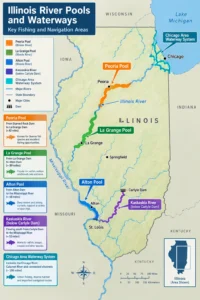
The Illinois River splits into two useful fishing zones. Below Starved Rock Dam, silver carp are generally more common; above the dam, anglers often encounter more bighead carp.
Other important waters include:
-
Illinois River: Peoria, La Grange, and Alton pools; tributary mouths; backwaters; and areas near grain docks.
-
Kaskaskia River below Carlyle Lake Dam: Asian carp gather in the spillway and downstream river, though agencies have not documented established populations inside Carlyle Lake itself.
-
Mississippi River border waters: A major source population and travel route for all four species.
-
Chicago Area Waterway System: Managed intensively because it links the Illinois River system to the Great Lakes.
For lakes with Asian carp Cook County, treat online claims carefully. The Chicago Area Waterway System receives monitoring because of its connection to Lake Michigan, but that does not mean every Cook County lake holds Asian carp. Check current Illinois DNR notices before planning a trip.
How Did Asian Carp Spread Into Illinois Waterways?
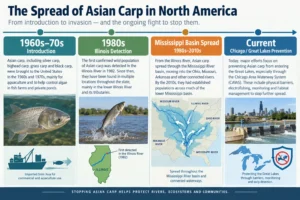
Bighead and silver carp were brought to the United States in the 1960s and 1970s for aquaculture and pond management. Escapes and flooding allowed them to enter the Mississippi River basin, where they moved upstream into Illinois waters.
Illinois first recorded Asian carp in 1985. Their numbers expanded quickly in the lower Illinois River, creating the dense populations anglers see today.
Black carp and grass carp also escaped or were released from aquaculture settings. Black carp are especially concerning because they eat freshwater mussels and snails, including native species.
Why Are Asian Carp a Problem in Illinois?
Asian carp compete with native fish for food. Silver and bighead carp filter plankton from the water, reducing food available to young sportfish and other native aquatic animals.
Silver carp create a safety issue because they leap up to 10 feet when disturbed by boat engines. A jumping fish can strike boaters, skiers, and anglers moving at speed.
Black carp threaten Illinois’s native mussel populations. Because they crush and eat mollusks, their spread can harm species that already face habitat and water-quality pressures.
The biggest long-term concern is the Great Lakes. The Chicago Area Waterway System connects the Missouri river to Lake Michigan, so agencies monitor and remove carp to reduce the chance of them reaching the lakes.
According to the Asian Carp Regional Coordinating Committee, some carp can weigh over 100 pounds and grow to around 4 feet long. These large fish are also heavy eaters, consuming as much as 40% of their body weight in food each day.
How to Identify Silver Carp, Bighead Carp, and Other Species
Correct identification matters because Illinois rules and reporting needs differ by species.
Silver carp
Silver carp have a low-set, upturned mouth, small head, and a sharp keel running from the anal fin toward the throat. Their scales are small and silvery, and they are the species famous for jumping.
Bighead carp
Bighead carp have a larger, broader head, a wide terminal mouth, and no sharp keel along the belly. They look similar to silver carp but do not normally jump when boats pass.
Grass carp
Grass carp have a long, tube-shaped body and a nearly white to olive body color. They resemble black carp closely, so external identification can be difficult.
Black carp
Black carp are darker, heavier-bodied fish with large scales and throat teeth adapted for crushing snails and mussels. Because they look like grass carp, photograph the whole fish and report suspected black carp to Illinois DNR rather than relying on appearance alone.
Where to Catch Asian Carp in Illinois?
The most reliable places for Asian carp fishing Illinois anglers are large rivers and their connected backwaters—not small neighborhood ponds.
– Illinois River
The Illinois River is the state’s best-known destination. Focus on the Peoria, La Grange, and Alton pools, especially near current seams, warm shallow bays, tributary mouths, and grain-dock areas.
For shore or small-boat anglers, smaller tributaries flowing into the Illinois River between the Fox River and Peoria can produce opportunities. Early-season fish often move into warmer tributary water.
– Carlyle Lake and Kaskaskia River
For anglers searching for Asian carp in Carlyle, fish the Kaskaskia River below Carlyle Lake Dam and the East or West Spillway access areas. The dam area holds carp that moved up the Kaskaskia River from the Mississippi.
Carlyle Lake itself is better known for crappie, white bass, catfish, and other gamefish. It also offers solid Illinois carp fishing for common carp, but Asian carp are documented mainly below the dam rather than throughout the lake.
– Chicago-area waters
Anglers who want to catch Asian carp Chicago should focus on the Chicago Area Waterway System rather than assuming local lakes hold them. This area is closely monitored because of its connection to the Great Lakes, so follow posted access rules and current agency guidance.
– Southern Illinois
For carp in southern Illinois, the Mississippi River and lower Kaskaskia River are the strongest starting points. The Carlyle spillway is a practical option for bank anglers because it provides direct access to carp-holding water below the dam.
– Black carp
If you are searching for black carp spots near me, understand that black carp are uncommon and hard to target. Recent captures have occurred in the Alton, La Grange, and Peoria reaches of the lower Illinois River, but they are not a dependable sportfish.
For anglers wondering where to catch black carp in Illinois, the best approach is to fish known big-river areas, identify every unusual carp carefully, and report suspected black carp immediately. Illinois DNR lists 217-557-0719 for reporting captured black carp.
Best Methods and Gear for Catching Asian Carp
Asian carp do not bite bait the way bluegill or catfish do. Most successful anglers target them by bowfishing, snagging where legal, or using methods designed for large river fish.
Bowfishing
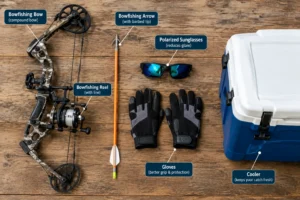
Bow fishing is the most popular recreational method for Asian carp Illinois river fishing. Illinois allows anglers to take carp with bow and arrow devices, though local lake rules and distance restrictions apply.
A practical setup includes:
-
A recurve or compound bowfishing bow
-
A solid reel with strong line
-
Barbed or multipoint arrow
-
Polarized sunglasses
-
A boat with a raised shooting platform, if legal for the water
On the Illinois River, experienced bowfishers look for silver carp jumping behind a slowly moving boat. At night, low-glare lights can help, but avoid bright generator lights around bighead carp because they tend to avoid disturbance.
Rod-and-reel fishing
Traditional bait fishing is difficult for silver and bighead carp because they feed on drifting plankton rather than taking bait from the bottom. Grass carp may respond to plant-based baits in some waters, but success is inconsistent.
For best carp fishing in Illinois involving common carp, use corn, dough bait, bread, or pack bait on a hair rig. That approach targets common carp, not necessarily Asian carp.
Boating and spotting
Use a quiet trolling motor to scan warm backwaters, current edges, and surface-feeding areas. Bighead carp often feed near grain docks, while silver carp may reveal themselves by jumping.
Safety note: Wear eye protection and keep passengers low when running water where silver carp are active. Jumping fish can cause serious injuries.
Are Asian Carp Good to Eat?
Yes. Silver and bighead carp are eaten in many cultures and can be excellent when handled quickly and prepared correctly. Illinois encourages anglers to harvest and eat invasive carp to help reduce their numbers.
The main challenge is the bone structure. Asian carp have many small intramuscular bones, so filleting takes practice. Ground carp patties, smoked carp spreads, and professionally processed fillets are easier options for first-time cooks.
Buy from a licensed processor when possible. Commercial harvest and processing programs in Illinois help move these fish species into food markets while supporting population-control efforts.
Illinois Asian Carp Regulations and Conservation Efforts
Illinois treats silver, bighead, black, and grass carp as injurious or invasive species. Sport anglers may harvest them, but they may not possess them live or release them back into the water.
Current sportfishing rules allow these species to be taken with a valid license and used as dead bait on the water where collected. There is no harvest limit for bighead, black, or Asian carp under the state’s injurious-species provisions, but always confirm the current Illinois DNR regulation booklet before your trip.
Key rules include:
-
Never move a live Asian carp in a livewell, bucket, or tank.
-
Never release one back into the water after catching it.fws
-
Kill the fish humanely if you keep it.fws
-
Do not transport Asian carp across state lines.fws
-
Report suspected black carp, especially if you cannot confidently separate it from grass carp.ifishillinois
Illinois also supports commercial removal, monitoring, processing incentives, and prevention work around the Chicago Area Waterway System. Recent incentive programs have paid commercial fishers for invasive carp removed from the Peoria, La Grange, and Alton pools. icrcc.fws
Best Carp Fishing in Illinois – FAQs
Where can I catch black carp near Western Springs, Illinois?
There is no reliable public black-carp fishery near Western Springs. Black carp are rare, difficult to identify from grass carp, and have been reported mainly in lower Illinois River reaches such as Alton, La Grange, and Peoria. If you believe you caught one, keep it dead, photograph it, and contact Illinois DNR.
Is there carp in Case Creek, Jacksonville, Illinois?
Case Creek may hold common carp in some sections, but it is not a known destination for Asian carp. For more dependable where to catch Asian carp opportunities near Jacksonville, look toward larger connected river systems, especially the Illinois River and its backwaters.
Where to fish for Asian carp around Chicago?
Focus on the Chicago Area Waterway System and follow current access and safety guidance. This system is monitored because it connects to the Great Lakes, but it is not a place to assume every nearby lake or pond contains Asian carp.
Where can I find Asian carp near me?
Start with large rivers connected to the Mississippi basin: the Illinois River, Mississippi River, and Kaskaskia River below Carlyle Lake Dam. Look for warm backwaters, tributary mouths, current seams, and areas near grain docks.
Final Thoughts
Asian carp in Illinois are more than a fishing curiosity—they are an invasive species challenge that affects rivers ecosystem, native wildlife, boaters, and the Great Lakes. The best opportunities for Asian carp fishing in Illinois are on the Illinois River, the Mississippi River, and the Kaskaskia River below Carlyle Lake Dam. Learn to separate silver, bighead, grass, and black carp before you go, follow Illinois’ no-live-possession rules, and harvest responsibly when you catch one.
Whether you are planning Asian carp Illinois River fishing, looking for the best carp fishing in Illinois, or simply trying to understand carp in Illinois, careful identification and ethical handling make every trip more useful. Use this Asian carp in Illinois—species, best spots, and fishing guide to fish smarter, stay legal, and help protect the state’s waterways.
You will also love:
- Can You Carp Fishing After Heavy Rain? (Winter Carp Fishing Advice)
- The 5 Most Important Pieces Of Gear For Late Winter Bass Fishing
- Buffalo Fish Vs Carp | What Are The Differences? (With Videos)
- Can You Fish For Carp When They Are Spawning! (Explained)
- What Gear Do You Need For Carp Fishing? (Carp Fishing Equipment List)
- Is Asian Carp Good to Eat? Taste, Safety & Cooking Tips