
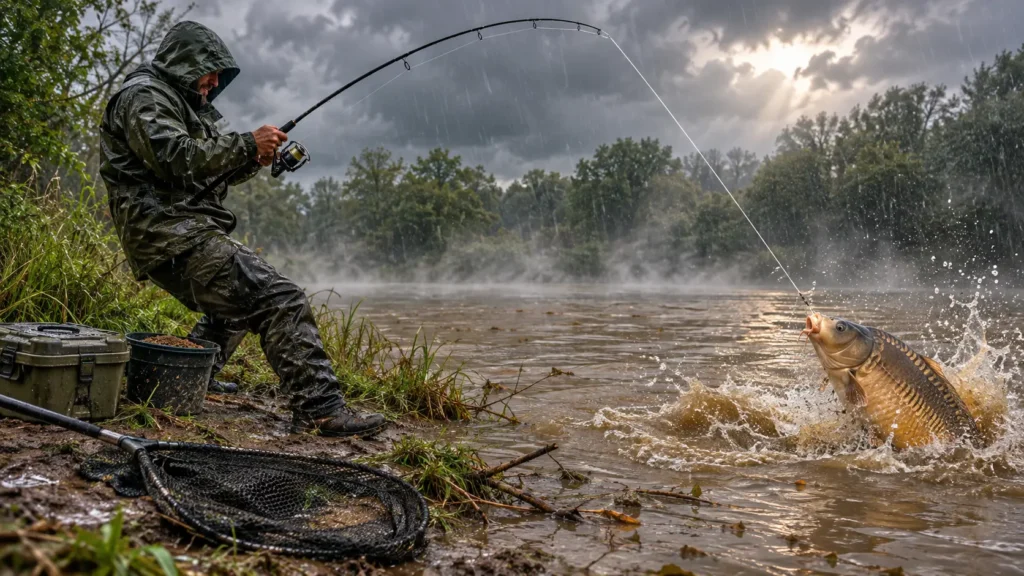
Carp fishing after heavy rain can be very productive, but only when you adjust to the new water conditions. Rain can wash worms, insects, and natural food into a lake, stir up oxygen, and trigger carp to feed—yet cold runoff, muddy water, and rising levels can also move fish away from their usual spots.
The best approach is simple: find where clean water meets dirty water, use a bait with strong scent or visual appeal, and fish slowly until the lake settles. Results depend heavily on water temperature, runoff, and how quickly conditions stabilize.
Is Carp Fishing After Heavy Rain Good?
Carp fishing in the rain is often good, especially once the worst of the storm has passed. Heavy rainfall can push natural food into the lake, increase oxygen, and create fresh feeding areas around inlets, drains, and flooded margins.
That said, heavy rain is not automatically a green light. A short summer shower may improve fishing, while a long, cold autumn downpour can chill shallow water and push carp into deeper, more stable areas.
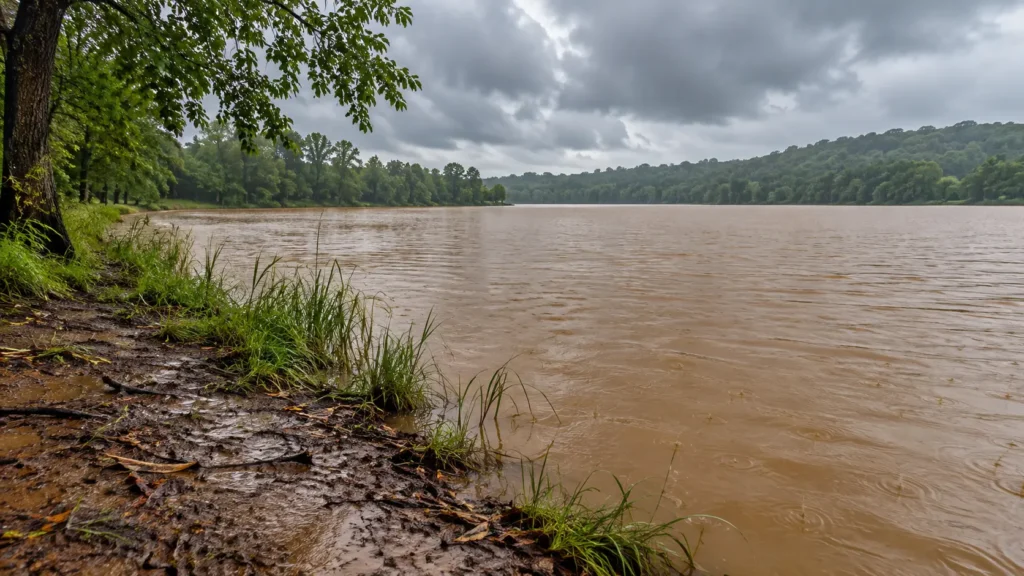
A useful rule: if the rain is warm, the wind is from the south or west, and the air pressure is falling, expect more activity. If the rain is cold and the lake has turned chocolate-brown, give the water time to settle before expecting a fast bite.
How Heavy Rain Affects Carp Behavior and Feeding
Rain changes more than the surface of the lake. It alters clarity, temperature, oxygen levels, food availability, and where carp feel safe. Carp behaviour after rain is therefore driven by the whole weather conditions package—not the rain alone.
Heavy rainfall often washes earthworms, insects, seeds, and other food from the banks into the water. Carp may move toward these areas to feed, particularly where runoff enters the lake.
At the same time, cold runoff can create a cooler layer near the bottom. In autumn, experienced carp anglers often fish a bait slightly above the lakebed because carp may sit above that cold layer rather than feed directly on the bottom.
Muddy water also reduces visibility. Carp rely heavily on smell, taste, and vibration, so a high-attract bait or a bait with a strong food signal can outperform a subtle presentation.
Where to Find Carp After Heavy Rain
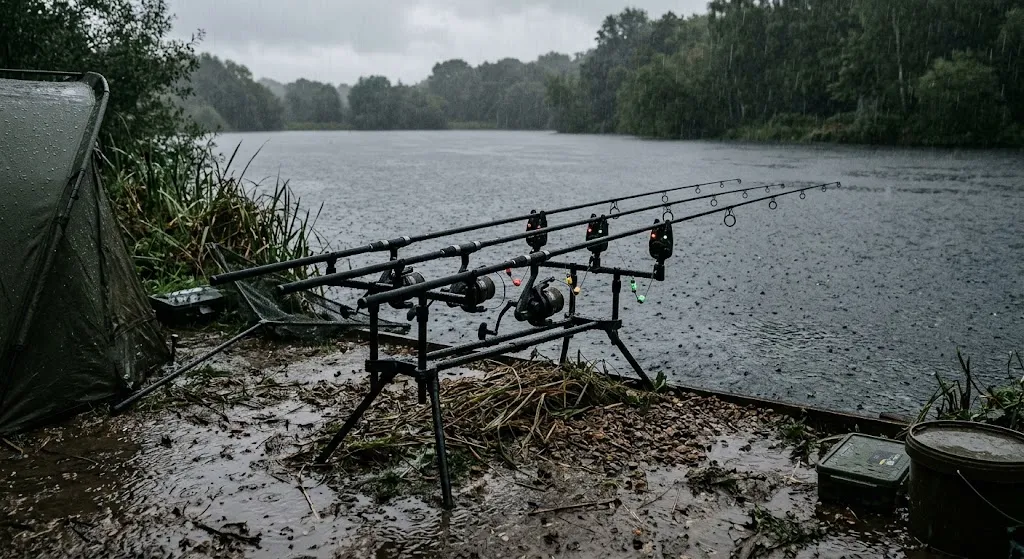
After a storm, carp rarely stay in one place. Look for areas where food enters the water, where the bottom is firmer, or where dirty water meets clearer water.
Good starting points include:
- Stream or ditch mouths
- Flooded margins and reed beds
- Windward banks, where food collects
- Islands and bars near deeper water
- The edge where muddy runoff meets cleaner water
- Bays that warm quickly after the rain stops
A tracked carp study found that during very heavy rain, fish left shallow bays and moved toward areas with more water in front of them, likely because cold runoff had clouded the shallows.
Should You Fish Near Inlets and Runoff Areas?
An inlet can be one of the best places to try after rain. Moving water carries worms, insects, and other food into the lake, and carp often investigate these areas.
Do not cast directly into the dirtiest water every time. Start on the cleaner edge just outside the runoff plume. Carp can feed confidently there while still benefiting from the food being washed in.
If the inflow is powerful, fish slightly wider of the main current. A bait presented in a calmer pocket is easier for carp to find and eat.
Are Shallow Margins Productive After Rain?
Shallow margins can be excellent after light or warm rain, especially in spring and summer. New food, cover, and oxygen can draw carp into areas they may normally ignore.
In colder months, be more cautious. Cold rain can quickly cool shallow water, so carp may drop back toward deeper water or hold just off the margin.
A practical tactic is to fish one rod tight to the margin and another at mid-range. Let the bites tell you where the fish have settled.
Best Carp Baits to Use After Heavy Rain
The best carp bait after rain is usually something with a strong scent, visible profile, or natural food connection. In murky water, carp need help locating your hookbait.
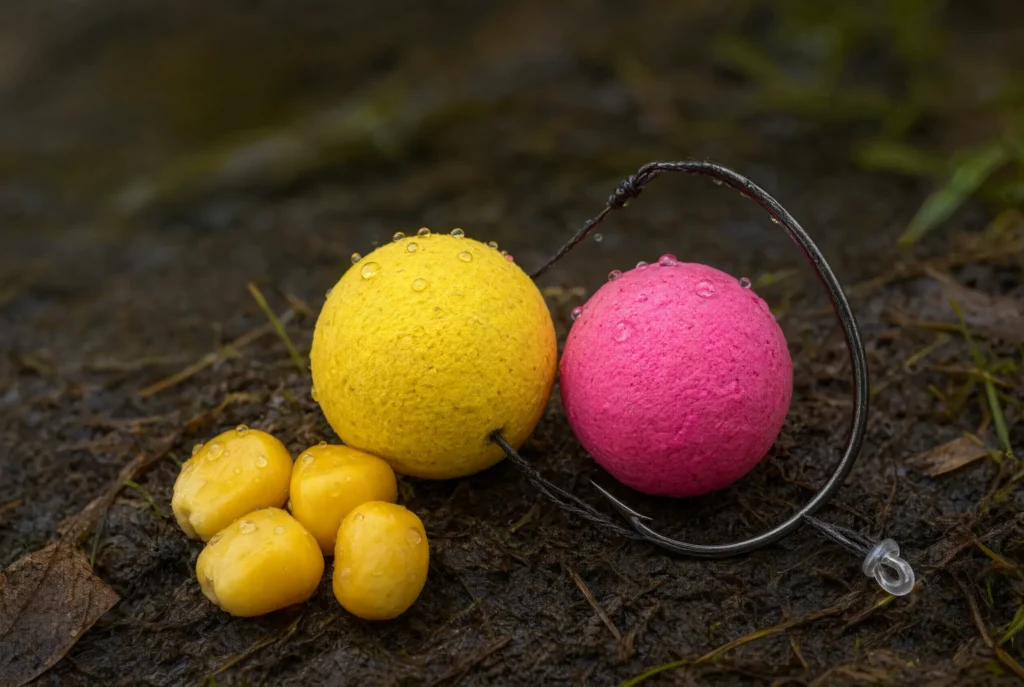
Try these options:
- Sweetcorn: Bright, visible, and a reliable cold-water bait.
- Meaty or fishy boilies: Strong flavour and scent help carp find them in coloured water.
- Halibut pellets: A high-food signal that works well around inflows.
- Maggots or worms: Ideal when rain has washed natural food into the lake.
- Bright pop-ups: Useful when the lakebed is covered in silt or debris.
- Paste or glugged bait: Releases attraction quickly in muddy water.
For carp fishing in muddy water, avoid relying only on tiny, dull hookbaits. A high-visibility pop-up, a bright piece of corn, or a strongly flavoured boilie gives carp a clearer target.
If you are fishing for carp in the rain, keep bait or lure presentation simple. A small PVA bag or a tightly wrapped mesh bag can put attraction close to the hook without creating a large spread of loose feed.
9 Practical Tips for More Bites
- Check the rain temperature. Warm rain encourages movement; cold rain often pushes carp deeper.
- Find the clean-water edge. Fish where muddy runoff meets clearer water.
- Start near an inlet. Food enters the lake there, and carp often follow it.
- Use a high-attract bait. Strong-smelling boilies, pellets, corn, worms, or maggots work well in coloured water.
- Add a visual hookbait. A bright pop-up or piece of corn helps carp locate the bait.
- Fish above a cold bottom layer. In autumn, raise your bait slightly off the deck.
- Keep feeding light. A small PVA bag or a few free offerings is often better than a big bed of bait.
- Cover three depths. Try a margin rod, a mid-range rod, and a deeper-water rod.
- Stay mobile early. Watch for bubbles, showing fish, and movement, then cast to the clearest signs.
Choosing the Right Carp Fishing Rigs for Murky Water
In clear water, carp can inspect a bait carefully. After heavy rain, they often need scent, movement, or a clear visual cue. Choose a rig that presents the hookbait cleanly and helps the carp find it.
Strong choices that favoured by carp anglers include:
| Condition | Recommended rig | Why it works |
|---|---|---|
| Muddy water | Hair-rigged boilie with bright pop-up | Gives carp a visible target |
| Silty bottom | Pop-up or wafter | Keeps the bait above debris |
| Cold conditions | Simple hair rig with corn or small boilie | Slower, subtle presentation |
| Food washing in | Maggot or worm rig | Matches the natural food source |
| Weedy margin | Chod rig or solid PVA bag | Keeps the hookbait clear of weed |
A low pop-up can be particularly effective during low-pressure conditions because carp tend to sit lower in the water and investigate bottom baits.
Keep the rig short and tidy. In coloured water, carp are less likely to follow a bait across a large area, so put the attraction close to the hook.
How Water Temperature and Clarity Affect Carp Fishing
Water temperature and clarity are the two biggest clues after a storm. Warm rain can wake fish up; cold rain can shut feeding down.
Warm rain, especially after a dry spell, can raise activity levels and draw carp shallower. Cold rain does the opposite: it can chill the margins and push carp toward deeper water where conditions feel more stable.
Clarity matters too. Lightly stained water often fishes well because carp feel less exposed. Completely muddy water can make visual feeding harder, so use scent-led baits and fish where the water is beginning to clear.
Watch the lake for 20 minutes before setting up. If you see carp topping, bubbling, or moving through the margins, fish those signs rather than forcing a plan based on last week’s conditions.
Best Time to Catch Carp After a Heavy Rainstorm
The best time is often just after the rain eases and the atmospheric pressure begins to stabilize. Carp may feed during the change in weather, then settle once the lake becomes very cold, high, or heavily coloured.
For many venues, the most reliable window is:
- First 6–24 hours after warm rain: Great for checking margins, inlets, and shallow bays.
- 24–48 hours after cold rain: Often better, once the water starts to clear and temperatures settle.
- Dawn and dusk: Still strong feeding periods, especially in autumn.
- During a mild south-westerly wind: Often a productive time because it brings warmer, wetter air and oxygen into the lake.
In rivers, the period a couple of days after heavy rainfall can be excellent once the flow begins to drop and the water is coloured but manageable.
Common Mistakes to Avoid When Carp Fishing After Rain
Many anglers either stay home after rain or fish exactly as they would in normal conditions. Both can cost you bites.
Avoid these mistakes:
- Fishing only in the dirtiest water. The clean edge beside the runoff is often better.
- Ignoring water temperature. Cold rain can move carp away from the shallows.
- Using a bait with weak attraction. Carp need scent or a visible target in murky water.
- Casting to the same old spot. New food and rising water can create fresh feeding zones.
- Feeding too heavily. In cold or muddy conditions, a small amount of bait is often enough.
- Not changing depth. If the bottom is cold, try a popped-up bait slightly above it.
- Leaving too quickly. Carp may need time to settle after a major change in conditions.
A good tactic is to start with one rod near an inflow, one on a clean marginal line, and one in deeper water. Then move toward the area producing signs of feeding carp.
Safety Tips for Carp Fishing in Flooded or Rising Water
No carp is worth risking your safety. Heavy rain can make banks slippery, raise water levels quickly, and bring debris into swims.
Follow these safety rules:
- Do not fish during lightning or thunder.
- Avoid steep, muddy, or undercut banks.
- Stay clear of fast-moving inflows and flooded paths.
- Wear waterproofs and boots with good grip.
- Check the forecast and radar before you go fishing.
- Tell someone where you are fishing and when you expect to return.
- Move your gear well back from the water if the level is rising.
If a lake is flooded, access is unsafe, or the current is strong, wait. The fishing may improve later, but the conditions need to be safe first.
Fishing for Carp after Rain FAQs
Will carp still bite after rain?
Yes. Carp can still bite after rain, especially if the rain was warm, the pressure is falling, or food has been washed into the lake. Cold, muddy conditions may slow the bite, but carp rarely stop feeding completely.
What baits do carp like to eat after heavy rain?
Corn, worms, maggots, meaty boilies, pellets, and bright pop-ups are all strong choices. Use something with scent or visibility when carp fishing in muddy water.
Does rain affect carp fishing?
Yes. Rain changes water clarity, temperature, oxygen, food availability, and carp location. It can improve fishing, but only if you adjust your bait, area, and presentation.
Is it better to fish for carp before or after rain?
Fishing just before a low pressure system can be excellent because carp often become more active ahead of a change. After rain can also be good, particularly once the water begins to settle.
Is it possible to catch carp in dirty water after rain?
Yes. Carp can be caught in dirty water, but use high-attract baits, bright hookbaits, and simple rigs. Fish the boundary where muddy water meets clearer water.
Where will carp be feeding after rain?
Look near inlets, runoff areas, flooded margins, windward banks, and the edge of clearer water. Carp often follow food that rain has washed into the lake.
Is fishing after a storm good for carp?
It can be. Once it is safe, a storm can create fresh feeding opportunities. The key is to read the water rather than assume every storm will produce the same result.
Do carp still bite well after a little rain?
Often, yes. A small amount of rain may cool the water, add oxygen, and improve confidence without badly affecting clarity. It can be a good time to go fishing.
What is the 80/20 rule in fishing?
In fishing, the 80/20 rule means that roughly 80% of the fish are found in about 20% of the water. Focus on features such as weed edges, bars, drop-offs, inlets, shade, and windward banks instead of spreading your effort across the whole lake.
What scares fish away?
Fish are often spooked by sudden noise, shadows, vibration, bright light, careless casting, and disturbance in shallow water. Walking heavily on the bank, dropping tackle, or repeatedly casting over fish can also push them away.
What is the best air pressure for fishing?
There is no single perfect number, but stable, normal pressure—roughly 29.70–30.40 inHg—is generally reliable. Many anglers find the strongest feeding window just before a front, when pressure is falling.
How long does carp fishing stay productive after rain?
It depends on the rain and season. Warm rain can keep carp active for 24 hours or more, while a sharp cold front may slow fishing for 24–48 hours until the water settles.
How should you adapt your carp fishing tactics after heavy rain?
Fish the cleaner edge beside muddy runoff, use high-attract or visible baits, and keep your rig simple. Start near inlets and margins, but be ready to move deeper if the water has turned cold or heavily coloured.
Conclusion
Carp fishing After The Rain rewards anglers who read the water instead of relying on old habits. Heavy rainfall can wash food into the lake, raise oxygen levels, and create fresh feeding opportunities around inlets, margins, and windward banks. At the same time, cold runoff and muddy water can move carp into deeper, more stable areas.
Your best approach is to identify the clean-water edge, choose a bait with strong scent or visibility, and keep your presentation simple. A bright pop-up, corn, worms, maggots, or a high-attract boilie can all produce bites when carp are feeding after a storm.
Do not let bad weather stop you from going fishing. Check safety first, watch how the lake responds, and adapt your rod positions as conditions change. With the right bait, location, and timing, carp fishing after heavy rain can turn a difficult session into one of your most productive.
You might also like: