
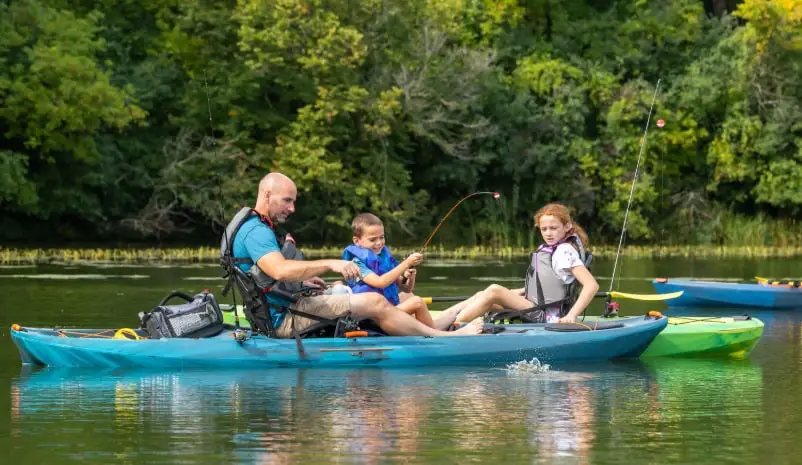
Choosing the Best Fishing Kayaks can make your first fishing trips safer, easier, and more enjoyable. Want to catch more fish without spending a fortune on a boat? A beginner-friendly fishing kayak should offer excellent stability, comfortable seating, easy handling, and enough storage for your rods, tackle, and other essentials.
The best fishing kayaks for beginners combine stability, manageable weight, and practical fishing features at an affordable price. Look for a sit-on-top design, a comfortable seat, and a weight capacity that accommodates both you and your fishing gear.
From budget-friendly models to feature-packed kayaks, our guide will help you compare the top options for lakes, ponds, and calm rivers. You’ll also learn what to look for in stability, propulsion, storage, and safety features before buying. Ready to find your first fishing kayak and make everytrip count? Let’s explore the best options for you.
Top-rated fishing kayaks of 2026 (At A Glance)
- Old Town Fishing Kayak – Compact electric pedal-driven boat
- INTEX Excursion Pro K2 Inflatable Kayak 2-Person Set with Paddles & Pump
- Jackson kayak for Fishing trips – popular Coosa HD hull and deck design
- NuCanoe Unlimited MAX Fishing Kayak – 3 Years Warranty
- Novelty N01 Fishing Kayak – Dare to Be Different, Paddle Board w/All Gear
- Old Town Sportsman Sit-on-Top Fishing Pedal & Cruise Control Kayak
- Hobie Mirage Pedal Fishing Kayak Slate Blue – Classic Mirage Drive
Quick Jump
ToggleWhat Are the Best Fishing Kayaks for Different Anglers?
There is no single “best fishing kayak” for everyone. A 10-foot kayak that feels easy on a small pond can struggle in wind, current, or open water. A 13-foot pedal kayak may cover distance quickly but become difficult to lift onto a car roof.
Use this quick match-up to narrow your choice:
| Angler type | Best kayak style | Ideal length | Look for |
|---|---|---|---|
| First-time buyer | Lightweight sit-on-top paddle kayak | 9–11 ft | Simple storage, 300–400 lb capacity, easy transport |
| Lake bass angler | Stable sit-on-top kayak | 10–12 ft | Standing platform, rod holders, gear tracks |
| River angler | Maneuverable paddle kayak | 10–12 ft | Rocker, tracking, durable hull, skeg or rudder |
| Saltwater angler | Longer pedal or motor-ready kayak | 12–14 ft | Sealed drive, rudder, dry storage, high capacity |
| Budget-conscious angler | Basic sit-on-top paddle kayak | 10–12 ft | Value, low weight, essential rod holders |
| Angler with limited storage | Inflatable or modular kayak | 9–12 ft | Carry bag, rigid floor, quick setup |
Expert reviewers consistently emphasize that the right boat depends on where and how you fish rather than one universal winner.
Best Fishing Kayaks for Beginners (Top-Rated)
Beginners should prioritize stability, low weight, simple rigging, and a seat that does not cause back pain after two hours. Avoid starting with a heavy, fully rigged pedal kayak unless you already know you need hands-free propulsion.
Pelican Catch Classic 100 Angler
The Pelican Catch Classic 100 Angler is a strong beginner choice because it is light, stable, and easy to store. It measures 10 feet long, weighs about 57 pounds, supports up to 350 pounds, and includes a dual-position seat that lets you sit or stand while fishing.
Best for: Small lakes, ponds, calm rivers, and new kayak anglers.
Pros
- Lightweight enough for one person to handle
- Wide 34-inch hull adds stability
- Dual-position seat supports seated or standing fishing
- Lower price than premium pedal kayaks
Cons
- Limited space for a large tackle crate
- Paddle propulsion requires more effort on windy days
Check price: Pelican Catch Classic 100 Angler on Amazon
Lifetime Tamarack Pro 103
The Lifetime Tamarack Pro 103 is another practical entry-level sit-on-top option. Its 10-foot, 3-inch length and simple fishing layout make it a good fit for casual anglers who want a low-maintenance boat without spending premium-kayak money.
Best for: Beginners, occasional anglers, and calm-water fishing.
Pros
- Affordable compared with pedal-drive models
- Simple sit-on-top design
- Easy to transport and store
- Suitable for lakes and slow rivers
Cons
- Not ideal for rough water or long-distance paddling
- Fewer premium rigging options
Check price: Lifetime Tamarack Pro 103 on Amazon
Best Sit-On-Top vs. Sit-Inside Fishing Kayaks
Most fishing kayaks are sit-on-top models because they are easier to enter, exit, drain, and customize. Sit-inside kayaks can feel warmer and drier in cool weather, but they offer less open deck space for tackle, rods, and standing.
Sit-on-top fishing kayaks
A sit-on-top kayak is the better choice for most anglers. You can stand, shift your weight, re-enter after a capsize, and mount accessories without fighting a cramped cockpit.
Choose sit-on-top if you:
- Fish in warm weather
- Want to stand and cast
- Carry a tackle crate, cooler, or fish finder
- Fish saltwater, lakes, or wide rivers
- Want the easiest self-rescue experience
Sit-inside fishing kayaks
Sit-inside kayaks work best for colder climates, protected water, and anglers who value a lower profile. They are less common in dedicated fishing setups because gear access and recovery are harder.
Choose sit-inside if you:
- Fish in cold weather
- Prefer a lighter, narrower boat
- Paddle more than you cast
- Fish calm rivers or sheltered bays
For most buyers searching for the best sit-on-top fishing kayaks, stability and deck space matter more than top-end speed. Wide, flat, or tunnel-style hulls help anglers cast, land fish, and stand with more outdoors confidence.
Best Fishing Kayaks for Lakes, Rivers, and Saltwater
Your fishing environment should decide the hull before you look at colors, seats, or accessories.
Best fishing kayaks for lakes
Lakes reward stability, comfort, and storage. A 10–12-foot sit-on-top kayak with a wide stance gives you a solid casting platform and enough room for tackle.
Recommended option: Pelican Catch PWR 100 on Amazon
The Pelican Catch PWR 100 has a 450-pound weight limit, a 360-degree swivel seat, four recessed rod holders, gear tracks, and a pre-installed transom for a motor up to 2.5 hp. That makes it especially useful for lake anglers who want to add an electric motor later.
Best for: Bass, panfish, pike, and calm-water fishing.
Best fishing kayaks for rivers
Rivers demand maneuverability. Look for moderate rocker, a durable hull, good tracking, and enough clearance to handle shallow water or obstacles.
Recommended option: Intex 68307EP Explorer K2 Inflatable Kayak
A shorter paddle kayak is usually easier to control around bends, downed trees, and current seams. Avoid oversized pedal drives in rocky or shallow rivers unless the drive can be removed quickly.
Best for: Smallmouth bass, trout, creek fishing, and moving water.
Best fishing kayaks for saltwater
Saltwater fishing puts more demands on a kayak: wind, chop, current, corrosion, and longer distances. Choose a longer hull, preferably 12–14 feet, with a rudder, sealed storage, and a corrosion-resistant pedal drive or motor mount.
The Sea Eagle 380X Explorer is a versatile inflatable option for anglers who need portability. It is 12 feet 6 inches long, supports up to 750 pounds, includes a drop-stitch floor, and is designed for fishing, touring, and whitewater use.
Check price: Sea Eagle 380X Inflatable Kayak on Amazon
Best for: Bays, estuaries, coastal flats, and anglers with limited storage.
Best Pedal Fishing Kayaks vs. Paddle Kayaks
A pedal fishing kayak lets you keep both hands on your rod while moving. A paddle kayak costs less, weighs less, and has fewer mechanical parts to maintain.
| Feature | Pedal fishing kayak | Paddle fishing kayak |
|---|---|---|
| Hands-free fishing | Excellent | Limited |
| Price | Higher | Lower |
| Weight | Usually heavier | Usually lighter |
| Maintenance | Drive, fins/prop, rudder | Minimal |
| Shallow water | Depends on drive design | Very good |
| Wind and current | Easier to handle | More effort required |
| Best for | Frequent anglers, open water | Beginners, small water, budget buyers |
Pedal kayaks have become popular because they free your hands for casting, working lures, and landing fish. However, paddle kayaks remain attractive because they are simpler, lighter, and less expensive.
Best pedal fishing kayak for portability
The Reel Yaks Radar Modular Fishing Kayak is a compact pedal option with a 10-foot length, 430-pound capacity, fin drive, and sit-on-top fishing layout. Its modular design helps anglers who cannot store or transport a traditional one-piece kayak.
Check price: Reel Yaks Radar Modular Fishing Kayak on Amazon
Best for: Anglers who want pedal power without a trailer or large garage.
What to Look for When Buying a Fishing Kayak
Use this fishing kayak buying guide before you compare prices. The right specifications matter more than brand loyalty.
– Stability
Stability determines whether you can cast comfortably, fight a fish, and possibly stand. Wider ocean kayaks are generally more stable, but hull shape matters too. A 34–38-inch beam is common in fishing-specific sit-on-top kayaks.
– Weight capacity
Your real load includes your body weight, paddle, PFD, tackle, cooler, fish finder battery, water, and any gear you bring aboard. Choose a kayak with at least 100 pounds of capacity above your expected total load.
– Length and tracking
Longer kayaks track straighter and move faster. Shorter kayaks turn more easily and fit better in tight storage spaces. Many anglers find 12 feet to be a practical middle ground for lakes, rivers, and protected coastal water.
– Seat comfort
A bad seat can end a fishing trip early. Look for an adjustable, breathable frame seat with lumbar support, especially if you plan to fish for several hours.
– Storage
Prioritize:
- A rear tank well for a tackle crate
- A dry hatch for phone, keys, and wallet
- Gear tracks for rod holders and fish finders
- Bungee rigging for paddles and extra gear
- Space for a cooler if you keep fish
– Propulsion
Choose paddle power for simplicity and lower cost. Choose pedal power for hands-free fishing and longer trips. Choose motor-ready only if you are comfortable managing batteries, wiring, and maintenance.
– Transport and storage
Measure your vehicle, garage, elevator, and storage area before buying. A 75-pound kayak is manageable for many people; a 130-pound pedal kayak often requires a cart, truck bed, or trailer.
How Much Should You Spend on a Fishing Kayak?
The best fishing kayaks for the money are not always the cheapest. They are the Vibe fishing kayak that match your style without forcing you to buy expensive upgrades immediately.
| Budget | What you can expect |
|---|---|
| Under $700 | Basic sit-on-top paddle kayak, simple seat, limited rigging |
| $700–$1,200 | Better stability, improved seat, rod holders, gear tracks |
| $1,200–$2,000 | Pedal drive options, more storage, motor-ready features |
| $2,000+ | Premium drive pedal systems, electronics integration, saltwater capability |
A budget kayak is often the right first purchase. You can add rod holders, an anchor trolley, a fish finder, and a better paddle later. Spending more upfront makes sense only when you already know you need pedal power, saltwater performance, or a motor-ready platform.
Best Fishing Kayak Accessories for a Better Experience
A good kayak becomes a great fishing platform with the right accessories. Start with safety gear, then add convenience items based on how you fish.
Essential accessories
- PFD: Wear a USCG-approved life jacket designed for paddling.
- Paddle: Choose a lightweight paddle sized to your kayak width and height.
- Dry bag: Protect your phone, keys, wallet, and first-aid supplies.
- Anchor trolley: Helps you position the kayak in current or wind.
- Rod holders: Keep rods secure while paddling or changing lures.
- Kayak cart: Makes launching easier if your kayak weighs more than 60 pounds.
- Fish finder: Useful for depth, structure, and fish location, though not required.
Useful Amazon accessories
- Kayak fishing rod holders on Amazon
- Kayak anchor trolley kit on Amazon
- Kayak cart on Amazon
- Dry bags for kayaking on Amazon
- Kayak fish finder on Amazon
- Kayak fishing paddle on Amazon
Fishing Kayak Safety Tips Every Angler Should Know
Kayak fishing is safe when you prepare properly. The biggest risks come from cold water, wind, traffic, and paddling beyond your skill level.
- Wear your PFD at all times; it is difficult to put one on after you fall into the water.
- Check wind, tide, weather, and water temperature before launching.
- Tell someone where you are going and when you expect to return.
- Carry a whistle, flashlight, first-aid kit, and communication device.
- Stay visible near boats; do not assume operators can see a low-profile kayak.
- Learn basic rescue skills before fishing alone.
- Dress for the water temperature, not the air temperature.
- Avoid standing in rough water or strong current.
- Secure loose gear so it does not become a hazard during a capsize.
A short paddling or boating-safety course is one of the best investments a new kayak angler can make.
How to Choose the Right Fishing Kayak for Your Needs
Answer these five questions before buying:
- Where will you fish most often? Lakes, rivers, bays, or open coastal water.
- How will you transport it? Car roof, truck bed, trailer, or trunk.
- Do you want to paddle, pedal, or use a motor?
- What is your total loaded weight? Include your body weight and all gear.
- Will you stand, use electronics, or carry a cooler?
If you fish calm lakes a few times per month, choose a lightweight sit-on-top paddle kayak. If you fish large lakes, coastal water, or long distances, a stable pedal kayak is worth considering. If storage is your main problem, an inflatable or modular kayak may solve it better than a traditional hard-shell.
FAQs
What is the most stable type of fishing kayak?
Wide sit-on-top kayaks with flat, tunnel, pontoon, or catamaran-style hulls are usually the most stable. Hull design affects stability as much as width, so test a kayak before buying when possible.
Are pedal fishing kayaks worth it?
Yes, if you fish often, cover long distances, or want your hands free for casting. They cost more and require more maintenance than paddle kayaks, but many serious anglers prefer them.
What size fishing kayak should a beginner buy?
Most beginners do well with a 9–11-foot sit-on-top kayak. It is easier to carry, store, turn, and control than a longer pedal kayak.
Can you stand up in a fishing kayak?
Yes, but only in kayaks designed for standing. Look for a wide hull, flat standing platform, good primary stability, and non-slip deck padding.
What is the best fishing kayak for lakes?
A 10–12-foot stable sit-on-top kayak with rod holders, a comfortable seat, and enough capacity for your gear is ideal. The Pelican Catch PWR 100 is a strong option for anglers who may add a motor later.
Are inflatable fishing kayaks any good?
Modern inflatable fishing kayaks can be durable, portable, and stable. They are excellent for anglers with limited storage, though hardshell kayaks generally offer better tracking, rigging options, and long-term performance.
Do I need a fish finder on a fishing kayak?
No. A fish finder helps with depth, structure, and locating fish, but many anglers catch plenty of fish without one. It becomes more valuable on larger lakes, reservoirs, and saltwater fisheries.
Conclusion
The best fishing kayaks are the ones that fit your water, body, budget, and transportation situation—not the most expensive model on the shelf. A stable sit-on-top paddle kayak is usually the smartest first boat for beginners, while pedal kayaks reward anglers who fish often and want hands-free control. For lakes, prioritize stability, seating, and storage. For rivers, choose maneuverability and a durable hull. For saltwater, invest in longer tracking, corrosion-resistant components, and secure dry storage.
Before buying, calculate your true loaded weight, measure your storage space, and decide whether you will paddle, pedal, or add a motor later. Start with essential safety gear, then upgrade with rod holders, an anchor trolley, and a fish finder only when they improve your fishing. Choose carefully, and your kayak will give you years of quiet water access, better fishing opportunities, and memorable way to get on the water.