
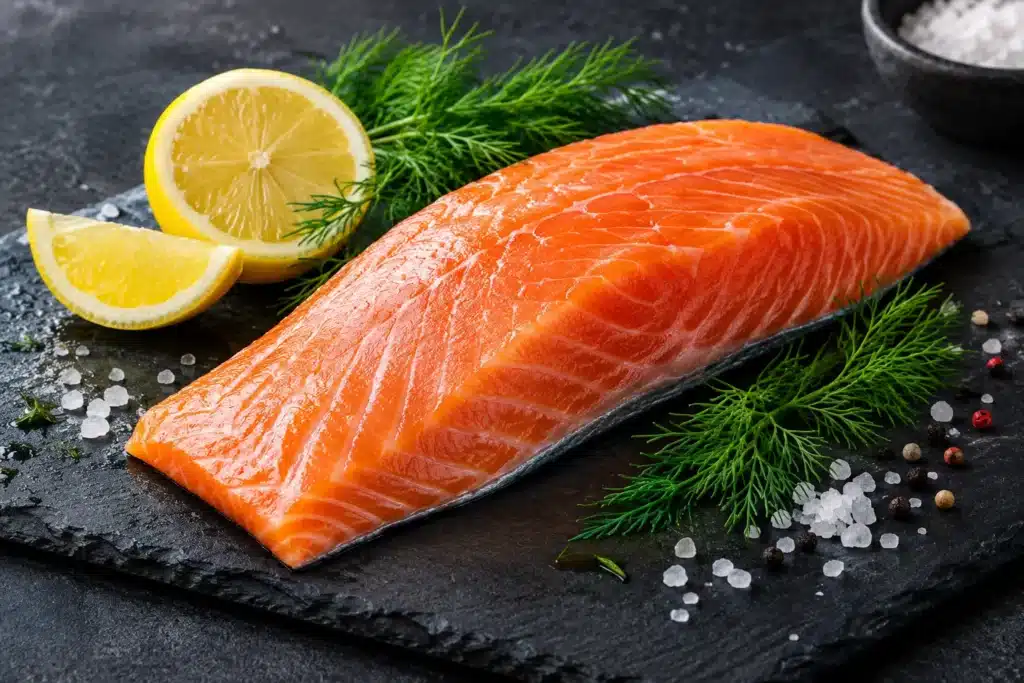
Faroe Island salmon is premium, farm-raised Atlantic salmon cultivated in the cold, nutrient-rich fjords of the North Atlantic Ocean between Iceland and Norway. Renowned for its silky texture, rich fat content, and clean, buttery flavor, this fish is a favorite among top sushi chefs and home cooks seeking a healthy, high-quality seafood option.
If you have ever ordered premium salmon at a fine-dining restaurant or high-end sushi bar, there is a strong chance it came from the tiny archipelago of the Faroe Islands. Tucked away in the icy currents of the North Atlantic, these islands produce some of the most sought-after ocean protein on the planet. But what exactly makes the salmon from faroe island so distinct?
In this complete guide, you will learn about the origins, culinary qualities, nutritional profile, farming ethics, and step-by-step cooking techniques for this world-class ocean fish.
What Is Faroe Island Salmon?
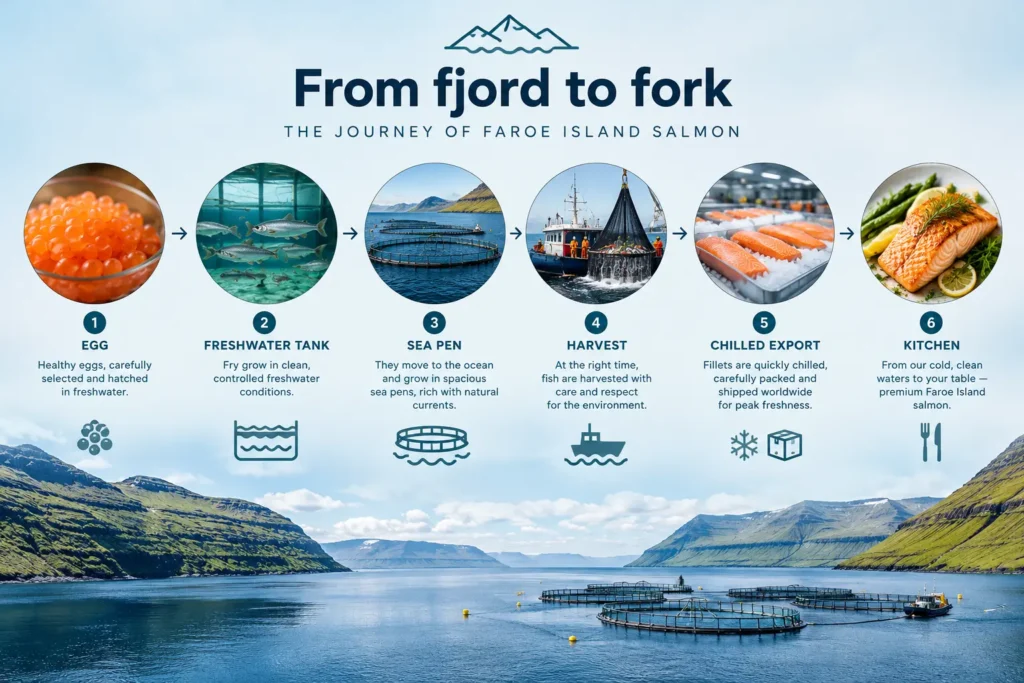
Faroe salmon refers specifically to Atlantic salmon (Salmo salar) raised in the remote fjords surrounding the Faroe Islands—an autonomous territory within the Kingdom of Denmark.
It is important to clear up a common point of confusion: while these fish live in ocean net pens set inside wild Atlantic waters, they are farm-raised, not wild-caught. Commercial fishing for wild Atlantic salmon is strictly banned or heavily restricted across the North Atlantic to protect endangered wild stocks.
Therefore, every commercially available salmon from the Faroe Islands comes from carefully managed aquaculture pens designed to mirror the cold, high-energy marine environment where wild salmon historically thrived.
Where Does Faroe Island Salmon Come From?
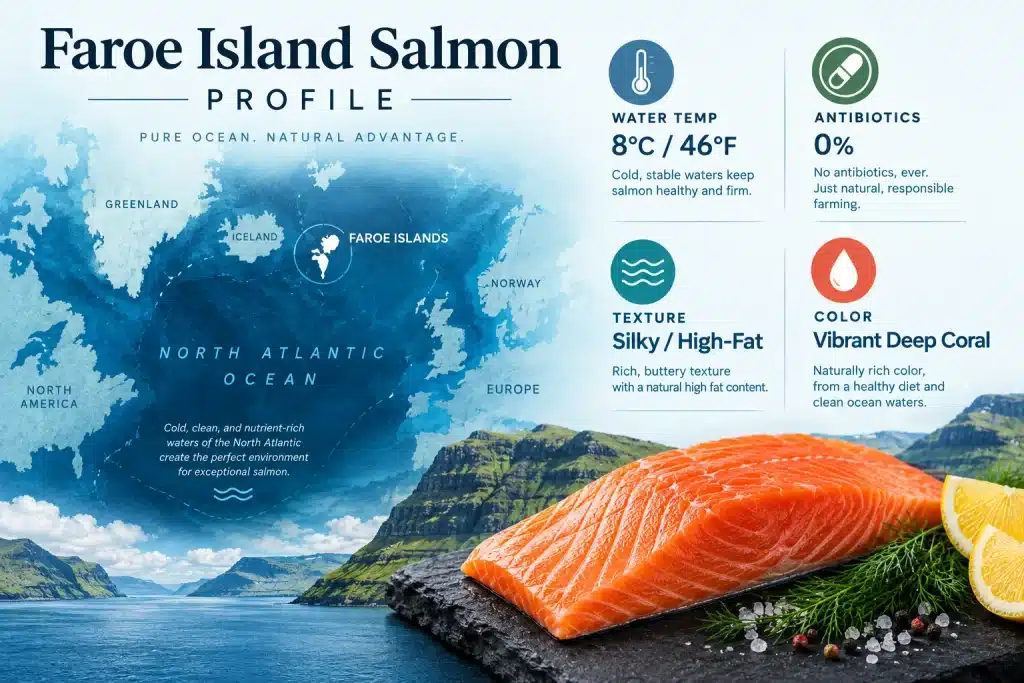
The Faroe Islands are a small group of 18 volcanic islands situated in the open ocean between Scotland, Norway, and Iceland. This remote location provides an ideal natural habitat for ocean aquaculture.
               [ Iceland ]
                   \
                    \   (North Atlantic Ocean)
                     \
             [ FAROE ISLANDS ]  <-- Icy Gulf Stream Currents
                     /
                    /
             [ Scotland ]
The Secret Behind the Geography:
- The Gulf Stream Meeting Point: Deep ocean currents mix continuous streams of cold Arctic water with warmer Gulf Stream currents, maintaining a steady sea temperature of roughly 8°C (46°F) year-round.
- High-Volume Water Exchange: Natural ocean tides constantly flush the fjords, ensuring the fish swim in oxygen-rich water with continuous movement.
- Isolation: The isolated geographic location protects farm sites from runoff pollution and commercial shipping contamination found in busier coastal regions.
Why Is Faroe Island Salmon So Popular?
Chefs, seafood purveyors, and consumers rate Faroese salmon among the finest in the world. Its rise in global popularity stems from three distinct factors:
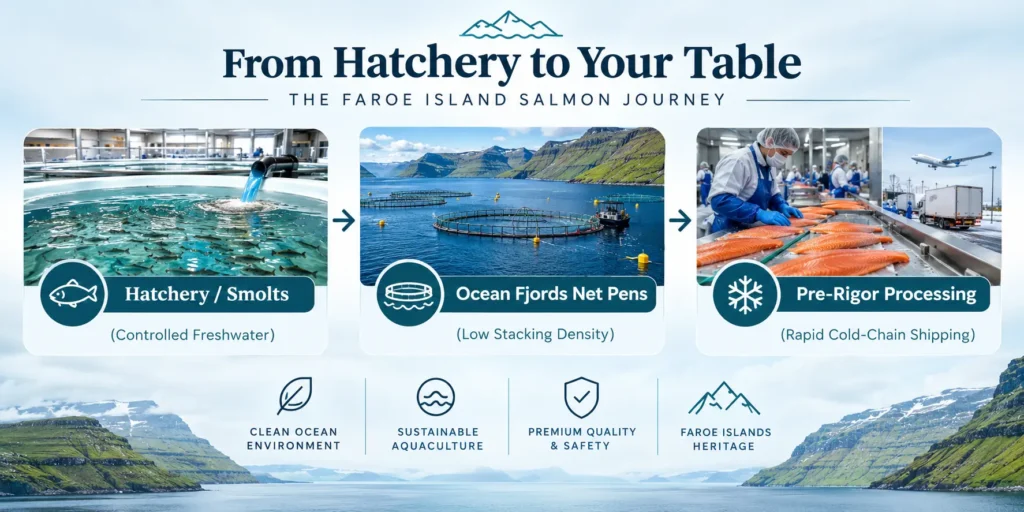
- Pre-Rigor Processing: Local producers often process and fillet fish pre-rigor—within hours of harvest. This preserves the cellular integrity of the fish, delivering a firmer texture with minimal muscle gaping.
- Exceptional Marbling: Slow growth in cool water encourages rich fat layers within the meat, similar to prime marbled beef.
- Purity in Taste: Because the fish swim against strong natural currents in clean water, they develop a clean, clean-tasting flesh without any muddy aftertaste.
Key Takeaway: The combination of natural water movement, cold temperatures, and rapid processing gives this fish a pristine texture that holds up equally well to raw sushi preparations and high-heat cooking methods.
What Does Faroe Island Salmon Taste Like?
The salmon taste of Faroese fish is often described as luxuriously rich, buttery, and clean. Because of its high fat content, it melts on the tongue with a silky texture.
Unlike low-grade farmed salmon that can taste watery or overly oily, Faroe Islands Atlantic salmon delivers a balanced flavor profile:
- Flavor Notes: Mildly sweet, rich, and sea-salty, with zero harsh “fishy” odor.
- Texture: Dense, firm, and velvety with large, delicate flakes.
- Color: A deep, vibrant coral-pink that holds its color beautifully during cooking.
Faroe Island Salmon Nutrition and Health Benefits
From a health perspective, Faroe Island salmon nutrition offers one of the most complete nutrient profiles found in marine protein. Its rich natural fat content translates directly to elevated levels of healthy heart and brain nutrients.
Nutritional Breakdown (Per 3.5 oz / 100g Serving)
| Nutrient | Amount | % Daily Value (DV) |
| Calories | ~210–220 kcal | — |
| Protein | 20–22 g | 42% |
| Total Fat | 14–15 g | 19% |
| Saturated Fat | 2.5 g | 13% |
| Omega-3s (EPA & DHA) | 1.7–2.2 g | >100% |
| Vitamin D | 15 mcg | 75–100% |
| Vitamin B12 | 3.2 mcg | 133% |
| Selenium | 36 mcg | 65% |
Core Health Benefits
- High Omega-3 Content: Provides essential long-chain EPA and DHA fatty acids that help reduce systemic inflammation, support brain function, and lower risk of heart disease.
- Natural Astaxanthin: The vibrant pink color comes from astaxanthin, a powerful natural antioxidant included in their feed that supports skin elasticity and eye health.
- Protein-Dense: Delivers a complete amino acid profile to aid muscle repair and keep you feeling full longer.
How Is Faroe Island Salmon Farmed?
The salmon farming industry in the Faroe Islands operates under strict veterinary regulations and environmental laws. The country implemented comprehensive aquaculture regulations that serve as a model worldwide.
Key Elements of Faroese Aquaculture:
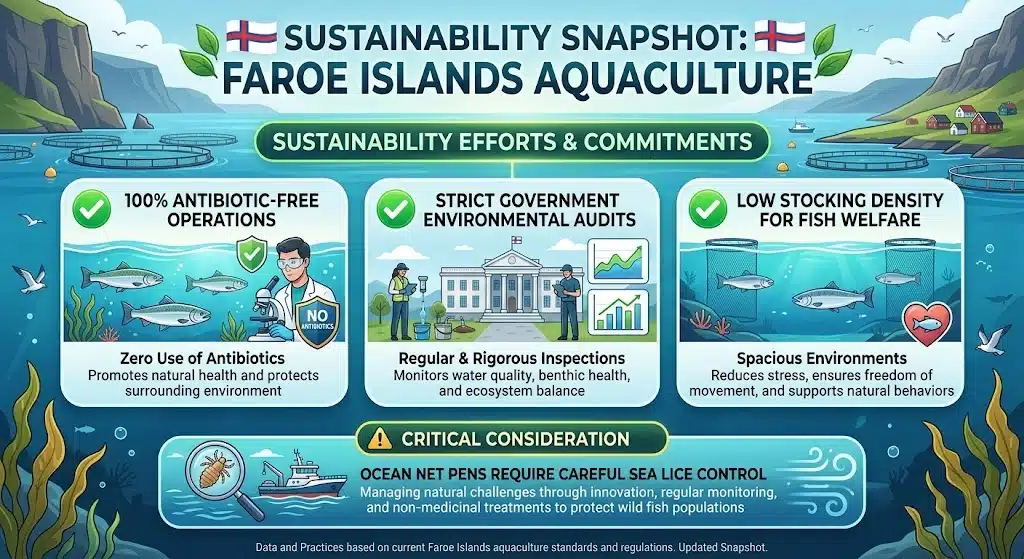
- Low Stocking Density: Fish pens are kept at 97.5% water to 2.5% fish ratio, giving the salmon plenty of space to swim actively.
- Zero Preventive Antibiotics: Through rigorous fish health management and targeted vaccinations, Faroese salmon is raised completely without prophylactic antibiotics or added growth hormones.
- Natural Feed Ingredients: Their feed consists of non-GMO plant ingredients paired with marine raw materials sourced from sustainable fisheries, matching the natural marine diet.
Is Faroe Island Salmon Sustainable?
When assessing sustainable salmon, it helps to look at both the environmental strengths and the ongoing challenges of marine net-pen aquaculture.
The Positives
- Antibiotic-Free Guarantee: Faroese farms have operated without antibiotics in ocean farming for years, protecting marine ecosystems from pharmaceutical runoff.
- Reduced Transport Footprint: Leading producers (such as Hiddenfjord) have completely eliminated air freight for overseas distribution, switching to ocean freight to cut carbon emissions by nearly 94%.
- Independent Certification: Many farm locations carry Aquaculture Stewardship Council (ASC) certifications or are recognized as a “Good Alternative” by environmental watchdogs like Seafood Watch.
The Considerations
Like all open-net pen marine farming, challenges like sea lice management and marine feed sourcing require continuous oversight to prevent impacts on wild ocean life. Nevertheless, the strict regulatory oversight in the Faroe Islands makes their practices among the cleanest in the open-ocean farming sector.
Faroe Island Salmon vs. Norwegian Salmon: What’s the Difference?
While both species are Atlantic salmon cultivated in cold northern waters, subtle differences set them apart:
| Feature | pharaoh island salmon | Norwegian Salmon |
| Origin | Fjords of the Faroe Islands | Fjords of Norway |
| Fat Content & Marbling | Noticeably higher fat marbling; richer | Moderate to high fat content |
| Texture | Silky, ultra-tender, firm pre-rigor flake | Slightly firmer, standard flake |
| Antibiotic Policy | Strictly zero antibiotics used in ocean farming | Extremely low, strict regulatory oversight |
| Production Volume | Niche, smaller volume, highly controlled | Large scale, high global volume |
Faroe Island Salmon vs. Wild Pacific Salmon
Comparing farmed Atlantic salmon from the Faroe Islands to wild Pacific salmon (like Sockeye, King, or Coho) highlights clear differences in taste and cooking applications:
                  FAROE ISLAND SALMON          WILD PACIFIC SALMON
               ┌────────────────────────┐   ┌────────────────────────┐
               │ - Rich, Buttery Fat    │   │ - Lean, Robust Flavor  │
               │ - Mild, Sweet Taste    │   │ - Deep Red Flesh       │
               │ - Silky, Large Flakes  │   │ - Low Fat / Firm Muscle│
               │ - Forgiving to Cook    │   │ - Easy to Overcook     │
               └────────────────────────┘   └────────────────────────┘
- Fat & Flavor Profile: Faroese salmon offers a rich, buttery taste due to its high fat content. Wild Pacific salmon is leaner, with a more pronounced, deeper flavor profile.
- Color: Faroese salmon features a bright coral-pink hue, whereas wild Sockeye exhibits a deep ruby red color.
- Cooking Forgiveness: The extra marbling in Faroese salmon keeps the meat moist even if cooked a minute too long, whereas lean wild Pacific salmon requires precise timing to avoid drying out.
How to Cook Faroe Island Salmon for the Best Flavor
Because of its high internal fat content, this fish cooks beautifully across various methods. Here are two classic, foolproof faroe island salmon recipes and grilling methods.
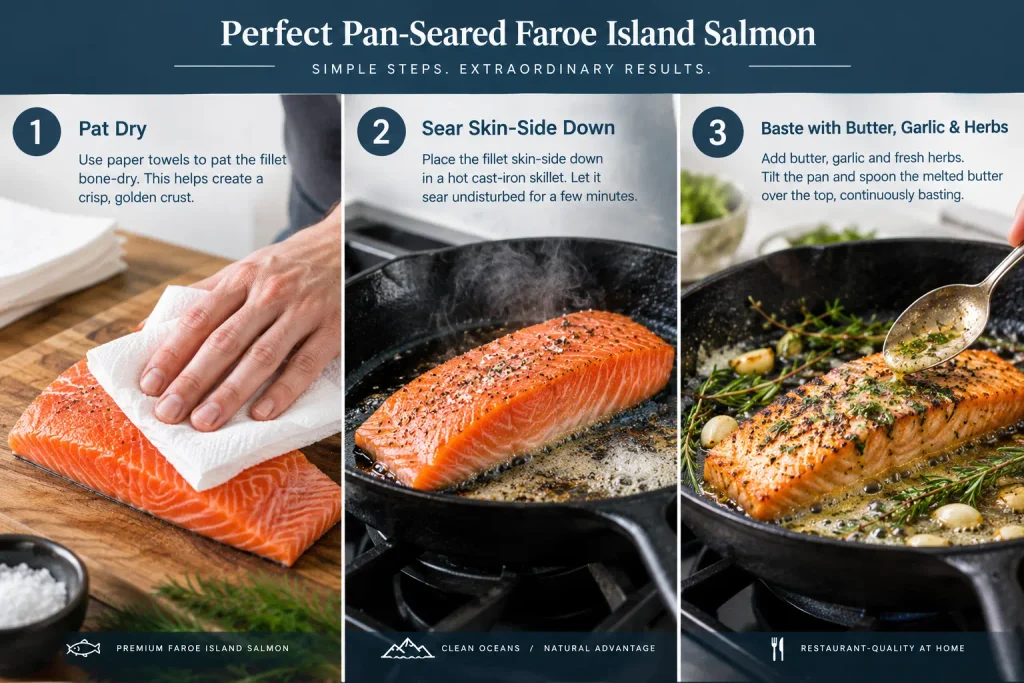
Method 1: Crispy-Skin Pan Searing (Chef Recommended)
- Prep the Fillet: Pat the salmon skin completely dry with paper towels. Season both sides with kosher salt and freshly cracked black pepper.
- Heat the Pan: Heat a tablespoon of high-smoke-point oil (avocado or light olive oil) in a heavy skillet over medium-high heat until shimmering.
- Sear Skin-Side Down: Place faroe island salmon fillets skin-side down, pressing gently with a spatula for 10 seconds to prevent curling.
- Cook Patiently: Cook for 4 to 5 minutes on the skin side until the skin is extra crispy.
- Flip and Baste: Flip gently, reduce heat to low, add a knob of butter, fresh thyme, and crushed garlic. Baste the top for 1 to 2 minutes until internal temperature hits 125°F to 130°F (medium-rare to medium). Rest for 3 minutes.
Method 2: Slow-Roasted Faroe Island Baking
- Pre-heat your oven to 275°F (135°C).
- Place fillets on a parchment-lined baking sheet, drizzle with olive oil, lemon zest, and fresh dill.
- Bake for 15 to 18 minutes until the flesh flakes gently under a fork. Slow baking keeps the healthy fats intact and yields an incredibly tender finish.
Complementary Faroh Island Sauces & Flavor Pairings
- Lemon-Dill Butter: The classic choice—bright acidity cuts through the rich fat profile.
- Garlic Cream Sauce: Pairs wonderfully with roasted or pan-seared cuts.
- Soy-Ginger Glaze: Sweet and savory notes highlight the delicate richness of the fish.
How to Choose and Store Fresh Faroe Island Salmon
Faroe Island Salmon Where to Buy
- Specialty Fishmongers & Local Markets: Look for fresh counters sourcing directly from Faroese producers like Bakkafrost or Hiddenfjord.
- Costco Wholesale: Many locations carry pre-packaged fresh or frozen faroe island salmon costco fillets in their seafood section.
- Online Purveyors: Specialty brands sell frozen portions, such as egg harbor faroe island salmon through gourmet food retailers and home shopping networks.
Quality Indicators & Storage Tips
- Visual Checks: Look for bright coral flesh with white fat marbling. Avoid fish with dull grey spots or separated tissue fibers.
- Touch & Smell: The flesh should bounce back when pressed lightly and smell fresh like clean seawater.
- Refrigeration: Store fresh salmon in the coldest part of your refrigerator (32°F–38°F) wrapped tightly, and cook within 1 to 2 days.
- Freezing: Wrap fillets tightly in plastic wrap and vacuum-seal before freezing at 0°F (-18°C) for up to 3 months.
Frequently Asked Questions (FAQ)
Is Faroe Island salmon wild caught?
No, Faroe Islands salmon is not wild caught. It is sustainably farm-raised in open-ocean net pens in the cold fjords surrounding the Faroe Islands. Commercial fishing for wild Atlantic salmon is restricted to protect native populations.
Is Faroe Island salmon safe to eat?
Yes, it is exceptionally safe to eat. Faroese aquaculture follows strict veterinary laws, using no preventive antibiotics or artificial chemicals. The clean Atlantic waters deliver pristine fish that meet rigorous global food safety standards.
Is Faroe Island salmon Scottish?
No, Faroe salmon is not Scottish. While both regions lie in the North Atlantic and raise Atlantic salmon, the Faroe Islands are an autonomous territory within the Kingdom of Denmark located north of Scotland, with its own dedicated farming regulations and producers.
Can you eat Faroe Island salmon raw for sushi?
Yes, high-grade pharaoh island salmon is widely prized by top sushi chefs for raw applications. Because of its clean farm environment, low-stress handling, and pre-rigor processing, it offers the density and clean flavor profile required for sashimi. (Always purchase healthier sushi-grade fish handled for raw consumption).
Does salmon from faroe island contain antibiotics?
No, Faroese salmon farming operates completely without antibiotics or added growth hormones. Strict bio-security protocols and preventative vaccines keep the fish healthy naturally.
Why is Faroe Island salmon more expensive than other salmon?
Its premium price reflects low stocking densities, isolated island logistics, high-quality sustainable feed, and pre-rigor processing methods that ensure exceptional freshness and quality.
How do I cook frozen Faroe Island salmon fillets?
For best results, thaw frozen fillets overnight in your refrigerator. Once thawed, pat them completely dry with paper towels before pan-searing or baking to ensure a crisp exterior.
What does Faroe Island salmon eat?
Faroese salmon are fed a natural diet consisting of sustainable marine ingredients (such as fish meal and fish oil from managed stocks) alongside non-GMO plant nutrients and natural astaxanthin for color.
Is Faroe Island salmon rich in Omega-3 fatty acids?
Yes, it contains some of the highest Omega-3 levels among all Atlantic salmon options, providing roughly 1.7 to 2.2 grams of EPA and DHA per 3.5 oz serving.
Where can I buy genuine Faroe Island salmon?
You can find genuine Faroese salmon at specialty seafood markets, direct-to-consumer online purveyors (including Egg Harbor preparations), and select club stores like Costco.
Conclusion
Faroe island salmon controversy – Choosing the right seafood comes down to balancing taste, nutritional quality, and environmental care. Salmon from faroe island delivers on all three fronts, offering a rich, buttery flavor profile backed by strict ocean-farming standards. Grown in the pure, icy currents of the North Atlantic, this fish provides an exceptional source of healthy Omega-3 fats, protein, and essential nutrients without any antibiotics or added hormones.
Whether you prepare Faroe Island salmon by pan-searing for a crispy skin, slow-baking with herbs, or slicing it fresh for sushi, its silky texture and natural richness make every meal memorable. By supporting responsible aquaculture and knowing how to cook this ocean protein properly, you can enjoy a world-class dining experience directly at home. Look for fresh fillets at your local fishmonger or specialty retailer to elevate your seafood dinner tonight.
You might also like:
- How To Choose The Best Salmon Lures For Rivers Fishing (Complete Guide)
- What is Flying Fish Roe: 5 Tobiko Caviar Ingredient Secrets!