
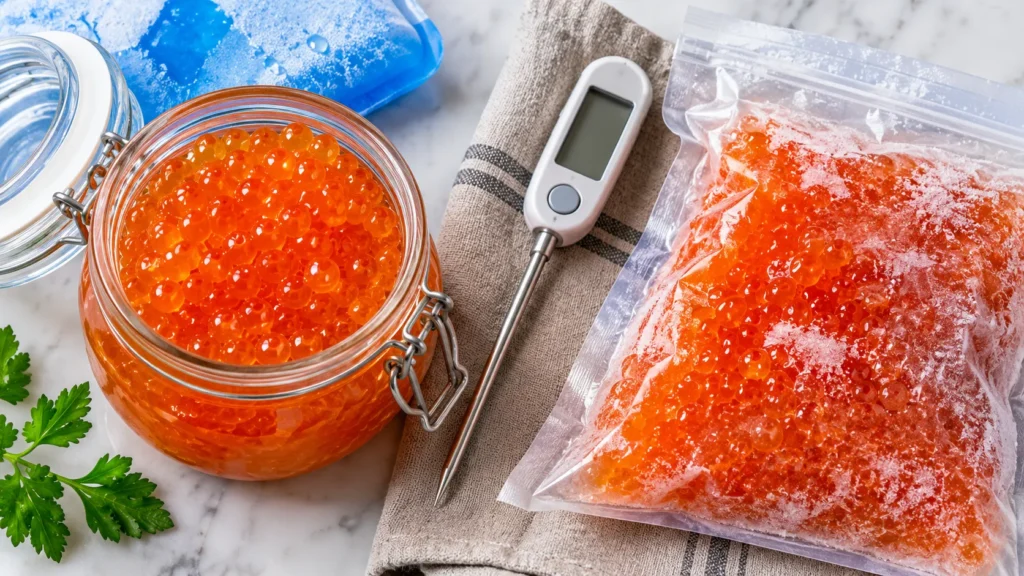
How long does salmon roe last in the refrigerator or freezer? Whether you enjoy fresh salmon eggs as sushi, caviar, or a seafood topping, proper storage keeps them fresh and safe to eat. Salmon roe spoils quickly, so knowing its shelf life helps you avoid food waste and potential foodborne illness.
Properly refrigerated opened salmon roe typically lasts 1–2 days, while commercially processed and pasteurized salmon roe can last longer when you follow the package instructions. Once opened, most packaged salmon roe stays fresh for about 3–5 days, depending on processing and storage conditions. Freezing can extend its storage life to approximately 2–3 months, although the eggs may lose some texture.
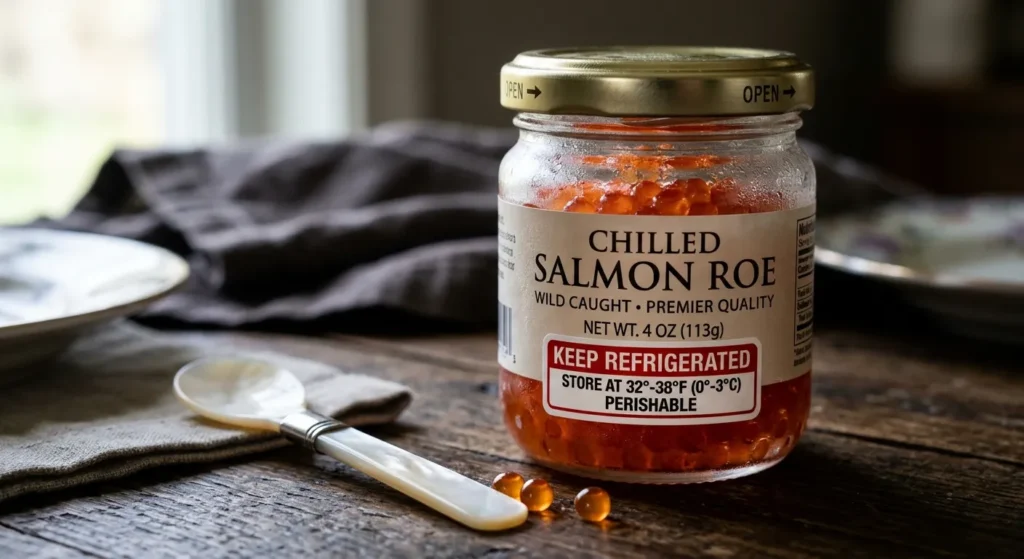
Temperature, packaging, salt content, and handling all affect how long salmon roe lasts. Food safety guidance from the USDA and FDA can help you understand safe seafood storage practices. Let’s explore the refrigerator and freezer shelf lives, signs of spoilage, and the best ways to store salmon roe without sacrificing its delicate flavor and texture.
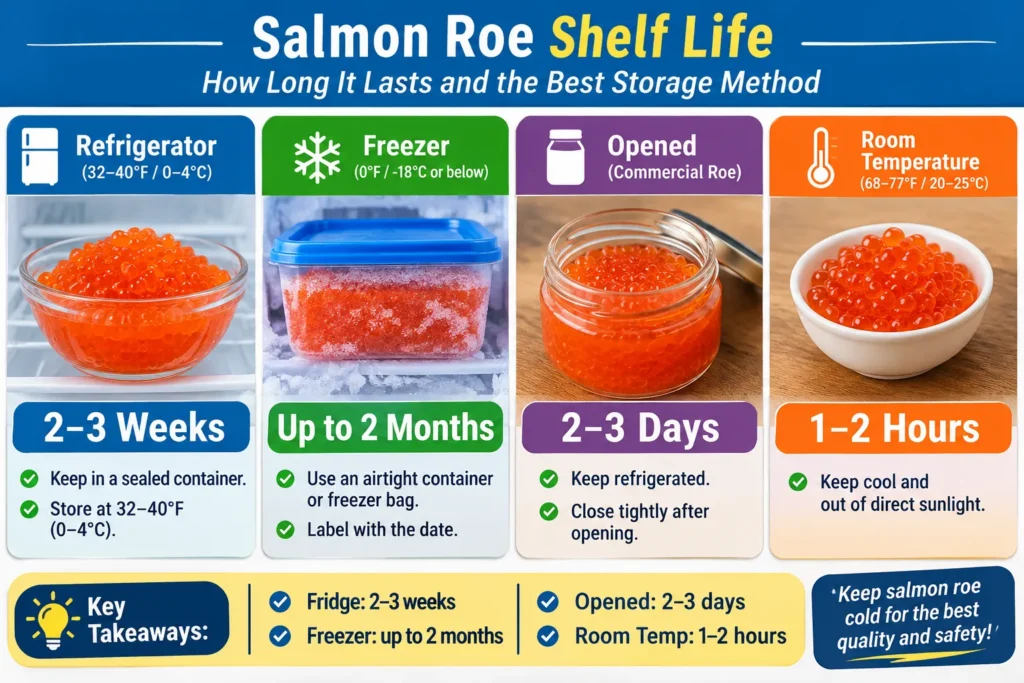
| Storage condition | Typical usable time | Best practice |
|---|---|---|
| Fresh, homemade salmon caviar in the refrigerator | 2–3 weeks | Keep tightly covered and very cold. |
| Fresh, homemade salmon roe in the freezer | Up to 2 months | Use an airtight freezer-safe container. |
| Unopened commercial salmon roe | Follow the package date | Refrigerate or freeze according to the label. |
| Opened commercial salmon roe | Usually 2–3 days | Keep refrigerated, sealed, and use a clean spoon. |
| Salmon roe at room temperature | No more than 1–2 hours | Return it to refrigeration promptly. |
Salmon roe is highly perishable because its oils can oxidize and its delicate eggs can spoil quickly once exposed to air, warmth, or contamination. The exact fish roe shelf life depends on whether it is fresh, salted, pasteurized, soy-marinated, previously frozen, or already opened.
How Long Does Salmon Roe Last?
How long does salmon roe last? For fresh salmon roe caviar prepared at home, plan on 2–3 weeks refrigerated and up to 2 months frozen. For store-bought ikura or salmon caviar, use the printed best-by date and the producer’s instructions; many refrigerated products recommend eating an opened container within three days.
The safest rule is simple: treat salmon roe as a fresh delicacy seafood product, not as a pantry item. Keep it cold from purchase to serving, avoid cross-contamination, and discard it if its smell, color, or texture changes.
How Long Does Salmon Roe Last in the Fridge?
Unopened Salmon Roe
An unopened jar or tin of commercial salmon roe can last longer than freshly prepared roe because it is sealed and often cured, pasteurized, or packed in modified-atmosphere packaging. Some producers state that refrigerated unopened salmon roe expire in 4–6 weeks, while others list frozen storage for 12–24 months before opening.
Do not assume every product follows the same timeline. A refrigerated fresh product, a pasteurized jar, and a frozen pack can have very different expiration dates, so check the package first.
Opened Salmon Roe
Once opened, salmon roe loses protection from air and handling. Most commercial sellers recommend finishing it within 2–3 days, even when it remains refrigerated.
For the best flavor and safety, keep the original lid tightly secured or transfer the roe to a clean airtight glass container. Avoid leaving the container on the counter while serving; put it back in the refrigerator as soon as possible.
How Long Does Salmon Roe Last in the Freezer?
You can freeze salmon roe, and salmon eggs tolerate freezing better than many other caviar types because their membranes are relatively thick. The University of Alaska Fairbanks recommends freezing fresh salmon roe caviar for up to two months for the best quality.
Commercially frozen salmon caviar may remain safe longer than two months if the manufacturer’s date allows it, but quality can decline over time. One retailer lists unopened frozen salmon roe for up to 24 months, while another lists 12 months, which shows why the package date matters more than a general rule.
Freezing slows spoilage, but it does not make old or poorly handled roe safe. Freeze it while it is still fresh, package it tightly, and thaw it only once.
How Long Does Salmon Roe Last at Room Temperature?
Do not leave salmon roe at room temperature for long. Keep serving portions small, place the container over crushed ice if it will sit out, and refrigerate leftovers within 1–2 hours. bacalalo
Warm temperatures speed bacterial growth and fat oxidation. If salmon roe has been left out for several hours, especially above 40°F, it is safer to discard it than to taste it and decide later.
How to Store Salmon Roe Properly
How to store salmon roe properly can make the difference between fresh, flavorful fish eggs and spoiled caviar. Have you ever opened a container of fish roe only to find that its texture, color, or smell has changed? Salmon roe spoils quickly, so proper refrigeration, airtight storage, and careful handling matter.
Store fresh salmon roe in an airtight, food-safe container in the refrigerator at 40°F (4°C) or below, and use it within 1–2 days for the best quality. Keep the eggs cold, avoid repeated temperature changes, and freeze them if you need longer storage. According to USDA food safety guidance, cold storage and prompt refrigeration help slow bacterial growth in perishable seafood.
From choosing the right container to freezing and thawing salmon roe without ruining its delicate texture, a few simple techniques can help preserve its quality. We’ll also cover spoilage signs, storage mistakes, and practical food safety tips. Ready to keep your salmon caviar fresh for longer? Let’s get started!
Keep Salmon Roe in an Airtight Container
Air exposure dries the surface, transfers odors, and accelerates oxidation. Keep salmon roe in its original sealed container when possible, or move it to a clean glass, ceramic, or food-grade plastic container with a tight lid.
For freezing, remove as much air as practical and label the container with the freezing date. This makes it easier to use the oldest portion first and avoid keeping it beyond its quality window.
Maintain the Right Refrigerator Temperature
Store salmon roe in the coldest part of the refrigerator, usually toward the back rather than in the door. Commercial guidance commonly recommends keeping refrigerated roe around 26–38°F; U.S. food-safety guidance generally treats 40°F as the upper limit for safe refrigeration.
Do not store it beside warm leftovers or in a crowded refrigerator section where air cannot circulate. A stable, very cold temperature protects both texture and flavor.
Use Clean Utensils When Serving
Use a clean, dry spoon each time you serve salmon roe. Never eat directly from the shared container, return unused roe that has touched other foods, or mix old roe with a new batch.uaf
Moisture, crumbs, and bacteria introduced during serving can shorten shelf life. Portion only what you plan to eat, then immediately reseal and refrigerate the rest.
Can You Freeze Salmon Roe Without Ruining It?
Yes—you can freeze salmon roe, especially fresh, salt-cured roe. Salmon eggs have thicker membranes than many other roe types, which helps them hold their shape during freezing.
Freezing may still soften the eggs slightly after thawing. To reduce damage, freeze small portions in airtight containers, keep them at a steady freezer temperature, and avoid repeated temperature changes.
Soy-marinated ikura can be more delicate because marinades add moisture and seasonings. If the producer says “do not freeze,” follow that instruction rather than assuming all salmon roe freezes equally well.
How to Thaw Frozen Salmon Roe Safely
Thaw frozen salmon roe in the refrigerator, not on the counter. Slow thawing helps preserve texture and keeps the product out of the temperature-danger zone.
Place the sealed container on a plate or in a bowl to catch condensation, then let it thaw overnight or for several hours depending on the portion size. Once thawed, keep it refrigerated and eat it promptly; do not refreeze it.
How to Tell If Salmon Roe Has Gone Bad
Knowing how to tell if salmon roe has gone bad can help you avoid food poisoning and prevent you from eating spoiled seafood. Fresh salmon roe should have a clean, mild ocean smell, glossy eggs, and a firm texture. Have you noticed a sour smell, cloudy liquid, or unusually mushy eggs? These changes may indicate spoilage.
Check salmon roe for several warning signs, including a strong sour or ammonia-like odor, slimy texture, unusual discoloration, and visible mold. Fresh eggs should look plump and retain their shape, while spoiled roe may become mushy, sticky, or discolored.
The USDA recommends keeping perishable seafood refrigerated at 40°F (4°C) or below and discarding food that shows signs of spoilage. Let’s look at the warning signs before your next serving!
Changes in Smell
Fresh salmon roe may smell mildly oily or briny. A sour, ammonia-like, rotten, or unusually strong fishy odor is a warning sign; UAF specifically advises not using roe with any spoilage odor.
Changes in Color and Texture
Fresh ikura should look glossy and plump, with individual eggs that hold their shape. Cloudiness, dullness, excessive liquid, mushy eggs, sliminess, or collapsed membranes suggest the roe is deteriorating.
Discard salmon roe if you notice:
- A sour, rancid, ammonia-like, or rotten smell. uaf
- Slimy residue, mushy eggs, or eggs that have lost their shape.
- Unusual discoloration, cloudiness, or a dull appearance.
- A swollen, leaking, damaged, or improperly sealed package.
- More than the producer’s recommended time after opening.
When in doubt, throw it out. Salmon roe is expensive, but food poisoning costs more.
Can You Eat Salmon Roe After the Expiration Date?
Do not rely on an expiration date alone. A “best by” date often reflects peak quality, while a “use by” date is more safety-focused; either way, storage history matters.
If the caviar and roe has been continuously refrigerated or frozen as directed, the package is intact, and it looks and smells normal, it may still be usable shortly after a best-by date. If it was left warm, opened too long ago, smells off, or shows spoilage signs, discard it.
Frequently Asked Questions About Salmon Roe Storage
Does Salmon Roe Go Bad Quickly?
Yes. Salmon roe is perishable, particularly after opening. Fresh homemade roe lasts about 2–3 weeks refrigerated, while opened commercial roe is often best within 2–3 days.
Can You Refreeze Thawed Salmon Roe?
No. Refreezing thawed salmon roe reduces quality and increases handling risk. Freeze it only once, thaw it in the refrigerator, and use it promptly.
How Long Does Ikura Last After Opening?
Ikura salmon roe usually lasts 2–3 days after opening when kept at 26–38°F in a sealed container. Some producers specify three days; use the product label as the final authority.
Does Salted Salmon Roe Last Longer Than Fresh Roe?
Usually, yes. Salt reduces available moisture and can slow spoilage, so properly cured roe generally keeps longer than untreated fresh roe. However, salt does not make spoiled roe safe.
How long does ikura last in the fridge
Unopened ikura may last 4–6 weeks refrigerated, depending on the producer and packaging. After opening, plan to finish it within 2–3 days.
How long do salmon eggs last in the refrigerator
Fresh salmon eggs stored tightly covered in the refrigerator generally last 2–3 weeks. Commercial products can differ substantially, so follow the package date and storage directions.
How long can pro cured roe kast in the fridge
Pro-cured salmon roe can last longer than fresh roe because curing lowers moisture activity, but it still needs constant refrigeration. Many cured commercial products recommend 2–3 days after opening; unopened cured roe may last several weeks or longer if the label permits.spo.nmfs.
Can you freeze salmon roe
Yes. Freeze fresh salmon eggs in an airtight container for up to two months for best quality; commercial frozen roe may be dated for longer storage.
How to use salmon roe?
Use salmon roe cold as a finishing topping. Add a small spoonful to sushi, rice bowls, blinis, scrambled eggs, toast, pasta, or canapés with crème fraîche and dill. Avoid heating it, which can burst the eggs.
How long does salmon last in the refrigerator?
Raw salmon lasts 1–2 days in the refrigerator when kept at 40°F or below. Cooked salmon generally lasts about 3–4 days. Keep it tightly covered and refrigerate it within two hours of purchase or cooking.
What is the nutritional value of salmon roe?
Salmon fish roe is nutrient-dense: about 143 calories, 22 g protein, and 6.4 g fat per 100 g. It provides omega-3 fats, including EPA and DHA, plus vitamin B12, vitamin D, selenium, and choline; cured roe can be high in sodium.
How long does sturgeon caviar last?
Unopened sturgeon caviar lasts about 3–6 weeks refrigerated. Once opened, eat it within 1–3 days. Keep it tightly sealed in the coldest part of the refrigerator, and discard it if it smells sour, looks dull, or becomes mushy.
Conclusion
Knowing how long does salmon roe last? storage practices make the difference between bright, clean-tasting ikura and a disappointing, unsafe batch. Keep fresh salmon roe tightly covered in the refrigerator for 2–3 weeks, freeze it for up to two months, and finish opened commercial roe within a few days.
Always prioritize the package date and producer instructions, because curing, pasteurization, marinades, and packaging change the shelf life. Store it very cold, use clean utensils, avoid long time at room temperature, and thaw frozen roe slowly in the refrigerator.
If the eggs smell sour or rancid, look cloudy or slimy, or feel mushy, discard them. Careful storage preserves both the delicate texture and the clean, briny flavor that make salmon roe worth enjoying.
You might also like:
- Salmon Fishing: Must-Read Tips & Tactics (Beginner’s Guide)
- Silver Pacific Salmon Vs. Atlantic Salmon: What’s The Difference?
- How Long Is Salmon Good For In The Fridge? (Explained)
- Salmon Fishing With Beads – Why You Should Be Fishing With Beads?
- How Long Do Salmon Eggs Bait Last? (Solved & Explained)
- Faroe Island Salmon Controversy (19 Questions Answered)
- Flying Fish Roe: 5 Tobiko Caviar Ingredient Secrets!