
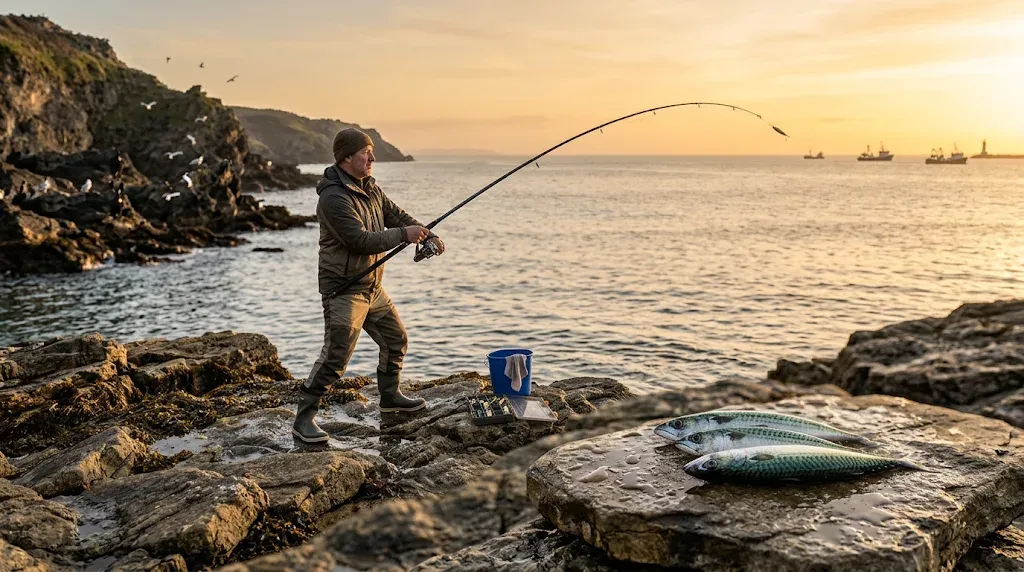
How to catch mackerel from shore comes down to finding moving baitfish, fishing deep water within casting range, and using a small flashing lure or feather rig. Mackerel often feed in fast-moving schools, so once you locate them, the action can be fast and exciting.
This guide covers mackerel shore fishing for both Atlantic mackerel and Spanish mackerel. You will learn the best bait for mackerel, simple mackerel fishing rigs, the best time to catch mackerel, and a practical method for fishing from a pier, jetty, or beach.
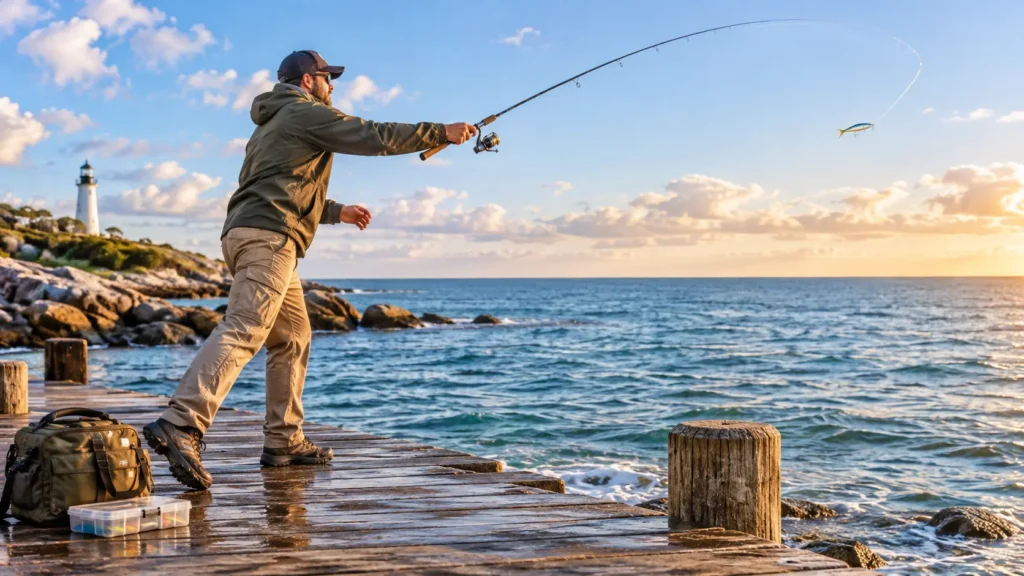
Can You Catch Mackerel from Shore?
Yes. You can catch mackerel from shore, especially where deep water, strong current, baitfish, or a harbour entrance brings the school close to land. Atlantic mackerel are common targets around UK piers and breakwaters, while Spanish mackerel are a popular target from beaches and jetties in warmer U.S. coastal waters.
The key is not casting as far as possible. It is finding the depth where the fish are feeding and presenting a lure or bait at that level.
Where Mackerel Come Close to Shore
Mackerel chase small baitfish such as sandeels, sprats, anchovies, and silversides. When bait gets pushed against structure or into shallow water, mackerel often follow.
Look for:
- Pier ends and harbour walls
- Breakwaters and rock jetties
- Deep water close to a rocky point
- Estuary mouths and current seams
- Steep shingle or sand beaches with deeper water nearby
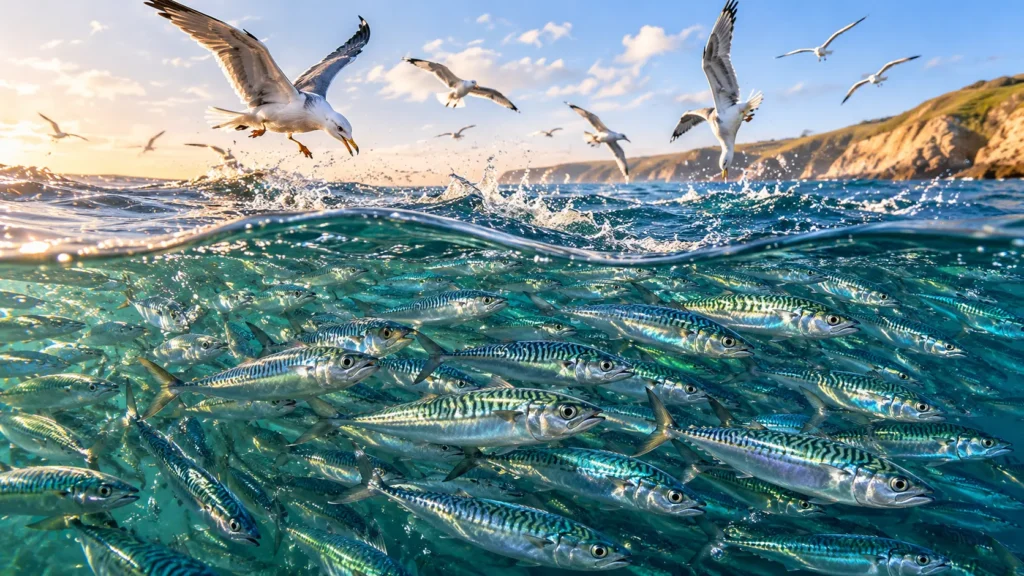
- Areas where birds are diving or bait is flickering on the surface
Mackerel often push prey fish toward harbour walls and breakwaters, which makes these reliable places to fish for mackerel. anglingactive.co
Best Shore Fishing Locations for Mackerel
A deep-water pier is usually easier for beginners than a wide, shallow beach. The fish can be close enough to reach with a modest cast, and the vertical drop gives you more water to search.
For catching Spanish mackerel from the beach, focus on beaches near inlets, passes, sandbars, and current edges. Spanish mackerel often feed on small baitfish and can be reached with compact metal jigs that cast well and imitate silversides or sand eels. onthewater
Best Time of Year to Catch Mackerel from Shore
There is no single best time of year for every coastline. Atlantic mackerel and Spanish mackerel move at different times, and local water temperature, bait availability, and tide strength matter more than a calendar date.
Seasonal Mackerel Runs and Migration Patterns
In the UK, mackerel commonly move inshore from late spring through summer, with many anglers finding the strongest shore fishing from June through September. Conditions vary by region, so local catch reports are more useful than a fixed date.
In the northeastern United States, Spanish mackerel may appear during warm summer periods, while Atlantic mackerel availability can differ by region and season. NOAA notes that the recreational Atlantic mackerel fishery is open year-round, although local rules and possession limits still apply.
For Spanish mackerel in Florida, the species is open year-round, with a 12-inch fork-length minimum and a 15-fish daily bag limit in state waters. myfwc
Best Time of Day and Tide for Mackerel Fishing
The best time to catch mackerel is often the two hours before and after high water, particularly on a flooding tide. Moving water carries baitfish toward the shore, and mackerel follow.
Dawn and dusk are excellent starting windows, but do not ignore midday. If birds are working, bait is dimpling the surface, or another angler is catching fish, fish then.
Tip: Start fishing on the flood tide, but keep fishing from the shore through the tide change. A current seam—where fast and slow water meet—can concentrate bait and mackerel.
Best Rod and Reel Setup for Shore Mackerel Fishing
A simple spinning setup is enough for most mackerel shore fishing.
| Item | Good starting choice | Why it works |
|---|---|---|
| Rod | 7–10 ft medium-light spinning rod | Comfortable for casting small metals and feathers |
| Reel | 3000–5000 size saltwater spinning reel | Holds enough line and handles saltwater use |
| Mainline | 10–20 lb braided line | Casts far and gives good bite detection |
| Leader | 15–30 lb fluorocarbon or mono | Protects against teeth, rocks, and multiple fish |
| Weight | 1–2 oz, depending on wind and current | Helps a feather rig reach feeding depth |
For Spanish mackerel, a 7- to 8-foot-6-inch medium or medium-light rod with a 3000–5000 spinning reel and 10–15 lb braid is a proven setup. A 3–4 ft fluorocarbon leader helps because Spanish mackerel have sharp eyesight and can be wary of heavy visible line.
For UK-style mackerel feathers, a 10–12 ft rod paired with a 5000-size fixed-spool reel gives you the line capacity and cranking power needed when several fish hit at once.
Best Bait for Catching Mackerel from Shore
Lures usually produce more fish because mackerel respond to movement and flash. Bait still earns its place when the school is finicky, the water is rough, or you want to fish a specific depth.
Best Natural Baits for Mackerel
The best bait for Spanish mackerel from shore includes:
- Small strips of fresh mackerel, herring, or sardine
- Sandeel or small whole baitfish
- Prawn or shrimp
- Squid strip
- Small pieces of oily fish
Use a small hook and enough weight to hold the bait in the feeding zone. A strip about the size of your thumb is usually enough; a huge bait can prevent a clean hook-up.
How to Use Small Baitfish and Fish Strips
Cut a thin, angled strip from the side of a baitfish. The flash of the silver skin matters as much as the scent. Thread the hook through the tough end of the strip so it does not tear free during casting.
Fish the bait under a float, on a simple running ledger rig, or beneath a small casting float. Start about 3–6 feet below the surface, then adjust deeper if you see no bites.
Best Lures for Shore Mackerel Fishing
The best way to catch mackerel from shore is usually to cover water with a small, flashy lure. Mackerel are visual feeders, and silver, blue, white, and chartreuse patterns often imitate the baitfish they hunt.
Metal Casting Jigs and Mackerel Spinners
Compact metals, casting jigs, and slender spoons are excellent when you need distance. A 1- to 1.5-ounce metal jig is a strong choice for Spanish mackerel from beaches and jetties, especially when the fish are feeding farther offshore.
Try this retrieve:
- Cast beyond the feeding area.
- Let the lure sink for a count of 3, 5, or 8.
- Retrieve with steady turns, short pulls, or a fast sweep.
- Change the count and speed until you find the productive depth.
Spanish mackerel often respond better to a subsurface retrieve than a constant surface-speed retrieve. Letting the lure sink before retrieving can make a major difference.
Sabiki Rigs and Feather Lures
A feather rig or sabiki rig lets you search several depths with one cast. These rigs use several small hooks dressed with feathers, flash, or beads, and they can catch more than one fish at a time when the school is feeding.
For shore fishing, use a modest rig with 3–5 hooks rather than a long commercial string. Too many hooks increase tangles and can make handling fish harder.
How to Rig for Mackerel Fishing from Shore
A good mackerel rig does not need to be complicated. The goal is to get a small, flashy offering into the feeding zone and keep it there.
Best Mackerel Rigs for Beginners
Simple feather rig
- Mainline to a snap swivel
- 3-hook mackerel feather rig
- 1–2 oz lead at the bottom
- Cast, count down, then retrieve with short lifts
Float rig
- Mainline to a sliding float
- Small split shot or weight
- 2–4 ft fluorocarbon leader
- Size 6–10 hook
- Bait or small strip
Metal-lure setup
- Braid mainline
- 20–30 lb fluorocarbon leader
- Small casting jig, spoon, or Gotcha-style jig
A feather rig is one of the most common mackerel fishing rigs because it is easy to use and effective when fish are feeding actively. Match the number of feathers and lead weight to your rod’s casting rating.
Choosing the Right Hook Size and Leader
Use small hooks: size 6–10 for feathers and sabikis, or size 2–6 for bait. Mackerel have relatively small mouths, and oversized hooks can miss bites or damage the fish.
For Atlantic mackerel, 20–30 lb fluorocarbon or mono leader is usually enough. For Spanish mackerel, 15–25 lb fluorocarbon is a good balance between stealth and abrasion resistance.
Step-by-Step: How to Catch Mackerel from Shore
Mackerel sea fishing offers an exciting way to catch fast-moving fish without spending money on a boat. Have you ever wondered how to catch mackerel straight from the beach, pier, or rocky shoreline? Shore fishing for mackerel works well during warmer months when large shoals move close to the coast in search of food.
The best way to catch mackerel from shore is to use small metal casting jigs, feather rigs, or shiny spinners that imitate baitfish. Fish around harbors, piers, beaches, and rocky points, especially when mackerel feed near the surface. A lightweight spinning rod, suitable reel, and 10–20 lb line give you a practical setup for most shore fishing situations.
But choosing the right tackle is only part of the challenge. Tide movements, water conditions, fishing times, and lure presentation can make a big difference to your catch.
- Check conditions before leaving. Look for moving water, wind that creates a slight chop, bait activity, and recent local catch reports.
- Choose a deep-water mark. Start at a pier end, breakwater, jetty, or steep beach rather than a long shallow flat.
- Rig a small metal lure or 3-hook feather rig. Use a 1–2 oz weight or lure, depending on wind and current.
- Make a controlled cast. Aim beyond the current seam or structure, not necessarily at maximum distance.
- Count the lure down. Begin with a 5-second count, then try 8, 12, and 15 seconds on later casts.
- Retrieve with purpose. Use a steady retrieve first, then try short lifts, fast sweeps, and pauses.
- Work the water column. Mackerel may be near the surface during a feed or several feet down when conditions are calmer.
- Move only after changing depth and speed. If you get no bites after 10–15 casts at different depths, change lure size, colour, or location.
- Set the hook smoothly. Mackerel mouths are soft, so a firm but not violent strike is enough.
- Keep only what you will use. Check local rules before keeping fish.
A useful rule: if you are not getting bites, change one variable at a time—depth first, then retrieve speed, then lure size or colour.
How to Find Mackerel Feeding Near the Surface
Read the water before you cast. Surface feeding often shows as sudden splashes, dimpling bait, nervous water, or diving birds.
Watch for:
- Small baitfish spraying across the surface
- Terns, gulls, or gannets diving repeatedly
- Oil-like slicks or disturbed water
- Fish breaking close to a current seam
- Other anglers hooking fish consistently at a particular distance
Mackerel travel and feed in schools, and bird activity can be one of the best visual clues to their location. Gannets, for example, often dive on mackerel schools.
Do not chase every splash. Cast just beyond the feeding area and retrieve through it. A lure landed directly on top of nervous bait can scatter the school.
Common Shore Mackerel Fishing Mistakes to Avoid
- Fishing too shallow. Mackerel often feed above the bottom, but they are not always right at the surface.
- Retrieving too fast every cast. Speed matters, but vary it until you find what triggers bites.
- Using tackle that is too light. A light spinning rod is fun, but a weak hook, thin leader, or undersized reel can fail around rocks and multiple fish.
- Ignoring tide movement. Slack water can be productive, but moving water often concentrates bait.
- Casting only straight ahead. Fan your casts left, right, and at different distances.
- Using one lure all day. Rotate between a metal, feather rig, small spinner, and bait.
- Keeping more fish than you need. Mackerel are excellent eating, but take only a sensible meal-sized amount.
- Ignoring regulations. Rules differ by species, state, country, and location.
In U.S. federal waters, the private recreational Atlantic mackerel possession limit is 25 fish per person per trip under the current framework. Always confirm the rules for the exact water you fish.
How to Handle, Store, and Keep Mackerel Fresh
Mackerel are oily and spoil quickly in warm weather. If you plan to keep fish, handle them properly from the moment they come over the rail or onto the pier.
- Bleed the fish promptly if you intend to keep it.
- Gut it soon after capture.
- Rinse briefly with clean seawater or fresh water.
- Place it on ice immediately.
- Keep the fish cool and dry until you get home.
- Cook or freeze it the same day for the best flavour.
Avoid leaving mackerel in a bucket or on hot rocks. Their high oil content makes rapid chilling especially important.
Comparison: Feathers, Metal Lures, and Bait Rigs
| Method | Best conditions | Strengths | Drawbacks |
|---|---|---|---|
| Mackerel feathers | Active schools, deeper water | Covers depth, can hook multiple fish | More tangles and bycatch risk |
| Metal lure | Windy conditions, long casts needed | Casts far, durable, easy to fish | One fish per cast |
| Sabiki rig | Clear water, visible bait | Excellent for smaller mackerel | Hooks can tangle easily |
| Bait under float | Finicky fish, calm conditions | Precise depth control | Less effective in strong current |
| Small spinner | Close-range fish, calm water | Simple and fun | Limited casting distance |
Mackerel Beach Fishing FAQs
What is the best bait for mackerel from shore?
Small strips of mackerel, herring, sardine, sandeel, prawn, and squid all work. Fresh oily fish strips are especially effective when mackerel are not chasing lures.
What is the best time to catch mackerel from shore?
Fish the moving tide, especially two hours either side of high water. Dawn and dusk are reliable, but feeding birds and surface activity matter more than the clock.
Can you catch Spanish mackerel from the beach?
Yes. Cast small metal jigs, Gotcha-style jigs, spoons, or epoxy-style lures beyond the first sandbar and retrieve them at varying depths. Spanish mackerel often feed on small baitfish near inlets and current edges.
What size hook is best for mackerel?
Use size 6–10 hooks for feathers and sabikis. For bait, size 2–6 is usually a better fit than a large hook.
Do mackerel feed on the bottom?
Sometimes, but they more often feed in the upper and middle water column. Start high, then count your lure or rig down until you find bites.
Is mackerel fishing good for beginners?
Yes. fishing for mackerel from shore is a beginner-friendly style of sea fishing, they are active fish, often willing to strike a moving lure, and a simple spinning setup is enough to get started. anglingactive.co
Are Spanish mackerels good eating?
Yes. Spanish mackerel have firm, rich, flavorful flesh and work well grilled, fried, smoked, baked, or pan-seared. Eat smaller fish when possible, keep them chilled, and follow local mercury and consumption advice.
Are you supposed to eat the skin on mackerel?
You can eat mackerel skin if the fish is fresh, properly cleaned, and thoroughly cooked. The thin skin crisps nicely when grilled or pan-fried, but remove it if you prefer a milder flavor.
Conclusion
Learning how to catch mackerel from shore is mostly about reading conditions and presenting a small, flashy offering at the right depth. Start with a pier, breakwater, jetty, or steep beach, fish the moving tide, and change your depth before changing locations.
Use a simple spinning rod, a 3000–5000 reel, 10–20 lb braid, and a short fluorocarbon leader. Carry a few small metals, a 3-hook feather rig, and a little fresh bait. Cast past the feeding area, count the lure down, and vary your retrieve until the school reveals its preferred depth.
Whether you are chasing Atlantic mackerel around a UK harbour wall or catching Spanish mackerel from a beach, the same principles apply: find bait, fish moving water, cover depths, and keep only what you will use. With a little observation and patience, mackerel shore fishing can deliver fast action, great sport, and an excellent fresh meal.
You will also like:
- Tuna Fishing Tackle Recommendation & Techniques (Explained)
- When Do Smallmouth Bass Spawn? 15 Things You (Should-Know)
- Is Northern Pike Good To Eat? 13 Answers You (Should-Know)
- How Long Is Bluefin Tuna Season In The USA (Full Episode)
- Can You Eat Bonita Fish? (Catch, Clean & Cook) Giant Bonito
- Is Mackerel Good for You? Taste, Benefits & Risks