
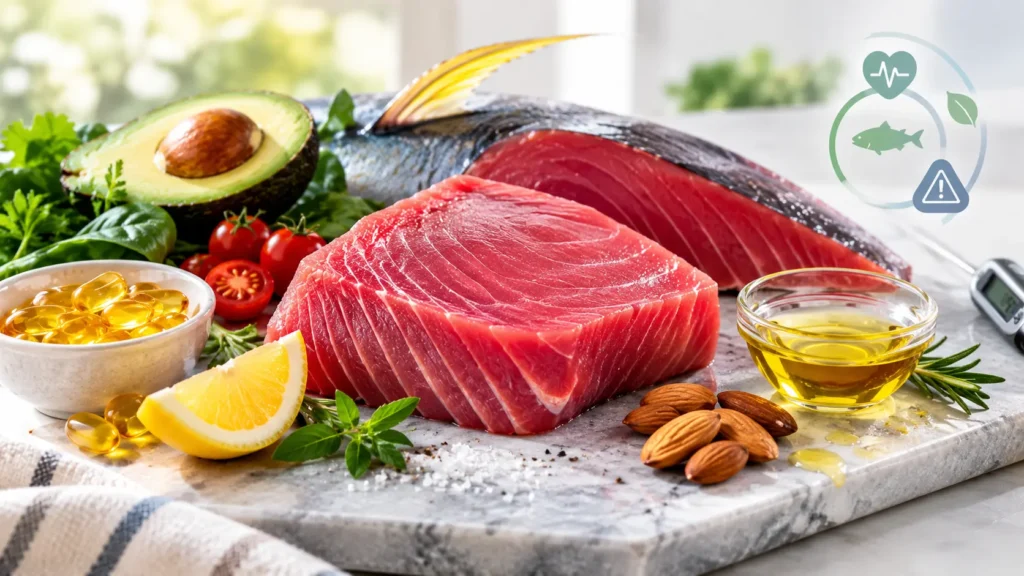
is yellowfin tuna good for you, or not? Yellowfin tuna is an excellent source of lean protein. It delivers high-quality protein along with essential nutrients like omega-3 fatty acids, selenium, and B vitamins. However, because yellowfin tuna contains moderate levels of mercury, eating it in moderation and keeping portions balanced is essential for long-term safety.
Below is an overview of yellowfin tuna nutrition facts per 3-ounce (85g) cooked serving:
| Nutrient | Amount per 3 oz (85g) Serving | % Daily Value (DV) |
| Calories | 110 kcal | — |
| Protein | 25 g | 50% |
| Total Fat | 1 g | 1% |
| Saturated Fat | 0.3 g | 1% |
| Omega-3 Fatty Acids | ~200–300 mg | — |
| Sodium | 45 mg | 2% |
| Vitamin B12 | 2.5 mcg | 104% |
| Vitamin B6 | 0.8 mg | 47% |
| Niacin (B3) | 15.8 mg | 99% |
| Selenium | 92 mcg | 167% |
| Phosphorus | 236 mg | 19% |
Is Yellowfin Tuna Good for You?
When asking is yellowfin tuna healthy, the answer comes down to its incredible density of macronutrients and micronutrients. Yellowfin tuna—often sold as ahi tuna in markets and restaurant menus—provides a dense source of complete protein with very little dietary fat.
Unlike heavily processed meats, yellowfin offers clean energy that supports your immune system, muscle repair, and cardiovascular health. It packs substantial nutrition into a remarkably low calorie footprint, making it a favorite among healthy eaters and athletes alike.
Whether you enjoy it as a grilled steak or seared in a salad, yellowfin provides essential building blocks your body cannot produce on its own.
Yellowfin Tuna Nutrition Facts: Calories, Protein, and Fat
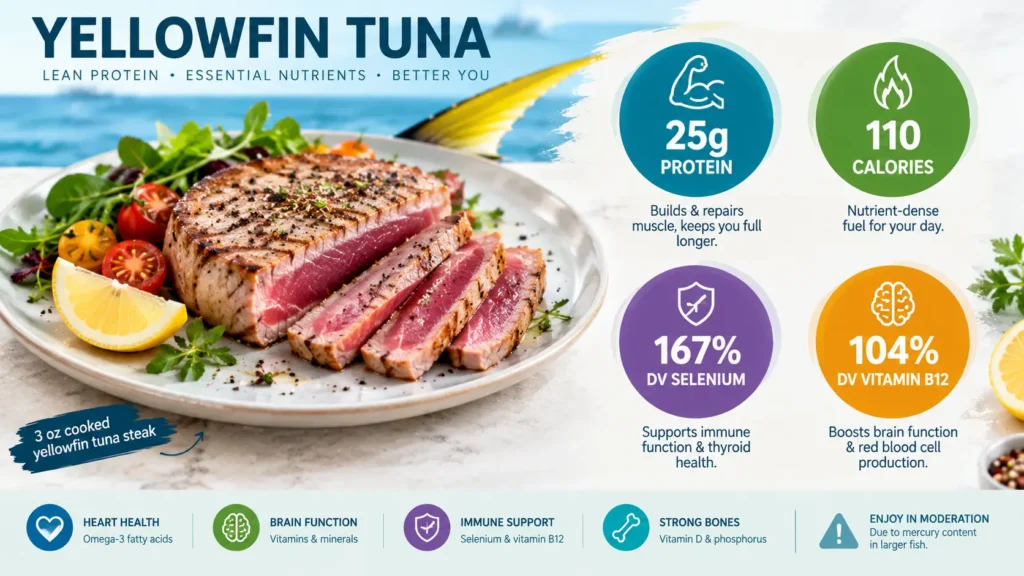
Understanding yellowfin tuna nutrition facts begins with its lean profile. A standard 3-ounce cooked portion contains roughly 110 yellowfin tuna calories, making it one of the most calorie-efficient foods available.
The primary macro power comes from yellowfin tuna protein. That small 3-ounce serving delivers a massive 25 grams of complete protein, containing all nine essential amino acids necessary for tissue repair and enzyme production.
Fat content remains minimal at around 1 gram per serving. While low in total fat, a good portion of that fat consists of beneficial omega-3 fatty acids (EPA and DHA). This balance gives you maximum nourishment without unnecessary saturated fats or carbohydrates.
Is Canned Tuna Healthy?
Many people wonder if canned versions offer the same nutritional value as fresh fish. Canned yellowfin tuna is indeed a nutritious, convenient, and budget-friendly choice. It retains most of its core protein, selenium, and B vitamins during the canning process.
However, you should keep a few distinct differences in mind when shopping:
- Packed in Water vs. Oil: Yellowfin packed in spring water stays low in calories (around 90–110 calories per serving). Tuna packed in olive oil or soybean oil can double or triple the calorie count, though olive oil adds heart-healthy monounsaturated fats.
- Sodium Levels: Fresh yellowfin naturally contains very little sodium (about 45 mg per serving). Canned versions often feature added salt for preservation, rising to 300 mg or more per serving. Look for “low sodium” or “no salt added” cans if you watch your blood pressure.
- BPA Linings: Choose brands that explicitly state they use BPA-free can linings to prevent chemical leaching into the fish.
Top Health Benefits of Eating Yellowfin Tuna
Incorporating this pelagic fish into your meal rotation yields wide-ranging wellness advantages. Here are the primary yellowfin tuna health benefits:
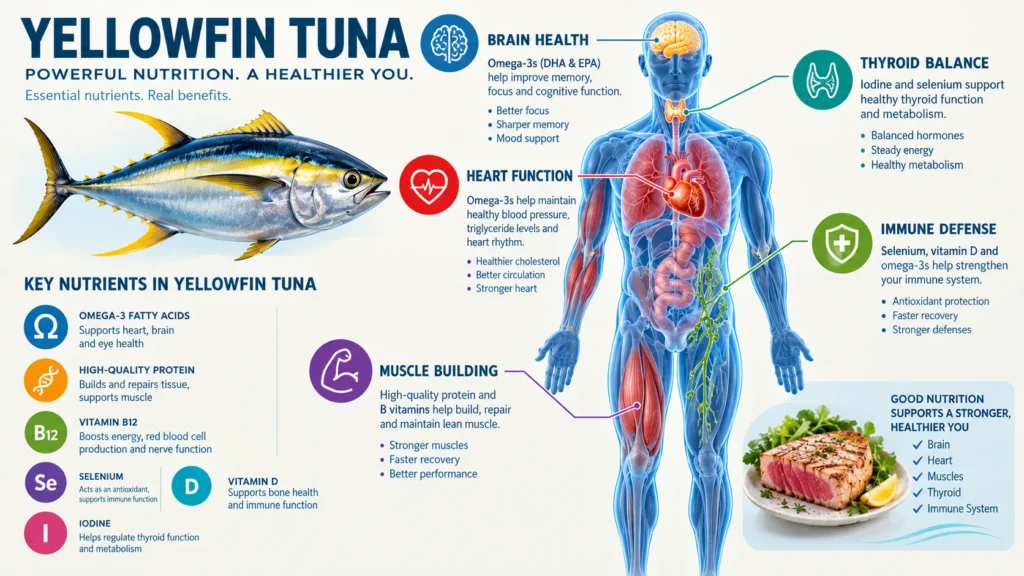
- Supports Brain Function: The omega-3 fatty acids and vitamin B12 found in yellowfin help preserve cognitive health, boost memory retention, and support overall neurological function.
- Strengthens the Immune System: Yellowfin is exceptionally rich in selenium, a potent antioxidant that lowers oxidative stress and protects immune cells from damage.
- Promotes Thyroid Health: Selenium also plays an essential role in thyroid hormone metabolism, keeping your metabolic engine running smoothly.
- Boosts Cellular Energy: Loaded with niacin (vitamin B3) and vitamin B6, yellowfin aids your body in converting carbohydrates and fats into usable cellular energy.
- Encourages Healthy Circulation: Potassium and B vitamins help maintain proper vascular tone and fluid balance across blood vessels.
Is Yellowfin Tuna Good for Weight Loss?
If your goal is shedding fat while preserving lean muscle mass, yellowfin tuna is an outstanding asset. High-protein foods take more energy for your body to digest—a concept known as the thermic effect of food (TEF). Protein also triggers satiety hormones like peptide YY and GLP-1, keeping you full for hours after your meal.
Because you get 25 grams of protein for a mere 110 calories, yellowfin tuna lets you hit your daily protein targets without exceeding your overall energy budget. Replacing higher-calorie protein sources with tuna can create a manageable calorie deficit without inducing hunger pangs.
Is Yellowfin Tuna Good for Muscle Growth and Heart Health?
For fitness enthusiasts, yellowfin tuna supplies a rich concentration of branched-chain amino acids (BCAAs), particularly leucine. Leucine acts as the direct signal to trigger muscle protein synthesis after resistance training workouts.
From a cardiovascular perspective, the omega-3 fatty acids in yellowfin help lower blood triglyceride levels, maintain flexible arterial walls, and reduce overall systemic inflammation. Regular consumption of lean seafood supports resting heart rate and reduces long-term risks of heart disease.
Various Vitamins and Minerals Found in Yellowfin Tuna
Beyond macros, yellowfin tuna contains a rich spectrum of micro-nutrients essential for daily vitality:
- Selenium: A single serving supplies over 160% of your daily required intake. Selenium acts as an antioxidant shield, protecting your DNA from free radical damage.
- Vitamin B12: Vital for red blood cell production, DNA synthesis, and keeping your nerves working properly.
- Niacin (Vitamin B3): Helps repair cellular DNA and improves cholesterol profiles by supporting high-density lipoprotein (HDL) levels.
- Vitamin B6: Crucial for neurotransmitter synthesis, affecting mood regulation and sleep quality.
- Phosphorus & Magnesium: These essential minerals work alongside calcium to preserve strong bone density and support smooth muscle contractions.
Is Yellowfin Tuna High in Mercury?
Mercury accumulation is the primary concern when evaluating any large marine predator. Heavy metals collect in ocean waters and build up in larger fish over time through a process called bioaccumulation.
Understanding yellowfin tuna mercury levels requires knowing where this species sits in the marine food chain:
- Mercury Classification: The FDA and EPA classify yellowfin tuna as a “Good Choice” for seafood consumption.
- Comparison to Skipjack: Skipjack (commonly sold as “canned light tuna”) is smaller and shorter-lived, placing it in the safer “Best Choice” category with lower mercury concentrations.
- Comparison to Albacore & Bigeye: Yellowfin generally contains less mercury than Bigeye or Bluefin tuna, and similar or slightly lower levels than Albacore (“White”) tuna.
Average mercury concentrations in yellowfin range around 0.354 parts per million (ppm). While this level is manageable for healthy adults, it requires thoughtful meal planning to avoid overexposure.
How Often Can You Safely Eat Yellowfin Tuna?
To maximize health benefits while keeping heavy metal exposure low, follow clear portion limits based on official health agency guidelines:
- Healthy Adults: Can safely enjoy one to two servings (4 to 8 ounces total) per week of yellowfin tuna, provided other high-mercury fish are not consumed in the same timeframe.
- Pregnant People, Breastfeeding Mothers, and Women of Childbearing Age: The FDA recommends limiting yellowfin tuna to one 4-ounce serving per week, making sure not to consume other high-mercury fish that week.
- Young Children (Ages 1–11): Should stick to one smaller serving (2 to 3 ounces) per week, balanced with lower-mercury choices like salmon, cod, or shrimp.
Rotating your seafood picks with low-mercury options—such as wild salmon, sardines, trout, and canned light skipjack—ensures you get plenty of seafood nutrients safely.
Is Raw Yellowfin Tuna Safe to Eat?
Raw yellowfin tuna is a central ingredient in poke bowls, sushi, and tartare. When prepared properly, raw yellowfin tuna is generally safe for healthy adults, but it carries inherent risks of foodborne bacteria and marine parasites.
Follow these critical safety rules for consuming raw yellowfin:
- Verify “Sushi-Grade” Handling: The term “sushi-grade” is not an official FDA regulated grade, but it signifies that the fish was commercially frozen at ultra-low temperatures (e.g., -4°F for 7 days or -31°F for 15 hours) to eliminate potential parasites.
- Keep It Cold: Raw tuna must remain under 40°F (4°C) up until preparation and consumption to prevent rapid bacterial proliferation.
- High-Risk Populations Should Avoid Raw Fish: Pregnant women, elderly individuals, infants, and people with compromised immune systems should strictly consume fully cooked yellowfin tuna cooked to an internal temperature of 145°F (63°C).
Yellowfin Tuna vs. Other Tuna: Which Is Healthier?
Choosing the right tuna depends on your personal nutrition goals, budget, and mercury tolerance. Here is how yellowfin compares to other common market types of fish varieties:
| Tuna Variety | Flavor & Texture | Calorie / Fat Profile | Mercury Risk Level | FDA Category |
| Yellowfin (Ahi) | Mild to firm, deep red/pink flesh | Very lean, high protein | Moderate (~0.35 ppm) | Good Choice |
| Skipjack (Light) | Stronger fish flavor, soft texture | Lowest fat, slightly less protein | Low (~0.12 ppm) | Best Choice |
| Albacore (White) | Mild, firm, steak-like texture | Higher in Omega-3s & fat | Moderate-High (~0.35–0.50 ppm) | Good Choice |
| Bigeye / Bluefin | Rich, buttery, high-fat content | Higher calories & fat | High (~0.68–0.88 ppm) | Choice to Avoid |
If you want lean muscle-building protein with a mild taste, is yellowfin tuna good to eat fish? Absolutely. However, if you want maximum omega-3 fats or the absolute lowest mercury risk, wild salmon or skipjack tuna might fit your daily routine better.
Frequently Asked Questions (FAQs)
Is yellowfin tuna good for pregnant women?
Yellowfin tuna can be eaten during pregnancy, but strict limits apply. The FDA categorizes it as a “Good Choice,” meaning pregnant or breastfeeding individuals should eat no more than one 4-ounce serving per week to prevent excessive mercury exposure.
Is yellowfin tuna good eating?
Yes, is yellowfin tuna good eating is widely agreed upon by chefs worldwide. It offers a clean, mild, slightly sweet flavor with a firm, steak-like texture that holds up wonderfully when seared, grilled, or eaten raw in sushi.
Is yellowfin tuna high in sodium?
Fresh yellowfin tuna is naturally low in sodium, containing only about 45 mg per 3-ounce serving. However, canned yellowfin tuna or tuna pre-treated with brine can contain significantly higher sodium levels, so always check package labels.
What is the difference between Ahi tuna and Yellowfin tuna?
“Ahi” is the Hawaiian name used commercially to refer to both Yellowfin tuna and Bigeye tuna. In most grocery stores and restaurants, Ahi specifically refers to high-quality Yellowfin tuna steaks.
Does yellowfin tuna have omega-3 fatty acids?
Yes, yellowfin tuna provides essential omega-3 fatty acids (EPA and DHA). While it contains slightly fewer omega-3s than fatty fish like wild salmon or albacore, it still supports heart and brain function.
Can you eat yellowfin tuna every day?
Eating yellowfin tuna every day is not recommended due to its moderate mercury content. Consuming it daily could cause mercury to build up in your body over time. It is best to cap your intake at 1 to 2 portions a week.
How should you cook yellowfin tuna so it stays moist?
Because yellowfin tuna is extremely lean, overcooking makes it dry and tough. Heat a pan to high temperature and sear the tuna steak for just 1 to 2 minutes per side, leaving the center rare or medium-rare for the best texture.
Is yellowfin tuna healthier than chicken breast?
Yellowfin tuna and chicken breast offer similar protein amounts per serving. However, yellowfin tuna provides extra health benefits like omega-3 fatty acids, selenium, and vitamin B12 that chicken breast lacks.
How can you tell if fresh yellowfin tuna has gone bad?
Fresh yellowfin should look bright red or deep pink with a moist surface and smell fresh like seawater. Avoid tuna that looks dull brown, slimy, or gives off a sharp, sour, or fishy ammonia smell.
Is wild-caught yellowfin tuna better than farmed?
Almost all commercial yellowfin tuna is wild-caught from open ocean fisheries. Wild-caught yellowfin offers a natural nutrient profile free from antibiotics or artificial dyes used in standard aquaculture operations.
Conclusion
So, is yellowfin tuna good for you? When eaten in moderation, yellowfin tuna stands out as an exceptionally healthy, nutrient-rich food. Packed with lean protein, heart-healthy omega-3 fatty acids, and essential minerals like selenium and vitamin B12, it effectively supports weight management, athletic recovery, and overall metabolic health.
Because it carries moderate mercury levels, following FDA serving guidelines—1 to 2 portions weekly for healthy adults and 1 portion weekly for pregnant individuals—ensures you harvest every nutritional reward safely. Paired with proper cooking techniques or certified sushi-grade handling, yellowfin tuna provides a clean, satisfying, and delicious boost to any balanced lifestyle.