
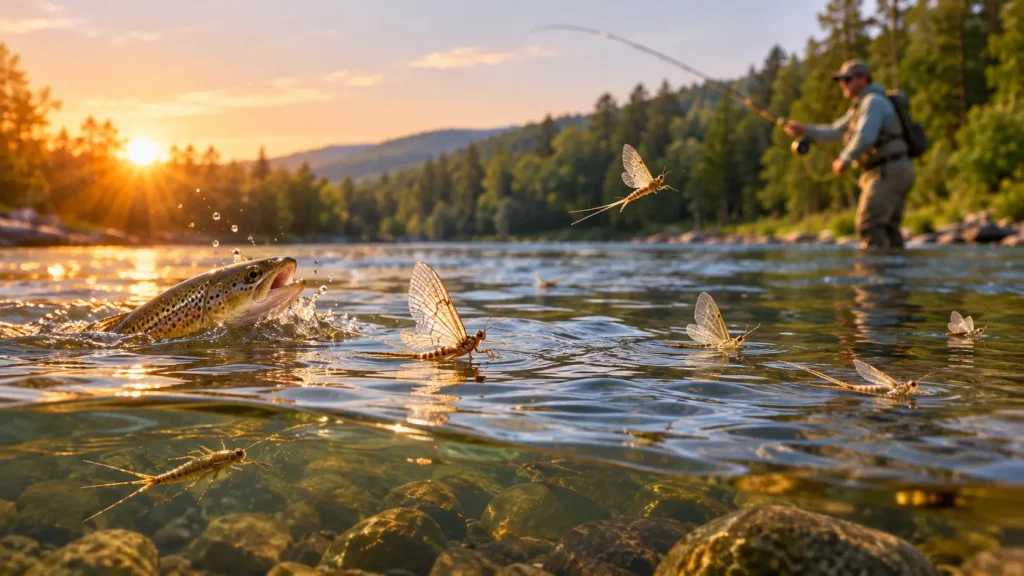
What is a mayfly hatch, and why do trout anglers get so excited when one begins? A mayfly hatch occurs when mature aquatic mayflies emerge from the water, transform into winged insects, and take flight to reproduce. During this natural event, trout often feed aggressively on emerging nymphs, floating duns, and spent adults.
A mayfly hatch is a period when large numbers of mayflies emerge from rivers, streams, and lakes, creating a temporary feeding opportunity for trout. The hatch usually follows seasonal patterns and depends on water temperature, weather, and species. Renowned fly-fishing authorities such as Tom Rosenbauer, author and Orvis fly-fishing educator, emphasize matching your fly pattern to the insect’s life stage.
But knowing when mayflies hatch is only part of the equation. You also need to recognize the different stages, identify productive fishing conditions, and choose the right fly patterns. So, let’s explore how mayfly hatches work and how you can use them to catch more trout on your next fishing trip!
Match the Hatch. Outsmart the Trout. Choose Your Perfect Mayfly Fly!
Quick Jump
ToggleWhat Is a Mayfly Hatch?
A mayfly hatch is the period when many mayfly nymphs transform into winged adults at roughly the same time. The term “hatch” does not mean eggs are hatching; it refers to the mayfly emergence from its underwater nymph stage into an adult.
Mayflies are aquatic insects. Their nymphs live among rocks, gravel, vegetation, and sediment in a river or stream, river or lake, or reservoir. When conditions are right, a nymph swims or crawls toward the surface, breaks through the surface film, and sheds its final nymphal skin, called a shuck. The new insect is a dun, or subimago.
This matters to fly fishers because the emerging insect cannot immediately fly away. It drifts on the surface while its wings expand and harden. That brief period makes it an easy food source for trout. A mayfly hatch therefore creates a visible, concentrated meal that can bring rising trout to the surface in numbers.
Mayflies are unique among insects because they have two winged adult stages: the dull-winged dun and the clear-winged spinner. gov.nt
What Triggers a Mayfly Hatch?
Water temperature is the main trigger for a mayfly hatch. As water warms through spring and summer, nymphs mature, develop darker wing pads, and eventually move toward the surface to emerge. Light levels, daylight length, weather, and river flow also influence timing.
Water temperature
Water temperature controls how quickly nymphs grow. In many trout waters, a steady warming trend brings the first major hatches. A thermometer is one of the most useful tools an angler can carry because a few degrees can change whether insects emerge that day.
Daylight and weather
Longer days signal seasonal change, while low light, cloud cover, humidity, and calm air often favor emergence. Cool, humid conditions help adult mayflies keep their bodies and wings from drying too quickly.
Flow and habitat
Stable flows, clean gravel, aquatic vegetation, and healthy oxygen levels support strong mayfly populations. A productive watershed usually supports a more reliable hatch calendar than a degraded or heavily altered river or stream.
When Do Mayflies Hatch?
Mayflies hatch from early spring through fall, depending on the species hatch, elevation, latitude, and water temperature. In colder northern waters, hatches may begin later and run shorter. In warmer southern waters, insects can emerge over a much longer season.
Spring hatches
Early spring often brings smaller mayflies, including Blue-Winged Olives and March Browns. A march brown hatch can appear on a mild afternoon when water temperature reaches the mid-50s Fahrenheit.
Summertime hatches
Summertime brings larger insects on many rivers, including drakes, sulfurs, and pale evening duns. Many hatches occur in the morning or evening rather than during the hottest part of the day, when dry air can make adult insects vulnerable.
Fall hatches
Cooler nights and shorter days can trigger another round of small mayfly activity. Blue-Winged Olives are especially important in autumn, often hatching on cloudy or drizzly afternoons.
What Are the Four Stages of a Mayfly’s Life Cycle?
The mayfly life cycle has four stages: egg, nymph, dun, and spinner. Understanding each stage helps an angler choose the right pattern and presentation.
Egg stage
After mating, female mayflies return to the water and deposit eggs on the surface. The eggs sink to the bottom, where they develop into larvae, or nymphs. Egg development can take from about a week to more than a year, depending on the species and water temperature.
Nymph stage
The nymph stage is the longest part of the mayfly lifecycle. Nymphs live on the riverbed, feed on plant material and organic matter, and grow through a series of molts. Trout feed on the nymphs throughout the year, making them an important food source for trout even when no hatch is visible.
Dun stage
When a nymph reaches maturity, it rises to the surface and transforms into a dun. The dun has dull, opaque wings and must rest on the surface film while its wings dry. This is the classic stage for dry flies and surface-feeding trout.
Spinner stage
A dun later molts into a spinner, the sexually mature adult mayfly. Spinners have clear, glassy wings, slimmer bodies, and longer tails. They swarm, mate, and lay eggs; after laying eggs, females often fall spent onto the water with their wings splayed flat.
How Long Does a Mayfly Hatch Last?
A single mayfly emergence may last only 30 minutes to a few hours. A broader hatch period can continue for days or weeks as different insects mature at slightly different rates. Water temperature, species, weather, and available habitat all affect duration.
Some mayflies emerge in a short, intense burst. Others produce a steady trickle through the afternoon. Spinner falls often happen near dusk, though cool weather can move that activity earlier in the day.
Do not assume a hatch is over just because the surface action pauses. Trout may be feeding on emergers just below the surface, on duns trapped in the film, or on spent spinners drifting into back eddies.
How to Identify a Mayfly Hatch on the Water
Look for the insects first, then watch how trout respond.
- Nymphs rising: A sudden increase in nymph activity near riffles, seams, and shallow gravel can signal that a hatch is close.
- Emergers in the surface film: Insects struggling to fly, with wings partly unfolded, are easy targets for trout.
- Duns on the surface: Upright wings and a low, drifting profile are classic signs of freshly emerged duns.
- Rising trout: Steady, subtle rises often mean trout are taking insects from the surface. Splashy rises can indicate emergers or nymphs near the top.
- Spinner clouds at dusk: Swarms of spinners over riffles, followed by flat-winged insects on the water, signal a spinner fall.
A fisherman who watches the water’s surface, rather than casting blindly, gains a major advantage. Look closely at the insect’s size and color, wing shape, body color, and whether trout are taking duns, emergers, or spinners.
Why Are Mayfly Hatches Important for Trout Fishing?
Mayfly hatches matter because they turn a scattered food supply into a predictable feeding opportunity. During emergence, trout can feed on nymphs rising through the water column, emergers trapped in the surface film, duns floating downstream, and spent spinners lying flat on the surface.
This is why dry fly fishing becomes so effective during a hatch. A trout that has keyed on a specific insect often ignores unrelated patterns. The angler who identifies the right pattern, matches its size and color, and presents it naturally has a much better chance of getting a take.
Mayflies are also an important food source beyond trout. Smallmouth bass, panfish, and other species may feed on nymphs, drowned adults, or insects trapped in the surface film. In still water, a reservoir or lake hatch can create excellent sight-fishing opportunities for bass and panfish.
What Flies Should You Use During a Mayfly Hatch?
Carry patterns for every stage of the mayfly life cycle. The best choice depends on what the trout are actually eating—not on what looks best in your fly box.
Mayfly nymph imitations
Before insects reach the surface, fish a nymph imitation near the bottom. Pheasant Tails, Hare’s Ears, and jig-style nymphs work well when trout are feeding below the surface. A lightly weighted jig pattern can ride naturally through rocky current and imitate a nymph preparing to rise.
Emerging mayfly patterns
When nymphs rise, switch to an emerger, soft-hackle, or unweighted nymph fished just under the surface. Many trout take emergers before they commit to fully floating duns.
Dry flies and spinner imitations
Once trout rise steadily to duns, use a dry fly such as a Comparadun, parachute pattern, or traditional Catskill-style dry. A parachute fly sits low in the water and gives trout a realistic silhouette. For a spinner fall, use a rusty spinner or spent-wing pattern with wings splayed flat.
Choosing size and color
Match the natural insect’s size and color before changing patterns. A fly that is one size too large can put selective trout down. Observe the wing shape, body tone, and whether the natural insect is translucent or opaque. A simple rule: match the insect first, then refine presentation.
How to Catch Trout During a Mayfly Hatch
Successful fishing during a hatch comes from observation, timing, and a clean drift.
- Read the rise forms. Gentle sips usually mean duns or spinners. Head-and-back rises can mean emergers. Repeated rises in the same lane reveal a feeding trout’s position.
- Match the hatch. Compare your imitation with the natural insect. Match size, silhouette, color, and stage.
- Get a drag-free drift. Let the fly line, leader, and fly move at the same speed as the current. Drag is one of the most common reasons trout refuse a well-chosen fly.
- Target feeding lanes. Focus on seams, current edges, foam lines, and back eddies where insects collect.
- Change stages before changing flies. If duns are on the water but trout refuse your dry fly, try an emerger, cripple, or spinner imitation.
- Set the hook smoothly. During a hatch, trout often rise quietly. A controlled lift is usually better than a hard strike.
The goal is not simply to cast at rising trout. It is to present a lifelike imitation in the exact lane where that trout expects food.
Common Mayfly Species Anglers Should Know
Different species hatch at different times and demand different imitations. Learning a few common names helps you prepare before a fishing trip.
| Mayfly group | Typical water | Common hatch window | Useful fly types |
|---|---|---|---|
| Blue-Winged Olives | Rivers and streams | Spring and fall | Emergers, parachutes, rusty spinners |
| March Browns | Freestone rivers | Spring | Large duns, nymphs, spinner patterns |
| Sulphurs | Rivers and tailwaters | Late spring and summer | Emergers, duns, spinners |
| Pale Evening Duns | Rivers and streams | Summer evenings | Parachute duns, emergers |
| Drakes | Rivers and lakes | Late spring and summer | Large dry flies, nymphs, spinners |
| Stenacron interpunctatum | Rivers and streams | Summer | Light-colored duns and spinner imitations |
Stenacron interpunctatum, often called the Light Cahill, is one mayfly species anglers may encounter during warm-weather hatches. Its pale body and mottled wings make it a useful reminder to inspect the natural insect rather than assume every light-colored mayfly is the same species.
Frequently Asked Questions About Mayfly Hatches
Do mayflies hatch every year?
Yes. Most mayfly species hatch every year, although weather, water temperature, and river conditions can shift the timing. A cold spring may delay hatches, while warm, low-water conditions can bring them earlier.
What time of day do mayflies hatch?
Mayflies can hatch in the morning, afternoon, or evening. In summer, many hatches occur early or late in the day. Spinner falls often happen at dusk, when adults gather over riffles to mate and lay eggs.
Do mayflies hatch in cold weather?
Some do. Small mayflies such as Blue-Winged Olives can hatch in cool conditions, especially in fall, winter, and early spring. The key is water temperature, not air temperature alone. midcurrent
How do you know when a mayfly hatch is starting?
Watch for nymphs becoming active, darker wing pads on collected nymphs, insects struggling in the surface film, and the first subtle rises. Trout often begin taking emergers before duns become obvious on the surface.
Are mayflies a sign of healthy water?
Often, yes. Many mayfly nymphs need clean, well-oxygenated water, suitable substrate, and available food. A diverse mayfly population can indicate a healthy aquatic food chain, though a single hatch does not tell the whole story of a watershed.
What is the difference between a dun and a spinner?
A dun is the first winged stage, with dull wings and a duller body. A spinner is the mature adult, with clear wings, a slimmer body, and the ability to mate and lay eggs.
Can you catch trout during a mayfly hatch without dry flies?
Yes. Nymphs and emergers can be excellent choices, especially before trout commit to the surface. Start deep, then move higher in the water column as insects approach the surface.
Are mayflies good for anything?
Yes. Mayflies are a vital aquatic food source for trout, bass, birds, bats, and other wildlife. Their nymphs also help cycle nutrients, while their presence often signals clean, well-oxygenated water.
What month do mayflies hatch?
Mayflies can hatch from early spring through fall, but May and June are often peak months in many regions. Exact timing depends on water temperature, elevation, and the mayfly species.
Is it rare to find a mayfly?
No. Mayflies are common in healthy freshwater systems, though you may not see adults every day. Large synchronized hatches can make them suddenly abundant for a short period.
Where do mayfly hatches occur?
Mayfly hatches occur in clean rivers, streams, lakes, ponds, and reservoirs with enough oxygen. Look for activity near riffles, weed beds, rocky bottoms, shorelines, and slower current seams.
Conclusion
Understanding what is a mayfly hatch gives an angler a practical advantage on the water. A hatch is more than a cloud of insects; it is a short window when nymphs rise, emergers struggle in the surface film, duns drift downstream, and spinners return to lay eggs. Trout respond to each stage differently, so the best angler is not always the one with the most flies. The best angler is the one who observes first, identifies the stage trout want, and presents a believable imitation with a clean drift.
Use a nymph before the hatch, an emerger as insects approach the surface, and dry flies when trout rise confidently. When the evening light fades and spinners gather over the riffles, be ready with a rusty spinner or spent-wing pattern. Watch the water, match the insect’s size and color, and make every cast count. Tight lines, and may your next mayfly hatch bring steady rises, confident trout, and a memorable day of fly fishing.
Recommended posts
- River Nymphing 101 – Powerful Tips for Epic Success!