
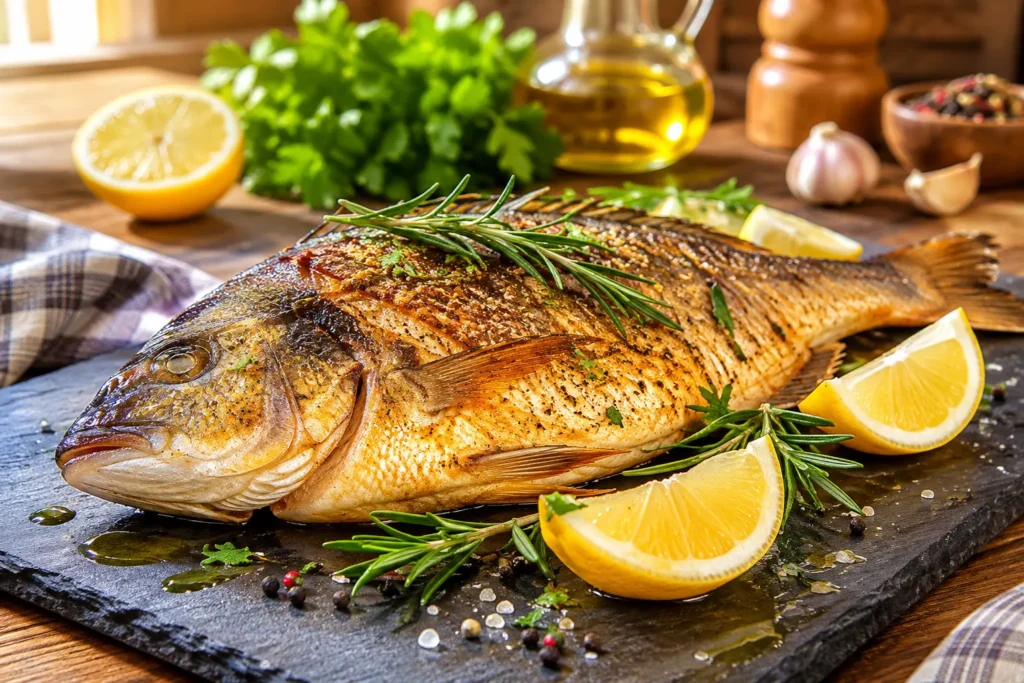
Are bream good to eat? Bream are good to eat when they are fresh, properly cleaned, and cooked with enough fat, moisture, or crispness to suit their lean flesh. Freshwater bream such as bluegill taste mild and sweet, while sea bream offers firm, juicy white fish with a clean, slightly sweet flavor.
“Bream” means different fish in different places. In much of the UK and Europe, it often means sea bream, a popular Mediterranean fish.
In the southern United States, “bream” usually means bluegill and other sunfish caught from a pond, lake, or river. Both can make a delicious supper, but they differ in size, bone structure, texture, and the best way to cook them.
Are Bream Good to Eat?
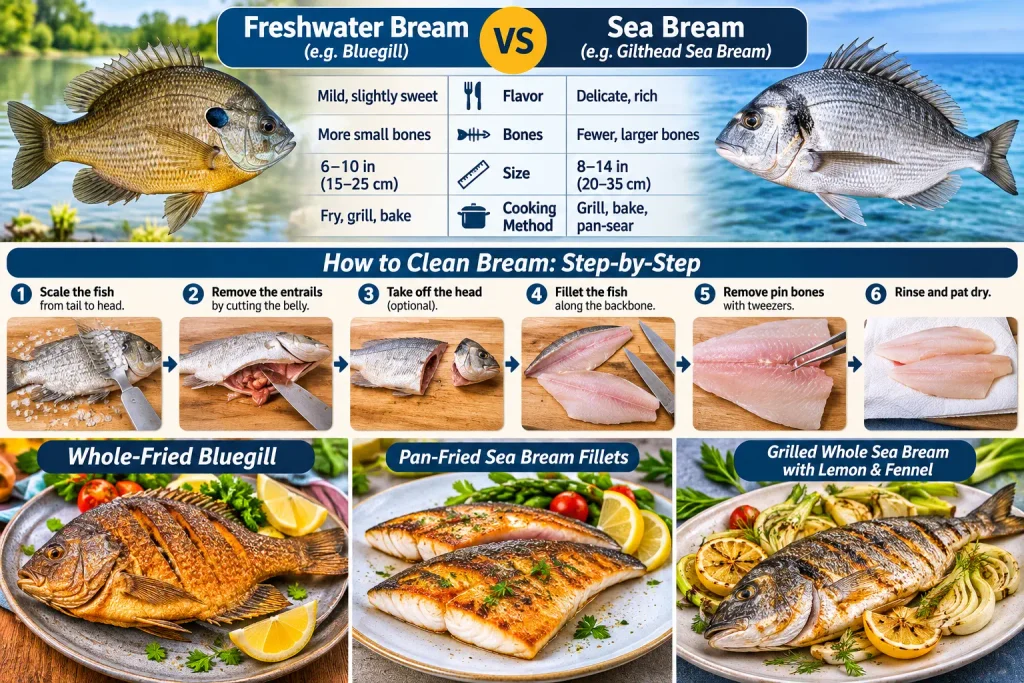
Bream is a good eating fish, especially when you match the cooking method to the species. Bluegill and other freshwater panfish are excellent fried whole, while sea bream is one of the most versatile premium white fish for grilling, roasting, or pan-frying.
Sea bream has dense, juicy flesh and a clean, delicate flavor. It works well whole or in fillets, and it holds up to lemon, olive oil, fennel, tomato, and Mediterranean herbs. Freshwater bream, including bluegill, has softer, flaky white meat that becomes sweet when the fish comes from clean, cool water.
The main drawback is bones. Smaller bream carry many fine bones, so new cooks often prefer fillets or a crisp whole-fried preparation that makes the bones easier to avoid.
What Does Bream Taste Like?
Bream taste mild, clean, and slightly sweet—not overly “fishy.” The exact flavor depends on the species, diet, water quality, and freshness.
| Type of bream | Flavor | Texture | Best simple pairing |
|---|---|---|---|
| Sea bream | Clean, sweet, delicate, with a rich flavor | Firm, meaty, juicy | Lemon, olive oil, fennel, garlic |
| Bluegill / freshwater bream | Mild, light, faintly sweet | Flaky, tender | Cornmeal, pepper, lemon |
| Larger European freshwater bream | Mild but sometimes earthy | Soft, lean, prone to drying | Sour cream, herbs, tomato sauce |
Sea bream is closer to sea bass than to cod in the kitchen: it has enough structure for the grill, yet remains tender enough for quick pan cooking. Bluegill is smaller and more delicate, so it rewards a fast fry rather than long, dry heat.
Are Bream Healthy to Eat?
Yes. Bream provide high-quality protein, B vitamins, selenium, and omega-3 fats. Sea bream contains about 17.5 g of protein and 96 calories per 100 g of raw fish, making it a lean choice for a balanced menu.
Fish also supplies nutrients such as vitamin B12, vitamin D, iodine, choline, iron, and zinc. The FDA and EPA note that many fish are nutritious and relatively low in mercury, but pregnant people, breastfeeding people, and young children should choose lower-mercury seafood and follow local advice.
For freshwater bream, safety depends more on the lake, pond, or river than on the species alone. Mercury and other contaminants can vary by water body, fish size, and age. Check your local fish-consumption advisory before you eat a wild catch.
Do Bream Have a Lot of Bones?
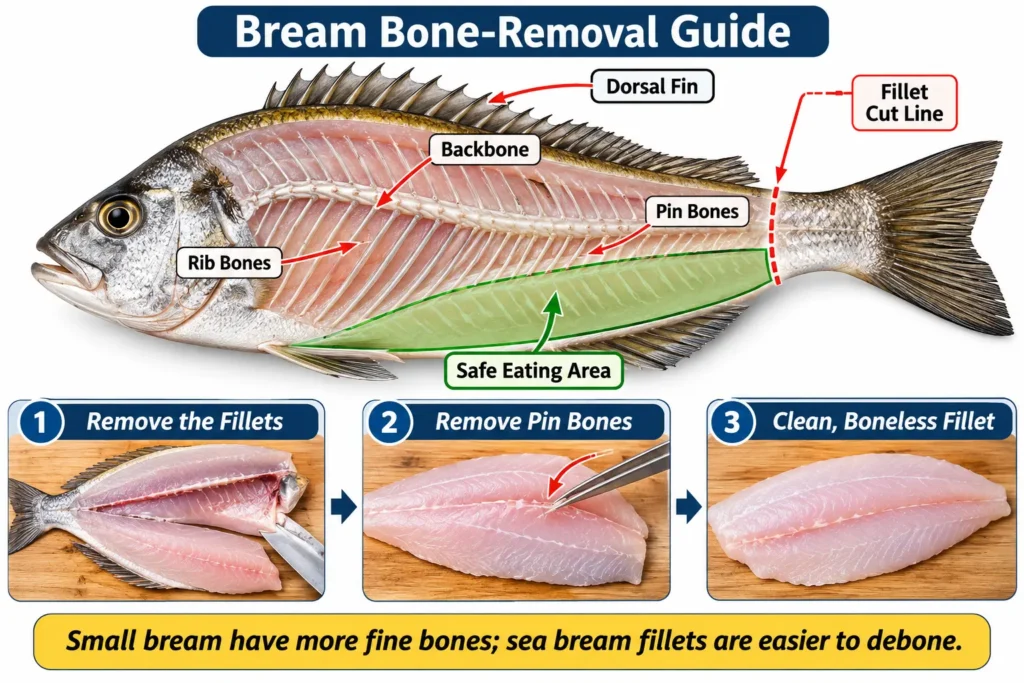
Yes—bream can have a lot of bones, particularly small freshwater bream. Bluegill and similar panfish have fine pin bones and a complex bone structure around the rib cage, which is why many anglers fry them whole and eat carefully around the backbone.
Sea bream is easier to manage. Its larger bones make filleting more straightforward, and a fishmonger can remove the head, gut, fins, and central bone for you. After filleting, run your fingers along the flesh and pull any remaining pin bones with fish tweezers.
Easiest bone-free options:
- Buy sea bream fillets rather than a whole fish.
- Ask the fishmonger to fillet and pin-bone the fish.
- Cook small bluegill whole, then lift the meat away from the backbone.
- Use a sharp fillet knife and tweezers if you process the catch yourself.
What Does Bream Meat Look and Feel Like?
Bream meat is white to pale pink, with a clean appearance and a moist, flaky texture when cooked correctly. Sea bream flesh feels firmer and meatier than bluegill, while freshwater bream is lighter, more tender, and more delicate.
Raw sea bream fillets should look glossy, translucent, and free of drying around the edges. Fresh fish should smell like clean water or the sea—not sour or strongly fishy. When cooked, the flesh should separate into large, juicy flakes rather than feel mushy or chalky.
How to Clean and Prepare Bream for Cooking
Clean bream as soon as possible after the catch. Cold water, a sharp knife, and a little patience make the job much easier.
- Rinse the fish. Use cold running water to remove slime, bait residue, and loose scales.
- Remove the fins. Cut away the dorsal fin and other sharp fins with scissors; sea bream fins can prick your hands.
- Scale the fish. Scrape from tail to head with a scaler, spoon, or the back of a knife. Work under water or inside a bag to control the mess.
- Gut the fish. Cut along the belly, remove the innards, and rinse the cavity thoroughly. Remove the dark belly lining, which can taste bitter in some freshwater bream.
- Choose whole fish or fillets. Keep small bream whole for frying. Fillet larger sea bream by cutting along the backbone, then remove pin bones with tweezers.
If you keep the head and backbone, use them for fish stock. They add depth to a tomato sauce, chowder, or light broth.
What Is the Best Way to Cook Bream?
The best way to cook bream depends on its size and species. Small freshwater bream shine when fried; sea bream is excellent grilled, roasted, or pan-fried.
Whole-fried bream
This is the classic way to cook bluegill and other panfish. Score the skin, season the fish, dredge it in cornmeal or seasoned flour, and fry in hot oil until golden. A typical whole bream needs only about 3–5 minutes per side at around 375°F, depending on size.
Pan-fried sea bream fillets
Pat the fillet dry, season it, and place it skin-side down in a hot pan with olive oil. Leave it alone for 2–3 minutes so the skin crisps, then turn it for about a minute. Finish with lemon juice, parsley, and a spoonful of butter if you like.
Grilled whole sea bream recipe
Stuff the cavity with lemon, fennel, garlic, and herbs. Brush the skin with olive oil, grill over medium-high heat, and turn once. The fish is ready when the flesh flakes easily from the bone.
Baked sea bream
Place a gutted, scaled whole fish in a baking dish with olive oil, lemon slices, tomato, fennel, and herbs. Bake until the flesh flakes easily; a 1.2 kg fish may need roughly 25–30 minutes at 410°F.
What Are the Best Seasonings for Bream?
Bream has a delicate flavor, so use seasonings that support it rather than cover it.
- Mediterranean style: Olive oil, lemon, garlic, fennel, parsley, and black pepper.
- Southern fry style: Cornmeal, salt, black pepper, paprika, and a pinch of cayenne or chilli.
- Asian-inspired style: Ginger, spring onion, soy sauce, sesame oil, and a little orange juice.
- Herb-crusted style: Breadcrumbs, lemon zest, parsley, dill, and fennel fronds.
- Smoky style: A light dusting of smoked paprika before grilling or a brief turn in a smoker.
Avoid heavy cream sauces with small bluegill. Their subtle bite disappears under rich flavors. Sea bream can handle a stronger sauce, especially one built from tomato, white wine, garlic, and herbs.
Is Freshwater Bream Better to Eat Than Sea Bream?
Neither is universally better; they suit different meals.
| Factor | Freshwater bream / bluegill | Sea bream |
|---|---|---|
| Common source | Pond, lake, river | Mediterranean and other saltwater fisheries or farms |
| Flavor | Mild, light, slightly sweet | Clean, sweet, slightly richer |
| Texture | Flaky and tender | Firm, meaty, juicy |
| Bones | Many small bones | Larger, easier-to-follow bones |
| Best cooking method | Whole-fry, pan-fry | Grill, roast, bake, pan-fry |
| Best for | Casual fish fry | Restaurant-style supper or Mediterranean cuisine |
Sea bream is often sold whole or in fillets and is a popular fish on restaurant menus across the UK and Mediterranean. Freshwater bream is more of an angler’s reward: fresh, local, and delicious when cooked soon after the catch.
Fresh bream recipes Worth Trying
– Crispy Whole-Fried Bream
You need: small bream, cornmeal, salt, pepper, paprika, oil, lemon.
Score each fish twice on each side. Season inside and out, coat in cornmeal, and fry in 1 inch of hot oil until crisp and golden. Drain well and squeeze lemon over the top. This method makes the skin crunchy and keeps the tender meat juicy.
– Mediterranean Baked Sea Bream
You need: whole sea bream, olive oil, lemon, fennel, tomato, garlic, parsley.
Lay the fish on a bed of sliced fennel and tomato. Fill the cavity with lemon and herbs, drizzle with olive oil, and bake until the flesh flakes from the bone. Serve with the pan juices as a light sauce.
– Ginger-Soy Bream Fillets
You need: bream fillets, ginger, garlic, spring onion, soy sauce, sesame oil.
Pan-fry the fillets skin-side down, then pour over a quick sauce of grated ginger, garlic, soy sauce, and a splash of orange juice. The result is fragrant, savory, and ready in under 15 minutes.
How to Choose Fresh Bream?
Look for clear eyes, bright red gills, firm flesh, and moist skin. The fish should not smell sour or ammonia-like. If you buy fillets, choose pieces with translucent flesh and no brown edges.
If you catch bream yourself, ice them immediately. Keep the fish clean, gutted if practical, and out of direct heat—especially on a boat or during a long day of fishing. Fresh fish makes the biggest difference in flavor.
Is Bream Sustainable?
It depends on the source. Some sea bream comes from well-managed farms, while other fish is wild-caught. Farmed sea bream is widely available, but farming practices vary by country and producer. For the best choice, look for certification from a reputable seafood sustainability program and ask your fishmonger where the fish came from.
For wild freshwater bream, follow local size limits, seasonal rules, and catch limits. Smaller, younger fish often contain fewer contaminants than large, old fish.
Frequently Asked Questions About Eating Bream
Can You Eat Bream Skin?
Yes. Bream skin is edible and becomes crisp when fried, grilled, or roasted. Sea bream skin is especially good when cooked skin-side down in a hot pan. Remove scales first, and avoid eating skin from fish caught in waters with contamination advisories, because contaminants can collect more in skin, fat, and organs than in the fillet.
Does Bream Taste Muddy?
Sometimes. Freshwater bream from warm, stagnant ponds or muddy rivers can develop an earthy taste. Fish from clean, cool water usually taste much better. Bleeding the fish quickly, removing the dark belly lining, and cooking it with lemon, garlic, or a spice rub can reduce unwanted flavors.
Is Bream Safe to Eat Every Week?
Often, yes—but check the source. Sea bream can fit into a weekly fish routine for many people, while freshwater bream safety depends on local advisories. Some states classify bluegill as a lower-mercury “best choice,” while other waters have species- or lake-specific limits. Pregnant people, children, and people who fish regularly should follow the strictest applicable guidance.
What Does Sea Bream Taste Like?
Sea bream tastes clean, mildly sweet, and delicate, with a satisfying meaty texture. It is less oily than salmon and less flaky than cod, sitting closer to sea bass in both flavor and cooking behavior. Lemon, olive oil, fennel, and fresh herbs complement it especially well.
Can You Eat Bream Raw?
Do not eat wild-caught bream raw. Raw fish carries a risk of parasites and bacteria, and freshwater fish require particular caution. If you want raw-style dishes, use sushi-grade fish handled specifically for raw consumption.
What Size Bream Is Best to Eat?
For bluegill and panfish, many anglers prefer fish around 6–9 inches: large enough to yield meat, small enough to stay tender. For sea bream, a fish of roughly 12–18 inches is easy to handle and cooks evenly. Local regulations may set a minimum size, so check before you keep a catch.
What is healthier, sea bream or salmon?
Salmon is healthier for omega-3 intake because it is an oily fish with substantially more EPA and DHA. Sea bream is still healthy—lean, protein-rich, and lower in calories—so it is the better pick if you want a lighter white fish.seafish+1
What is the best bait for bream fish?
For freshwater bream such as bluegill, live crickets and red worms are the best all-round baits. Fish them slowly under a small float or near cover; grubs, mealworms, grasshoppers, and tiny jigs also work well.myfwc+2
What is the lifespan of a bream fish?
European freshwater bream commonly live about 15–20 years. Bluegill and sea bream usually have shorter lifespans, often around 5–10 years depending on species, habitat, predation, and fishing pressure.
Conclusion
So, are bream good to eat? Yes—when you choose the right species, keep the fish fresh, and cook it in a way that suits its texture. Freshwater bream such as bluegill delivers mild, sweet, flaky meat that is hard to beat when fried crisp in a pan. Sea bream offers firmer, juicier white fish that takes beautifully to lemon, olive oil, fennel, tomato, and Mediterranean flavors.
Bones are the main challenge, but they should not stop you. Cook small bream whole, order sea bream fillets, or learn a few simple filleting moves. Always check local advisories before eating wild freshwater fish, and choose fresh fish with clear eyes, firm flesh, and a clean smell.
Whether you catch bream from a quiet lake or pick up sea bream from a fishmonger, this is a genuinely delicious fish worth adding to your menu. With the right seasoning and a hot pan, grill, or oven, bream can turn an ordinary supper into something special.
Recommended posts
- Bream Fishing Tips: Best Baits, Rigs & Techniques
- Best Pans for Cooking Fish (Incl. AFFORDABLE Models!)
- Are minnows good bait for bass Fishing? (21 fun facts )