
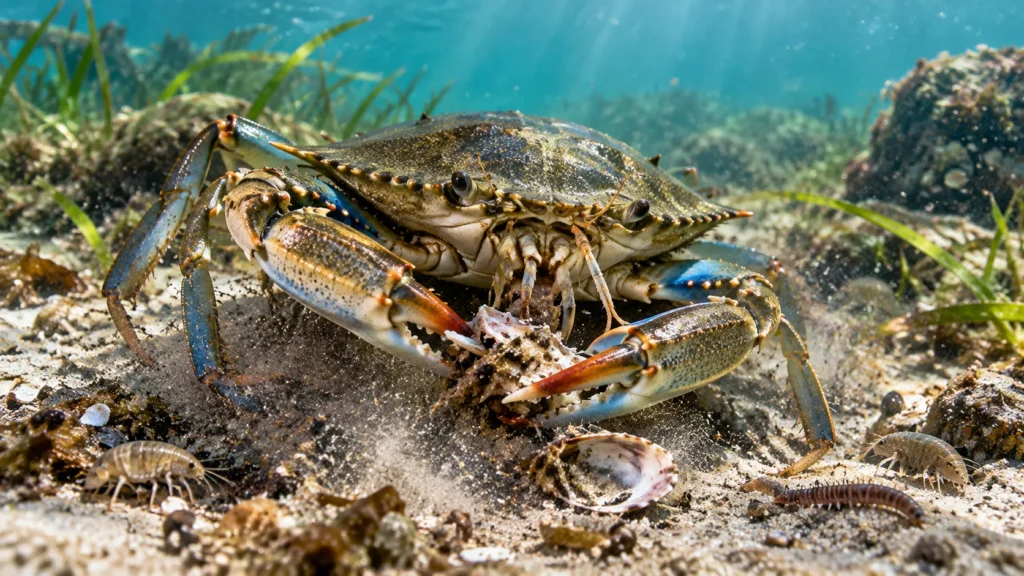
Are crabs bottom feeders? Yes, many crabs are bottom feeders because they search for food on or near the ocean floor. They are also opportunistic omnivores, meaning they eat a variety of foods, including small animals, oysters, algae, and dead organic matter, depending on the species and habitat.
If you have ever wondered whether are crabs bottom feeders, the short answer is yes for most species, but their actual daily menu might surprise you.
Beyond simply cleaning up the seabed, these fascinating crustaceans play a critical role in marine ecosystems.
In this guide, we break down their feeding habits, separate marine myths from facts, and look closely at the overall crab diet so you know exactly what ends up on your plate.
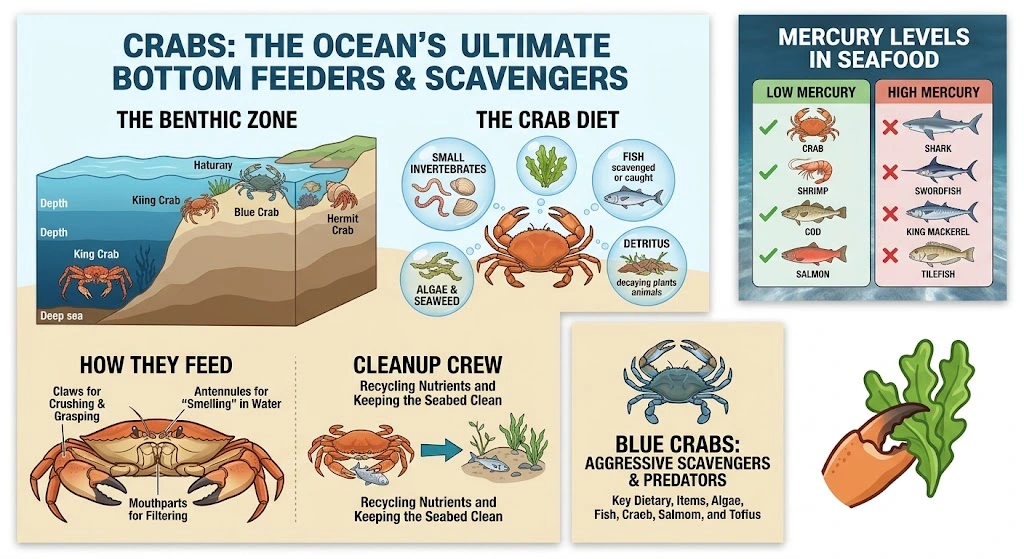
Are Crabs Bottom Feeders?
When people picture crabs, they usually imagine them scuttling sideways across the sandy seabed, poking into mud and rocks. This classic image is accurate for the vast majority of species. Is crabs bottom feeders by definition? Yes, because they inhabit benthic zones—the ecological region at the lowest level of a body of water.
However, calling them bottom feeders does not mean they only eat garbage. They actively hunt live prey, graze on aquatic vegetation, and scavenge for whatever nutrients are available in their environment. Their physical build, featuring flat bodies and walking legs designed for walking on sediment, makes them perfectly adapted for life on the floor.
What Do Crabs Eat in the Wild?
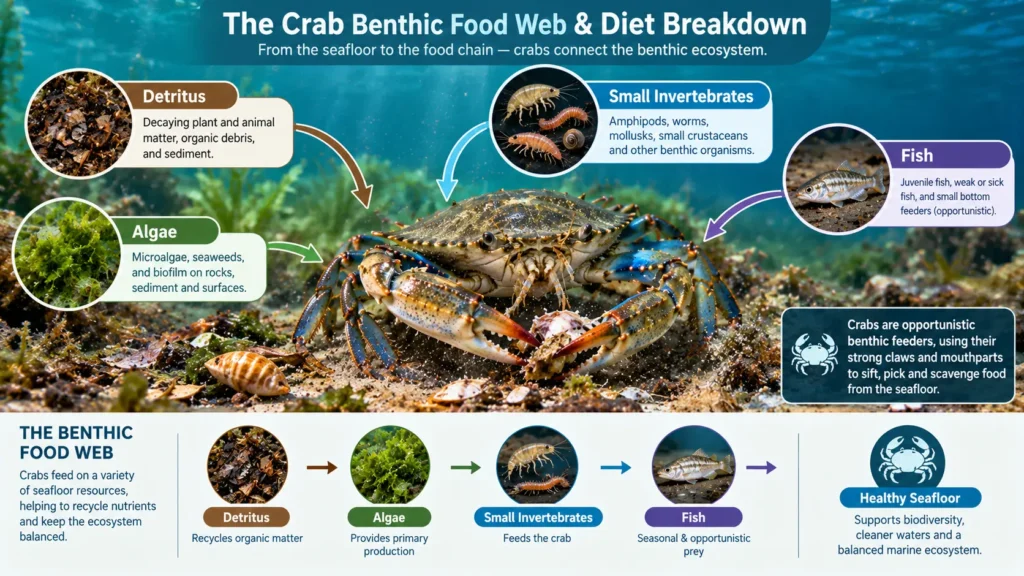
The typical crab diet varies wildly depending on where the animal lives, ranging from tropical beaches to deep ocean trenches. Because they are opportunistic eaters, they do not waste energy being picky.
Their natural menu features:
- Small clams, mussels, and snails
- Worms and small crustaceans
- Fallen plant matter and detritus
- Algae and seagrasses
This diverse diet helps keep marine populations balanced by preventing any single species from overpopulating the ocean floor.
Do Crabs Eat Dead Fish and Decaying Animals?
Yes, are crabs scavengers is one of the most common questions asked by seafood lovers, and the answer is a resounding yes. Crabs play the role of the ocean’s cleanup crew. When a fish, marine mammal, or seabird dies and sinks to the seabed, crabs are among the first animals to arrive.
Eating decaying matter helps recycle nutrients back into the marine food web. Far from being a dirty habit, scavenging is a crucial ecological service that keeps coastlines and ocean floors clean.
Are All Crab Species Bottom Feeders?
While the vast majority of crabs live on the ocean floor, not all species fit the traditional mold. Some spend parts of their lives swimming in open water columns, while others live entirely on land, climbing trees or burrowing deep into tropical soil.
Ghost crabs and mangrove crabs, for instance, forage across beaches and tree roots rather than underwater seabeds. Even among aquatic crabs, swimming crabs use modified paddle-like back legs to hunt actively in open water rather than solely scouring the mud.
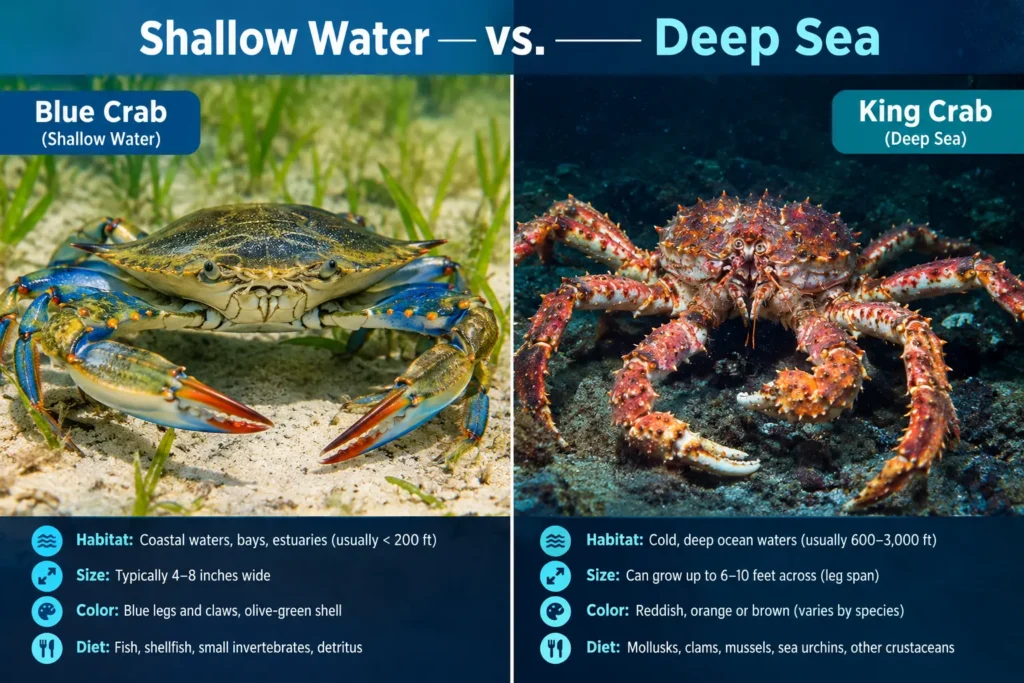
Are Blue Crabs, Snow Crabs, and King Crabs Bottom Feeders?
Different commercial species have unique feeding styles influenced by their ocean depths:
- Blue Crabs: Found in shallow estuaries and bays, blue crabs are aggressive predators and scavengers that feed heavily on small fish, bivalves, and plant matter right on the muddy bottom.
- Snow Crabs: Living in cold, deep northern waters, snow crabs feed primarily on bottom-dwelling invertebrates like worms, small clams, and brittle stars.
- King Crabs: These giants roam deep, cold oceanic floors, using their powerful claws to crush sea urchins, snails, and whatever organic debris drifts down from above.
Knowing are blue crabs bottom feeders helps explain why they interact so closely with coastal sediments, making local water quality monitoring vital for commercial fisheries.
How Do Crabs Find Food on the Ocean Floor?
Crabs do not rely solely on their eyes to hunt. They possess specialized sensory organs called antennules that act like an advanced sense of smell in water, detecting amino acids released by decaying or living prey from great distances.
Once they zero in on a scent, they use tiny sensory hairs covering their claws and legs to taste and feel their surroundings before taking a bite. This sensory setup lets them find hidden food buried deep beneath the sand.
Do Crabs Eat Algae, Seaweed, and Plants?
Many people assume crabs are strictly carnivorous, but plant matter makes up a large percentage of a crab’s diet. Herbivorous and omnivorous crabs regularly graze on green algae, red algae, kelp, and fallen mangrove leaves.
Eating vegetation provides them with essential fibers and secondary nutrients. In mangrove forests, crabs act as primary processors of fallen leaves, chewing them into smaller pieces that fuel the entire local ecosystem.
Does Being a Bottom Feeder Make Crabs Unsafe to Eat?
A common fear is that eating bottom-feeding animals exposes humans to toxins. However, bottom-feeding behavior alone does not determine whether crab meat is safe to eat.
Commercial crab fisheries operate in heavily regulated waters. Furthermore, crabs filter their food through their digestive tracts, and humans typically eat only the muscle meat in the claws and legs, not the digestive organs where impurities might accumulate. As long as crabs are harvested from clean waters and cooked thoroughly, they pose no inherent health risk. Asking are crabs safe to eat comes down to sourcing, proper handling, and cooking practices rather than their place on the food chain.
Are Crabs Healthy to Eat?
Beyond safety, crab meat is exceptionally nutritious. It is packed with lean protein, omega-3 fatty acids, vitamin B12, and essential minerals like zinc, selenium, and copper.
Compared to other meats, crab is low in saturated fat, making it a fantastic addition to a heart-healthy diet. Whether steamed, baked, or tossed into a salad, it delivers high nutritional value without heavy calories.
Frequently Asked Questions About Crabs as Marine Bottom Feeders
Do crabs eat waste and dirt?
Crabs do not eat dirt or waste for nutrition. When they sift through mud and sand, they are actually filtering out tiny organic particles, microorganisms, and small detritus while spitting the inedible sand back out.
Do crabs eat other crabs?
Yes. Cannibalism is quite common among many crab species, especially when populations are crowded, during molting seasons when crabs are soft and vulnerable, or when food is scarce.
Are crabs scavengers or predators?
They are both. Crabs switch effortlessly between hunting live prey (like small fish and clams) and scavenging dead material depending on what food is easiest to access.
Do crabs clean the ocean floor?
Yes. By consuming decaying matter, organic waste, and excess debris, crabs act as natural scavengers that help prevent the buildup of rotting material in marine habitats.
What do hermit crabs eat?
Pet and wild hermit crabs are complete omnivores. In the wild, they eat fruits, decaying wood, leaves, dead insects, and small marine life. In captivity, they thrive on commercial pellets, vegetables, and occasional protein supplements.
Are crabs high in mercury?
No, crabs are generally considered low in mercury compared to large predatory fish like shark, swordfish, or king mackerel. Because crabs have a shorter lifespan and occupy a lower level on the marine food chain than large apex predators, they do not accumulate high levels of heavy metals in their muscle meat.
Conclusion
Understanding Are Crabs Bottom Feeders reveals much more than a simple dietary label; it uncovers a complex ecological story. These remarkable crustaceans navigate the ocean floor as skilled predators, vital scavengers, and enthusiastic herbivores, all while keeping marine ecosystems clean and balanced.
Their scavenging habits do not make them dirty or unsafe; instead, they highlight nature’s efficient recycling system at work. From the muddy estuaries home to blue crabs to the deep, freezing waters prowled by king crabs, these animals turn what sinks to the bottom into valuable marine life. Next time you enjoy a seafood dinner, you can appreciate the intricate biology and important environmental role that brought that meal to your table.
Recommended posts
- Are Shrimp Bottom Feeders? Facts About Their Diet
- Are Lobsters Bottom Feeders & What Do Lobsters Eat! (Guide)
- What Fish Are Not Bottom Feeders? 15 Fish to Eat Safely