
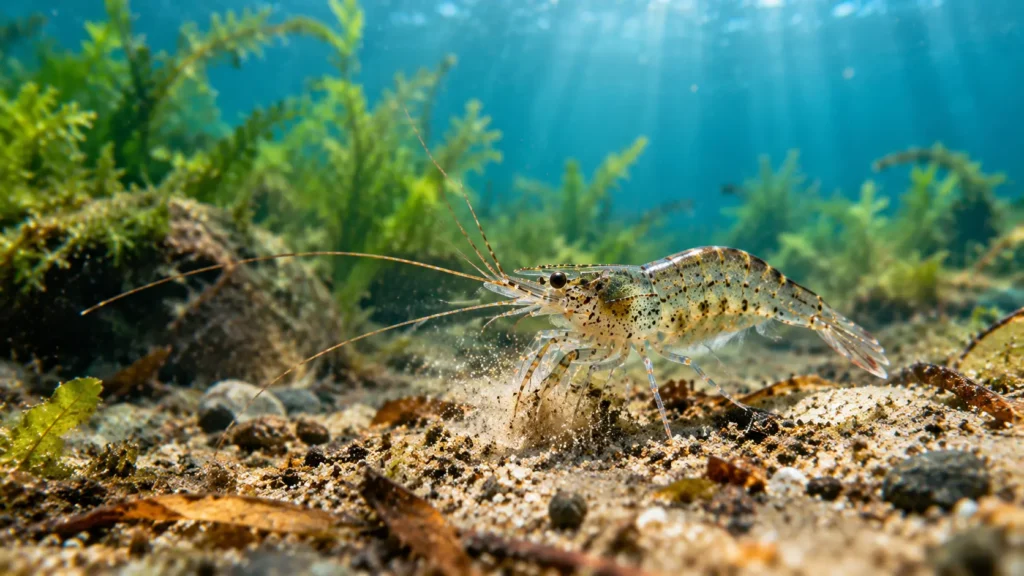
Are Shrimp Bottom Feeders? Yes, many shrimp are bottom feeders, but not all of them are. Most shrimp hunt for food near the ocean floor. They eat algae, dead plant material, tiny animals, and scraps they find in the mud or sand. That does not make them dirty or unsafe to eat.
People often hear “bottom feeder” and picture an animal living in filth. Shrimp are not like that. They are busy little omnivores. Some graze on rocks and plants. Others pick through sediment or grab worms and larvae. A few even feed higher up in the water.
Their diet depends on the species, where they live, and how old they are. A young shrimp may eat plankton. An adult may eat almost anything it can find.
Are Shrimp Bottom Feeders?
Many wild-caught shrimp are bottom feeders because they look for food on or close to the seabed. White shrimp are a good example. When they grow older, they feed along the bottom on dead material, plants, tiny organisms, small animals, and even little fish.
Still, the term is a little misleading. It sounds like shrimp only eat waste. They do not.
Some shrimp scrape algae off surfaces. Some sift tiny particles from the water. Others walk across mud and sand, picking up whatever looks edible. Many do several of these things.
So the better answer is this: many shrimp are bottom dwellers, but they are not all the same.
Many of the seafood we eat are bottom feeders, including catfish, tilapia, and crabs. Oysters are filter feeders, meaning they strain tiny particles from the water to get food. These are all natural feeding habits, and people have been harvesting and eating these animals for generations.
What Do Shrimp Eat in the Wild?
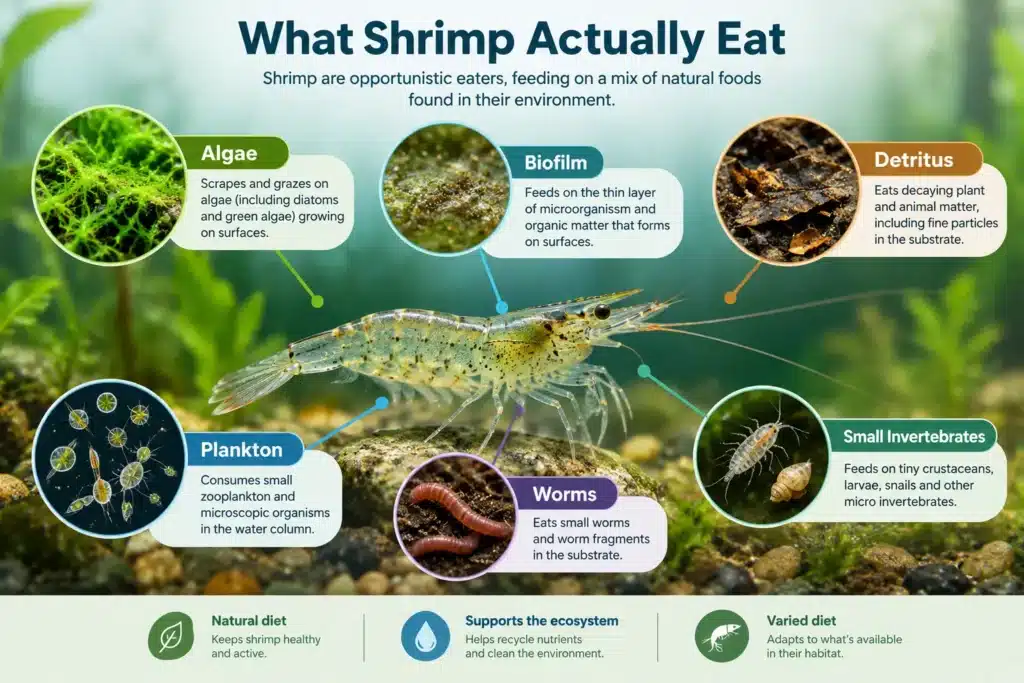
Wild shrimp are not picky. They eat what they can find.
Baby shrimp usually start with plankton. These are tiny plants and animals drifting in the water. As shrimp grow, they begin eating more solid food.
Here is what they commonly eat:
- Algae
- Dead leaves and plant pieces
- Tiny worms
- Insect larvae
- Small crustaceans
- Microorganisms
- Dead animals
- Small fish, sometimes
Alaska’s pandalid shrimp eat worms, algae, diatoms, detritus, and small invertebrates. White shrimp can become fairly aggressive feeders as adults. They may even eat other shrimp.
That may sound harsh, but it is normal in nature. Food is not always easy to find.
How Do Shrimp Find and Eat Food?
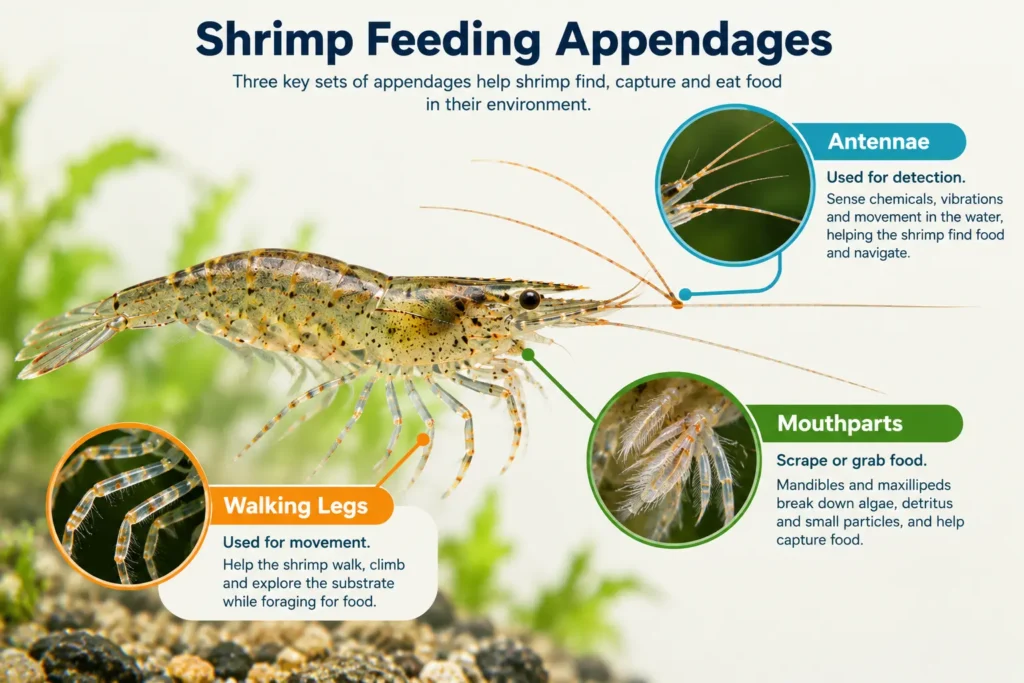
Shrimp use their antennae like little sensors. They wave them through the water to pick up smells and movement. Then they use their legs and mouthparts to grab, scrape, or pick apart food.
Some shrimp fan water toward their mouths to collect fine particles. Others crawl over rocks and plants, nibbling as they go. Many hunt at night, when small prey is less alert.
This flexibility matters. Wild-caught shrimp live in estuaries, reefs, muddy bays, and rocky areas. They need to be able to change what they eat based on what is around them.
Do Shrimp Eat Algae and Detritus?
Yes. Many shrimp eat algae. Many also eat detritus.
Detritus is not as gross as it sounds. It is mostly dead plant material, bits of decaying life, and the tiny organisms breaking it down. In a river, bay, or ocean, that material feeds a lot of animals.
In home tanks, cherry shrimp and other dwarf shrimp often nibble on soft algae and the thin film that grows on glass, rocks, and leaves. In the wild, shrimp over muddy bottoms may eat more decaying material. Shrimp near reefs may eat more algae and live prey.
Shrimp help clean up their environment. They break down material that would otherwise just sit there.
Do Shrimp Eat Fish Waste or Leftover Food?
Shrimp will eat leftover fish food. They may also pick at waste, but that is not their main job.
In an aquarium, shrimp often rush toward uneaten pellets, flakes, or bits of blanched vegetables. They clean up scraps before those scraps rot and affect water quality.
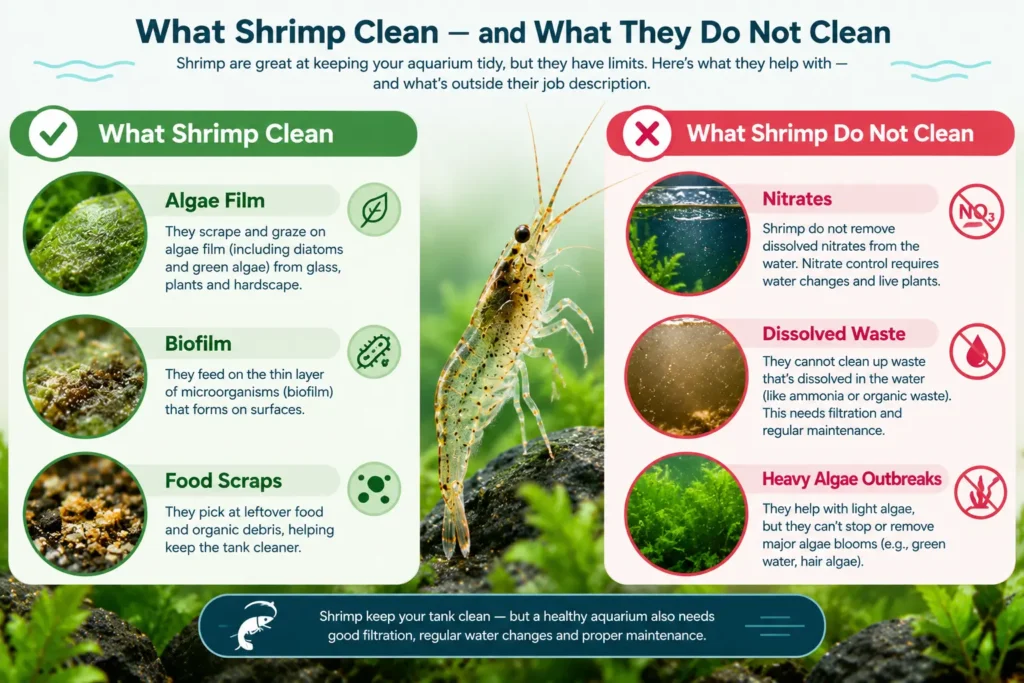
But shrimp cannot do everything. They do not remove dissolved waste. They do not lower nitrates. They cannot replace a filter or a water change.
If you keep shrimp, feed them properly. Give them shrimp pellets, algae wafers, and small pieces of blanched zucchini or spinach. Do not expect fish leftovers to keep them healthy.
Are All Shrimp Bottom Feeders?
No. Some shrimp spend much of their lives near the bottom. Others do not.
Baby shrimp often drift in open water and eat plankton. Some adults also rise higher at night to feed. Habitat changes their habits too. Pink, sidestripe, and humpy shrimp often live over mud. Spot and coonstripe shrimp are more often found around rocks, coral, and debris.
It is more accurate to say that many shrimp are bottom-dwelling omnivores. Calling every shrimp a bottom feeder oversimplifies things.
Are Shrimp Considered Scavengers?
Yes, many Shrimp and lobsters are scavengers. They will eat dead material when they find it. They also eat live algae, tiny animals, and microorganisms.
But a scavenger is not an animal that only eats garbage. Scavengers do an important job. They consume material that might otherwise build up.
Shrimp are opportunistic. If they find a worm, they may eat it. If they find a dead fish, they may eat that too. If algae is available, they will graze on it.
Many people think lobsters and shrimp are like the ocean’s cleanup crew, picking up harmful waste from the seafloor. But that doesn’t automatically make them unsafe to eat. In fact, some top predators, such as tuna, can contain higher levels of PCBs and mercury because it builds up as they eat smaller fish.
Do Aquarium Shrimp Clean the Tank?
Aquarium shrimp can help keep a tank looking tidy. They graze on algae, biofilm, dead plant matter, and leftover food.
They are good at soft algae and the thin film that forms on surfaces. They are not miracle workers. Thick hair algae, black beard algae, and heavy outbreaks usually need more than shrimp.
Think of them as helpers, not a cleaning service. You still need a good filter, sensible feeding, and regular water changes.
Are Farmed Shrimp Bad?
Farmed shrimp are not automatically bad. Much of the shrimp sold worldwide is farmed, and responsible farms can produce shrimp with less pressure on wild stocks.
The concern is not farming itself. It is poor farming practices. Some shrimp farmers use banned chemicals, or antibiotics, and the FDA can refuse imported shrimp shipments that contain prohibited drug contaminant.
The FDA does not approve antibiotics for shrimp farming, and imported shrimp with antibiotic residues can be rejected at the border. That does not mean every imported shrimp is contaminated. It means sourcing matters.adfg.alaska+1
Look for shrimp from reputable sellers. Certifications, country-of-origin labels, and trusted suppliers can help. If you want more control, choose shrimp from well-regulated fisheries or farms with clear sustainability standards.
Is it Safe to Eat Shrimp – Is Shrimp Healthy?
Yes. Shrimp can be safe and healthy when you buy it well, store it cold, and cook it properly.
Shrimp is high in protein and low in saturated fat. A 3-ounce raw portion of mixed shrimp provides about 11.6 grams of protein, along with selenium and vitamin B12. It is also relatively low in calories. consumerreports
The bigger food-safety issue is handling. Keep raw shrimp cold. Wash your hands, knives, and cutting boards after preparing it. Do not let raw shrimp touch ready-to-eat food.wlf.louisiana+1
Cook shrimp until the flesh turns firm, pearly, and opaque. The FDA recommends cooking most seafood to 145°F. If you do not have a thermometer, look for that opaque color and firm texture.wlf.louisiana+2
People with a shellfish allergy should not eat shrimp. For everyone else, the feeding habits of the animal matter far less than clean sourcing and proper cooking.
Frequently Asked Questions About Shrimp Feeding Habits
Do shrimp eat poop?
They may pick at it, but they do not mainly eat poop. They are more interested in algae, tiny organisms, decaying plants, and leftover food.
Do shrimp clean algae off glass?
Yes. Many aquarium shrimp graze soft algae and film from glass, plants, and decorations. They will not remove every kind of algae.
Are shrimp dirty animals?
No. “Bottom feeder” only describes where an animal finds food. It does not mean the animal is filthy.
Do shrimp eat dead fish?
Some do. If a shrimp finds a dead fish, it may scavenge it. That is normal behavior in the wild.
What should I feed aquarium shrimp?
Give them a mix of shrimp pellets, algae wafers, blanched vegetables, and whatever natural film grows in the tank. Remove uneaten food so it does not spoil the water.
Do shrimp only live on the ocean floor?
No. Shrimp live in estuaries, reefs, seagrass beds, muddy areas, and deeper water. Some also move up and down in the water column.
Conclusion
So, are shrimp bottom feeders? Often, yes. But that phrase does not tell the whole story.
Many shrimp feed near the ocean floor. They eat algae, dead plants, tiny animals, worms, and whatever else they can find. Some graze on rocks. Others sift particles from the water. Some rise higher to feed at night.
That does not make shrimp dirty. It makes them useful. They recycle organic material, eat scraps, and help keep aquatic systems moving. In a home tank, they can help with soft algae and leftover food, though they cannot replace proper care.
Shrimp can also be a healthy food when you choose it carefully and cook it well. They are high in protein and provide nutrients such as selenium and vitamin B12. The real question is not whether shrimp feed near the bottom. It is whether the shrimp came from clean sources and reached your plate safely.