
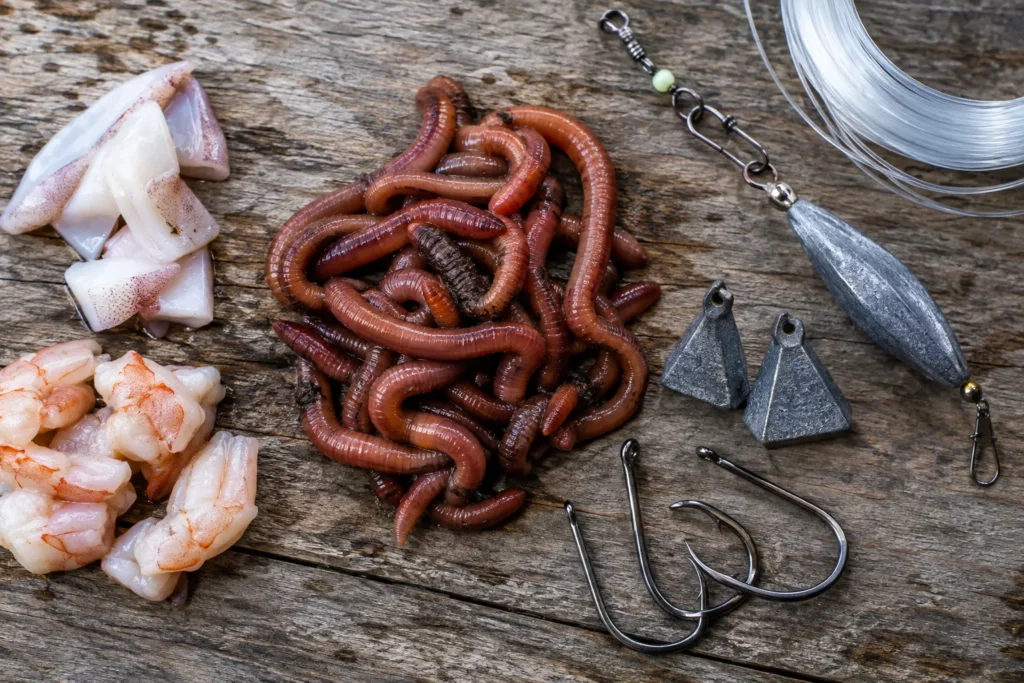
Can you use earthworms for sea fishing? You can use earthworms for sea fishing, particularly when targeting smaller inshore species such as flounder, croaker, and certain surf fish. Their natural scent and soft texture can attract hungry fish, although they usually work better in calm, shallow water than in strong surf.
Earthworms can attract several saltwater fish species, especially when you fish in coastal waters, estuaries, and shallow bays. But do saltwater fish prefer earthworms over familiar baits like shrimp, squid, and marine worms This guide explains which species bite earthworms, how to hook them, and when to choose other saltwater baits.
Ready to give earthworms a try on your next saltwater fishing trip? We’ll explore the best fishing conditions, effective rigs, bait presentation techniques, and practical tips to keep earthworms on your hook longer. You’ll also learn when earthworms make a smart bait choice and when shrimp, sandworms, or cut bait can deliver better results.
Can You Use Earthworms for Sea Fishing?
Can you use earthworms for sea fishing? Yes. Earthworms are a legitimate fishing bait in salt water, and live worms can attract fish through movement, scent, and a familiar worm-like shape. They work best close to shore, around docks, in estuaries, and wherever fish are used to feeding near muddy or sandy bottoms.
Earthworms are not a marine animal, though. A nightcrawler or red worm normally lives in damp soil, so seawater can weaken it faster than it weakens a bloodworm, ragworm, or lugworm. That does not make earthworms useless; it means you should use them soon after buying them, keep them cool and moist, and expect to rebait more often.
The key difference is habitat. Freshwater worms are familiar to trout, perch, carp, and catfish, while marine worms are part of the normal food chain for many coastal fish. Still, an earthworm’s wriggling action can trigger a bite even when it is not a fish’s usual meal.
Do Saltwater Fish Eat Earthworms?
Many saltwater fish will eat earthworms, particularly when they are hunting small food items near the bottom. Fish respond to bait through scent, movement, size, and presentation; an active worm gives off all three signals.
A lively earthworm can look like a small invertebrate or worm-like prey item. In estuaries and sheltered bays, rain runoff can also wash soil worms into the water, so some coastal fish may encounter them naturally.
Results depend on the species, water temperature, tide, and location. Earthworms may work very well one day and be ignored the next, especially when fish are focused on shrimp, crabs, clams, or small baitfish.
What Saltwater Fish Can You Catch With Earthworms?
Earthworms can catch a useful range of inshore fish. The exact species depends on where you fish, but the following are common targets.
| Fish | How earthworms can work |
|---|---|
| Flounder and fluke | Fish a whole nightcrawler slowly along the bottom; the dangling tail can encourage a strike. |
| Sea bass | Use a small piece or whole worm on a bottom rig, particularly around structure. |
| Striped bass | Small schoolie stripers may take worms, especially when fished near marsh edges or channel mouths. |
| Weakfish | Thread a worm onto a small jig or fish it on a bottom rig. |
| Speckled trout | Earthworms can work in southern inshore waters, especially around grass lines and tidal creeks. |
| Whiting, croaker, and spot | Small worm baits can attract these bottom feeders around sandy or muddy areas. |
| Sheepshead, black drum, and saltwater catfish | These species may take worms, although crab, shrimp, or cut bait is often more dependable. |
Pinfish and Small Baitfish
Pinfish, small perch-like fish, and other bait stealers often find earthworms quickly. They can be useful if you want live bait, but frustrating if you are trying to reach larger fish. Use a slightly larger hook or add a small piece of shrimp or squid to reduce constant nibbling.
Croaker and Other Bottom-Dwelling Fish
Croaker, spot, whiting, and similar fish feed close to the seabed. A small hook, enough weight to hold the bait near the bottom, and a fresh worm can produce steady action from a pier, beach, or boat.
Spot, Whiting, and Smaller Coastal Species
These fish often respond well to worm baits because the bait is easy to swallow and gives off movement. Keep the hook small enough for the fish to take it, but large enough to avoid deep-hooking tiny fish.
How to Use Earthworms for Sea Fishing
Use fresh, lively worms whenever possible. A worm that wriggles naturally attracts more attention than a soft, pale, or dried-out one.
- Choose fresh, active earthworms from a reputable bait shop or a clean, legal collection area.
- Keep them cool, moist, and shaded until you are ready to fish.
- Thread the hook through the worm’s collar, then push the point back into the body so it stays secure.
- Leave part of the tail free so it can wiggle in the current.
- Use a whole nightcrawler for flounder and weakfish; smaller garden worms suit smaller hooks and smaller fish.
- Rebait often in salt water, especially if crabs or small fish are stripping the worm.
Avoid cutting a nightcrawler into tiny pieces unless you are targeting very small fish. One experienced saltwater angler recommends using the whole worm because the extra movement helps draw strikes.
Best Hooks and Rigs for Earthworm Saltwater Fishing
Size 4–8 Hooks for Smaller Fish
A size 4 to size 8 hook is a good starting point for whiting, spot, croaker, small sea bass, and similar fish. The hook should match the worm’s size; a huge hook makes a small worm look unnatural and can prevent a clean hookup.
Paternoster and Two-Hook Bottom Rigs
A paternoster rig or two-hook bottom rig keeps the bait above snags and lets you test two depths at once. This is a practical choice from piers, jetties, and boats when fish are feeding near the seabed.
Fish-Finder Rigs for Surf and Pier Fishing
A fish-finder rig works well when you need to cast beyond the breakers or hold bait in current. Use enough weight to keep the rig on the bottom, but not so much that the worm cannot move naturally.
A simple setup is a size 4–8 hook, a small sinker or fish-finder slider, and a 12–24 inch leader. Add bait elastic if the worm keeps sliding down the hook.
Where Should You Fish With Earthworms in Saltwater?
Earthworms usually perform best in sheltered, inshore water rather than rough open-ocean conditions.
- Piers and docks: Fish close to pilings, shadow lines, and structure where small fish gather.
- Beaches and sandy bottoms: Use a fish-finder rig and cast into troughs, cuts, or areas just beyond the first sandbar.
- Estuaries and tidal creeks: These are often the best places to try garden worms because freshwater input and runoff can make the environment more familiar to them.
- Inshore channels and shallow coastal water: Drift or slowly retrieve a worm-tipped jig near the bottom.
A boat, kayak, or shore angler can all use this technique. The best spot is often where current brings food past a drop-off, channel edge, or muddy flat.
Are Earthworms Better Than Saltwater Fishing Baits?
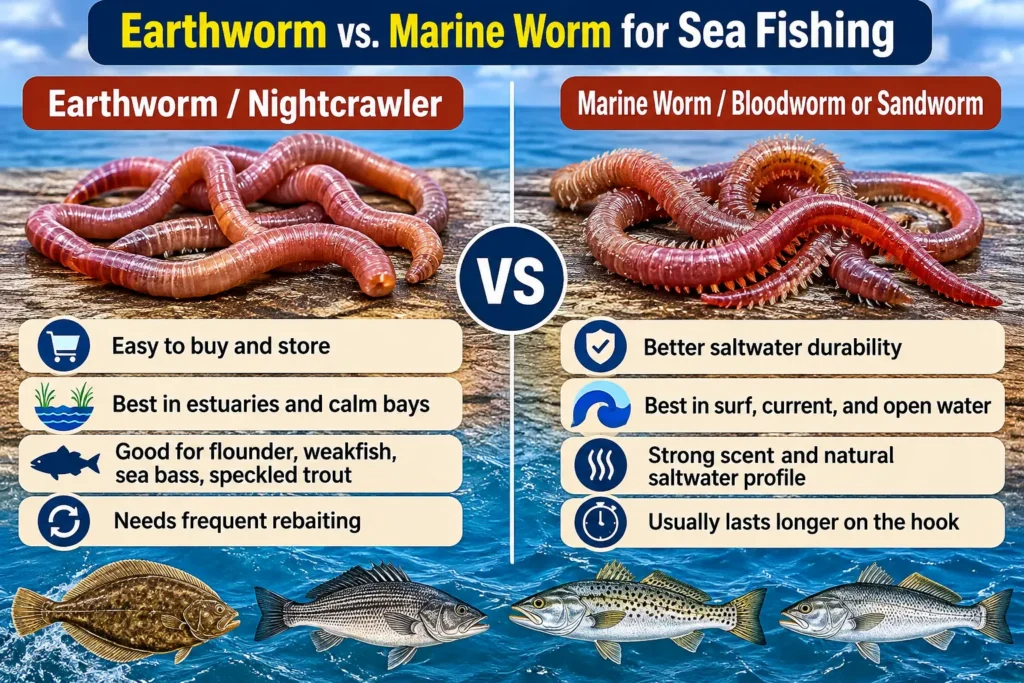
Earthworms are worth carrying, but they are not always the best worms for sea fishing. Marine worms generally last longer, hold up better in current, and match the natural prey of more saltwater species.
| Bait | Strengths | Best use |
|---|---|---|
| Earthworms / nightcrawlers | Cheap, easy to find, lively, effective in bays and estuaries | Flounder, weakfish, small sea bass, speckled trout, whiting. |
| Bloodworms | Strong scent and a natural saltwater profile | Bottom fish, pier fishing, and mixed-species days. |
| Sandworms / ragworms | Tough, active, and versatile | Surf, current, boat fishing, and larger fish. |
| Lugworms | Large, durable, and effective for bottom fishing | Cod, flatfish, whiting, and heavier surf conditions. |
| Shrimp | Strong scent and broad appeal | Many inshore species, especially around structure. |
| Squid or cut bait | Tough and scent-rich | Larger fish, surf fishing, and longer soak times. |
A worm-and-shrimp cocktail can be a useful experiment when fish are picky. Thread a piece of shrimp onto the hook first, then add a worm to add movement and scent.
Can You Use Freshwater Earthworms in Saltwater?
Yes, you can use freshwater worms in salt water, but they will not survive as long as marine worms. Salt draws moisture from an earthworm’s body, so it may become limp, inactive, or begin to break apart after a short time.
Nightcrawlers tend to be the better freshwater option because they are larger, tougher, and easier to hook securely. Smaller red worms can work for panfish-sized saltwater species, but they may come off the hook quickly in current or around aggressive bait stealers. thefisherman
If you only have garden worms, fish them promptly and keep the container cool. If you plan a full day of surf fishing or boat fishing, buy bloodworms, sandworms, or lugworms instead.
Tips for Keeping Earthworms Alive and Effective for Sea Fishing
- Store worms in a ventilated container with moist bedding, such as damp shredded newspaper or soil.
- Keep the container cool, dark, and out of direct sun; a refrigerator or cooler works well.
- Do not soak the bedding; damp, not wet, bedding prevents drowning and drying.
- Keep the container out of a hot car and away from direct sunlight.
- Replace dried-out, damaged, or dead worms before casting.
- Take only what you need and release unused worms responsibly; common bait worms can spread into new habitats. dnr.state.mn
Frequently Asked Questions About Using Earthworms for Sea Fishing
Can earthworms catch saltwater fish?
Yes. Earthworms can catch saltwater fish, especially in bays, estuaries, and around piers. Flounder, sea bass, weakfish, striped bass, speckled trout, whiting, and croaker are all realistic targets.
Do sea bass eat earthworms?
Sea bass can eat earthworms, though they often prefer clams, squid, shrimp, or crab. Try a worm when those baits are unavailable or when fish are feeding lightly.
Can you use nightcrawlers for saltwater fishing?
Yes. Nightcrawlers are one of the better earthworm choices for sea fishing because they are larger and easier to keep on a hook. They can work well for flounder, weakfish, sea bass, and schoolie stripers.
Are earthworms good bait for surf fishing?
They can be, but they are not the most durable surf bait. Waves, current, crabs, and small fish can strip an earthworm quickly. A sandworm, lugworm, squid strip, or piece of cut bait is usually a better choice for rough surf.
Do earthworms work better than shrimp for sea fishing?
Usually, no. Shrimp has a stronger scent profile and generally stays on the hook better in salt water. Earthworms are still worth trying in calm estuaries, around docks, or when targeting flounder and weakfish.
Can you use earthworms for fishing?
Yes. Earthworms are one of the most widely used natural fishing baits. They work in freshwater and can also produce fish in saltwater, particularly close to shore.
Can I use normal garden worms for sea fishing?
Yes. Normal garden worms can catch saltwater fish, but they are less salt-tolerant than marine worms. Use them soon after collection or purchase and keep them cool and moist.
Can I catch a speckled sea trout on an earthworm?
Yes. Speckled trout have been caught on earthworms, especially in southern inshore waters. A small piece of worm on a jig or a whole worm under a float can be worth testing. thefisherman
Can you catch fish with earth worms in saltwater?
Yes. Live worms can attract fish through scent and movement, and anglers have caught a variety of inshore saltwater species with them.
Do saltwater fish eat worms?
Many do. Marine worms are a normal food source for many coastal fish, and some fish will also take freshwater earthworms when the bait moves naturally.
Why are earthworms used as bait?
Anglers use earthworms because they are easy to obtain, lively, inexpensive, and appealing to many fish. Their wriggling motion and natural scent can trigger a bite.
Do earthworms work for saltwater fish?
Yes, but their effectiveness varies by species, location, and conditions. They are most useful in sheltered inshore water and around structure rather than in heavy surf.
What lure was banned from bass tournaments?
The Alabama Rig was restricted in major B.A.S.S. bass tournaments; anglers could use only one lure rather than its multi-bait umbrella-style setup.
Do earthworms regrow if cut?
Sometimes. Many earthworms can regrow a lost tail, but the tail end usually cannot grow a new head, so cutting one in half does not create two worms.
What are the disadvantages of earthworms?
As fishing bait, earthworms require cool, moist storage and can deteriorate quickly in seawater, making frequent rebaiting necessary. Unused worms can also spread invasive species that harm native habitats, so never release leftover bait into the environment after fishing.
Conclusion
Can you use earthworms for sea fishing? Yes—and they can be a surprisingly effective bait when you match them to the right water and fish. Nightcrawlers and garden worms work best in bays, estuaries, tidal creeks, and around piers, where flounder, weakfish, sea bass, speckled trout, whiting, and croaker may be hunting near the bottom.
Use a fresh, lively worm, thread it securely onto the hook, and leave enough tail free to wriggle. A small bottom rig, jig, or fish-finder setup gives the bait a natural presentation. For rough surf, strong current, or larger fish, choose bloodworms, sandworms, lugworms, shrimp, or cut bait instead.
Earthworms should not replace every saltwater bait, but they deserve a place in your tackle bag. They are affordable, easy to store, and useful when you want to experiment close to shore. Try them in calm water, watch how the fish respond, and adjust your hook size, rig, and presentation until you find what works.
You might also like:
- Can You Use Mealworms For Fishing? (The Whole Story)
- How Long Do Maggots Live For Fishing? (Solved & Explained)
- 10 Best Rubber Worms For Largemouth Bass Fishing (That Work)
- Bass Fishing With Live Worms TIPS: (Outstanding Results!)
- Do Fish Bite In Cold Weather! 17 Quick Answers (Must-Read)
- How Deep Do Walleye Go In The Summer? 9 Things (Should-Know)