
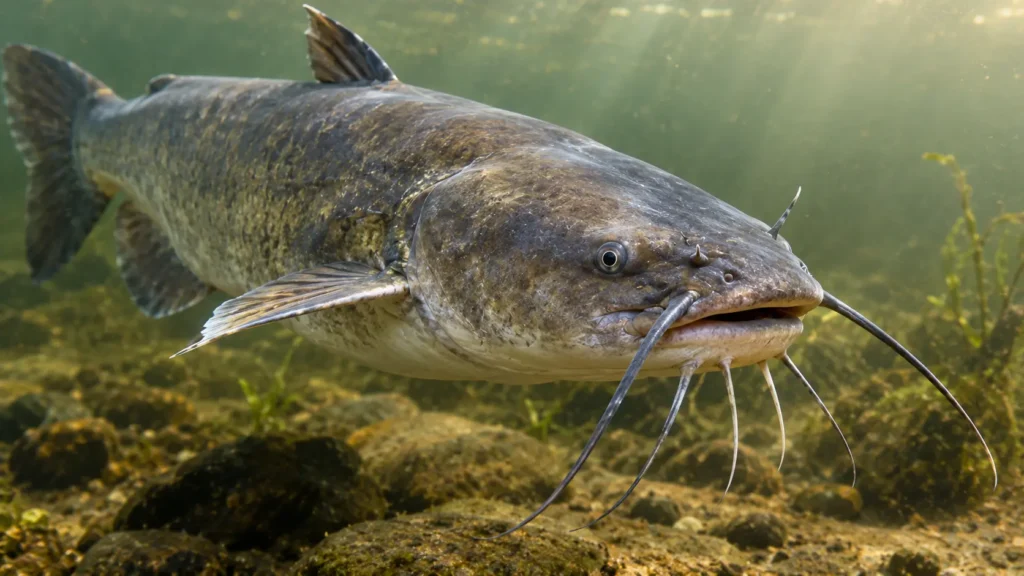
Does Catfish Have Scales? catfish do not have scales. Instead, almost all catfish species feature smooth, scaleless skin covered in a protective layer of mucus, while some species of catfish possess tough, bony armor plates called dermal scutes.
If you have ever caught a channel catfish or watched a pleco in an aquarium, you might notice their skin looks completely different from a bass or a salmon. Understanding catfish skin structure helps anglers handle them properly and reveals how these unique creatures thrive in underwater environments worldwide.
Do Catfish Have Scales or Smooth Skin?
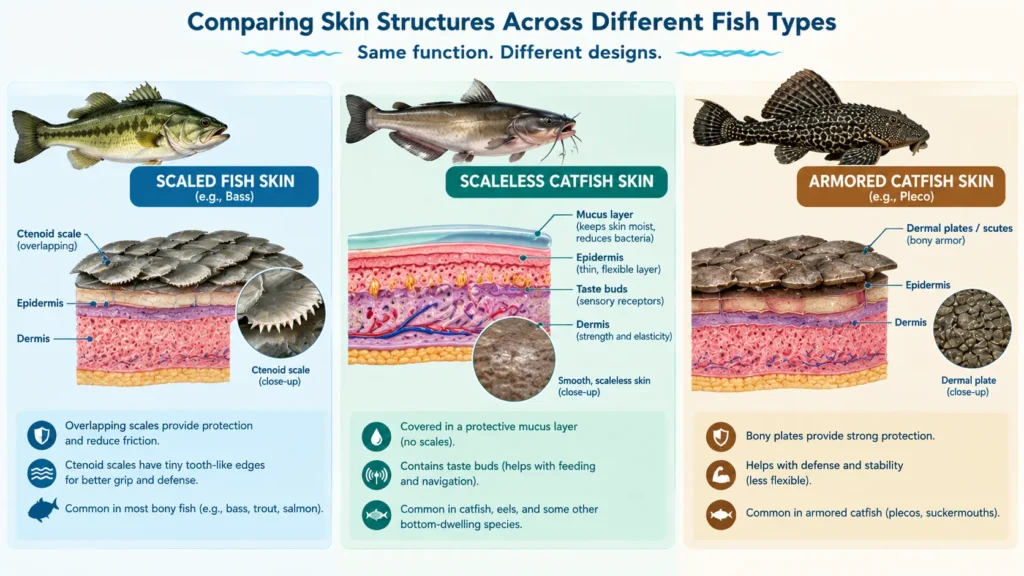
When examining members of the order Siluriformes, the short answer is that true scales are missing entirely. Unlike bluegills or trout, which feature overlapping cycloid or ctenoid scales, catfish boast smooth skin layered over thick connective tissue.
This absence of scales gives catfish a rubbery feel. Their skin functions dynamic living tissue rather than a rigid outer shell.
Because their skin is exposed directly to the surrounding water, catfish rely on specialized glandular secretions to maintain healthy skin barrier function and ward off harmful parasites.
Why Don’t Catfish Have Scales? Scientific classification
Evolutionary history explains why catfish dropped scales millions of years ago. Sacrificing heavy outer scales offered early ancestral catfish distinct advantages in bottom-dwelling environments:
- Flexibility and Speed: Smooth skin allows catfish to wiggle through tight crevices, dense vegetation, and muddy riverbeds without getting snagged.
- Cutaneous Respiration: Smooth skin allows gas exchange directly through the outer tissue layer, helping catfish survive in low-oxygen waters.
- Sensory Density: Without rigid scales blocking skin cells, catfish developed thousands of external sensory receptors across their body surface.
How Does Catfish Skin Protect the Fish?
Without armor-like scales, catfish rely on an advanced dual-protection system: a thick dermis layer and an active slime layer.
The inner layer of skin contains dense collagen fibers that resist punctures from sharp underwater debris. Externally, specialized goblet cells produce a continuous coating of mucus. This coat seals out microbes, prevents water imbalance, and speeds up healing when minor scrapes occur.
What Is the Slime on a Catfish?
The slippery coating on a catfish is a complex glycoprotein mucus matrix. This slime layer performs several vital biological tasks:
- Hydrodynamic Efficiency: The slippery coating reduces water friction, allowing catfish to swim with minimal effort.
- Pathogen Defense: Mucus contains enzymes, antibodies, and antimicrobial peptides that kill bacteria and fungi on contact.
- Chemical Communication: Catfish release chemical signals into their slime coat to communicate stress or reproductive readiness to nearby fish.
Do All Catfish Species Have Scaleless Skin?
While no catfish species possesses true scales, not all catfish have soft, naked skin. Catfish species identification reveals a wide spectrum of body coverings across families:
| Catfish Group / Family | Skin Type | Example Species |
| Ictaluridae (North American Catfish) | Completely scaleless, thick mucus coat | Channel Catfish, Blue Catfish, Flathead Catfish |
| Siluridae (Eurasian Catfish) | Smooth, naked skin | Wels Catfish |
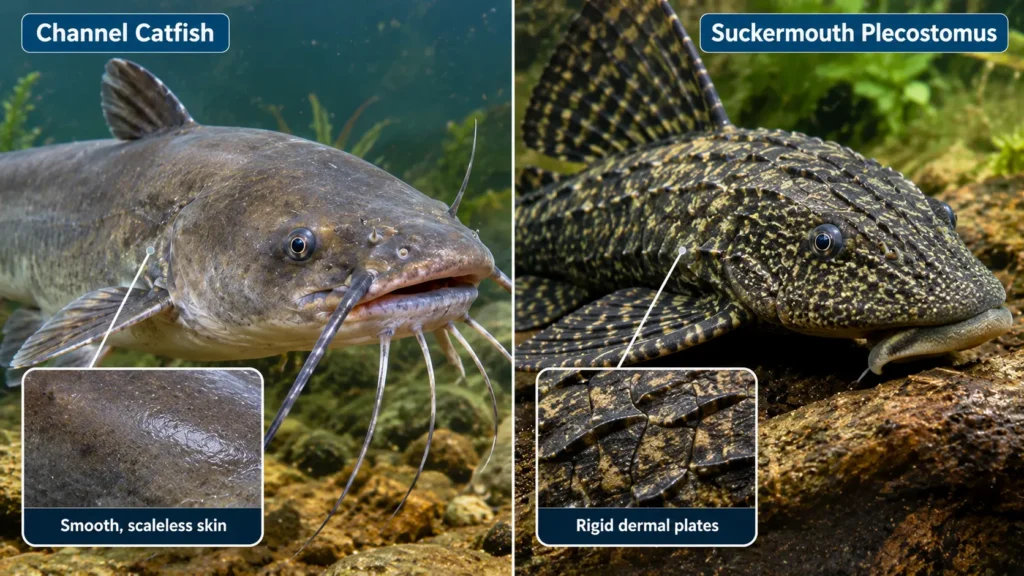
| Loricariidae (Armored Catfish) | Bony dermal plates (scutes) | Suckermouth Catfish (Plecostomus) |
| Doradidae (Thorny Catfish) | Lateral rows of spiny plates | Striped Raphael Catfish |
Do Catfish Have Bony Plates Instead of Scales?
Yes, several catfish families feature bony plates called dermal scutes instead of flexible scales.
These plates derive from modified bone tissue inside the deeper skin layer rather than the epidermal scale structures seen in typical bony fish. Armored catfish use these rigid plates as physical shields against aggressive predators in fast-flowing South American rivers. While these plates feel hard and rough, scientists classify them separately from true scales.
How Do Catfish Whiskers Help Them Survive?
A fundamental aspect of catfish anatomy is their barbels, commonly called whiskers. These fleshy tentacles surround the mouth and act as external sensory organs.
Catfish barbels feature thousands of taste buds and chemical receptors. Because catfish often hunt in murky, dark waters where vision is useless, their barbels sweep the bottom to detect tiny food signals, chemical scent trails, and electrical impulses from prey hiding in the mud.
Are Catfish More Slippery Than Other Fish?
Catfish are notably more slippery than most scaled game fish. Because they lack overlapping scales to hold water or offer finger traction, their heavy mucus production creates a slick surface.
This extreme slipperiness acts as an anti-predator adaptation. When a larger predator attacks, the slick skin allows the catfish to slide straight out of the predator’s jaws. For anglers, this high slipperiness makes secure handling a unique challenge.
How Should You Handle a Catfish Safely?
Applying proper catfish fishing tips protects both the angler and the fish. Catfish possess sharp, rigid spines on their dorsal and pectoral fins that lock into place when the fish feels threatened.
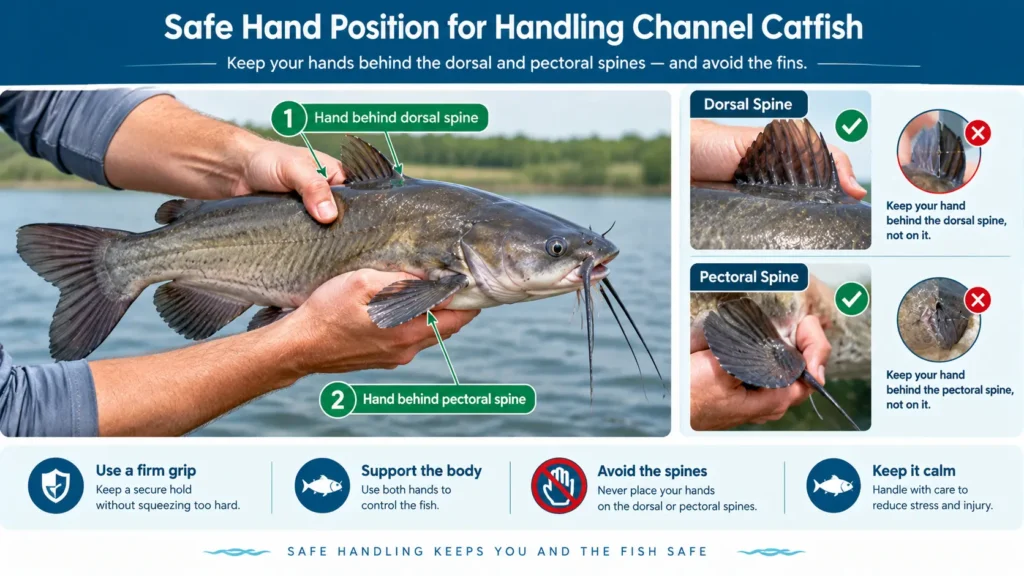
Essential Steps for Safe Handling:
- Wet Your Hands First: Never hold a catfish with dry hands or a dry towel, as this strips away their vital protective slime layer.
- Avoid the Fin Spines: Slide your dominant hand up from the belly, placing your thumb behind one pectoral spine and your index/middle fingers behind the opposing pectoral spine.
- Never Grab by the Whiskers: Barbels are sensitive sensory organs; pulling them hurts the fish.
- Use a Lip-Gripping Tool for Large Fish: For heavy blue or flathead catfish, use a cushioned lip gripper to support their weight safely.
How Are Catfish Different From Fish With Scales?
Comparing catfish to scaled species highlights key structural and functional differences:
- Outer Barrier: Scaled fish rely on overlapping bone-like plates; catfish rely on thick dermis tissue and heavy mucus or dermal scutes.
- Cleaning and Preparation: Scaled fish require descaling before cooking, whereas catfish must be skinned using specialized skinning pliers prior to culinary preparation.
- Tactile Sensing: Catfish possess taste receptors across their entire outer body surface, allowing them to “taste” their surroundings on contact—a capability scaled fish lack.
Catfish Anatomy and Species Identification FAQs
Can catfish sting you with their whiskers?
No, catfish whiskers (barbels) are completely soft and harmless. They contain no venom or stings. Painful pricks come from the sharp, rigid spines located on the dorsal and pectoral fins.
Why do some religious dietary rules ban catfish?
Certain religious texts, such as dietary laws in Leviticus, require aquatic animals to have both fins and scales to be considered kosher. Because catfish lack true scales, they are excluded under these specific guidelines.
Do young catfish have scales that fall off later?
No. Catfish hatch without scales and remain scaleless throughout their entire lifecycle.
Conclusion
Understanding the structure of catfish skin resolves the question of does catfish have scales once and for all. While true scales are missing across the entire order, catfish have evolved remarkably effective alternatives, ranging from heavy protective slime coatings to tough dermal armor plates.
This unique skin structure, paired with sensory barbels and defensive fin spines, makes catfish exceptionally resilient underwater creatures. Whether you are an angler learning how to handle a slick catch safely or a curious nature enthusiast, recognizing these unique biological adaptations deepens your appreciation for these versatile fish.
Recommended posts
- Does Tuna Fish Have Scales and Fins? Facts Explained