
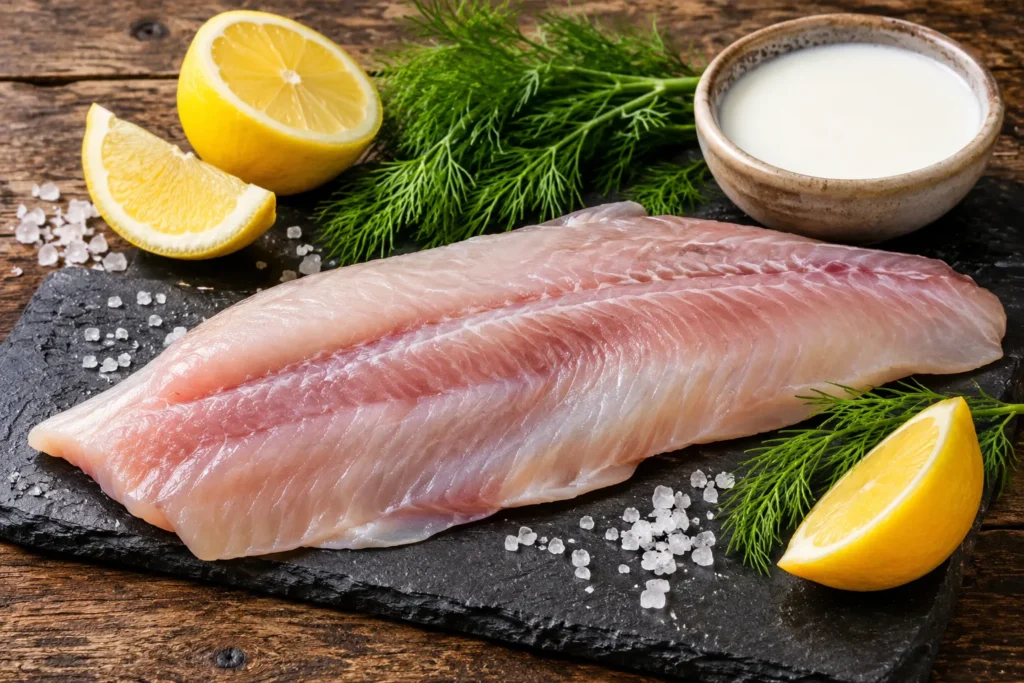
How to get muddy taste out of catfish? To get muddy taste out of catfish, trim the dark lateral-line meat and excess fat, keep the fish cold after catching it, and soak the fillets in milk or buttermilk for 30–60 minutes before cooking.
A strong muddy flavor often comes from natural compounds in the water—not dirt on the fish—so proper cleaning and flavor-focused cooking matter as much as soaking.
Catfish can taste clean, mild, and slightly sweet when handled well. If yours tastes earthy, musty, or like pond water, these seven tips will help you make catfish taste better without masking it under heavy seasoning.
Why Does Catfish Taste Muddy?
Catfish do not usually taste muddy because they are “dirty.” The flavor mainly comes from geosmin and 2-methylisoborneol (MIB)—natural compounds produced by algae, bacteria, and other microorganisms in ponds, lakes, and slow-moving fresh water. Fish absorb these compounds into their flesh, where they create an earthy or musty aroma and flavor.
These compounds can be present even in very small amounts. USDA research notes that consumers can detect geosmin at about 0.7 parts per billion, which explains why one fresh water catfish may taste noticeably stronger than another from the same pond.
Other factors can make the problem worse:
- Warm water and algae-heavy ponds
- Fish held on a stringer for hours
- Delayed cleaning or poor icing
- Leaving the skin, belly fat, bloodline, or dark meat on the fillet
- Overcooking, which can intensify fishy taste
How to Get Muddy Taste Out of Catfish – 7 Easy Tips
Use these steps in order for the best results. If you already have fillets in the refrigerator, start with tip 1 and tip 2.
1. Remove the Skin and Dark Meat
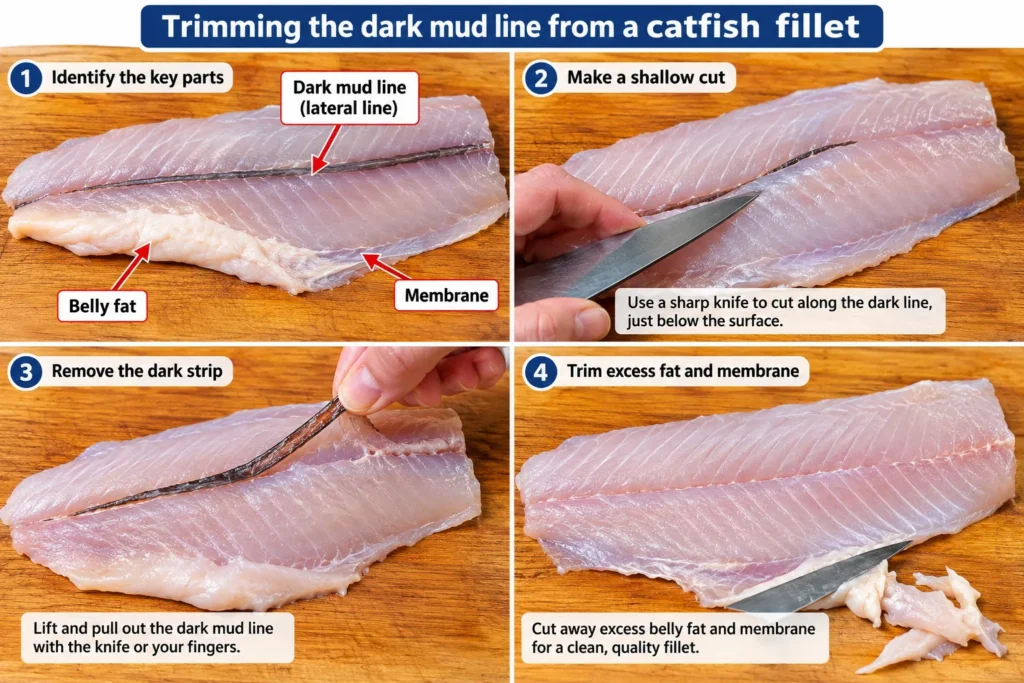
Skin the catfish before filleting if possible. The skin, slime, belly fat, and dark red-brown muscle along the lateral line can carry stronger flavors than the white meat.
After you fillet the fish, look for:
- The dark “mud line” or bloodline running through the fillet
- Yellowish belly fat
- Gray, red, or brown tissue
- Any thin membrane on the skin side
Trim these areas away with a sharp fillet knife. Removing the dark meat and fat is one of the most effective ways to reduce a fishy or muddy taste before you soak or cook the catfish.
2. Soak Catfish in Milk or Buttermilk
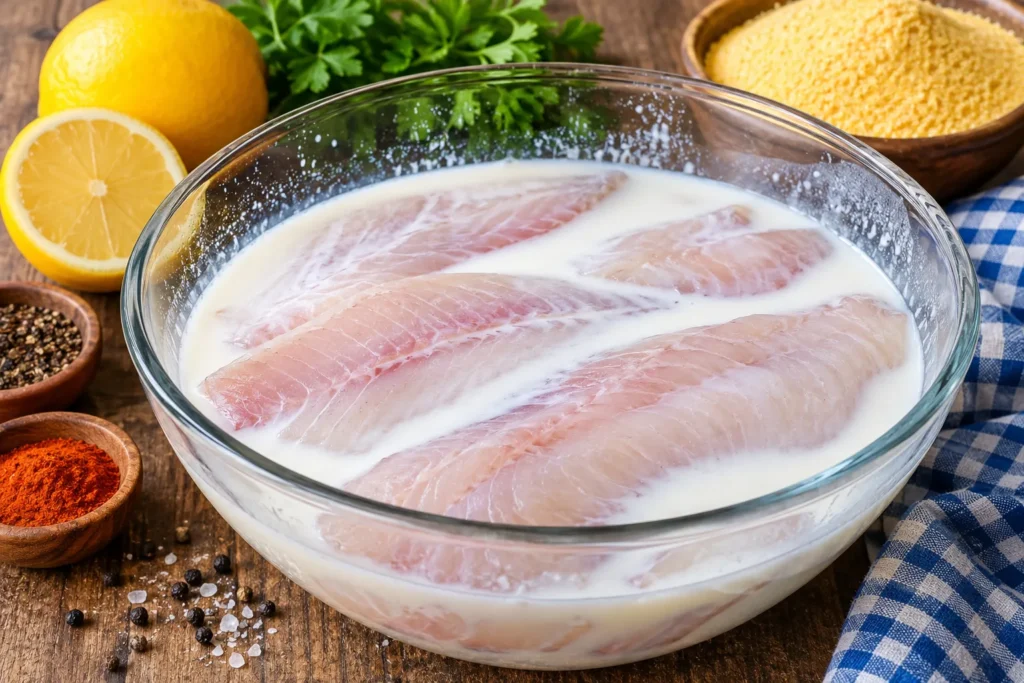
Soaking catfish in milk is a simple, reliable way to soften lingering fishy or earthy flavors. Place the catfish fillets in a bowl, cover them with cold whole milk or buttermilk, and refrigerate them for 30–60 minutes.
Buttermilk works especially well if you plan to fry the fish. It adds a mild tang, helps a cornmeal coating stick, and gives fried catfish a better crust. For a longer soak, keep the fish refrigerated and avoid leaving it at room temperature.
Quick method:
- Pat the fillets dry.
- Cover them completely with cold milk or buttermilk.
- Refrigerate for 30–60 minutes.
- Remove, pat dry, season, and cook.
3. Try a Saltwater or Vinegar Soak
If you do not have milk, use a light saltwater soak. Dissolve about 1 tablespoon of salt per quart of cold water, add the fillets, and refrigerate for 30–60 minutes. Rinse briefly in cold water and pat dry before seasoning.
A vinegar soak is another option, but use it carefully. Add 1–2 tablespoons of vinegar to a bowl of cold water, soak the fillets for only 15–20 minutes, then rinse and pat dry. Too much vinegar or too long a soak can make the texture mushy or give the fish a sharp, pickled flavor.
For extra flavor, add lemon juice, black pepper, paprika, garlic powder, or Cajun spice after soaking—not during the saltwater soak.
4. Bleed and Ice the Fish Immediately
If you catch your own catfish, bleed it right away. Cut through the gills or the artery near the tail, let the fish bleed out for about 10 minutes, then move it to a cooler filled with ice.
An ice slurry—ice mixed with a little cold water—chills fish faster than ice alone. Keeping catfish cold slows spoilage and helps preserve a cleaner, milder fish taste.
This step matters most for wild-caught catfish. A fish left in warm water for hours can develop off-flavors that no marinade can fully fix.
5. Rinse Fillets in Cold Water—Then Dry Them
After trimming, rinse the catfish fillets under cold water until the water runs clear. This helps remove loose blood, slime, and surface fat.
Then pat the fillets dry with paper towels. Dry fish seasons better, browns better, and holds a batter or cornmeal coating more evenly. Avoid letting fillets sit in a puddle of meltwater in the cooler or refrigerator.
6. Marinate Briefly for Flavor
A short marinade can make catfish taste better, especially if the fillets still have a mild earthy note. Use lemon juice, hot sauce, Worcestershire sauce, garlic, onion powder, paprika, and a little oil.
Keep the marinating time short—about 20–30 minutes. Acidic ingredients such as lemon juice and vinegar can change the texture if you leave fish in them too long.
7. Cook It Hot and Do Not Overcook
High heat helps fried catfish develop a crisp coating and limits sogginess. For frying, heat oil to about 350°F, use a cornmeal or seasoned-flour coating, and fry fillets until golden and cooked through.
Catfish is safe to eat when it reaches an internal temperature of 145°F. Overcooking dries the meat and can make any remaining fishy flavor more noticeable.
Grilling also works well for thicker catfish steaks. Brush the fish with oil, season boldly, and grill over medium-high heat until it flakes easily.
How to Clean Catfish for Better Flavor?
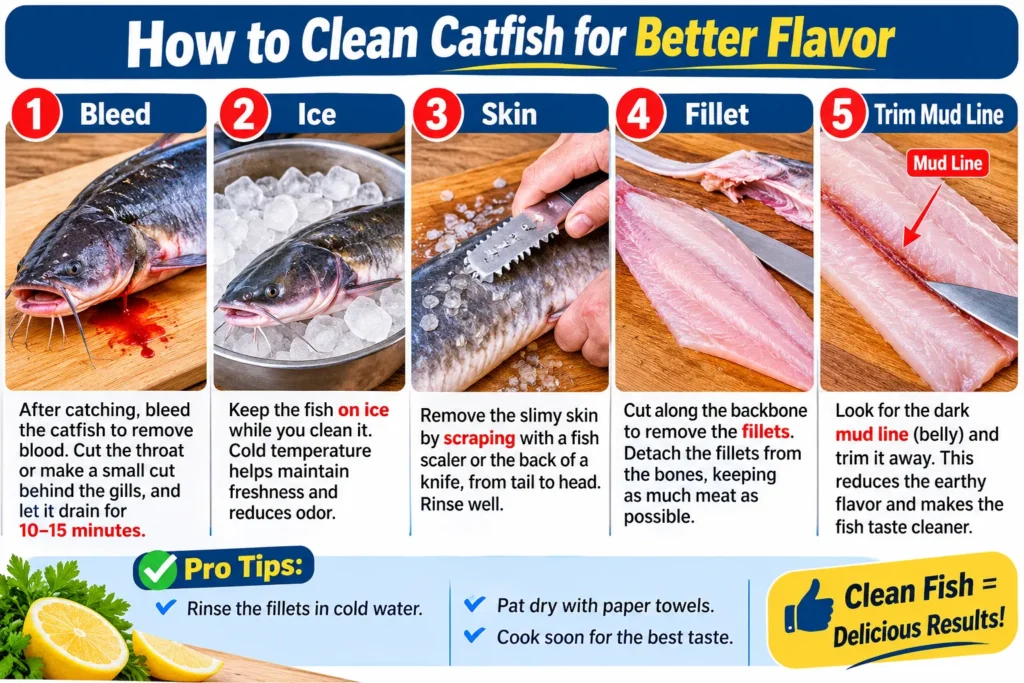
Good cleaning starts before the fillet knife touches the fish.
- Bleed the fish immediately after landing it.
- Keep it cold in an ice slurry.
- Skin the catfish before filleting.
- Fillet along the spine, working carefully around the ribs.
- Trim the lateral line, belly fat, and membrane.
- Rinse with cold water and pat dry.
- Cook or refrigerate promptly.
The lateral line—sometimes called the mud line—is especially important to remove. It is darker, oilier muscle that can taste stronger than the rest of the fillet.
Does the Water Where Catfish Live Affect Their Taste?
Yes. Water quality has a major effect on flavor. Catfish from algae-rich ponds, warm shallow water, or slow-moving freshwater can absorb more geosmin and MIB than fish raised in cleaner, well-managed farm systems.
Farm-raised catfish often tastes more consistent because producers can manage water conditions and, when needed, move fish into cleaner water before harvest. This process, called depuration, allows off-flavor compounds to decline over time.
Wild catfish from a muddy pond may still taste earthy even after excellent cleaning. In that case, use a buttermilk soak, bold seasoning, and a crisp fried coating to make the fish more enjoyable.
Best Ways to Cook Catfish Without a Muddy Taste
The best cooking method depends on how strong the flavor is.
| Method | Why it works | Best for |
|---|---|---|
| Fried catfish | Cornmeal coating, hot oil, and spice create a crisp, flavorful crust | Fillets with a mild muddy note |
| Blackened catfish | Bold spice and high heat add strong savory flavor | Thicker fillets or steaks |
| Grilled catfish | Smoke, marinade, and charring balance earthy flavors | Firm fillets or steaks |
| Baked catfish | Simple and lower-fat, but less effective at covering strong off-flavors | Clean-tasting farm-raised fish |
| Catfish tacos | Citrus, cabbage, salsa, and spice distract from mild earthiness | Smaller fillets |
For fried catfish, soak the fillets in buttermilk, dredge them in seasoned cornmeal, and fry at 350°F until crisp. For grilled catfish, use a lemon-and-spice marinade and cook over direct heat just until the flesh flakes. If you don’t love it, make fish cakes.
Can You Eat Catfish That Tastes Muddy?
Usually, yes—if the fish is fresh, properly handled, and fully cooked. A muddy or earthy taste is generally a flavor issue, not automatically a safety issue. The compounds responsible, geosmin and MIB, occur naturally in aquatic environments.
Do not eat fish that smells rotten, sour, ammonia-like, or unusually strong after cooking. Also avoid fish from water with posted contamination warnings, and follow local advisories for wild-caught fish.
FAQs About Removing Muddy Taste From Catfish
How do you get the muddy taste out of catfish?
To reduce the muddy taste, trim the dark lateral-line meat and fat, rinse the fillets in cold water, then soak them in milk, salt water, or buttermilk for 30–60 minutes. Cook the fish hot and avoid overcooking.
How do you remove muddy taste from catfish without buttermilk?
To get rid pf the bad taste, use a light saltwater soak for 30–60 minutes or a brief vinegar-water soak for 15–20 minutes. Rinse, pat dry, season well, and cook with a cornmeal coating or bold spices.
Why does my catfish taste like dirt?
It likely absorbed geosmin or MIB from algae, bacteria, or sediment in the water. These compounds create an earthy, musty flavor even when the fish is clean.
Does soaking catfish in milk really work?
It can help. Milk and buttermilk do not remove every off-flavor compound, but a 30–60 minute soak can reduce lingering fishy or muddy notes and improve the overall flavor.
Should you rinse catfish before cooking?
A quick rinse in cold water after trimming is common for wild-caught catfish. Pat the fillets dry afterward so seasoning and coating stick properly. Cooking to 145°F is what makes the fish safe to eat.
How long should you soak catfish in buttermilk?
Soak catfish fillets for 30 minutes to 1 hour for a noticeable improvement. If you soak longer, keep the fish in the refrigerator; some cooks go up to several hours, but longer is not always better.
Does bleeding catfish improve the taste?
Many anglers and state wildlife resources recommend bleeding catfish immediately after capture because it can preserve meat quality and improve taste. It also helps prevent blood from darkening the fillets.
Can you fix a very muddy catfish?
You can improve it, but you may not eliminate a strong off-flavor. Trim aggressively, soak in buttermilk, use a bold coating or marinade, and fry or grill the fish. If it still tastes unpleasant, choose a different fish next time.
What makes catfish taste better?
Fresh handling, fast icing, thorough trimming, a short milk or buttermilk soak, balanced seasoning, and proper cooking temperature all make catfish taste better. Clean-tasting fish needs less masking than fish with a strong earthy flavor.
How to remove dirt taste from tilapia?
Rinse tilapia fillets in cold water, pat them dry, and soak them in milk or buttermilk for 20–30 minutes. Then season with lemon juice, garlic, paprika, or Cajun spice and cook until the internal temperature reaches 145°F. Avoid overcooking, which can make any fishy or earthy taste stronger.
Does catfish taste like cod?
No. Catfish tastes sweeter, richer, and slightly earthier than cod. Cod is leaner, flakier, and has a cleaner, more delicate flavor, while catfish has a denser texture and a mild but more distinctive freshwater taste.
Conclusion
How to remove the fish taste out of catfish? Learning how to get muddy taste out of catfish comes down to handling the fish well and treating the fillets before cooking. Bleed and ice a fresh catch quickly, skin it, remove the dark mud line and belly fat, rinse the fillets in cold water, and soak them in milk or buttermilk for 30–60 minutes. Those simple steps can turn an earthy, fishy fillet into a much cleaner-tasting meal.
Remember that a muddy taste often starts in the water, not on the fish. Geosmin and MIB are natural compounds that catfish absorb from ponds and freshwater systems, so soaking helps but cannot always erase a strong flavor completely. Use a crisp cornmeal coating, lemon, spice, and high heat to make fried catfish taste better. With the right cleaning, soaking, and cooking method, you can enjoy mild, delicious catfish instead of throwing away a good catch.
Recommended posts
- Does Catfish Have Bones in It? (Filleting a Catfish FAQ)
- What Does Catfish Taste Like? – Tastes Like Chicken Or (Not)
- Does Catfish Have Scales? The Surprising Answer