
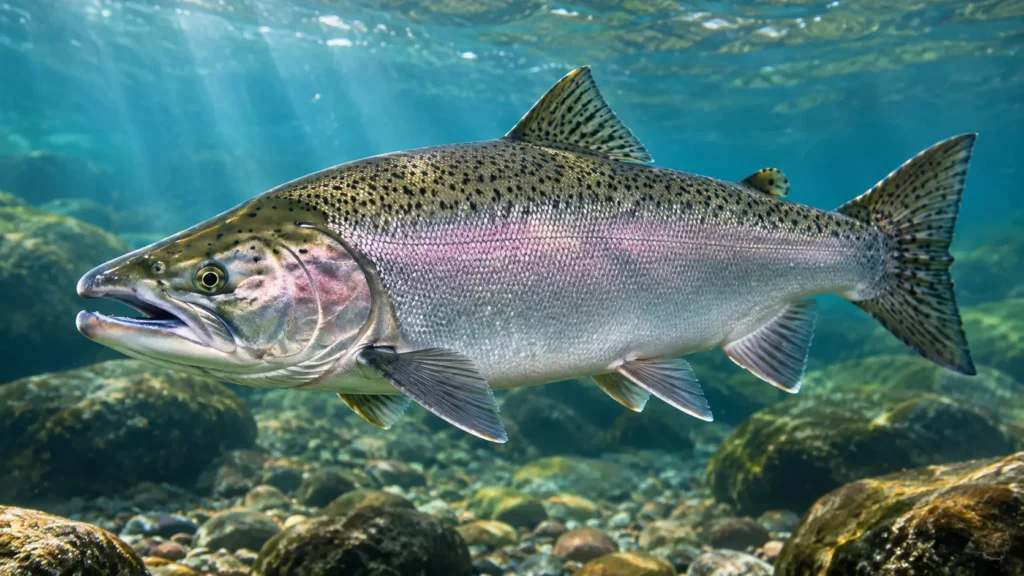
Yes, does salmon have scales and fins is a common question, and the straightforward answer is that salmon possess both overlapping scales and a complete set of eight distinct fins.
When you look at a fresh salmon, its body is covered in tiny, flexible scales protected by a slimy mucus layer, while its powerful fins help it navigate rushing rivers and deep ocean currents.
Understanding salmon anatomy gives you a better appreciation for how these remarkable fish survive and swim. Whether you are prepping a fresh fillet in the kitchen or studying marine biology, knowing how their skin, scales, and fins work together answers a lot of everyday seafood questions.
Does Salmon Have Scales and Fins?
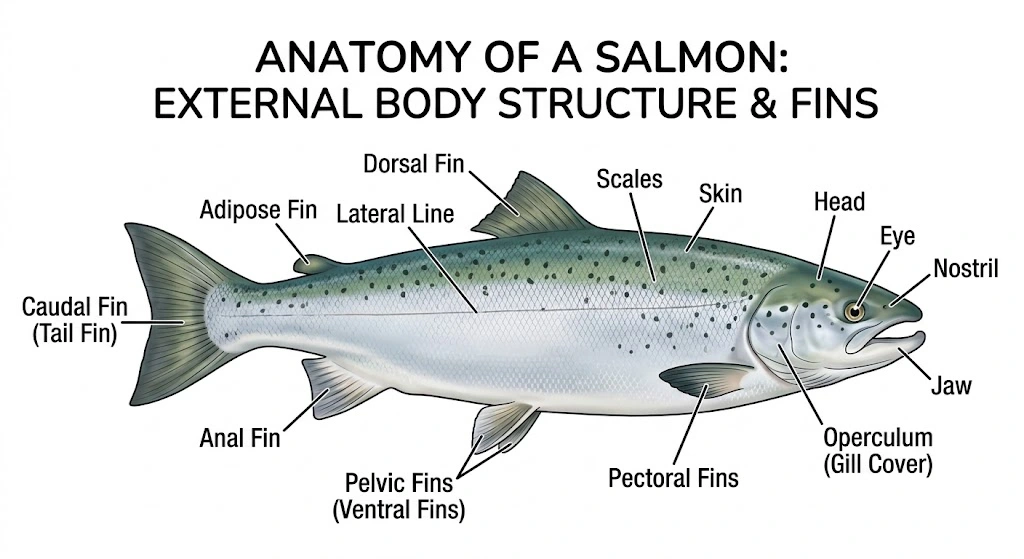
Salmon have both scales and fins. Their small, overlapping scales protect the skin, while eight fins help them balance, steer, stop, and swim powerfully through rivers and oceans.
Salmon are bony fish, so their bodies follow a familiar fish design: a streamlined shape, slippery skin, scales, gills, and fins. Their scales are not large or armor-like; they are tiny, smooth plates that often look silver because light reflects off them and the skin beneath.
What Do Salmon Scales Look Like?
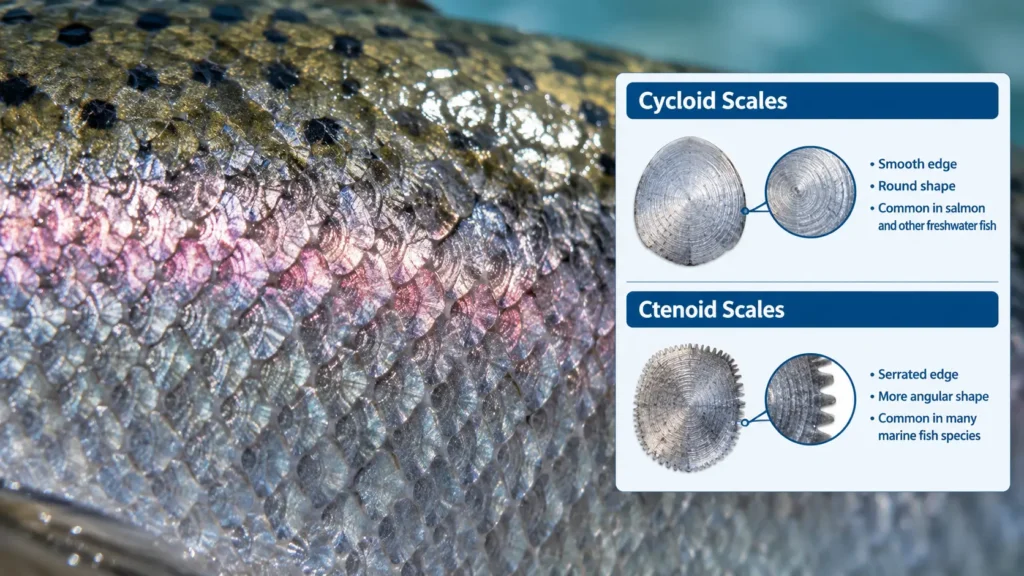
Salmon have cycloid scales: small, round, smooth-edged plates made mostly of collagen and bone-like material. They overlap like shingles on a roof, creating a flexible protective layer rather than a stiff shell.
Most salmon scales look clear or silvery. The color you see usually comes from the skin and pigments underneath, not from the scale itself. On a fresh fillet, the scales may be barely visible; on a whole salmon, they can create a shiny, metallic appearance.
Salmon scales also grow in concentric rings. Researchers can read these rings to learn about a fish’s age, growth rate, and parts of its life history.
What Is the Purpose of Salmon Scales?
The main purpose of fish scales is protection. On a salmon, scales form flexible armor that reduces injury from rocks, logs, predators, and everyday bumps in fast-moving water.
Scales also work with the salmon’s mucus layer. That slippery coating helps reduce friction in water and supports the fish’s defense against some disease organisms.
A salmon can lose scales through contact or handling, but new scales can grow back. This is one reason a wild-caught salmon may have a few missing or damaged scales without necessarily being unhealthy.
Do All Salmon Species Have Scales? types of salmon
Yes. All salmon species have scales, including Atlantic salmon and Pacific salmon such as Chinook, sockeye, pink, chum and Coho salmon. The exact number, size, and pattern of scales can vary by species, but the basic structure does not.
Atlantic salmon have small scales—roughly 114 to 130 along the lateral line, according to FAO species information. Chinook salmon also have cycloid scales, with about 130 to 165 pored scales along the lateral line.
So if you are wondering, “Does Atlantic salmon have scales?” or “Does Pacific salmon have scales?”—the answer is yes for both.
What Types of Fins Do Salmon Have?
Salmon have eight fins, including the tail. Two sets are paired: the pectoral fins and pelvic fins. Four are single fins: the dorsal fin, adipose fin, anal fin, and caudal fin.
| Fin | Location | Main job |
|---|---|---|
| Pectoral fins | Just behind the gills, one on each side | Steering, lifting, turning |
| Pelvic fins | On the belly, farther back | Balance, slowing down, moving up or down |
| Dorsal fin | Middle of the back | Stability and quick turns |
| Adipose fin | Small fleshy fin between dorsal and tail fin | Small, fleshy structure; no confirmed function |
| Anal fin | Belly, just ahead of the tail | Stability and roll control |
| Caudal fin | Tail | Propulsion, steering, and braking |
Dorsal and Adipose Fins
The salmon dorsal fin sits on the middle of the back. It works like a keel: it helps the fish stay upright, prevents rolling, and supports quick turns or stops.
The salmon adipose fin is the small, soft, fleshy fin between the dorsal fin and tail. It has no confirmed function, but it is useful for identification because hatcheries sometimes clip it to mark released salmon.
Pectoral, Pelvic, and Anal Fins
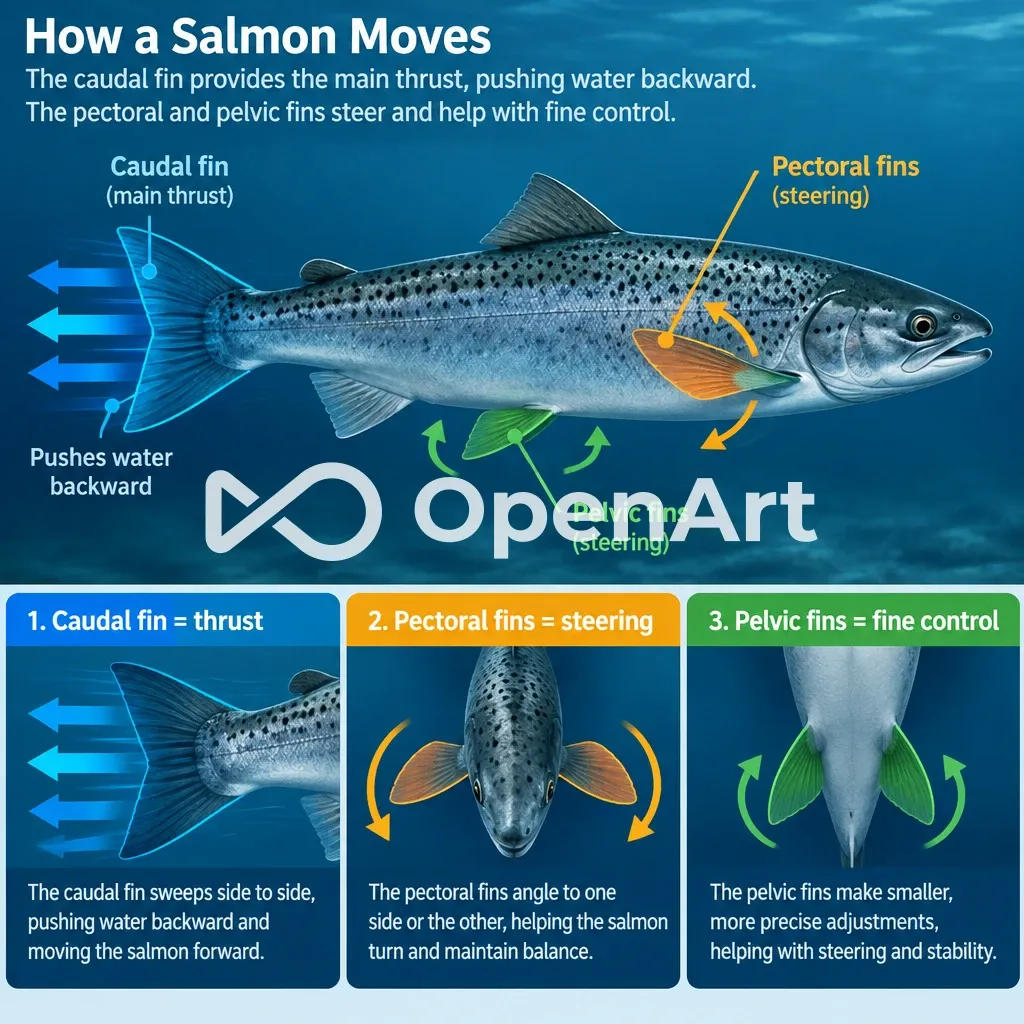
The pectoral fins sit near the front of the body, below the gill area. They help a salmon turn left or right, create lift, and adjust its position in the water.
The pelvic fins are paired fins on the belly. They help with balance, slowing down, and moving upward or downward.
The anal fin sits on the underside, just before the tail. It stabilizes the fish and helps control rolling motion.
How Does a Salmon’s Tail Fin Help It Swim?
The tail fin, also called the caudal fin, is the salmon’s main engine. It sweeps side to side and, combined with strong body muscles, pushes the fish forward.
The tail also acts like a rudder. It helps the salmon change direction, hold its position in current, and make powerful bursts when escaping predators or moving upstream. Female salmon also use their tails to dig nests, called redds, in stream gravel before laying eggs.
Does Salmon Skin Have Scales After Cleaning?
Often, yes—but many salmon fillets arrive already scaled. A fishmonger may remove the scales before sale, especially for skin-on fillets intended for quick home cooking.
To check, run a finger or the back of a knife gently from tail to head against the skin. If you feel rough, tiny edges or see loose flakes, the salmon may still need scaling. If the skin feels smooth, it has probably been scaled.
Scales can fall off during handling, freezing, thawing, or cooking. That does not automatically mean the fish is bad; check smell, texture, color, and storage date as well.
Can You Eat Salmon Skin and Its Scales?
Yes, you can eat salmon skin, and many people enjoy it when it is cooked until crisp. The skin contains protein and fats, and it can add flavor and texture to baked, pan-seared, or grilled salmon.
Salmon scales are generally considered safe to eat when the fish is clean and properly cooked, but they can be unpleasantly crunchy and may pose a choking risk. Most cooks remove them for comfort, especially when serving children or guests.
For the best result, scale the fillet before cooking if the scales are still present. Then cook the salmon skin-side down first so the skin becomes crisp rather than rubbery.
Should You Remove Scales From Salmon?
It is not always necessary, but it is usually more enjoyable. If the scales are small, loose, or likely to crisp into hard bits, remove them before cooking.
Quick method:
- Place the fillet skin-side up on a cutting board.
- Hold the tail end firmly.
- Scrape from tail toward head with a spoon, butter knife, or fish scaler.
- Rinse the skin and pat it dry.
If you plan to crisp the skin, scaling salmon before cooking gives you a cleaner, more pleasant texture.
Which Fish Have No Scales?
Not every fish has true, removable scales. Catfish have smooth skin or bony plates rather than the overlapping scales found on salmon. Sharks have tooth-like skin structures called dermal denticles, which are different from salmon’s cycloid scales.
In kosher dietary tradition, a fish generally needs both fins and scales that can be removed without tearing the skin. Salmon meets that description; catfish and shark do not.
How to Identify Salmon by Its Fins
You can identify a salmon by looking for its adipose fin—the small fleshy fin on the back, just in front of the tail. Salmon, trout, and catfish have this fin, but many other fish do not.
Also check for:
- A forked or slightly forked tail fin
- A dorsal fin on the back
- Paired pectoral fins near the head
- Paired pelvic fins on the belly
- An anal fin before the tail
A salmon with a clipped adipose fin may be a hatchery-raised fish, depending on the region and management program.
FAQs
Do salmon have fins?
Yes. Salmon have eight fins: two pectoral fins, two pelvic fins, one dorsal fin, one adipose fin, one anal fin, and one caudal fin.
Do all salmon have scales?
Yes. Atlantic and Pacific salmon species all have scales.
What do salmon scales look like?
They are small, smooth, round, overlapping plates. They often appear clear or silvery because the skin beneath shows through.
Does salmon fish have scales?
Yes. Salmon scales protect the fish and overlap across most of its body.
Is it necessary to remove scales from salmon?
No, but removing them improves texture. Many store-bought fillets are already scaled.
Is it okay to eat salmon skin with scales?
Salmon skin is edible, and scales are generally safe when cleaned and cooked, but most people remove scales because they can be hard and unpleasant.
Why can’t you eat a lot of salmon?
Salmon is nutritious, but eating very large amounts regularly can add excess calories and, depending on the source, may increase exposure to environmental contaminants. Variety and reasonable portions are a sensible approach.
How to tell if salmon has been scaled?
Run your fingers from tail to head along the skin. Rough, loose, or flaky edges suggest remaining scales; smooth skin usually means it has been scaled.
Should salmon be cooked with or without scales?
Either works, but most home cooks prefer to remove scales first. If keeping the skin on, scale it before cooking for a better crisp texture.
Which salmon is not to buy?
Avoid salmon with a strong fishy odor, slimy flesh, dull or sunken eyes on a whole fish, broken flesh, or unclear sourcing. Choose reputable sellers and check freshness dates.
Do salmon scales fall off?
Yes. Scales can fall off from handling, injury, or normal wear, and salmon can regrow them.
Can you eat salmon skin?
Yes. Crispy salmon skin is safe and flavorful for most people when the fish is fresh and properly cooked.
Do you need to remove scales from salmon?
You do not need to for safety in most cases, but you should remove them if you dislike crunchy bits or plan to eat the skin.
What protects a salmon’s body?
Scales, skin, and a mucus layer protect a salmon’s body from injury, friction, and some disease organisms.
How to identify salmon by its fins?
Look for the small adipose fin between the dorsal fin and tail, plus the typical arrangement of paired pectoral and pelvic fins, a dorsal fin, anal fin, and tail fin.
Conclusion
So, does salmon have fins and scales? Yes. Salmon have small, overlapping cycloid scales that protect their bodies, along with eight fins that let them steer, balance, brake, and swim with impressive power. Their dorsal fin stabilizes them, their pectoral and pelvic fins control direction, and their caudal fin acts as the main engine.
For cooks, the practical answer is simple: salmon skin is edible, scales are usually safe but better removed, and many fillets arrive already scaled. Knowing how to identify salmon by its fins—and understanding what its scales do—makes you a smarter shopper and a more confident cook. Whether you choose Atlantic or Pacific salmon, both have the scales and fins that define these remarkable fish.
Recommended posts
- Do Sharks Have Scales or Skin? (A Closer Look)