

How to fish for trout in Stream? Trout stream fishing is the practice of targeting trout in moving water—usually a creek, river, or mountain stream—by presenting bait, lures, or flies where fish feed and rest. The fastest way to improve is simple: find trout where fast water meets slow water, approach quietly, and offer a natural-looking meal.
Trout stream fishing rewards observation more than expensive gear. A small creek can produce steady action when you learn to read currents, stay hidden, and match your offering to what trout are eating.
This guide covers stream trout fishing techniques, the best bait for stream trout, seasonal timing, safety, and practical ways to catch trout in a creek—whether you chase wild trout, stocked rainbow trout, or wary brown trout.
Learn Fly Fishing the Right Way — Explore Orvis’s expert guide and build the skills to catch more trout in streams.
What Is Trout Stream Fishing and Why Is It So Popular?
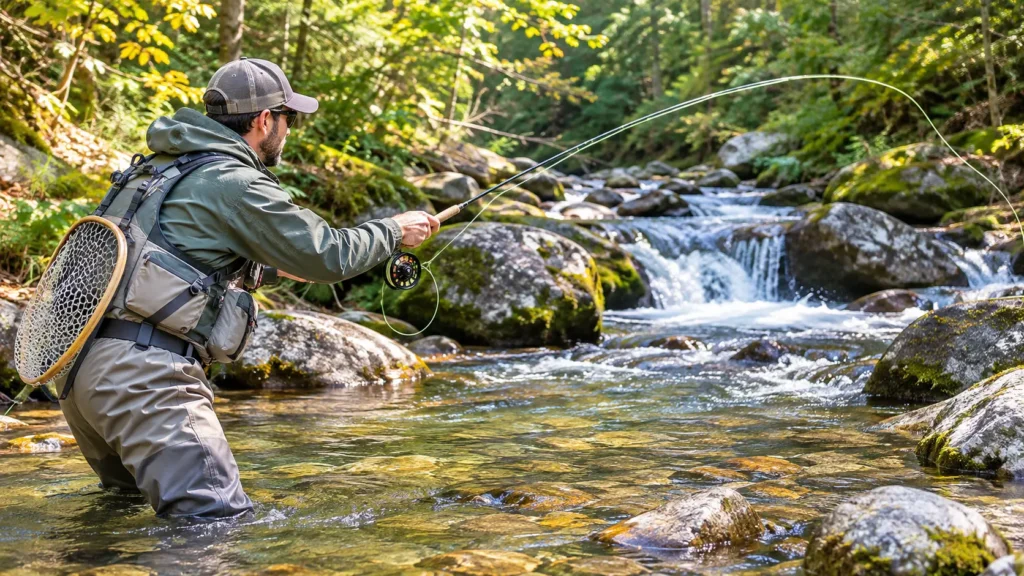
Trout stream fishing means fishing for trout in moving water way rather than a lake or pond. It usually involves wading, walking the bank, casting upstream, and drifting a bait or lure through current seams, pools, and pockets.
The appeal is the adventure. You explore small streams, read moving water, and often find trout in beautiful, quiet places. Unlike fishing from a boat, stream fishing keeps you close to the action: every rock, bend, and shadowed bank can hide a fish.
Trout are cold-water species, so streams with cool, clean water and steady flow matter most. Common targets include rainbow trout, brown trout, and brook trout. Rainbow trout are often stocked in accessible streams, while brook trout and wild brown trout fishing often require more walking, stealth, and careful handling.
How to Find Trout in Streams: Best Fishing Spots for Trout
To find trout, look for three things: food, cover, and a comfortable place to hold. Trout need to eat without burning too much energy fighting the current.
Start with current seams
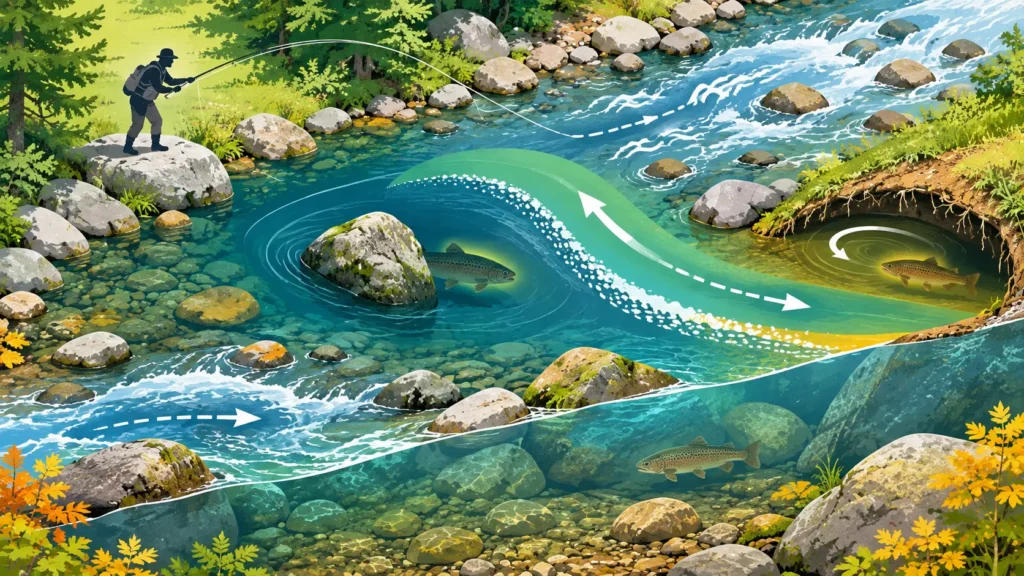
A current seam is the visible line where fast and slow water meet. Trout hold on the slower side of that line while food drifts past in the faster current. Foam lines, bubbles, and changes in surface texture often mark these seams.
Fish the edges first
Many beginners walk straight into the middle of a stream and cast toward the far bank. That approach can push fish downstream before you ever make a cast. Instead, fish the near-side water first, especially in stained water, low light, or high flow. mycustomflybox
Target high-percentage trout spots
The best places for trout fishing in a stream include:
- The head of a pool, where a riffle dumps food into deeper water.
- The tail of a pool, where current narrows and food funnels through.
- Slack pockets behind boulders, logs, and undercut banks.
- Current seams along the edges of runs.
- Shaded banks, root wads, and overhanging vegetation.
- Small tributaries or a creek fork where cooler water enters the main stream.
A useful tip: if a spot has depth, cover, and moving food, it is worth a cast—even if it looks too small to hold a fish.
Best Time of Day and Weather for Trout Stream Fishing
Trout are most active when water stays cool and oxygen levels remain high. Early morning and late evening are often productive because light is lower and trout move more freely to feed.
Seasonal timing
| Season | What to expect | Best approach |
|---|---|---|
| Spring | Cold, rising water and active fish | Fish slower pools, seams, and protected pockets |
| Summer | Warm afternoons can stress trout | Fish early, target shade and cool inflows, handle fish carefully |
| Fall | Cooling water and active feeding | Cover more water with spinners, spoons, and streamers |
| Winter | Slow metabolism and cautious fish | Fish deep, slow pools with small, subtle presentations |
Weather matters
Overcast days, light rain, and a slight ripple on the surface often improve fishing because trout feel safer moving out from cover. Bright, clear, low-water conditions call for longer casts, smaller lures, lighter line, and a low profile.
Avoid fishing stressed trout during hot weather. If water feels warm to your hand or trout are gathered in cold spring-fed areas, give them space. Check local fishing regulations before your fishing trip, since bait rules, seasons, size limits, and catch-and-release rules vary by water.
Best Bait for Trout Stream Fishing: Natural Baits That Work
The best bait for stream trout is usually something that looks and moves like the trout’s natural food. Worms, insects, fish eggs, and minnows all produce fish when rules allow them.
Natural bait options
- Worms: A classic choice for trout fishing for beginners. Hook a worm once or twice and leave a small tail moving in the current.
- Grasshoppers and crickets: Excellent in late summer and early fall, especially along grassy banks.
- Salmon eggs or fish eggs: Effective where legal, particularly around spawning periods; always follow local rules.
- Live or salted minnows: A strong option where permitted, especially for larger brown trout.
- Corn, maggots, and prepared baits: Useful in some stocked-water situations, but check regulations first.
How to drift bait
Use just enough split shot to get your bait near the bottom without constantly snagging. Cast upstream, let the bait drift naturally through the seam, and keep your line tight enough to detect a strike.
A small float can help beginners see subtle bites. In shallow pocket water, remove weight and keep the bait close to the rocks where trout hold.
Best Lures for Catching Trout in Streams
Lures let you cover water quickly and work especially well in runs, riffles, and wider stretches. Small spinners, spoons, jigs, and stickbaits are proven stream choices.
Best lure choices
| Lure | Best water | How to fish it |
|---|---|---|
| Inline spinner | Riffles, runs, seams | Cast upstream or across, retrieve slowly as it swings downstream |
| Small spoon | Deeper pools and runs | Let it sink, then use a steady retrieve |
| Marabou jig | Pools, pockets, slow seams | Hop it gently along the bottom |
| Small crankbait | Wider streams and runs | Retrieve slowly along current edges |
| Tube jig or soft plastic | Pocket water and deep pools | Short hops near cover |
| Streamer | Larger streams and aggressive fish | Strip or swing it across current |
Start with a small spinner in silver, gold, black, or a natural minnow pattern. If the water is clear, downsize. If the water is stained or fast, use a slightly larger lure with more flash or vibration.
For stocked rainbow trout, small spinners and worms often work well. For wild brown trout, slower presentations near cover can outperform a fast retrieve. Brook trout often respond aggressively to small minnow-style lures and flies.
Essential Trout Stream Fishing Gear and Tackle
You do not need a large amount of gear to enjoy trout stream fishing. A light, versatile setup is usually best.
Basic tackle checklist
- Rod: A 6- to 7-foot ultralight or light spinning rod works well in most creeks and small rivers.
- Reel: A small spinning reel with a smooth drag.
- Line: 4- to 6-pound monofilament or a thin fluorocarbon leader; use lighter line in clear water.
- Hooks: Small baitholder hooks, typically size 8 to 14.
- Split shot: Several small sizes for adjusting depth.
- Lures: A few spinners, spoons, jigs, and small plugs.
- Wading gear: Non-slip wading boots, and a wading staff when currents are strong.
- Safety items: A whistle, dry bag, first-aid basics, and a fully charged phone.
- Tools: Forceps or pliers, line clippers, small net, and a measuring device.
Keep your gear simple. A light rod, a handful of lures, hooks, split shot, and bait will cover most stream situations. If you fish a larger river, a longer rod can help you make better drifts and control fish in current.
How to Fish a Trout Stream: Techniques for Beginners
If you are learning how to fish for trout in a stream, begin with a simple plan: approach quietly, cast upstream, and work the water methodically.
Step-by-step approach
- Observe before casting. Look for seams, foam lines, rocks, shade, and current breaks.
- Approach from downstream. Trout usually face into the current, so they are less likely to notice an angler approaching from behind.
- Make a short, accurate cast. Place your bait or lure upstream of the target, not directly on top of it.
- Drift naturally. Let the current carry the bait through the seam or pocket.
- Cover water slowly. Make several casts from different angles before moving.
- Change depth before changing location. Add or remove split shot, switch lure size, or slow your retrieve.
- Move quietly. Avoid splashing, dragging feet, and casting a shadow over likely holding water.
A simple beginner routine
Fish upstream with a spinner to cover water quickly. When you reach a promising pool, switch to a worm, jig, or small bait presentation and work it thoroughly. This combination lets you search actively and then slow down where trout are likely holding.
Reading Stream Currents, Pools, Riffles, and Runs
Learning how to fish a stream for trout becomes easier once you understand the water. Trout do not randomly scatter through a creek; they use specific places that provide food and protection.
Riffles
Riffles are shallow, fast sections with broken water. They add oxygen and carry insects downstream. Fish the edges and the transition where the riffle slows into deeper water.
Runs
Runs are steady stretches of moving water between riffles and pools. They often hold trout along the edges, behind rocks, and near current seams. Spinners, spoons, and streamers work well here.
Pools
Pools are deeper, slower areas with a head, body, and tail. Fish the head first, where food enters; then work the middle and tail. Trout often hold near logs, rocks, bridge pilings, and undercut banks.
Pocket water
Pocket water forms behind boulders and other obstacles. The calm area behind the rock gives trout a resting spot, while the faster water beside it delivers food. Cast upstream of the rock and let your bait drift along the edge of the slack water.dec.ny
Undercut banks
An undercut bank is a hidden ledge beneath the bank where trout can hide from predators and bright light. These areas often hold the largest fish in a small stream, especially brown trout.
Common Trout Stream Fishing Mistakes and How to Avoid Them
Many anglers struggle not because they lack skill, but because they make the same avoidable mistakes.
- Walking directly into the stream. Stay low, use the bank, and approach from behind the fish whenever possible.
- Casting only to the middle. The first few feet of near-side water often hold fish.
- Using tackle that is too heavy. Heavy line and oversized lures reduce natural presentations in clear water.
- Retrieving too quickly. Trout often want a slow, believable drift.
- Ignoring small pockets. A 12-inch-wide seam behind a rock can hold a trout.
- Fishing the same depth repeatedly. Change your split shot, lure weight, or retrieve speed.
- Wading carelessly. Fast current can knock you off balance; move slowly, keep a wide stance, and cross at an angle when needed.
- Overlooking regulations. Some streams restrict live bait, require catch-and-release, or have special seasonal rules.
Trout Stream Fishing Tips for Bigger and More Consistent Catches
Consistency comes from making better decisions before every cast.
- Fish the seam, not the middle. The edge between fast and slow water is one of the most reliable spots for trout.
- Match the food. If grasshoppers are active, try a hopper-style bait or fly. If minnows are present, use a small minnow imitation.
- Use stealth. Wear muted colors, keep a low profile, and avoid sudden movements.
- Work upstream. This keeps your approach hidden and lets your bait drift naturally toward fish.
- Slow down in cold water. Winter trout often want a small bait fished close to the bottom.
- Explore new access points. Walking farther from parking areas often means less fishing pressure and more willing fish.
- Protect wild trout. Wet your hands before handling a fish, avoid touching the gills, release it quickly, and never lift a fish fully out of the water for a photo.
- Respect other anglers. Give people room, ask before entering water near them, and avoid stepping into a run another angler is working.
Stream Etiquette, Safety, and Conservation
A successful fishing experience includes taking care of the waterway. Stay on established paths, avoid trampling spawning gravel, and pack out everything you bring in.
When wading, keep your feet low and shuffle rather than stepping high. Move sideways into the current, and never enter water that makes you feel unstable. If the current pushes hard, turn back and find a safer crossing.
Check local fishing regulations before you go. Rules may cover bait restrictions, gear limits, daily limits, closed areas, and catch-and-release requirements. Following them protects trout populations and keeps access open for everyone.
FAQs
What is the best bait for stream trout?
Worms are one of the most reliable natural baits, especially for beginners. Small spinners, spoons, jigs, and soft plastics also work well when regulations allow artificial lures.
Where are good trout streams and fishing destinations?
Good trout streams usually have cool, clean water, steady flow, riffles, pools, and plenty of cover. Start with your state wildlife agency’s trout-stocking maps and regulations, then explore nearby creeks, tailwaters below a dam, and wild-trout waters.
How do I catch trout in a small creek?
Fish slowly and quietly. Target seams, pockets behind rocks, undercut banks, and the heads and tails of pools. Use light line, small baits, and short casts.
What time of day is best for trout stream fishing?
Early morning and evening are often best, especially in summer. On cloudy or lightly rainy days, trout may feed more actively throughout the day.
Should I fish upstream or downstream?
Fish upstream whenever practical. Trout face into the current, so approaching from behind makes you less visible and lets your bait drift naturally toward them.dec.ny
What size rod is best for creek trout?
A 6- to 7-foot ultralight or light spinning rod is a strong all-around choice. Use a shorter rod in tight, brushy streams and a longer rod on wider water.
Do trout stay in the same spot all day?
Trout often remain in a preferred holding area, but they may move with changes in light, temperature, flow, and food availability. Revisit productive seams and pools at different times.
Is trout stream fishing good for beginners?
Yes. Start with a simple spinning setup, worms or a small spinner, and focus on obvious seams and pools. Trout fishing for beginners improves quickly once you learn to read moving water.
How can I fish safely while wading in a stream?
Wade slowly, keep two feet on the bottom, and use a wading staff in strong current. Wear non-slip boots and a life jacket in deeper or faster water; never wade upstream of a waterfall or enter water that feels unstable.nps
What should I know about seasonal trout fishing and catch-and-release?
Trout often fish best in spring and fall, when water is cooler. Rules change by water and season: some streams require catch-and-release, artificial lures only, or specific size and daily limits, so always check current local regulations first.
What gear and fishing techniques should I use for trout in moving water?
Use a light 6-foot spinning rod, 4–6-pound line, small hooks, split shot, and a few spinners or spoons. Cast slightly upstream, let the current carry your bait naturally, and drift it near seams, rocks, and the bottom.
Conclusion
Trout stream fishing is one of the most rewarding types of fishing because it combines skill, observation, and adventure. You do not need expensive gear to succeed. You need to read the water, approach quietly, and present a believable meal where trout naturally feed.
Start with a light spinning rod, a few small lures, worms where legal, and a willingness to explore. Focus on current seams, pocket water, pool heads, and shaded banks. Fish upstream, change depth before changing locations, and slow down when conditions get tough.
Most importantly, respect the waterway. Follow local fishing regulations, handle released fish carefully, and leave the stream better than you found it. With patience and practice, trout stream fishing can turn an ordinary creek into one of your favorite places to fish.
You might also like: