
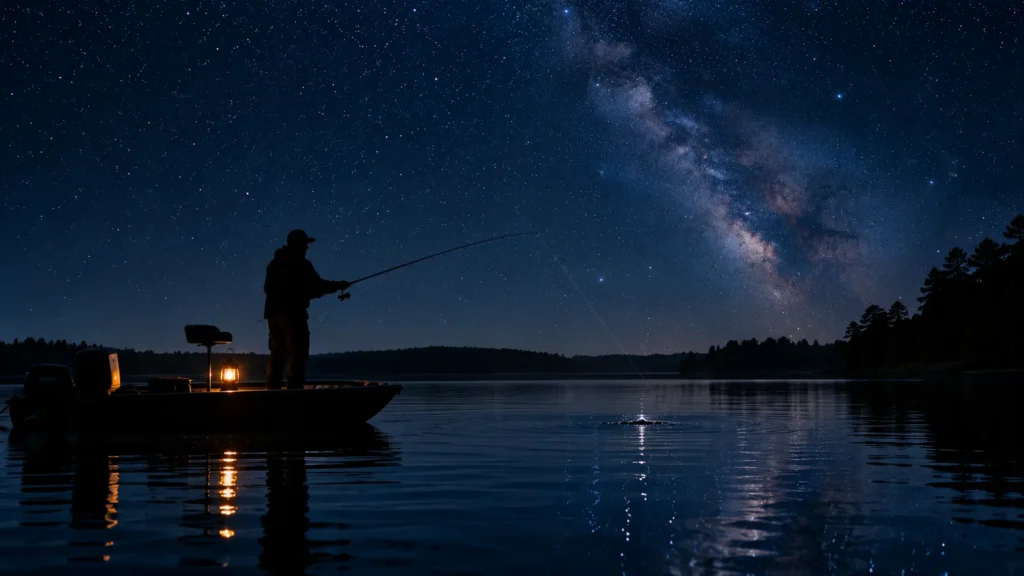
Is a new moon good for fishing? Yes—a new moon can be good for fishing, especially in tidal saltwater where it creates stronger currents and concentrated bait movement. In freshwater, the new moon is not automatically better, but dark nights can improve fishing around dawn, dusk, and cover-oriented fish such as bass and muskie.
The moon does not guarantee bites. Water temperature, weather, bait availability, tide stage, and your presentation usually matter more than the lunar calendar. A large trout-fishing study found no meaningful link between solunar tables, lunar phase, and catch rates, while a major muskie study found a modest increase in catches around both new and full moons.
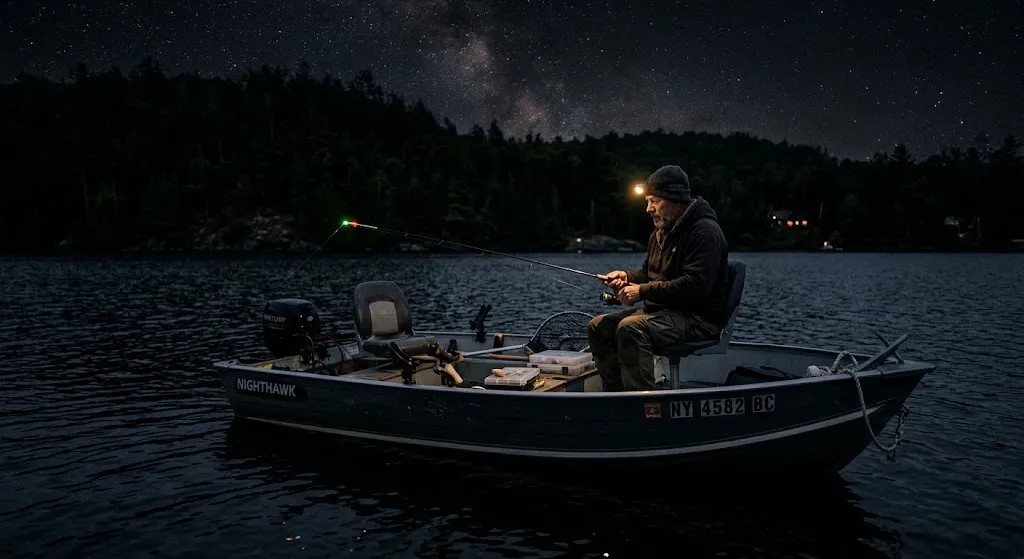
Is New Moon Good for Fishing?
New moon fishing can be excellent when moving water, low light, and feeding fish line up. During a new moon, the sun and moon align, producing spring tides: higher highs, lower lows, and stronger tidal currents in coastal areas.
That matters because current moves plankton, baitfish, shrimp, crabs, and other food. Predators often set up along current seams, channel edges, points, and structure to ambush prey as it drifts past.
For fishing on a new moon freshwater, treat the phase of the moon as one clue—not a promise. Lakes and rivers do not have ocean tides, so the main benefit is usually the dark night and the way fish use shadows, cover, and low-light periods.
Best use of a new moon:
- Fish tidal bays, inlets, flats, jetties, and river mouths.
- Target the days two to three days before and after the new moon.
- Focus on moving water rather than slack tide.
- Fish dawn, dusk, and night when safety and local rules allow.
- Adjust your bait and lure choice for darker water and lower visibility.
How Does a New Moon Affect Fish Behavior?
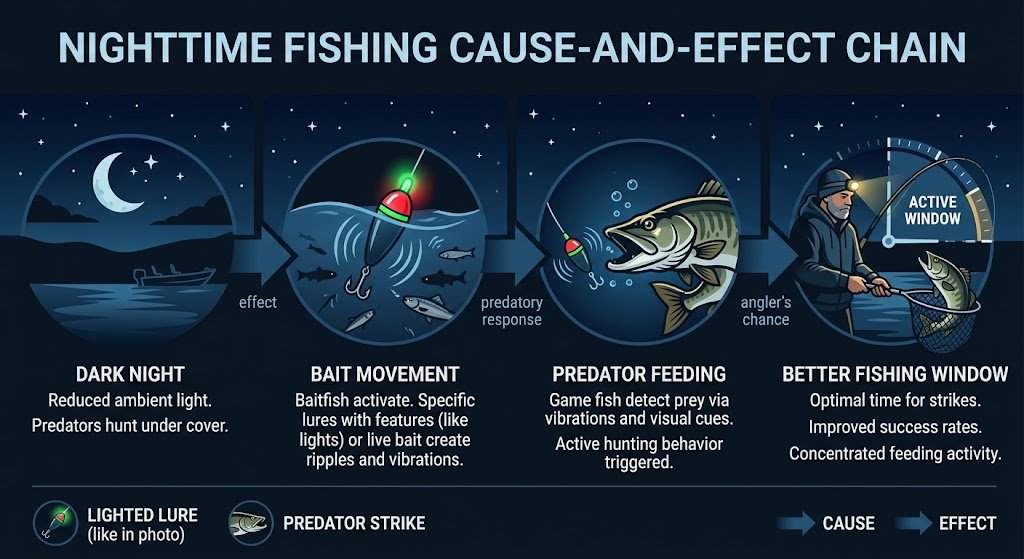
A new moon and fishing connect through three main factors: darkness, tides, and feeding timing.
Less moonlight
With little or no moonlight, many predators rely more on cover, vibration, sound, and short feeding windows. Bait may hold tighter to grass, docks, rocks, or current breaks, while predators wait nearby.
This does not mean fish stop eating. It means they may feed more confidently in darker areas, especially where current or moving bait gives them an easy target.
Stronger tidal movement
At new moon, the sun’s and moon’s gravitational pull work together. NOAA describes the result as spring tides, with stronger tidal currents and a larger difference between high and low water.
Moving water stirs up food, concentrates bait, and gives predatory fish a reason to feed. In many coastal fisheries, the tide stage matters more than the moon phase itself.
Feeding windows
Fish often become more active around dawn and dusk. On a new moon, the night is darker, so the first and last light periods can be especially productive because prey becomes visible just as predators begin hunting.
Is New Moon Fishing Better in Saltwater or Freshwater?
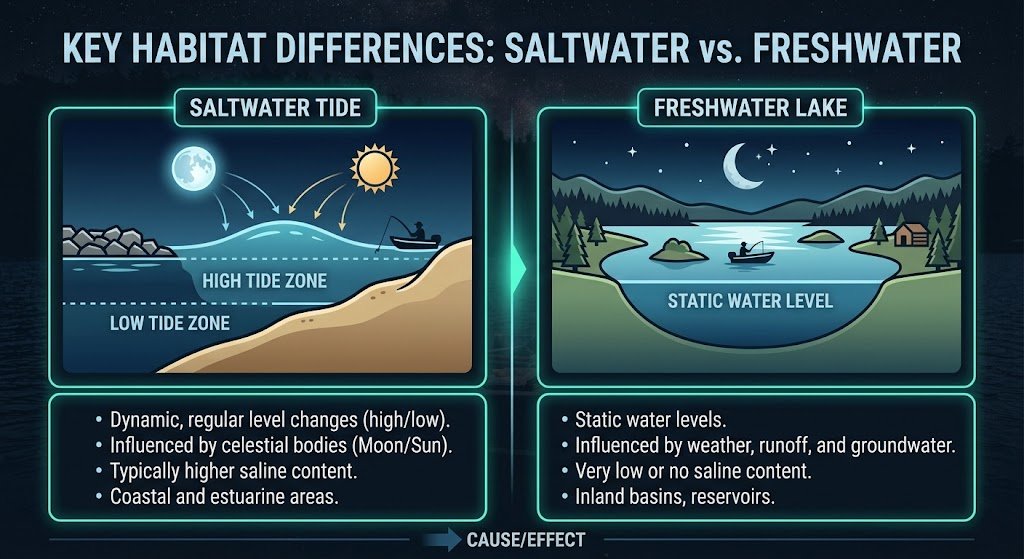
Saltwater usually benefits more from new moon surf fishing because the moon phases affects tides. Freshwater can still fish well, but the effect is less predictable.
| Condition | New moon effect | Best approach |
|---|---|---|
| Saltwater bays and flats | Stronger tides and current move bait | Fish incoming or outgoing water near channels and points |
| Inlets and jetties | Stronger current can concentrate predators | Fish tide changes and current seams |
| Offshore | Tides can influence bait and fish movement | Watch current, temperature breaks, and bait marks |
| Lakes | No true tide; darkness is the main factor | Fish cover, shallow flats, and dawn/dusk windows |
| Rivers | Current matters, but lunar tide effect varies | Fish current breaks and moving water |
Saltwater anglers should read a local tide chart before choosing a spot. A strong tide can be great on a flat or around an inlet, but it can also make boat control, anchoring, and lure presentation difficult.
What Are the Best Times to Fish During a New Moon?
The best times for fishing during new moon are usually:
- Dawn: Low light gives predators an advantage as bait becomes active.
- Dusk: Fish often move shallower or closer to feeding zones.
- Night: Dark conditions can improve fishing for species that feed by feel, sound, or vibration.
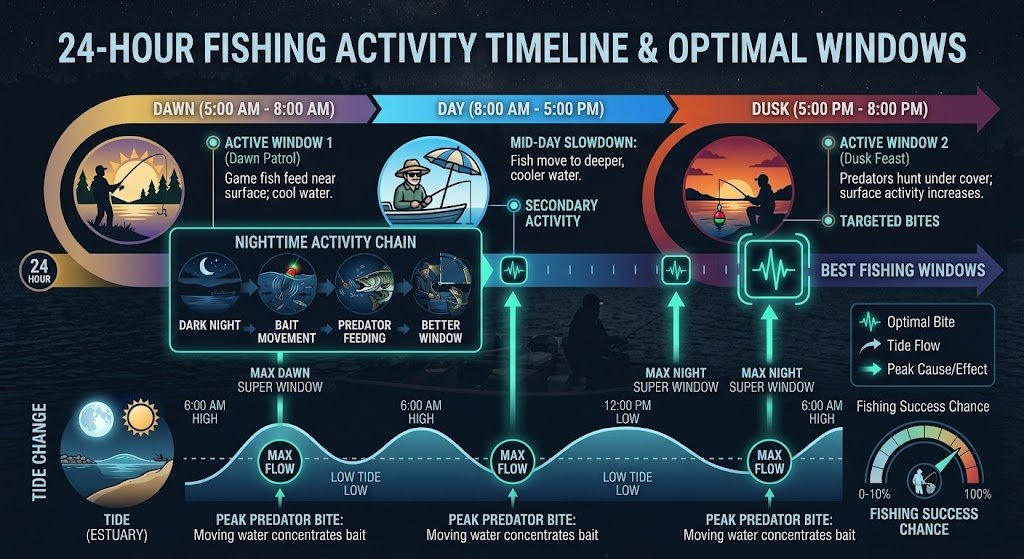
- Tide changes: In saltwater, the first hour or two of a strong incoming or outgoing tide is often best.
- Moonrise and moonset: Some anglers use these periods as secondary bite windows, although evidence for solunar calendars is mixed.
For night fishing, safety comes first. Use a headlamp with a red-light mode, tell someone where you are going, wear a life jacket around moving water, and avoid unfamiliar rocks or jetties in the dark.
How Do New Moon Tides Affect Saltwater Fishing?
New moon tides create spring tides, which produce stronger water movement than the quieter neap tides around quarter moons.
That water movement can help in several ways:
- It pushes baitfish, shrimp, and crabs through channels and across flats.
- It creates current seams where predators wait.
- It can pull bait out of marshes, creeks, and estuaries on falling water.
- It can flood shallow flats on rising water, giving fish access to new feeding areas.
A practical rule: fish the moving part of the tide, not simply the high or low tide. If the current is too strong, look for protected eddies, lee sides of points, or areas where bait can gather without being swept away.
Is a New Moon Better for Bass Fishing?
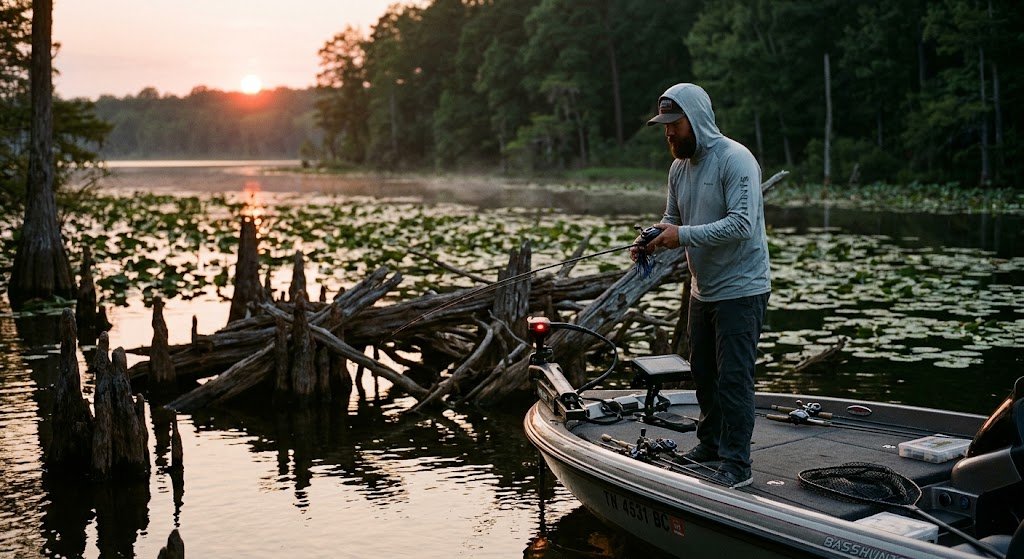
Bass fishing new moon conditions can be good, but the new moon is not clearly better than other phases. Research summarized from largemouth bass data found catches spread fairly evenly through the lunar cycle, with no strong advantage for new moon nights.
Still, a new moon can help bass anglers in specific situations:
- Night fishing: Bass may roam shallower and feed closer to cover in darkness.
- Muddy or stained water: Low moonlight matters less when visibility is already poor.
- Summer: Fish may feed during cooler nighttime hours.
- Spawning periods: Moon timing can influence fish movement, though local water temperature and weather usually matter more.
For bass, fish dark points, dock lights, grass edges, laydowns, rocky banks, and areas near bait. Slow-moving baits with strong vibration—such as spinnerbaits, chatterbaits, swim jigs, and dark-colored soft plastics—can help bass find the lure in low light.
What Weather Conditions Make New Moon Fishing Better?
The best fishing new moon phase usually includes stable weather, comfortable water temperature, and some water movement.
Look for:
- Steady barometric pressure: Fish often feed more consistently when weather is stable.
- Light wind: A gentle ripple breaks up the surface and can improve lure action.
- Cloud cover: Clouds extend low-light feeding periods.
- Warm-enough water: Fish metabolism and feeding depend heavily on temperature.
- Clean or slightly stained water: Extremely muddy water can make sight-feeding difficult.
A cold front, sharp temperature drop, or severe weather change can shut down a good-looking moon window. In the Utah trout study, air temperature predicted catch success better than any solunar value or lunar phase.
What Are the Best Baits and Lures for New Moon Fishing?
Choose baits that help fish locate your offering when visibility is low.
Freshwater
- Dark soft plastics: Black, junebug, bluegill, and green pumpkin work well around cover.
- Chatterbaits and spinnerbaits: Vibration helps bass track the bait.
- Swimbaits: Good for covering water near baitfish.
- Jigs: Excellent around wood, rocks, grass, and docks.
- Topwaters: Try them at dawn, dusk, or night when fish feed near the surface.
Saltwater
- Live bait: Pilchards, mullet, shrimp, pinfish, or local baitfish match what predators are eating.
- Paddletail soft plastics: Good for current and suspended fish.
- Bucktail jigs: Effective around inlets, bridges, and deeper structure.
- Topwater lures: Use them during dawn, dusk, or calm low-light periods.
- Scented baits: Useful when fish rely less on sight.
Match the hatch first. If bait is small, downsize. If current is strong, add weight or choose a lure that maintains contact with the bottom or desired depth.
New Moon vs. Full Moon: Which Is Better for Fishing?
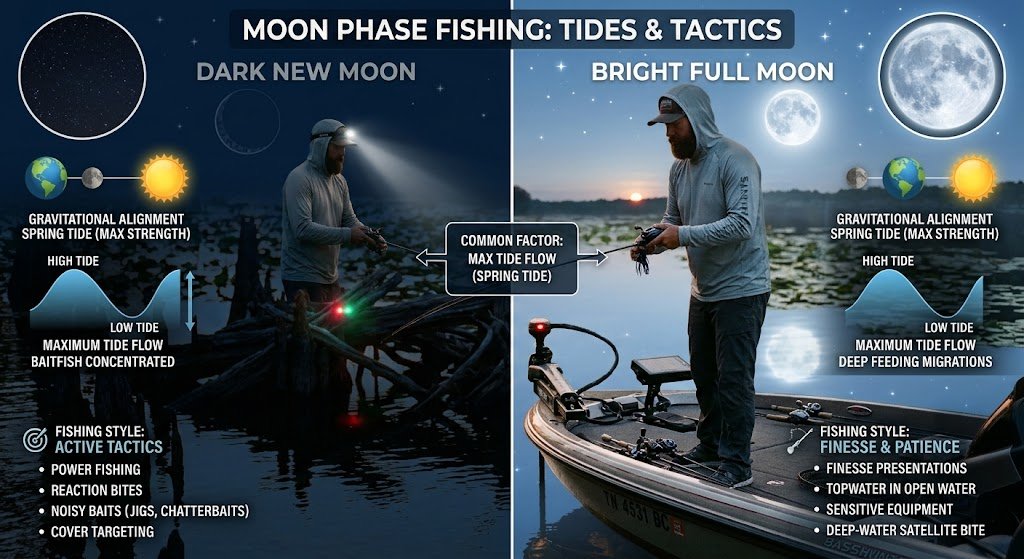
Neither phase is universally better. The best moons for fishing are often the new moon and full moon because both can create stronger tides, but they produce different conditions.
| Factor | New moon | Full moon |
|---|---|---|
| Night light | Very dark | Bright |
| Tides | Spring tides, strong current | Spring tides, strong current |
| Freshwater effect | Fish may hold tighter to cover | Fish may roam farther in moonlight |
| Best strength | Night, dawn, dusk, moving tide | Night sight-fishing, shallow flats, spawning periods |
| Main challenge | Harder visibility for angler and fish | Fish may become more cautious in bright water |
A large muskie study found more fish caught around both full and new moons, with an estimated overall effect of about 5%. Night catches were stronger around the full moon in that study. Other research has found no reliable freshwater advantage for either phase, which is why local observation matters.pmc.
Tips for Planning a Successful New Moon Fishing Trip
- Check the tide chart first. In saltwater, plan around the strongest moving-water period, not just the calendar date.
- Fish the days around the new moon. The two to three days before and after often provide strong tidal movement.
- Start at dawn or dusk. These periods combine low light with natural feeding activity.
- Target structure and current. Fish points, channel edges, bridge pilings, grass lines, rocks, and current seams.
- Use vibration or scent. Dark conditions favor baits fish can feel, hear, or smell.
- Slow down after a front. If water temperature drops suddenly, fish may need a slower presentation.
- Keep a fishing log. Record moon phase, tide, weather, water clarity, bait, location, and catches. Patterns in your local water matter more than generic lunar advice.
- Prioritize safety at night. Bring navigation lights, a headlamp, communication device, life jacket, and a float plan.
Species Notes: Carp, Tuna, and Black Moon Fishing
– Best moon phase for carp fishing
There is no single proven best moon phase for carp fishing. Many carp anglers fish successfully through every phase, focusing instead on water temperature, wind, baiting strategy, and consistent feeding. A new moon can be useful for night sessions because darker conditions may make carp less cautious, but results vary by lake and pressure.
– Best moon phase for tuna fishing
For tuna, the best moon phase for tuna fishing depends more on bait, current, temperature breaks, and offshore conditions than moonlight alone. New and full moons can create stronger tidal flow, which may concentrate bait, but offshore anglers should prioritize sea-surface temperature, current edges, bird activity, and recent fishing reports.
Black moon fishing
Black moon fishing usually refers to fishing during a new moon or, in some usages, a second new moon in a calendar month. From a fishing standpoint, it behaves like a standard new moon: very dark skies and stronger tidal influence in coastal areas. There is no special biological effect unique to a “black moon.”
New Moon and Fishing FAQs
Is a new moon good for fishing at night?
Yes. A new moon creates very dark conditions, which can improve night fishing for species that use vibration, sound, and cover to hunt. It works best when bait is active and water movement is present.
Is a new moon better than a full moon for fishing?
Not always. Both can produce strong tides. A new moon favors darker-night fishing, while a full moon provides more visibility and may help fish roam farther from cover,
Is a waning gibbous moon good for fishing?
Yes, a waning gibbous moon can be good for fishing, particularly in the first few days after a full moon. Tides remain relatively strong, and many anglers find steady action during this period.
Is a waning crescent moon good for fishing?
A waning crescent moon can be good for fishing, especially as light decreases heading toward the new moon. It can be productive at dawn, dusk, and night, though tidal strength is usually lower than around the new or full moon. fishing.net
What is the best time to fish during a new moon?
Fish dawn, dusk, night, and the strongest moving portion of the tide. In saltwater, the first couple of hours of incoming or outgoing current are often best.
Does a new moon affect bass fishing?
It can, but not reliably. Bass may feed better around cover at night during a new moon, yet studies show no consistent overall advantage for new moon bass fishing.
Is new moon fishing good for freshwater lakes?
It can be. Since lakes have no ocean tides, the main advantage is darkness. Focus on shallow cover, points, drop-offs near bait, and low-light periods.
Do fish bite better during a new moon?
Sometimes. Fish may bite better when strong tides, stable weather, and active bait line up. Moon phase alone does not reliably predict bites.
What is the best moon phase for fishing overall?
Many anglers consider the new moon and full moon the best moons for fishing because both create spring tides. For freshwater, weather, season, and water temperature often matter more.
Can I fish offshore during a new moon?
Yes. New moon fishing can work offshore, especially where current concentrates bait. Use recent reports, water temperature, bait presence, and safety forecasts before running offshore.
Conclusion
So, is new moon good for fishing? It can be—particularly when you use it as part of a complete plan rather than treating it as a guarantee. A new moon brings dark nights and, in coastal waters, stronger spring tides that move bait and create feeding opportunities around current seams, points, channels, and structure.
For saltwater anglers, fish the moving tide and target areas where bait collects. For freshwater anglers, use the darkness to your advantage around dawn, dusk, and night, especially when targeting bass, catfish, walleye, or muskie. The evidence shows that lunar phase can influence some fisheries, but weather, water temperature, bait, and presentation usually decide the day.
Plan your next new moon fishing trip around local conditions, keep notes on what works, and adjust your bait to the water in front of you. When the moon, tide, weather, and fish activity align, a new moon can absolutely produce a memorable day—or night—on the water.
You might also like: