
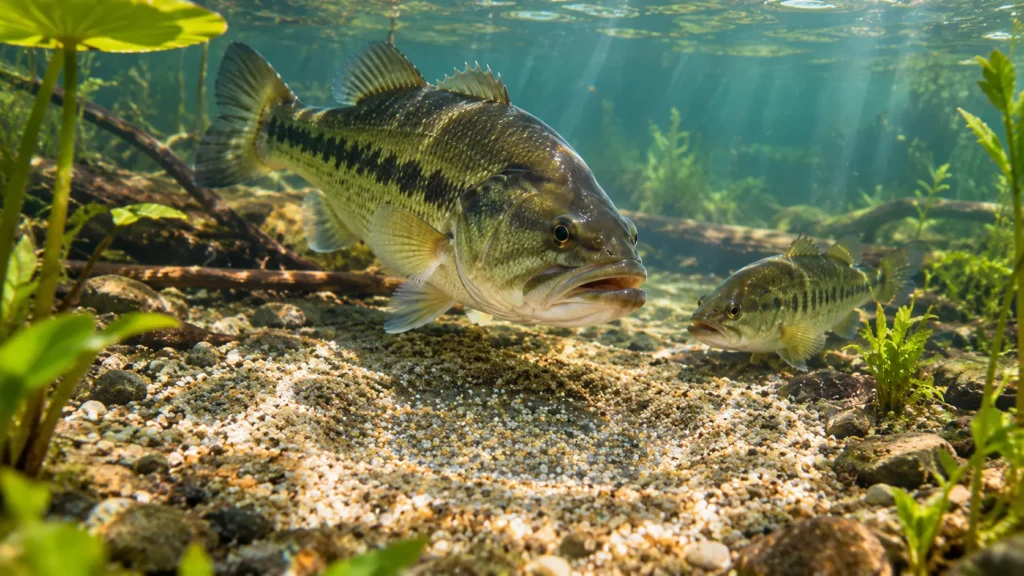
When do largemouth bass spawn? In most of the United States, largemouth bass spawn from late winter through early summer. Southern fisheries often start in February or March, mid-latitude lakes peak in April and May, and northern lakes commonly see spawning bass in May and June.
The calendar matters less than conditions on your main lake. Bass respond to warming water, longer daylight, stable weather, and suitable shallow habitat. A warm spell can start the process early, while a cold front can delay it or push fish back off the banks.
A useful rule when fishing for bass: watch for several days of water temperatures in the low 60s, especially on protected northern or northwestern banks that receive afternoon sun. That is often when the first males begin scouting and preparing nests.
When Do Largemouth Bass Spawn?
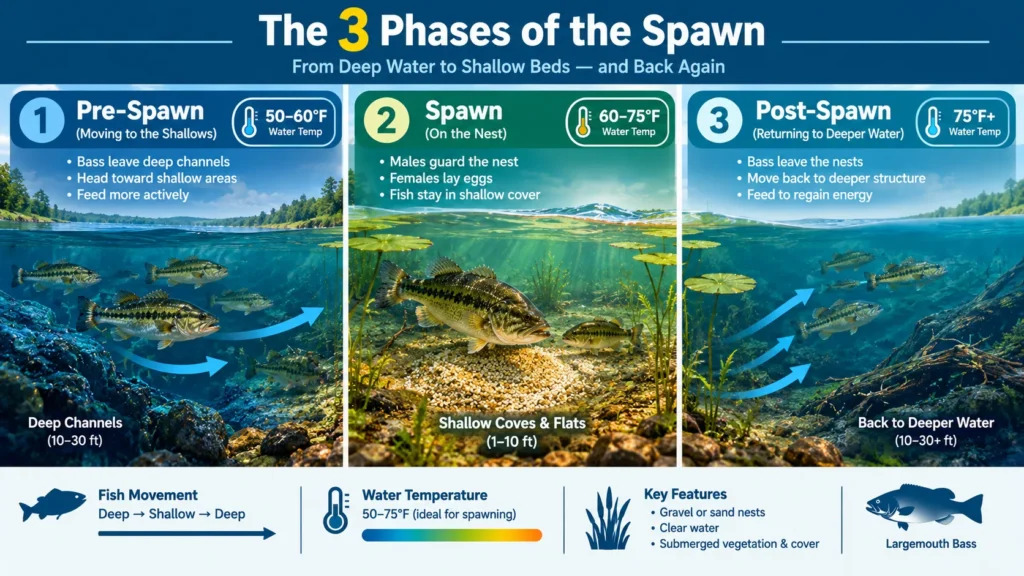
When Bass fish begin spawning? Large mouth bass spawn primarily between late winter and early summer. Daylight duration (photoperiod) and water temperature trigger this annual biological cycle. When spring days grow longer, bass feel an instinctual pull to move out of deep winter holding areas into protected shallow water.
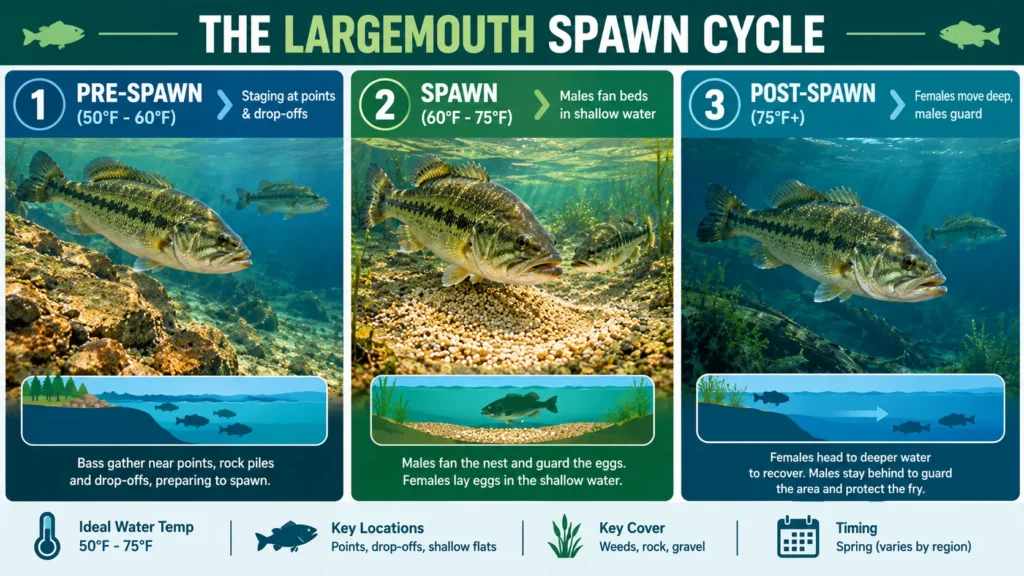
The annual migration takes place in three distinct phases:
- Pre-Spawn: Bass feed heavily near staging points in 55°F to 60°F water as females bulk up before dropping eggs.
- Spawn (Bedding Phase): Bass lock onto shallow beds in 60°F to 75°F water to lay and fertilize eggs.
- Post-Spawn: Females retreat offshore to rest, while aggressive males guard the newly hatched fry near shallow cover.
Understanding when do bass start to spawn requires monitoring local weather trends rather than relying solely on calendar dates. Warm spring rains, stable high-pressure systems, and a full or new moon often trigger mass migrations toward the shoreline.
The most widely used reference range for largemouth bass spawn temperature is 59–75°F. Males often begin selecting and building nests once water holds above about 60°F, while peak spawning commonly occurs in the mid-60s to low 70s.fws+2
| Water temperature | What bass usually do |
|---|---|
| 50s°F | Pre-spawn movement begins; spawning fish feed along routes leading shallow. bassresource |
| About 60°F | Males start scouting and clearing nests in protected shallow spawning areas. |
| 65–75°F | Prime spawning window in many waters; females bass move onto beds. |
| Above 75°F | Spawning activity generally winds down in most fisheries. |
Temperature alone does not guarantee a spawn. Water level stability, wind direction, sunlight, water clarity, and available cover all influence when and where fish commit to beds.
What Water Temperature Triggers Largemouth Bass Spawning?
Water temperature is the primary physical catalyst for bass reproduction. While 60°F to 75°F serves as the primary bass spawn temperature range, fish do not all move at once.
| Water Temperature Range | Spawn Phase | Bass Behavior & Movement | Target fisherman Locations |
| 48°F – 55°F | Early Pre-Spawn | Fish staging in staging lanes; staging near secondary points. | Creek channels, bluff walls, deep drop-offs. |
| 55°F – 62°F | Late Pre-Spawn | Heavy feeding; cruiser bass scout shallow flats for nest sites. | Shallow flats, secondary points, marina docks. |
| 60°F – 72°F | Peak Spawn | Males build beds; females lock onto nests for egg deposition. | Sand/gravel pockets, stump fields, reed lines. |
| 72°F – 78°F | Early Post-Spawn | Females migrate outward to recover; males guard fry. | Docks, overhanging brush, lily pads, nearby ledges. |
Water clarity and body size alter how fast these temperatures change. Shallow farm ponds heat up quickly, starting the spawn weeks ahead of a large, deep reservoir in the exact same county. Deep reservoirs retain cooler depths longer, causing the spawn to stretch out over several months as different sections of the lake warm up at varying rates.
When Do Largemouth Bass Spawn by State?
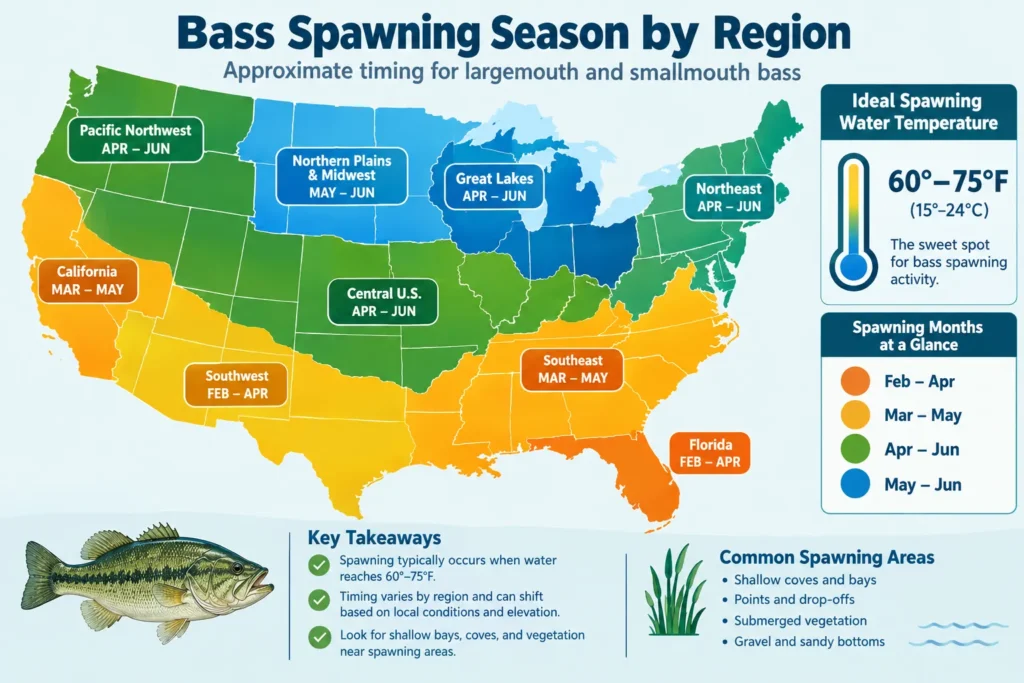
Because climate varies dramatically across North America, the largemouth bass spawning season shifts by geographic location. The spawn moves gradually from south to north as spring warmth spreads across the country.
Southern States: Florida, Texas, and Alabama
In warm southern waters, the spawn starts remarkably early. Florida largemouths often begin building beds in late January or February, with peak activity occurring between February and March. In Texas and Alabama, the main spawning run takes place from February through April. Stable warm weather allows largemouth spawn in multiple waves over an extended window.
Central States: Tennessee, Georgia, and Oklahoma
In mid-latitude regions, bass spawning months typically span from late March through May. Georgia and Oklahoma experience strong pre-spawn feeding runs in March, with peak bedding occurring in April. Tennessee lakes usually see peak spawn activity from mid-April to early May, depending on spring cold fronts.
Northern States: Michigan, Wisconsin, and Minnesota
Northern anglers wait longer for the action to begin. In Michigan, Wisconsin, and Minnesota, ice-out dictates the timeline. Bass rarely begin bedding until mid-May, with peak spawning running through June and early July. Because northern summers are shorter, the entire spawning cycle occurs in a fast, condensed window.
Where Do Largemouth Bass Build Their Spawning Beds?
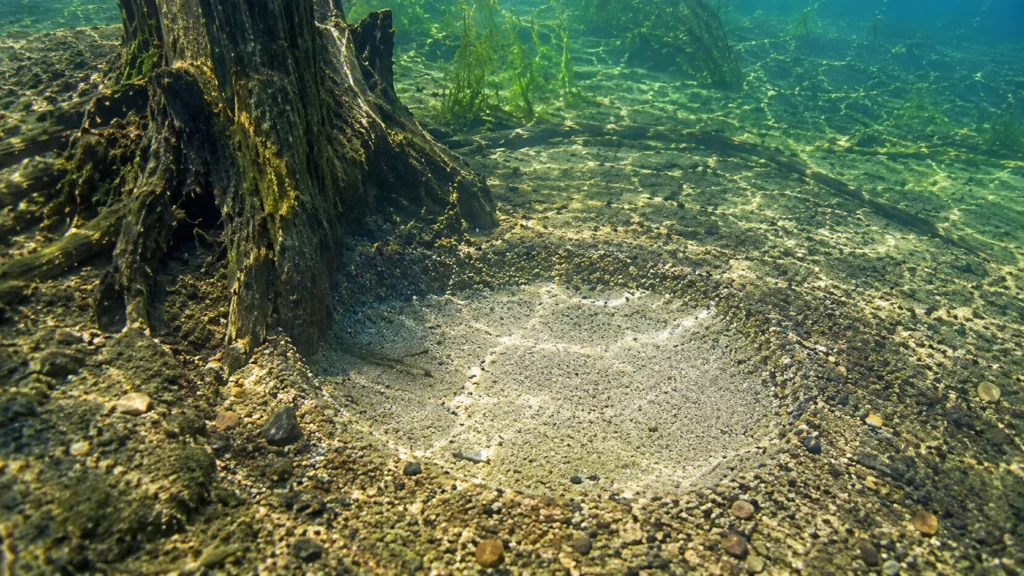
Bass build nests in protected shallow areas that shield eggs from strong currents and egg predators like bluegill and crawfish. Male bass fan out circular depressions in hard substrate using their tails, creating noticeable light-colored spots on the lake floor.
Target these primary habitat features when searching for bass spawning beds:
- Hard Bottoms: Gravel, sand, packed clay, or crushed shell beds provide firm foundations for egg adhesion.
- Visual Cover: Bass position beds against structural objects like dock pilings, submerged stumps, fallen logs, and boulders.
- Protected Coves: Back pockets of creeks in the backwaters, protected marinas, and shallow bays shield nests from heavy wave action caused by spring winds.
- Depth Zone: Most beds sit in 1 to 5 feet of water, though bass in crystal-clear lakes may spawn down to 8 or 10 feet so light can reach the eggs.
What Are the Signs That Largemouth Bass Are Spawning?
Spotting active spawning grounds requires observing physical signs on the water column, and noticing subtle changes in fish appearance:
- Visible White Disks: Fanned-out beds appear as light, clean circles on dark lake bottoms.
- Pair Behavior: A larger female and smaller male resting side-by-side inside or near a swept-out bed.
- Aggressive Nest Patrols: Male bass quickly swimming out to chase away bluegills, sunfish, or crawfish before returning to the center of the bed.
- Physical Wear on Bass: Caught fish often display red, raw tail fins (from fanning beds) and bruised lower jaws.
- Warming Trends & Moon Phases: Stable water temps (60°F–68°F) paired with a new or full moon typically signal a fresh wave of fish moving shallow.
How Long Does the Largemouth Bass Spawn Last?
The overall largemouth bass spawning season for a body of water lasts about 6 to 8 weeks. However, an individual pair of bass completes the actual spawning process much faster.
Extremely cold spring fronts can pause the process. If a sudden drop in air temperature pulls water temps back below 55°F, bass will back off their beds into deeper water until stable weather returns.
Do Largemouth Bass Bite During the Spawn?
Yes, largemouth bass bite during the spawn, but their motivation changes. They stop feeding out of hunger and start striking out of defense, annoyance, or nest preservation.
- Male Bass (Buck Bass): Males guard the nest aggressively. They will pick up almost any lure dropped into their bed to carry it away from the eggs.
- Female Bass: Female bass are notoriously difficult to catch bass during the spawn. They often ignore lures entirely or simply nudge intruders away. However, pitching a lure directly onto the bed repeatedly can trigger an reaction strike from a protective female.
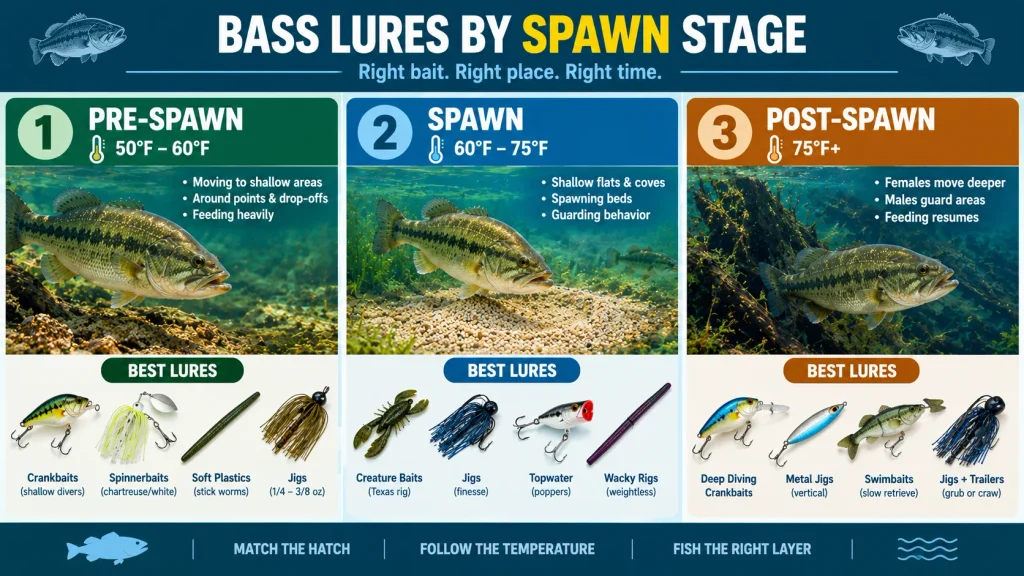
What Are the Best Lures for Pre-Spawn, Spawn, and Post-Spawn Bass?
Selecting lures tailored to each phase is essential for consistently catching spawning bass.
Pre-Spawn Bass Fishing Lures
During pre-spawn bass fishing, spotted bass actively hunt for food near shallow transition points. Fast-moving lures that cover water work best:
- Lipless & Lipped Crankbaits: Excellent for searching shallow flats, grass lines, and creek channels.
- Bladed Jigs (ChatterBaits): Mimic bluegill and baitfish around emerging aquatic vegetation.
- Suspended Jerkbaits: Pause lure near secondary points to entice sluggish cold-water bass.
Active Spawn Lures (Bed Fishing)
Targeting fish directly on beds requires high-visibility finesse lures:
- White Creature Baits & Texas-Rigged Craws: White colors allow you to visually track when a bass picks up the bait inside the bed.
- Drop Shot Rigs: Keep your soft plastic suspended right in the eyes of a defensive male bass.
- Weightless Soft Stickbaits (Senkos): Sinks slowly into the bed without scaring cautious fish.
Post-Spawn Bass Fishing Lures
During post-spawn bass fishing, females look for easy meals around shady cover to recover, while males defend fry:
- Wacky Rigged Worms: Slow, fluttering action triggers strikes from recovering, hesitant bass.
- Topwater Poppers & Hollow-Body Frogs: Target fish hiding under shady docks, overhanging trees, and thick mats.
- Swim Jigs & Finesse Jigs: Retrieve through shallow bluegill zones where hungry bass hunt.
What Happens to Largemouth Bass After Spawning?
Once female bass finish dropping their eggs, they enter a brief recovery phase lasting 1 to 2 weeks. Exhausted from the spawning process, large females move off the immediate bank to rest near nearby shade, docks, overhanging trees, or secondary points.
After recovering, females feed heavily to regain lost body weight. They often follow bluegill and shad spawning runs in shallow water before eventually moving out to deeper summer holding spots like offshore ledges, deep humps, and submerged river channels.
Frequently Asked Questions About Largemouth Bass Spawning
Do largemouth bass spawn more than once a year?
No, individual bass spawn only once per year. However, because different fish move shallow in waves based on weather and water body depth, the overall spawn in a single lake can stretch out over several months.
What month is best for bass spawning?
April is generally the single best times for bass spawning across central parts of North America. However, peak spawning ranges from February in southern states like Florida to June in northern states like Minnesota.
Do largemouth bass spawn in ponds?
Yes, largemouth spawn regularly in small ponds. In fact, because small bodies of water have lower overall water volume, ponds warm up much faster in spring than large lakes, causing pond bass to spawn earlier in the season.
How can you tell if a bass is guarding its nest?
A male bass guarding a nest will hover directly over or beside a cleared spot on the bottom. He will dart out aggressively at intruding panfish or lures, pick them up, and carry them away from the bed before returning to his central position.
Conclusion
Understanding when do largemouth bass spawn gives you a major advantage on the water every spring. By paying close attention to water temperatures (60°F to 75°F), photoperiod shifts, and regional climate patterns, you can accurately track when bass transition from deep staging areas to shallow bedding sites.
Whether you target aggressive pre-spawn feeders, sight-fish active beds, or catch post-spawn bass recovering near shallow cover, adjusting your tactics to each phase yields consistent success. Keep an eye on your boat’s depth finder and water temp gauge as winter turns to spring. Locate firm sand or gravel bottoms in protected coves, tie on the right lures for the current sub-phase, and make the most of this rewarding bass fishing season.
Recommended Posts
- When Do Shad Spawn? Season, Temperature & Locations