

You can be fishing a quiet shoreline one minute and watching bass smash baitfish the next. That’s what makes the shad spawn worth paying attention to. When shad move into shallow water to reproduce, bass during the shad spawn often follow them, looking for an easy meal.
So, when do shad spawn? Most shad spawn in spring, although some species can spawn again in summer. Threadfin shad often begin spawning when the water gets close to 70°F. Gizzard shad may start at cooler temperatures.
The calendar helps, but it won’t tell you exactly when the action will begin on your lake. Water temperature, weather, and the type of shad all play a part.
Here’s how to recognize the shad spawning season, find likely spawning areas, and use the activity to your advantage when fishing for bass.
When Is Shad Season?
For many bass anglers, shad season means spring. That’s when warming water brings baitfish into shallow areas and creates some excellent feeding opportunities.
In warmer southern lakes, the activity may begin in March or April. Farther north, it can take until May or June for the water to warm enough. Some lakes fall outside these general windows, so use the dates as a rough guide.
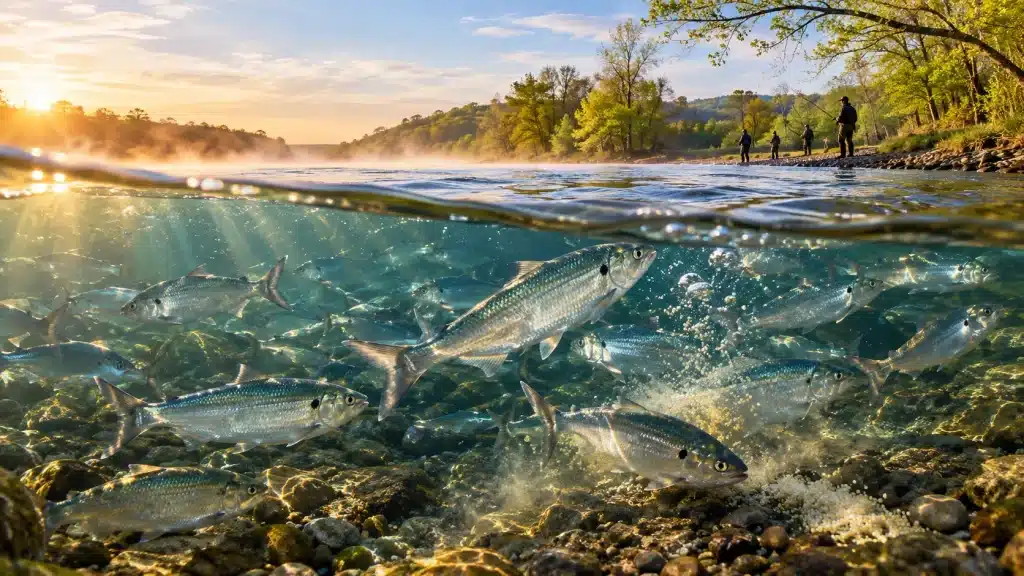
Water temperature is a better clue than the month. A warm stretch of weather can bring shad into the shallows earlier than expected. A sudden cold snap may slow things down.
For threadfin shad, start watching closely when water temp approach 67–70°F. Gizzard shad can spawn at lower temperatures, so don’t wait for every part of the lake to reach 70°F before checking likely spots.
Shad Spawning Season by Region:
| Region | General spring window | What anglers should watch |
|---|---|---|
| Deep South | March–May | Warming shallows and baitfish near cover |
| Southeast | April–May | Water approaching the upper 60s to around 70°F |
| Central states | April–June | Sustained warming and activity along the banks |
| Northern lakes | May–July | Warmer shallows and visible baitfish activity |
These are broad estimates, not fixed dates. Two lakes in the same state can have different spawning schedules.
If you can only make one trip, check the recent weather and water temp before heading out. Then look for signs of active baitfish when you arrive.
When Do Threadfin Shad Spawn?
Threadfin shad usually spawn in spring, often when water temp approach 70°F. In many southern reservoirs, anglers look for activity in April and May, but the timing can shift from one year to the next.
These small, silvery fish gather in shallow water to reproduce. Their eggs stick to submerged surfaces, including rocks, vegetation, and wood.
Threadfin shad may spawn more than once during the year. In suitable conditions, spawning can continue into summer. That gives bass anglers more than one possible window to find baitfish near shore.
Keep an eye on rocky banks, docks, and grass edges. You may see the shad flickering near the surface or gathering around cover. Bass feeding nearby can give away the best spots.
For more biological details, see the USGS threadfin shad species profile.
When Do Gizzard Shad Spawn?
Gizzard shad also spawn in spring, but they may begin at cooler temperatures than threadfin shad. A range around 64–69°F is often used as a general guide, although local conditions can change the timing.
Look for gizzard shad in shallow coves, backwaters, and areas with suitable spawning surfaces. They may use rocks, vegetation, and submerged wood.
There’s another difference worth knowing. Gizzard shad grow much larger than threadfin shad. Young gizzard shad are an important food source for bass, while larger ones may be too big for smaller bass to eat.
If your lake holds both species, don’t assume their spawning activity will peak at the same time. Watch the shallows and let the fish tell you what’s happening.
What Water Temperature Do Shad Spawn?
Water temp gives you a useful starting point when trying to predict the shad spawn.
Threadfin shad often begin spawning near 70°F. Gizzard shad may spawn at temperatures in the mid-60s. These are general ranges, not strict limits.
| Species | General temperature guide |
|---|---|
| Threadfin shad | Around 70°F |
| Gizzard shad | Roughly 64–69°F |
| Other shad species | Depends on species and location |
A temperature reading doesn’t confirm that spawning has started. It tells you when conditions may be favorable.
How to check conditions before fishing
Check shallow water first. Protected coves and creek arms can warm differently from exposed parts of the lake.
If the water has warmed over several days, it’s worth investigating the banks. Pay attention to small changes in the surface, too.
Shad may flicker near rocks or brush. You might hear splashes against the bank or see bass chasing baitfish. Those clues are more useful than a thermometer alone.
Where Do Shad Spawn?
Shad use a range of shallow habitats to reproduce. They often release eggs near submerged objects that provide suitable surfaces for the eggs to attach.
For anglers, a few types of cover are worth checking first.
– Rocky banks and riprap
Start with rocks along dams, bridges, and reservoir shorelines. Riprap provides plenty of hard surfaces, and the edges can attract baitfish moving into shallow water.
Make a few casts parallel to the bank. This keeps your lure near the rocks longer than casting straight out into open water.
Watch closely. A few shad flashing near the rocks may be enough reason to stay and investigate.
– Docks and marinas
Docks can attract shad because of their floats, pilings, cables, and nearby cover. Bass often use these same structures to ambush baitfish.
Look around docks in shallow water, especially those close to a protected pocket or creek arm. Watch for baitfish gathering near the structure.
A small swimbait or spinnerbait is a good choice for covering the area. Around posts and tighter spaces, a swim jig can help you work close to cover.
– Grass beds and vegetation
Shad may spawn near submerged vegetation when suitable surfaces are available. Grass edges can also hold bass waiting for baitfish to pass.
Pay attention to the outside edge of a grass bed, particularly where shallow water meets a deeper channel. A swim jig works well along the edge, while a spinnerbait can help you cover more water.
Don’t overlook small openings in the grass. A short stretch with active baitfish may be more productive than a large, empty weed bed.
– Fallen trees and submerged wood
Laydowns, brush, and submerged branches provide more places for shad to gather and spawn. These spots are common in protected coves and creek arms.
Work your lure close to the wood, but keep an eye on snags. A spinnerbait can handle some cover, while a weedless swim jig is useful around branches and vegetation.
If you catch a bass near one fallen tree, check similar cover nearby. The fish may be using several spots along the same bank.
– Creek arms and shallow coves
Creek arms and sheltered pockets are worth checking as spring progresses. They may warm faster than exposed water and often contain the shallow cover shad need.
Start near the mouth of a creek arm. If you see baitfish activity, work farther into the pocket.
A shallow area close to deeper water is particularly useful. Baitfish can move in and out, and bass have nearby places to hold when the feeding activity changes.
What Time of Day Is Best for the Shad Spawn?
Early morning is often the best time to fish for bass feeding on spawning shad.
Shad may spawn at night or during low-light periods, depending on the species and conditions. The early-morning window is popular with anglers because baitfish and feeding bass can be easier to spot near the surface.
Some mornings, the action starts before sunrise. Other days, you may not see much until the light begins to change.
And the bite can end quickly.
As the sun rises, baitfish may move away from the bank. Bass can follow them or settle around nearby cover. That’s why it’s worth arriving early instead of waiting until midmorning.
How to tell if shad are spawning
Look for a few clues:
- Small fish flashing or darting near the surface.
- Repeated splashes along rocks, docks, or vegetation.
- Bass chasing baitfish close to shore.
- Birds feeding over shallow water.
- Shad gathering around submerged cover.
You may also see shad brushing against rocks or other objects. That can be a sign of spawning behavior, but it isn’t proof on its own.
Watch the area for a few minutes. If baitfish keep returning to the same cover and bass are feeding nearby, you’ve found a spot worth fishing.
Which Lure Should You Tie On?
You don’t need a huge tackle box to fish the shad spawn. A few lures that resemble small baitfish will cover most situations.
The best choice depends on the cover and what the bass are doing. Fish feeding at the surface may respond to a topwater bait. Bass around grass or rocks may prefer a lure that runs just below the surface.
| Lure | Best situation | How to fish it |
|---|---|---|
| Spinnerbait | Rocky banks, docks, and windy shorelines | Retrieve steadily along the cover |
| Swim jig | Grass and shallow vegetation | Swim it along the edge or through openings |
| Topwater popper | Calm water and visible feeding | Use short pops with pauses |
| Walking bait | Bass chasing shad on the surface | Work it across the feeding area |
| Paddle-tail swimbait | Clear water, docks, and open pockets | Use a steady, natural retrieve |
| Shallow crankbait | Rocks and other hard cover | Run it close to the cover |
White, pearl, and silver are good starting colors. They resemble the flash of many baitfish. In stained water, a brighter color may help bass find your lure.
How to approach the morning bite
Get to a likely spawning area before sunrise. Start with a rocky bank, dock, or grass edge.
Make a few casts along the cover. If you see shad flickering on the surface or bass chasing them, slow down and work the area more carefully.
No activity? Keep moving.
Try another bank or a nearby creek pocket. Once you find baitfish, stay long enough to see whether bass are feeding. Don’t assume every school of shad has bass underneath it.
When the fish stop chasing, change your approach. A subsurface swimbait may work better than a topwater lure once the surface activity fades.
What Happens When the Shad Spawn Ends?
The end of the surface action doesn’t mean the bass have disappeared. They may have moved a short distance away from shore.
As the light increases, shad can leave shallow cover and move toward deeper water. Bass often follow the baitfish or hold near nearby structure.
Try fishing the outside edge of a grass bed, a deeper dock corner, or a point near the spawning area. If you have a fish finder, check for baitfish schools beyond the bank.
A swimbait or crankbait can help you cover that water. You may also need a slower retrieve if the bass aren’t chasing as aggressively.
The main mistake is staying in the same shallow spot long after the baitfish have moved. Follow the food source instead.
Do Shad Spawn in the Fall?
Yes, some shad can spawn again in late summer or early fall when conditions are suitable. Threadfin shad may produce multiple spawning events during the year.
Still, fall shad fishing is not always about spawning. Bass often feed heavily on shad in autumn, even when the baitfish aren’t reproducing.
Look for schools of baitfish, surface disturbances, and bass pushing shad toward the bank. These signs can point you toward feeding fish.
If you’re seeing shad but no obvious spawning behavior, fish the school anyway. You don’t need an active spawn to catch bass feeding on baitfish.
Shad Spawn vs. Shad Run: What’s the Difference?
The terms sound similar, but they can describe different events.
In bass fishing, the shad spawn usually refers to threadfin or gizzard shad reproducing in lakes and reservoirs. Anglers target the shallow baitfish because bass often feed around them.
A shad run usually refers to migratory fish moving through rivers to reproduce. American shad, for example, travel into freshwater rivers to spawn.
The timing depends on the species and location. If you’re searching for when the shad start running, identify the river system and the type of shad first. A river migration can follow a very different schedule from the threadfin shad spawn in your local bass lake.
Shad Spawn Questions Anglers Ask
1. What water temp do shad spawn?
Threadfin shad often spawn when water temperatures approach 70°F. Gizzard shad can spawn at cooler temperatures, commonly around 64–69°F. Timing varies by location.
2. Where do shad spawn?
Shad like to spawn near rocks, vegetation, submerged wood, docks, and other suitable surfaces. The exact location depends on the species and available habitat.
3. When do gizzard shad spawn?
Gizzard shad generally spawn in spring. In many southern reservoirs, activity may begin around April and continue into May, depending on the weather and water temperature.
4. Do shad spawn in the fall?
Some shad, including threadfin shad, may spawn again in late summer or early fall. However, bass feeding on shad in autumn doesn’t necessarily mean a spawn is taking place.
5. When do threadfin shad spawn?
Threadfin shad usually spawn in spring when water temperatures approach 70°F. Spawning may continue into summer, and some populations spawn more than once a year.
6. How long does the shad spawn last?
Activity at one location may last only a short time, while spawning across a lake can continue for weeks. The duration depends on the species and local conditions.
7. What month is shad season?
In many southern bass lakes, the main spring shad spawn occurs in April and May. Warmer regions may see activity earlier, while cooler lakes may warm up later.
8. What time of day is best for fishing the shad spawn?
Early morning is often the best time to catch bass feeding on spawning shad. The bite may slow as the sun rises, although shade and cloudy weather can sometimes extend the action.
9. What are the best places to fish during the shad spawn?
Try rocky banks, docks, grass edges, bridge riprap, and shallow creek pockets. Focus on spots where you can see baitfish activity.
10. What lures work best during the shad spawn?
Spinnerbaits, swim jigs, topwater lures, and paddle-tail swimbaits are good options. Choose your lure based on the cover and whether bass are feeding at the surface or below it.
Final Thoughts – When Do Shad Spawn
A good shad spawn morning can turn quiet water into a feeding frenzy. You might spot shad flickering on the surface, then see bass tear through the school seconds later. When that happens, pay attention to the location. The rocks, grass, or dock the shad are using to spawn may attract feeding bass again.
Start checking the water as spring warms up. Threadfin shad often spawn near 70°F, while gizzard shad begin at cooler temperatures. Get there early, watch the shallows, and don’t spend the whole morning in one place if the baitfish have moved.
If you’ve seen them spawn before, you know how quickly the action can change. When the surface goes quiet, check nearby deeper water rather than packing up.
The fish will tell you where to go next. Your job is to notice.
Want to catch more bass this season? Check out our bass fishing guides for lure tips, seasonal patterns, and practical ways to find fish on your next trip.
You might also like
- When Do Rainbow Trout Spawn In Your State? (Explained)
- Does Water Level Affect Fishing? Changing Water Levels Tips
- How Deep Do Walleyes Go In The Summer? 9 Things (Should Know)
- What Bait Do You Use For Crappie Ice Fishing (Top 10 Picks)
- How Big Do Channel Catfish Get In Ponds? (The Whole Story!)