
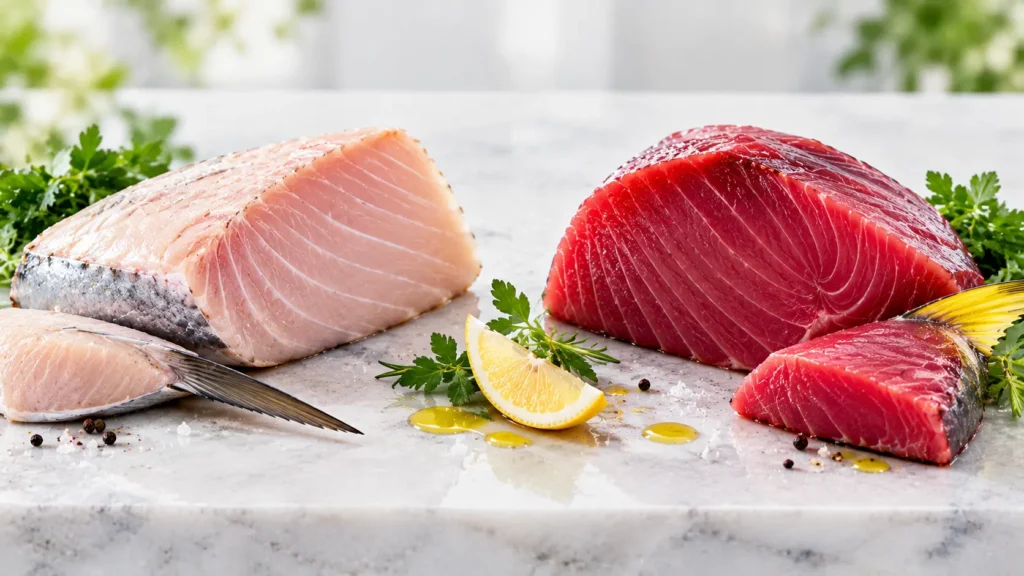
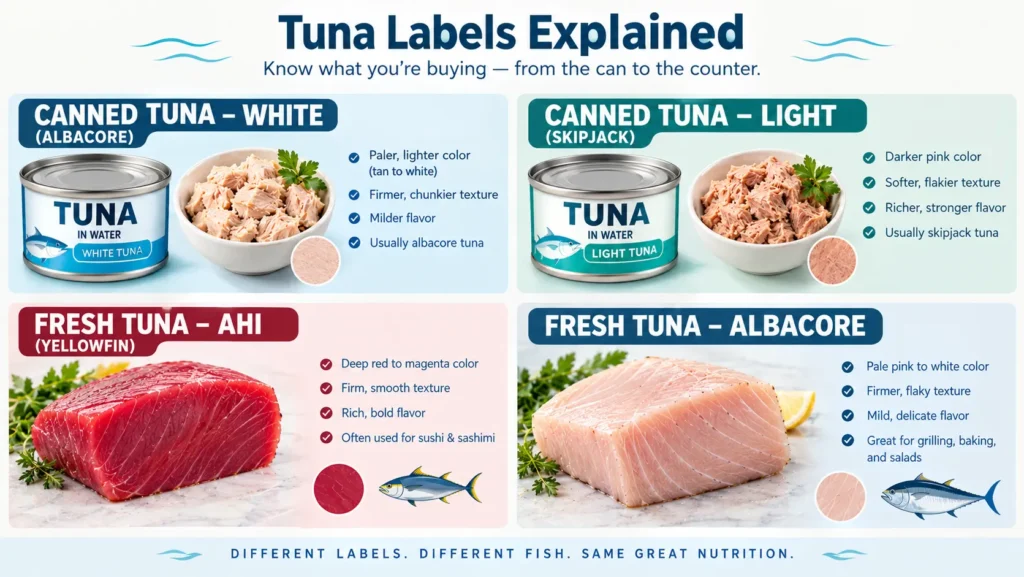
When comparing albacore vs yellowfin tuna, the primary difference lies in their taste, texture, and flesh color: albacore features a mild flavor, firm texture, and light pinkish-white flesh, while yellowfin offers a pronounced savory flavor, tender texture, and deep reddish-pink meat.
Understanding these distinctions helps you pick the right fish whether you buy fresh steaks at the seafood counter or grab cans from the grocery aisle.
Both tuna species belong to the Thunnus genus and populate oceans worldwide, yet they fill very different roles on your dinner plate. Albacore often takes the title of “white tuna,” while yellowfin commonly fills the role of “light tuna” or “Ahi.”
Before diving into the detailed breakdown, review this quick side-by-side comparison chart.
At-a-Glance Comparison Table
| Feature | Albacore Tuna (Thunnus alalunga) | Yellowfin Tuna (Thunnus albacares) |
| Common Market Names | White Tuna, Longfin Tuna | Ahi Tuna, Yellowfin, Light Tuna |
| Identifying Features | Exceptionally long pectoral fins, dark blue back | Bright yellow dorsal/anal fins and finlets |
| Average Weight | 10 to 80 lbs | 60 to 400 lbs |
| Flesh Color | Off-white to pale pink | Deep pink to ruby red |
| Flavor Profile | Milder, rich, slightly sweet, subtle | Savory, fresh, rich, distinctly fishy |
| Texture | Firmer, steak-like, flakey | Tender, velvety, medium-firm |
| Primary Culinary Use | Canned white tuna, seared steaks, salads | Sushi, sashimi, poke bowls, seared Ahi steaks |
| Fat & Omega-3 Content | Higher fat, rich in Omega-3s | Moderate fat, leaner protein profile |
What Is the Difference Between Albacore and Yellowfin Tuna?
At a foundational level, albacore tuna and yellowfin tuna are two distinct species within the mackerel family, Scombridae. Albacore tuna (Thunnus alalunga) is famous for its light-colored meat, which led to its official designation as the only species allowed to wear the label “White Meat Tuna” in the United States.
Yellowfin tuna (Thunnus albacares), on the other hand, produces darker, redder meat. Commercial fisheries label yellowfin as “Light Tuna” when canned, alongside its close relative, skipjack. Beyond labeling laws, these two fish differ significantly in how their muscles store fat and oxygen, directly shaping how they taste on your fork.
How to Identify Albacore vs Yellowfin Tuna
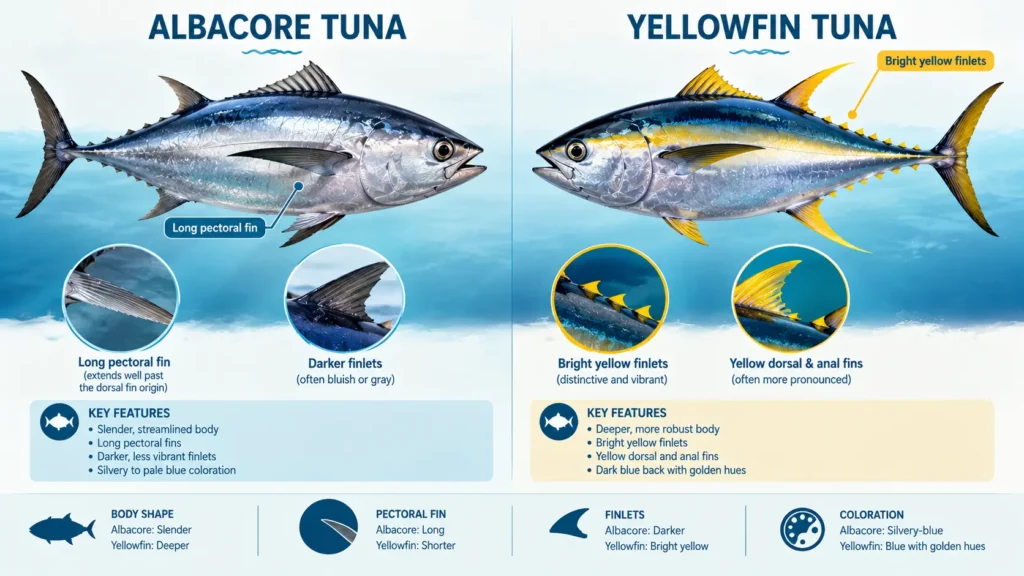
Fishermen and fishmongers identify these species by looking at their fins and body shapes.
- Albacore Tuna: Look at the pectoral fins (the side fins). On an albacore, these fins stretch unusually long, extending past the anal fin. Their bodies are streamlined, torpedo-shaped, and sport a dark blue back with a silvery-white belly.
- Yellow fin fish: The name gives this species away. Bright yellow colors accent its dorsal fin, anal fin, and the small finlets running down toward its tail. Its main body shows a metallic dark blue back that transitions into a silver belly, often adorned with faint vertical white lines.
Albacore Tuna vs Yellowfin Tuna: Size and Weight Comparison
Size impacts more than just a fisherman’s story; it influences muscle density, fat storage, and harvest methods.
- Albacore Tuna Size: Albacore are noticeably smaller pelagic fish. Mature albacore typically weigh between 10 and 80 pounds, averaging roughly 20 to 30 pounds in commercial catches. They measure between 2 and 4 feet in length.
- Yellow fin Tuna Size: Yellowfin grow much larger. Commercial catches frequently range from 60 to 200 pounds, with massive trophy specimens reaching up to 400 pounds and measuring over 7 feet long.
Because yellowfin grow so large, fish processors easily cut thick, wide, uniform steaks from them, making yellowfin ideal for high-end seafood counters.
Where Do Albacore and Yellowfin Tuna Live?
Both species swim vast distances across global ocean currents, but they prefer slightly different water temperatures and depths.
Albacore Habitat
Albacore thrive in temperate and tropical oceans worldwide, including the Pacific, Atlantic, and Indian Oceans, as well as the Mediterranean Sea. They prefer cooler surface waters ranging from 59°F to 69°F (15°C to 21°C) and often migrate long distances north along the Pacific coastline of North America during summer months.
Yellowfin Habitat
Yellow fin tuna prefer warmer, truly tropical and subtropical waters. They migrate through warm ocean zones where surface temperatures stay between 65°F and 88°F (18°C to 31°C). They spend significant time in the upper layer of the ocean, often schooling near surface structures, islands, and warm currents.
Yellowfin vs Albacore Tuna: Taste and Texture
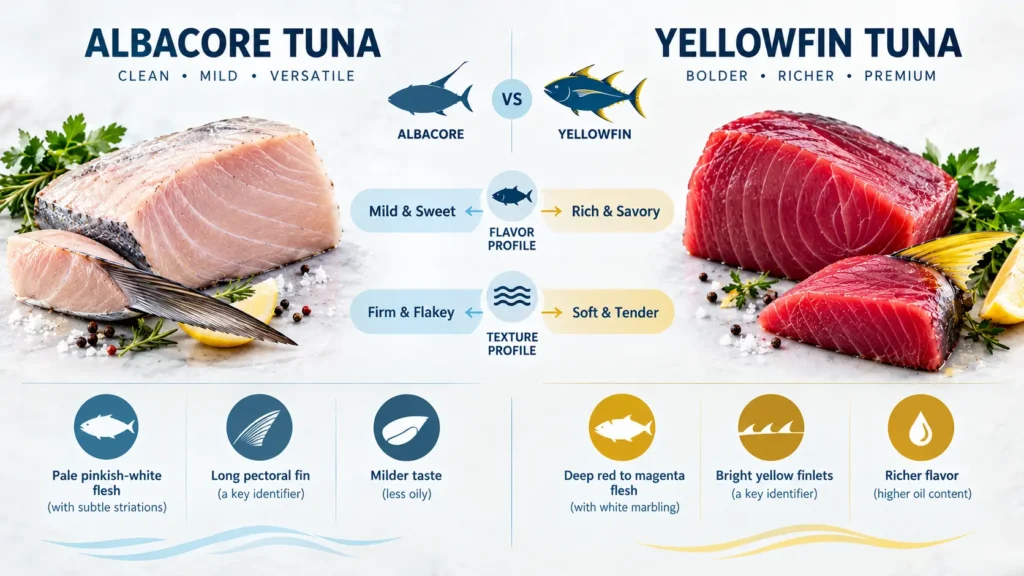
How do these fish compare on the palate? The albacore tuna taste differs markedly from the yellowfin tuna taste. Taste is where most people notice the biggest yellow fin tuna vs albacore difference.
– Albacore tuna taste
Albacore tuna taste is mild, clean, and gently buttery. It does not overpower mayonnaise, lemon, herbs, pasta, or vegetables, which makes it a reliable choice for classic tuna salad and sandwiches.
Albacore vs yellowfin canned tuna: Canned albacore usually has firm, chunky pieces. Fresh or frozen albacore can be more delicate, so it benefits from quick cooking and simple seasoning.
– Yellowfin tuna taste
Yellowfin tuna taste is deeper, meatier, and more savory. Many people describe it as having a stronger “real tuna” flavor, with a dense bite that resembles a lean steak.
That firm texture makes yellowfin excellent for recipes where the fish needs to keep its shape: poke bowls, sushi-style rice bowls, grilled steaks, and seafood platters
Quick rule: If you want the tuna to disappear into the dish, choose albacore. If you want the tuna to be the main event, choose yellowfin.
Which Tuna Is Better to Eat: Albacore or Yellowfin?
Choosing which tuna is better to eat depends entirely on your recipe and personal preferences.
If you prefer a mild, chicken-like flavor with a firm bite, albacore is your best pick. Its firm texture holds up beautifully when tossed into hearty dishes, pasta bakes, or classic tuna salads where you do not want the fish to turn into mush.
If you enjoy rich, fresh seafood with a soft texture, yellowfin wins. Its vivid color creates an appealing visual presentation on the plate, making it the top choice for raw preparations or quick, high-heat searing.
If you want to explore how yellowfin compares to another top-tier sushi fish, check out our detailed guide on bluefin vs yellowfin tuna.
Albacore vs Yellowfin Tuna: Nutrition and Health Benefits
Both species pack an exceptional nutritional punch, delivering high-quality lean protein, essential vitamins, and key minerals like selenium and vitamin B12. However, their nutrient profiles carry subtle differences:
- Omega-3 Fatty Acids: Albacore generally contains higher concentrations of heart-healthy Omega-3 fatty acids (EPA and DHA) due to its higher fat content.
- Lean Protein Density: Yellowfin features a slightly leaner profile, providing a higher protein-to-calorie ratio per serving for those keeping close track of total fat intake.
Mercury Content Considerations
Because tuna are predatory fish high up the ocean food chain, they absorb trace amounts of methylmercury.
- Albacore: Being a larger, longer-lived species than skipjack, albacore accumulates moderate mercury levels. The FDA classifies canned albacore white tuna as a “Good Choice,” recommending up to one serving per week for children and pregnant individuals.
- Yellowfin: Yellowfin also contains moderate mercury levels, generally comparable to albacore. Eating yellowfin once or twice a week fits comfortably within balanced dietary guidelines for healthy adults.
Which Tuna Is Better for Sushi, Sashimi, and Cooking?
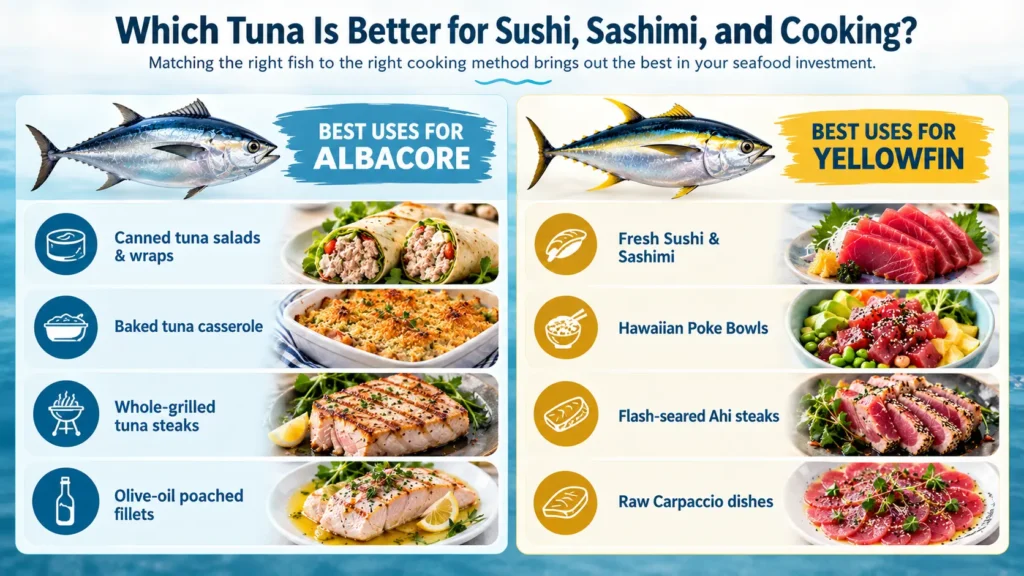
Matching the right fish to the right cooking method brings out the best in your seafood investment.
       BEST USES FOR ALBACORE                   BEST USES FOR YELLOWFIN
┌─────────────────────────────────┐     ┌─────────────────────────────────┐
│ • Canned tuna salads & wraps    │     │ • Fresh Sushi & Sashimi         │
│ • Baked tuna casserole          │     │ • Hawaiian Poke Bowls           │
│ • Whole-grilled tuna steaks     │     │ • Flash-seared Ahi steaks       │
│ • Olive-oil poached fillets     │     │ • Raw Carpaccio dishes          │
└─────────────────────────────────┘     └─────────────────────────────────┘
For Raw Applications (Sushi, Sashimi, Poke)
Yellowfin is the undisputed winner. Its vibrant red color remains visually stunning when sliced over rice or tossed in poke soy dressings. Its tender texture allows knives to slice through effortlessly, delivering a soft mouthfeel.
For High-Heat Searing
Yellowfin excels at quick searing. Flash-searing a yellowfin steak for 45 seconds per side creates a crisp, seasoned crust while keeping the interior cool, raw, and tender.
For Canned Meals and Comfort Dishes
Albacore reigns supreme. When canned, albacore keeps its firm structure and rich flavor without breaking down into tiny fragments. It mixes cleanly with mayonnaise, celery, herbs, and lemon juice.
Are Albacore and Yellowfin Tuna Safe to Eat?
Yes, both albacore and yellow fin tuna are safe, healthy additions to a balanced diet when eaten in moderation.
To enjoy your Tuna melts safely:
- Manage Portions: Healthy adults can comfortably consume 2 to 3 servings of yellowfin or albacore per week. Pregnant women, nursing mothers, and young children should limit intake of these species to 1 serving (about 4 ounces) per week due to mercury considerations.
- Practice Safe Raw Handling: If you plan to prepare raw yellowfin at home for sushi or poke, buy fish clearly labeled “sushi-grade” or “flash-frozen.” Commercial freezing kills parasites, making the fish safe for raw consumption.
- Source Sustainably: Look for eco-labels like the Marine Stewardship Council (MSC) blue fish logo to ensure your fish was harvested using safe, sustainable methods that protect wild ocean populations.
Ahi Vs Albacore Tuna: What Makes Them Different?
Much of the shopping confusion stems from the culinary term Ahi.
“Ahi” is the Hawaiian word for tuna, referring specifically to two species: Yellowfin tuna and Bigeye tuna. Therefore, when you buy Ahi tuna at a restaurant or grocery store, you are almost always purchasing yellow fin tuna.
Albacore is never called Ahi. Albacore comes from a completely different species line with lighter meat and a different shape.
When comparing Ahi vs albacore tuna, remember this rule of thumb:
Ahi = Yellowfin (red, tender, ideal for sushi), whereas
Albacore = White Tuna (light, firm, ideal for canning and grilling).
Frequently Asked Questions About Yellowfin Tuna vs Albacore Tuna
Is yellowfin tuna better than albacore?
Neither fish is universally better; it depends on how you plan to prepare it. Yellowfin is superior for raw dishes like sushi, sashimi, and poke bowls because of its bright red color and soft texture. Albacore is better for canned salads and grilled dishes because of its meaty texture and higher Omega-3 fat content.
How to choose a can of tuna?
To choose the best can of tuna, inspect the label for three key factors:
- Species: Choose “Solid White Albacore” for thick, mild, firm chunks, or “Chunk Light” (which often includes yellowfin or skipjack) for softer, stronger-tasting fish.
- Packing Medium: Select tuna packed in extra virgin olive oil for maximum flavor and richness, or tuna packed in water if you prefer lower calories.
- Sustainability: Look for labels stating “Pole and Line Caught,” “Troll Caught,” or MSC certification to ensure sustainable fishing practices.
Yellowfin tuna vs albacore canned tuna, which is better?
When comparing canned options, albacore canned tuna is widely considered premium because it offers large, solid white fillets that do not get soggy in salads. However, canned yellowfin tuna packed in olive oil offers a rich, flavorful, tender bite that works wonderfully in Mediterranean salads and pasta dishes.
What causes the color difference between yellowfin and albacore tuna meat?
The color difference comes down to myoglobin—the oxygen-binding protein in fish muscle tissue. Yellowfin tuna swim constantly at high speeds, developing higher myoglobin concentrations that give their meat a deep red color. Albacore store slightly more fat and lower myoglobin levels, resulting in lighter pink or off-white flesh.
Conclusion
Choosing between albacore vs yellowfin tuna comes down to your personal taste, cooking style, and budget. Albacore offers a mild, sweet flavor, firm texture, and light color, making it the best canned tuna and hearty baked dishes. Yellowfin brings a vibrant red color, delicate texture, and rich flavor that shines in raw sushi, poke bowls, and flash-seared steaks. Both species supply clean protein and essential nutrients to support a healthy lifestyle. Next time you visit the market, use this guide to pick the perfect tuna for your kitchen table.
Recommended posts
- Does Tuna Fish Have Fins and Scales? Facts Explained