
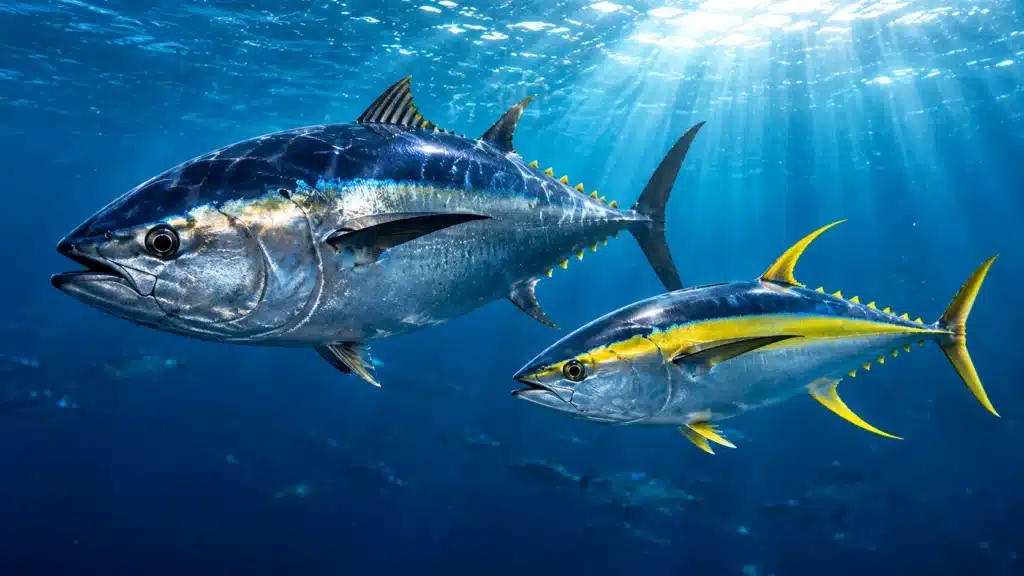
Bluefin and yellowfin tuna are both highly prized Atlantic ocean fish, but they are not interchangeable. Bluefin is larger, fattier, rarer, and usually much more expensive; yellowfin is leaner, firmer, more widely available, and better value for most home cooks.
If you are comparing bluefin vs yellowfin tuna, the quickest answer is this: choose bluefin for rich sushi and special occasions, and choose yellowfin for grilling, poke, seared steaks, and everyday sashimi.
🎣🔥 Ready for the ultimate Bluefin Tuna fishing trip? 🌊🐟
Feel the adrenaline as the reel screams, the line tightens, and a powerful bluefin tuna puts your fishing skills to the test! 💪 Whether you’re chasing your first big catch or hunting for a trophy fish, this is the kind of offshore adventure you’ll never forget.
Key Differences – Quick Comparison
| Feature | Bluefin tuna | Yellowfin tuna |
|---|---|---|
| Species | Atlantic, Pacific ocean, or Southern bluefin | One species: Thunnus albacares |
| Maximum size | Often over 1,000 lb; Atlantic Bluefin Tuna grow significantly, and can approach 1,500 lb | Commonly up to about 400–450 lb |
| Appearance | Dark blue-black back, silver belly, muted fins | Bright yellow second dorsal and anal fins, yellow finlets, slender body |
| Habitat | Cooler temperate waters; Atlantic, Pacific, and Southern Hemisphere populations | Warm tropical and subtropical waters worldwide |
| Taste | Rich, buttery, umami-heavy, high in fat | Clean, mild, slightly sweet, leaner |
| Best uses | Sushi, sashimi, otoro, tataki nordiccatch | Seared steaks, grilling, poke, ceviche, sashimi |
| Price | Premium; often far beyond yellowfin | More affordable and widely sold |
| Sustainability | Varies by species and stock; buy carefully | Generally more abundant, but sourcing still matters |
Quick Jump
ToggleBluefin vs Yellowfin Tuna: What’s the Difference?
The main difference between yellowfin and bluefin is fat, size, and availability. Bluefin tuna carries more fat through its flesh, especially in the belly, which creates the soft, buttery texture sushi fans pay a premium for. Yellowfin has less fat, a firmer bite, and a cleaner flavor.
“Bluefin” is also not one fish. It covers Atlantic bluefin, Pacific bluefin, and Southern bluefin tuna. Yellowfin is a single worldwide species, which helps explain why it appears more consistently in markets and restaurants.
For anglers, the difference matters too. Bluefin usually demands heavier tackle and more patience. Yellowfin are still powerful fish, but they are generally smaller and often respond well to trolling lures, jigs, and poppers.
How to Identify Bluefin and Yellowfin Tuna?
Look at the fins
Yellowfin tuna get their name from their bright yellow second dorsal fin, anal fin, and finlets. These bright yellowfins can look especially long in larger adults.
Bluefin have darker, more subdued fins. Their second dorsal fin may show some yellow, but it is usually mixed with gray rather than the vivid yellow seen on yellowfin. fishingbooker
Check the pectoral fin
A yellowfin’s pectoral fin is longer and can extend farther back toward the second dorsal fin. On a bluefin, that fin is shorter and does not reach as far.
Look at the body and tail
Bluefin have a thick, torpedo-shaped body built for power and long migrations. Their tail is typically dark blue. Yellowfin are more slender, with yellow tones near the tail and a visible yellow lateral line along the body.
Angler tip: Juvenile bluefin can resemble yellowfin. Never rely on size alone; check the fin color, pectoral-fin length, and tail before identifying the fish.fishingbooker
Media suggestion: Add a side-by-side labeled illustration showing the second dorsal fin, anal fin, pectoral fin, finlets, and tail of each species.
Bluefin Tuna vs Yellowfin Tuna Price, Size and Weight
Bluefin tuna are the giants of the tuna family. Atlantic bluefin can exceed 1,000 pounds, with exceptional fish reported near 1,500 pounds. Yellowfin are still large, but they usually top out around 400 to 450 pounds.
That size gap affects price. Bluefin commands high prices because it is scarcer, highly demanded by sushi markets, and produces prized fatty cuts such as chutoro and otoro. Yellowfin is more abundant, easier to source, and usually costs far less per pound.
Record auction prices for single bluefin make headlines, but they are not normal retail prices. They reflect auction tradition, marketing, and extreme demand for top-grade fish in Japan. For a practical shopper, the more useful point is simple: bluefin is a luxury purchase, while yellowfin offers strong quality for the money.
Where Do Bluefin and Yellowfin Tuna Live?
Yellowfin tuna prefer warm tropical and subtropical water. They roam across the Pacific, Atlantic, and Indian Oceans and often gather around islands, floating debris, and productive offshore current lines.
Bluefin tolerate cooler water and make some of the most impressive migrations in the sea. Atlantic bluefin move between North American waters and the Mediterranean, while Pacific bluefin travel across the northern Pacific during their lives. Southern bluefin live in cooler southern waters.
This explains availability. Yellowfin is common in warm-water fisheries around Hawaii, the Caribbean, the Gulf of Mexico, and the Pacific islands. Bluefin is more regional, seasonal, and regulated.
Bluefin Fish vs Yellowfin Tuna: Taste and Texture
Bluefin: rich and buttery
Bluefin tastes deep, savory, and luxurious. Its fat creates a soft, almost melting texture, particularly in the belly cuts. This is why bluefin remains the classic choice for high-end maguro, otoro, and premium sashimi.
The leaner back meat, called akami, is still flavorful but firmer than the belly. Even so, bluefin generally has more natural richness than yellowfin.nordiccatch
Yellowfin: clean and firm
Yellowfin has a lighter, cleaner flavor with a gentle sweetness. Its flesh is firm, dense, and less oily, so it holds its shape well on the grill or in a hot pan.
That firmness makes yellowfin excellent for tuna steaks, skewers, poke bowls, ceviche, and sesame-crusted seared tuna. It also works well raw when it is properly handled and sushi-grade.nordiccatch
Media suggestion: Include close-up photos of bluefin akami, bluefin otoro, and yellowfin saku blocks to show the difference in color and marbling.
Which Tuna Is Better for Sushi and Sashimi?
For yellowfin vs bluefin tuna sashimi, bluefin wins on richness, while yellowfin wins on value and versatility.
Bluefin offers the famous tuna progression:
- Akami: lean, deep-red loin meat with a clean flavor.nordiccatch
- Chutoro: medium-fatty belly or back-section meat with visible fat lines.nordiccatch
- Otoro: the fattiest belly cut, pale pink, soft, and intensely rich.nordiccatch
Yellowfin is essentially lean akami-style meat throughout most of the loin. It makes excellent nigiri and sashimi, especially when it is fresh, properly chilled, and cut against the grain. It does not produce true otoro because it lacks bluefin’s heavy fat marbling.nordiccatch
If you are serving sushi at home, yellowfin is usually the smarter first choice. Save bluefin for a celebration, a tasting plate, or a small portion of toro.
Blue Fin vs Yellow Fin Tuna: Fishing Techniques
Bluefin fishing
Bluefin fishing calls for heavy rods, strong reels, high-capacity line, and a plan for long runs. Anglers often use live bait such as mackerel, sardines, or squid. Chumming can also bring fish close to the boat.nordiccatch
Because bluefin are large and tightly managed, anglers should check local size limits, retention rules, reporting requirements, and seasonal closures before fishing. NOAA manages commercial Atlantic bluefin through quota categories and minimum-size rules.
Yellowfin fishing
Yellowfin anglers can often use lighter tackle. Productive methods include trolling skirted lures, casting poppers, vertical jigging, and live-baiting around schools, birds, current edges, and floating structure.nordiccatch
Yellowfin often travel in schools and feed aggressively near baitfish. Look for diving seabirds, surface commotion, temperature breaks, and floating debris.nordiccatch
Internal link ideas: Link to a guide on tuna species identification, a tuna fishing techniques guide, and an article answering whether tuna have scales and fins.
Yellowfin Tuna vs Bluefin: Nutrition and Health Benefits
Both fish provide high-quality protein, B vitamins, selenium, and omega-3 fats. The differences between bluefin and atlantic bluefin tuna is fat and calories.
Yellowfin is the leaner option. A 100-gram serving can provide roughly 25 grams of protein with less than 1 gram of fat, making it a strong choice for high-protein, lower-fat meals.nordiccatch
Bluefin contains more fat, including beneficial omega-3s. That makes it richer in calories, but it also gives bluefin its signature texture and flavor.nordiccatch
Mercury is worth considering. Research comparing the two species found higher mercury concentrations in bluefin muscle than in yellowfin, and mercury levels can vary by fish size, age, and ocean region. Pregnant people, young children, and frequent tuna eaters should follow local seafood-consumption guidance and vary their fish choices.
Which Tuna Is More Expensive and Sustainable?
Bluefin is usually more expensive because supply is limited, demand is intense, and the best cuts are highly sought by sushi buyers. Yellowfin is more affordable because it is more plentiful and enters markets in greater volumes.
Sustainability is not as simple as “bluefin bad, yellowfin good.” It depends on the exact stock, fishing method, country, and management program. Some bluefin fisheries are carefully managed with quotas, while others face greater pressure. Yellowfin is generally more abundant, but buyers should still look for traceable sourcing and responsible fishing for bluefin and yellowfin.
When buying tuna – either fish, ask:
- Which species and stock is it?
- Was it wild-caught or farmed?
- What gear was used?
- Is it certified or traceable?
- Is it genuinely sushi-grade if you plan to eat it raw?
Bluefin vs Yellowfin Tuna: Which Is Better for You?
Choose bluefin if you want the richest possible raw tuna experience and do not mind paying more. It is best for special sushi nights, otoro, and tasting flights.
Choose yellowfin if you want a versatile fish for weekly cooking. It is better for grilled steaks, poke, ceviche, meal prep, and more budget-friendly sashimi.
For most people, yellowfin is the practical winner. For a once-in-a-while luxury meal, bluefin remains hard to beat.
Key Differences between Bluefin and Yellowfin – FAQs
Is yellowfin tuna the same as ahi?
Often, yes. “Ahi” is a Hawaiian term commonly used for yellowfin and bigeye tuna. Always check the species label if the exact type matters to you.nordiccatch
Which tuna is better for sashimi?
Bluefin is traditionally considered better for premium sashimi because of its fat content. Yellowfin is also excellent for sashimi when it is sushi-grade, fresh, and handled correctly.nordiccatch
Why is bluefin tuna so expensive?
Bluefin is expensive because of limited supply, strong sushi-market demand, large fish size, and the value of fatty belly cuts such as chutoro and otoro.
Can you grill bluefin tuna?
Yes, but it is not the usual choice. Bluefin’s fat makes it better suited to raw or lightly seared preparations. Yellowfin is usually better for grilling because its firm, lean flesh holds together well.
Which tuna has more mercury?
Studies generally find higher mercury levels in bluefin than yellowfin, though levels vary by region and individual fish. Eat tuna meat in moderation and vary your seafood choices.
Which tuna should beginners buy?
Start with yellowfin. It costs less, is easier to find, works in more recipes, and still delivers excellent flavor and texture.
How many species of tuna are there?
There are 15 recognized tuna species, including skipjack, albacore, bigeye, yellowfin, and bluefin. They vary in size, color, and flavor, from the deep red flesh of some species to the lighter meat of albacore. Each offers a different taste and texture for cooking.
What is the best tuna for sushi?
Bluefin tuna is a top choice for sushi because of its rich flavor and buttery texture, especially in fatty cuts. Yellowfin tuna is another popular option, with a firm texture and great taste. If you want a leaner cut, look for yellowfin with its clean, mild flavor.
Which is better, yellowfin or albacore?
Yellowfin and albacore each have their strengths. Yellowfin has firmer meat and a deeper flavor, making it great for searing or sushi. Albacore is milder, with lighter-colored flesh, and is often preferred for canned tuna. To find yellowfin, check seafood counters or fish markets that label the species clearly.
Tuna Species Conclusion
Differences between bluefin tuna and yellowfin tuna quick guide -The bluefin vs yellowfin tuna decision comes down to what you value most. Bluefin delivers unmatched richness, soft texture, and prestige, especially in sushi and sashimi. Its fatty belly cuts remain the benchmark for luxury tuna. Yellowfin delivers a cleaner taste, firmer texture, lower price, and far more flexibility in the kitchen. It shines in seared steaks, poke bowls, ceviche, grilled skewers, and everyday bluefin toro sashimi.
If you want a special-occasion fish, choose bluefin. If you want dependable quality without the premium price, choose yellowfin. Both are remarkable fish, but they serve different purposes. Learn the fin and body differences, buy from a traceable source, handle raw fish carefully, and match the species to the meal. That approach will help you enjoy the right tuna every time—whether you are shopping at a fish market, ordering sushi, or planning your next offshore trip.
Recommended posts
- Tuna Fishing Season – Best Months, Locations & Techniques