
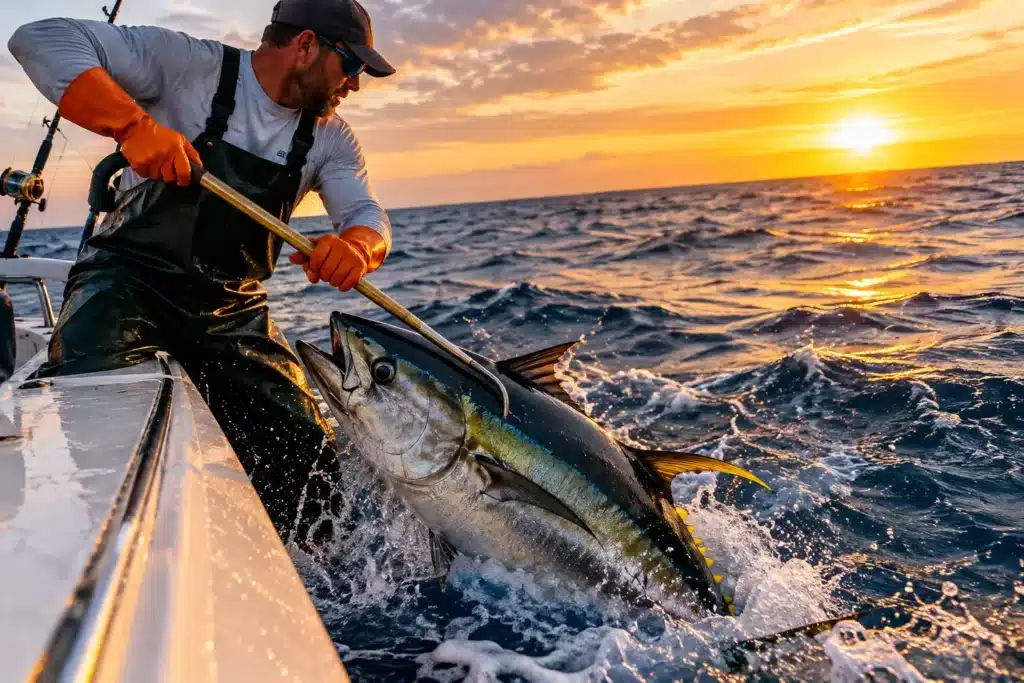
Tuna fishing season generally runs from June through November in most temperate regions, though specific timing depends entirely on the location, ocean water temperatures, and the species you target. Knowing when and where ocean currents push baitfish into key feeding zones helps anglers land massive ocean pelagics throughout the year.
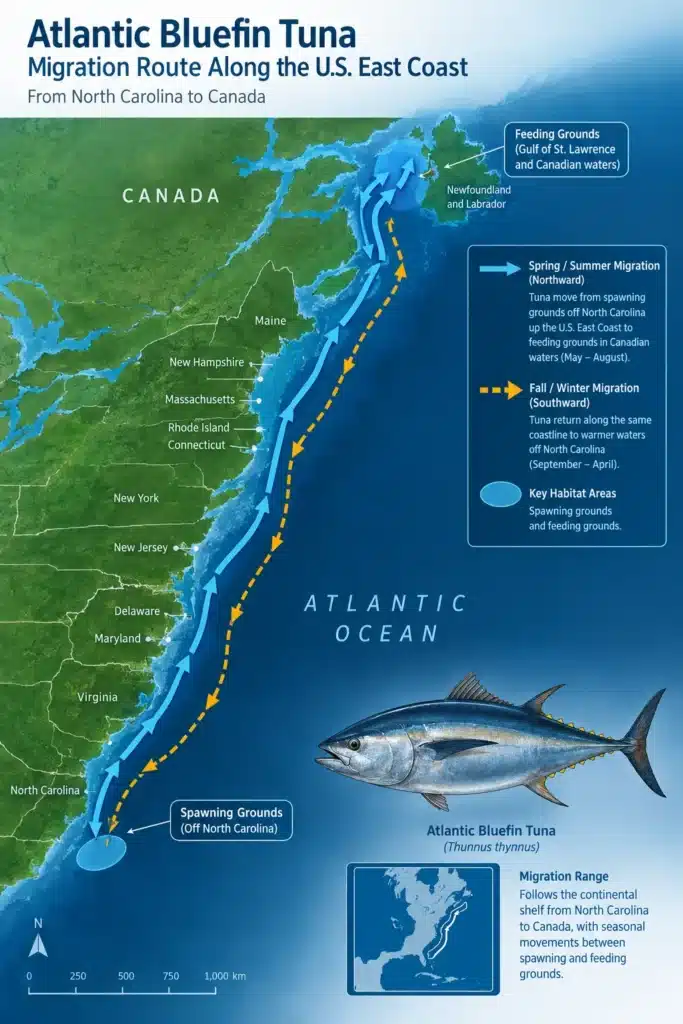
Tuna season is the period when tuna move into a specific area in fishable numbers, usually because water temperature, currents, and bait create ideal feeding conditions. There is no single worldwide tuna season: Atlantic bluefin often peak from summer into fall in New England, while North Carolina’s giant-bluefin window can run through winter.
This guide breaks down the tuna sportfishing season by region, species, and fishing style so you can plan a trip around real conditions—not guesswork.
When Is Tuna Fishing Season?
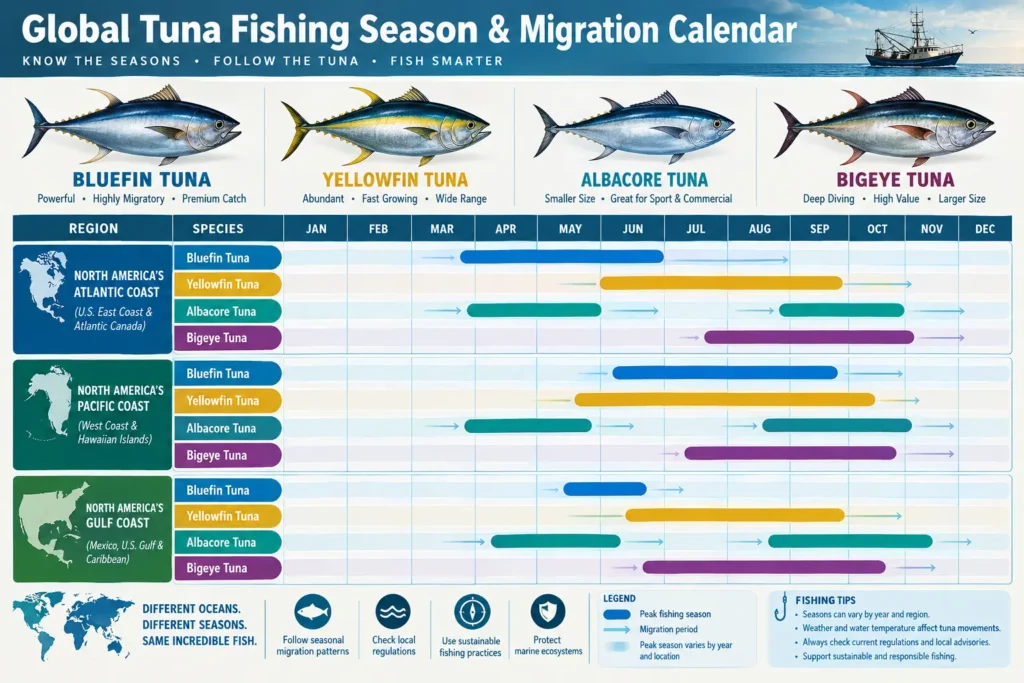
Most tuna fisheries open up from late spring through fall, when warm currents push baitfish closer to shore and tuna follow. The exact timing depends on the species, ocean region, and yearly migration pattern. fishingbooker
Tuna are highly migratory. They travel long distances to feed and spawn, so a port can have excellent fishing for tuna in July and poor fishing in October—or the reverse.
Short answer: In many U.S. fisheries, plan around June through October. But bluefin tuna in North Carolina often bite best from December through April, proving that “tuna season” is local, not universal.
What controls the season?
- Water temperature: Tuna gather around temperature breaks and warm-water edges.
- Bait availability: Sardines, mackerel, squid, herring, and flying fish pull tuna into feeding zones.
- Currents: Current edges concentrate bait and make tuna easier to locate.
- Spawning migrations: Some fisheries slow when fish move offshore to spawn.
- Regulations: A species may be present even when retention is restricted or closed.
Best Months for Tuna Fishing by Region
| Region | Main tuna species | Typical best months |
|---|---|---|
| Massachusetts / Cape Cod | Atlantic bluefin, yellowfin, bigeye giant tuna | June–September; action can extend into fall. |
| New York / Montauk | Bluefin, yellowfin, bigeye, false albacore | June–September, with August often strongest. |
| Maryland / Ocean City | Bluefin, yellowfin | Summer through early fall. |
| North Carolina / Outer Banks | Bluefin; yellowfin and blackfin in spring | Bluefin: November–April, with a strong winter bite; yellowfin/blackfin: spring, especially May. |
| Florida | Blackfin, skipjack, yellowfin, bigeye | Blackfin and skipjack year-round; larger species often peak in summer. |
| Texas / Gulf | Yellowfin, blackfin | Year-round fishing opportunities, with July–October often best. |
| Southern California / San Diego | Pacific bluefin, yellowfin, albacore, bigeye | June–November; July–September offers the widest species mix. sandiegotunafishing |
| Washington / Westport | Albacore | Summer through fall; August and September are commonly productive. |
| Hawaii | Yellowfin, bigeye, skipjack | May–September; July and August can produce larger fish. |
| Mexico / Cabo | Yellowfin, bluefin, skipjack | Yellowfin often best June–September. |
Media suggestion: Add an interactive map with color-coded months for each region and species.
Tuna Fishing Season by Species
– Bluefin tuna
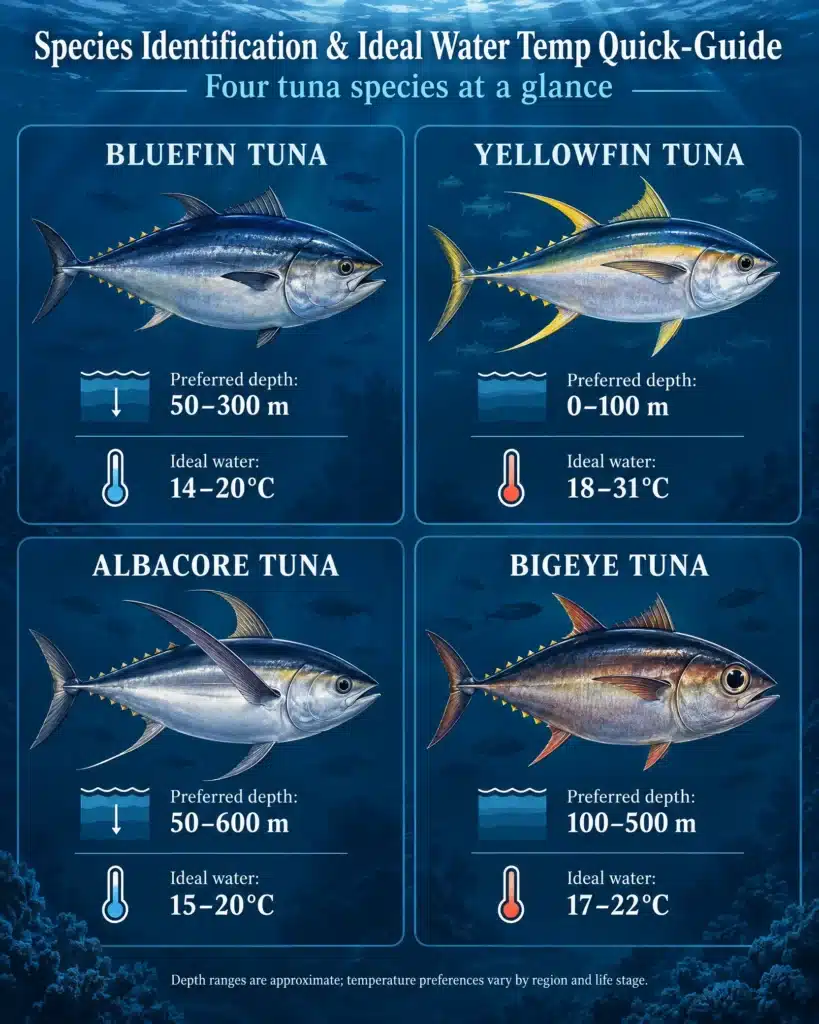
Atlantic bluefin tuna fishing season varies sharply by location. New England anglers commonly target them from summer into fall, while North Carolina anglers often find the largest fish during winter.
Pacific blue fin tuna fish fishing off Southern California generally improves from late spring, with strong summer and fall action; San Diego operators commonly describe June through November as the prime window.
– Yellowfin tuna
The yellowfin tuna season usually aligns with warm water. In Southern California, yellowfin often arrive later than bluefin, commonly from midsummer into fall.
In the Gulf of Mexico, Hawaii, Mexico, and tropical Atlantic waters, yellowfin can be available for much of the year, but the strongest fishing usually follows warm currents and bait concentrations.
– Albacore tuna
Albacore prefer cooler Pacific water. Washington is a major albacore destination, with peak fishing commonly from late summer into early fall.
Off California, albacore can show earlier in the season, but their presence changes with current strength and water temperature.
– Bigeye tuna
Bigeye tuna often feed deeper than yellowfin, especially during daylight. Anglers commonly encounter them offshore around temperature breaks, seamounts, and productive current lines.
In the Northeast, bigeye overlap with the summer-to-fall offshore tuna season. In Hawaii and other tropical fisheries, they can be caught year-round, though night fishing and deep bait presentations often improve results.
Best Places in the World for Tuna Fishing
Cape Cod, Massachusetts
Cape Cod sits near productive bluefin grounds in the Gulf of Maine and offshore canyons. The Massachusetts bluefin tuna fishing season generally runs from early summer into fall, with late summer often producing the most consistent action.
Outer Banks, North Carolina
The Outer Banks is one of the best places to target giant Atlantic bluefin during winter. Charter operators commonly describe the North Carolina bluefin tuna season as strong from December through April.
San Diego, California
San Diego remains a benchmark for Pacific tuna fish fishing. Local seasonal calendars identify June through November as the prime period, while July through September offers the broadest mix of bluefin, yellowfin, albacore, bigeye, and dorado.
Kona, Hawaii
Kona offers a long Pacific tuna season, with yellowfin—known locally as ahi—drawing anglers from May through September. July and August often provide the best chance at larger fish.
Cabo San Lucas, Mexico
Cabo gives anglers access to yellowfin, bluefin, skipjack, and other pelagic species. Yellowfin fishing is often strongest from June through September, when warm Pacific water moves through the region.
Azores, Portugal
The Azores are a strong Atlantic bluefin destination, particularly in spring. Portugal’s bluefin fishery can produce very large fish, so anglers should confirm local permits and seasonal rules before booking.
Atlantic Bluefin Tuna fish Season
The Atlantic bluefin tuna season depends on where you fish. In the northeastern United States, bluefin commonly arrive as waters warm in early summer and remain through fall. Farther south, North Carolina’s winter fishery targets large bluefin moving along the coast.
Bluefin tuna fishing season Massachusetts
For anglers searching for the bluefin tuna fish fishing season Massachusetts, a practical planning window is June through November. Cape Cod, Stellwagen Bank, and the waters east of Chatham are frequent starting points.
Massachusetts does not manage bluefin separately from federal rules; NOAA Fisheries manages Atlantic highly migratory species, including bluefin tuna.
Commercial Bluefin Tuna Season Massachusetts
The commercial bluefin tuna season Massachusetts anglers ask about is controlled through NOAA’s Atlantic Tunas General category. NOAA’s current status table lists General category fishing for bluefin measuring 73 inches or longer from June 1 through December 31 while the fishery remains open, with daily retention limits and designated fishing days during parts of the season.
Commercial rules can change quickly when quotas are reached, so captains should check NOAA’s fishery status page before every trip.
Yellowfin Tuna Fishing Season
The yellow fin tuna season is usually tied to warm water and bait. In Southern California, yellowfin typically show up later than bluefin, often from mid-July onward.
In tropical destinations such as Hawaii, Mexico, and the Bahamas, yellowfin can be caught across more of the year. The best months still depend on current strength, bait movements, and sea-surface temperature.
For anglers targeting bigger yellowfin, focus on:
- Temperature breaks near offshore banks and seamounts.
- Kelp paddies, current lines, and floating debris.
- Bird activity over feeding tuna.
- Live bait such as sardines, mackerel, or flying fish.
Albacore and Bigeye Tuna Fishing Seasons
– Albacore season
The albacore season peaks in cooler Pacific waters. Washington anglers commonly fish for them from summer into fall, with August and September standing out as prime months.
Southern California also sees albacore, though their timing changes more from year to year. Local calendars list albacore from spring through fall, with the strongest overlap during summer.
– Bigeye season
Bigeye tuna season often overlaps with yellowfin season, but bigeye are more likely to hold deeper during the day. Night fishing, deep dropping, and slow presentations with squid or bait can produce better results.
For anglers chasing catching big fish tuna season opportunities, bigeye are a strong target because they grow large and often feed around offshore temperature breaks and deep structure.
Best Weather and Water Conditions for Tuna Fishing
The best tuna fishing usually happens when several conditions line up:
- Clean blue water: Clear water often marks productive offshore zones.
- Temperature breaks: Look for a visible change in water temperature on charts or sonar.
- Current edges: Tuna hunt along boundaries where bait collects.
- Bait schools: Birds, porpoises, and surface disturbances often signal feeding fish.
- Moderate wind: Calm enough for safe offshore travel, but with enough current movement to concentrate bait.
- Moon phase: Full and new moons can improve night bites and bait movement, though results vary by fishery.
In California, warmer-water years can push tuna closer to shore and extend the season. San Diego fishing operators note that bluefin can remain available into October, November, and sometimes December during strong years.
Media suggestion: Include a simple infographic showing “temperature break + current edge + bait school = tuna zone.”
Best Tuna Fishing Techniques During Peak Season
Trolling
Trolling covers water quickly and helps you locate active fish. Run a spread of spreader bars, cedar plugs, daisy chains, or diving plugs at different depths and distances behind the boat.
Chunking
Chunking works well when tuna hold in one area. Cut bait into small pieces, create a steady scent trail, and drift chunks back with the current. This technique is especially effective around temperature breaks and offshore banks.
Live bait
Live sardines, mackerel, herring, or flying fish can trigger aggressive strikes. Match the bait size to what tuna are feeding on and deploy a few baits at different depths.
Jigging and popping
Vertical jigging works well when tuna show on sonar but will not come to the surface. Topwater popping can produce explosive strikes during morning feeding windows or when fish are chasing bait on the surface.
Kite fishing
Kite fishing keeps a bait swimming naturally at the surface. It is especially useful for picky bluefin and large yellowfin in clear water.
Tuna Fishing Regulations, Size Limits, and Seasonal Closures
Tuna regulations change by species, region, permit type, and fish size. Never assume last year’s rules still apply.
For Atlantic bluefin, NOAA Fisheries states that recreational retention limits vary by permit, vessel type, fish size, and region. The fishery can also close when quotas are met.
For the 2026 recreational season, NOAA listed adjusted retention limits effective June 1 through December 31 unless changed later. Private HMS Angling-permitted vessels could retain up to two bluefin measuring 27 to less than 73 inches per vessel per day or fishing trip, with only one in the 47-to-less-than-73-inch range. Charter and headboat limits differed.
Anglers targeting a trophy bluefin should also know that NOAA allows one bluefin over 73 inches per vessel per year under the recreational trophy category, subject to regional quotas and openings.
Before you go
- Confirm the fishery is open.
- Carry the correct NOAA HMS permit where required.
- Check size, retention , bag limits, and reporting rules.
- Carry a reliable measuring device and proper release equipment.
- Report bluefin as required; North Carolina requires bluefin reporting before removal from the vessel.
- Check state rules separately; states may add requirements even when NOAA manages the species.
FAQs
How long is tuna season?
Tuna season usually lasts several months, commonly from late spring through fall in temperate fisheries. Some tropical fisheries offer year-round opportunities, while North Carolina bluefin can peak in winter.
How many seasons of Wicked Tuna are there?
Wicked Tuna is a television series, not a fishing season. The number of seasons changes as new episodes air, so check the official network listing for the current count.
How long is the blue tuna fishing season?
The recreational bluefin tuna saltwater fishing season commonly lasts from late spring through fall in New England and Southern California, but North Carolina’s giant-bluefin season often runs from winter into spring.
When is tuna fishing season?
Tuna fishing season is generally June through October in many U.S. fisheries, though the best time depends on species and location. Bluefin in North Carolina often peaks from December through April.
When is tuna season?
Tuna season begins when tuna follow bait and favorable water temperatures into a fishery. In most temperate regions, that means late spring through fall; tropical areas can produce tuna year-round.fishingbooker
When is tuna fishing season in Canada?
Canadian tuna fishing, especially for giant Atlantic bluefin off Nova Scotia and Prince Edward Island, is generally strongest from late summer through fall. Exact dates and retention rules depend on Canadian federal conservation and annual quota decisions.
How long is the bluefin tuna fishing season?
The blue tuna fishing season can last several months in a given location. New England anglers often plan from June through November, while Southern California’s prime window is commonly June through November as well.
How long is blue fin tuna season?
Bluefin tuna season length depends on the ocean and migration. It may run from summer into fall in the Northeast, winter into spring in North Carolina, and late spring through fall off Southern California.
What time of year does bluefin tuna is allowed to fish?
Bluefin tuna may be allowed to fish year-round in some fisheries, but retention is controlled by permits, size classes, quotas, and regional openings. NOAA’s recreational bluefin rules can change during the season, and the fishery closes when quotas are met.
What is the best time to go tuna fishing in Pacific Ocean?
For the Pacific, plan around June through October in many areas. Southern California’s strongest overall window is commonly July through September, while albacore fishing off Washington often peaks in August and September.
How long is bluefin tuna season in Massachusetts?
Bluefin tuna season in Massachusetts commonly runs from June through November, with the most consistent fishing from late summer into early fall.
Is tuna fishing season the same everywhere?
No. Tuna fishing season changes by species, water temperature, bait, migration, and local regulations. A single month cannot be called best worldwide. fishingbooker
Conclusion
The best tuna fishing season is not a single date on a calendar—it is the point where migration, bait, water temperature, and local rules come together. If you target Atlantic bluefin, start with Massachusetts from summer into fall or North Carolina during winter. If you prefer Pacific tuna, San Diego offers a strong bluefin, yellowfin, and albacore window from late spring through fall.
Plan around the species you want, watch temperature breaks and bait activity, and verify current regulations before leaving the dock. Bluefin tuna fisheries can open, close, or change retention limits as quotas are reached, so current information matters as much as good weather.
You might also like: