
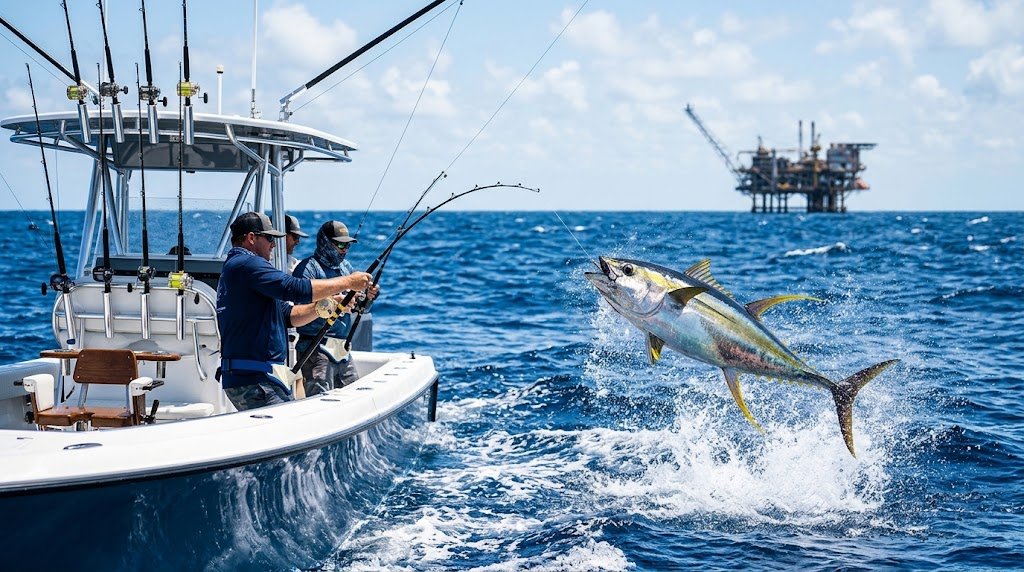
Texas tuna fishing puts you on some of the Gulf of Mexico’s hardest-fighting offshore gamefish—especially yellowfin and blackfin tuna. Most successful trips leave from Galveston, Freeport, Port Aransas, or South Padre Island and run far offshore to deep-water platforms, floating structure, and temperature breaks where tuna feed.
This guide explains when to go, where to launch, what a charter costs and includes, which baits work, and the rules you need to know before booking a Texas offshore tuna fishing trip.
Book the best Texas offshore tuna charters today—chase yellowfin, blackfin, and the Gulf trip of a lifetime!
What Makes Texas Tuna Fishing a Must-Try Adventure?
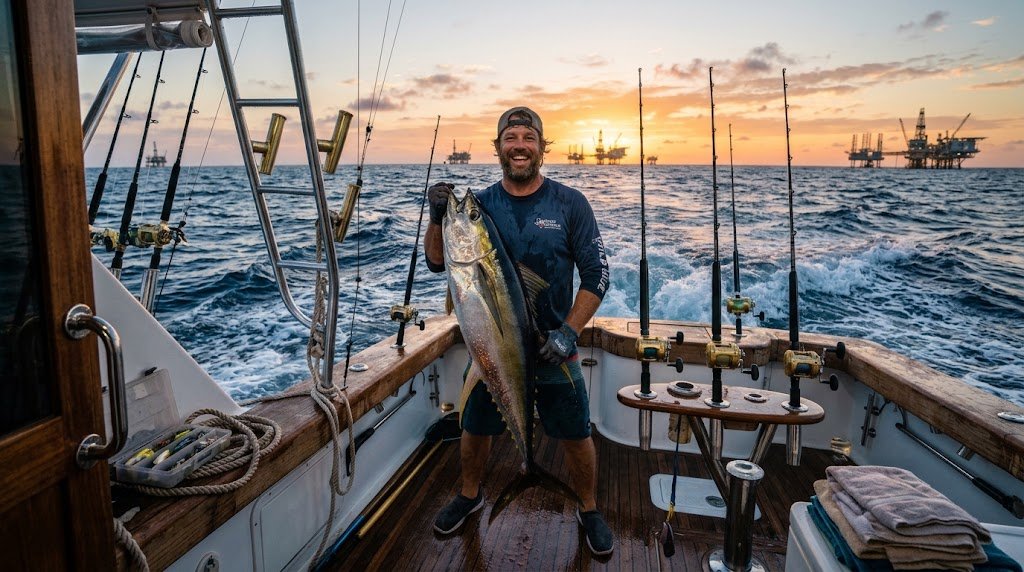
Texas Tuna Fishing is special because the western Gulf combines deep offshore water, productive oil-and-gas structure, shrimp boats, and long seasonal runs of tuna. You do not need to fly to Hawaii or the Caribbean to hook a fish that can make a quality reel sound like a coffee grinder.
The main prize is yellowfin tuna. Texas Parks and Wildlife notes that yellowfin can reach six feet and more than 400 pounds, although most recreational anglers target fish from roughly 30 to well over 100 pounds. Blackfin tuna are smaller, more plentiful, and often provide steady action around shrimp boats and deepwater rigs.
A Texas tuna trip is also a true offshore adventure. Depending on your departure port and the day’s conditions, you may run for hours to reach floating rigs, deep-water canyons, or working shrimp boats. That travel time is part of the experience—and one reason choosing the right charter matters.
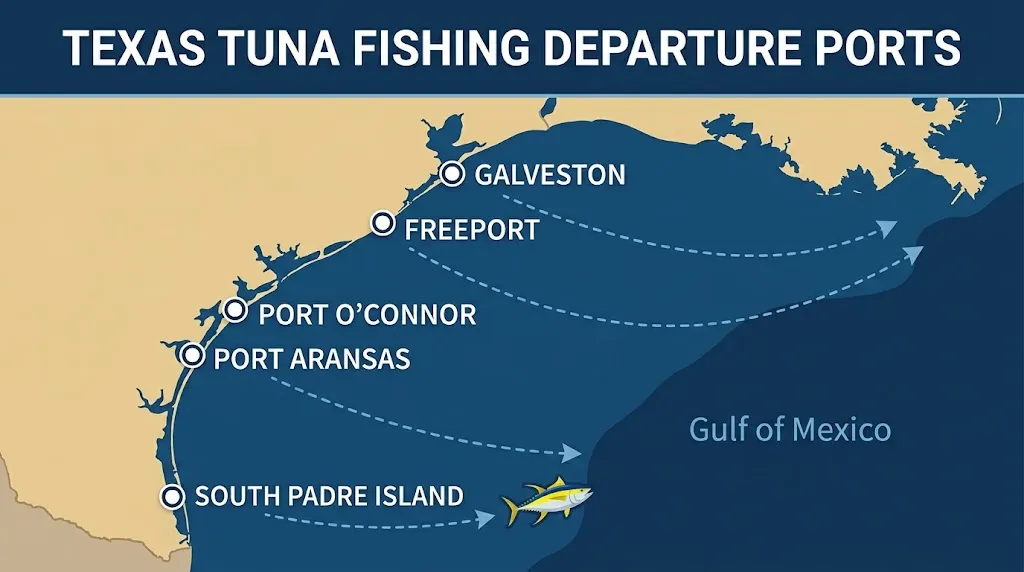
Media suggestion: Add an original map graphic titled “Texas Gulf Tuna Fishing Departure Ports and Offshore Zones,” showing Galveston, Freeport, Port O’Connor, Port Aransas, and South Padre Island with arrows toward the continental shelf and deepwater rig areas.
When Is the Best Time for Texas Tuna Fishing?
You can find tuna in the Gulf during much of the year, but late summer through fall is the strongest general window for Texas yellowfin and blackfin tuna fishing. Blackfin often become especially active from July into fall, while yellowfin opportunities commonly improve in September and October as larger fish move through productive offshore areas.
| Season | What to expect |
|---|---|
| Spring | Weather can be unsettled, but warming water begins improving offshore opportunities. |
| Summer | Blackfin action builds, especially around shrimp boats and nearshore-to-offshore structure. |
| Late summer–fall | Often the best overall window for yellowfin and blackfin, weather permitting. |
| Winter | Trips are possible, but cold fronts, rough seas, and shorter weather windows make planning more important. |
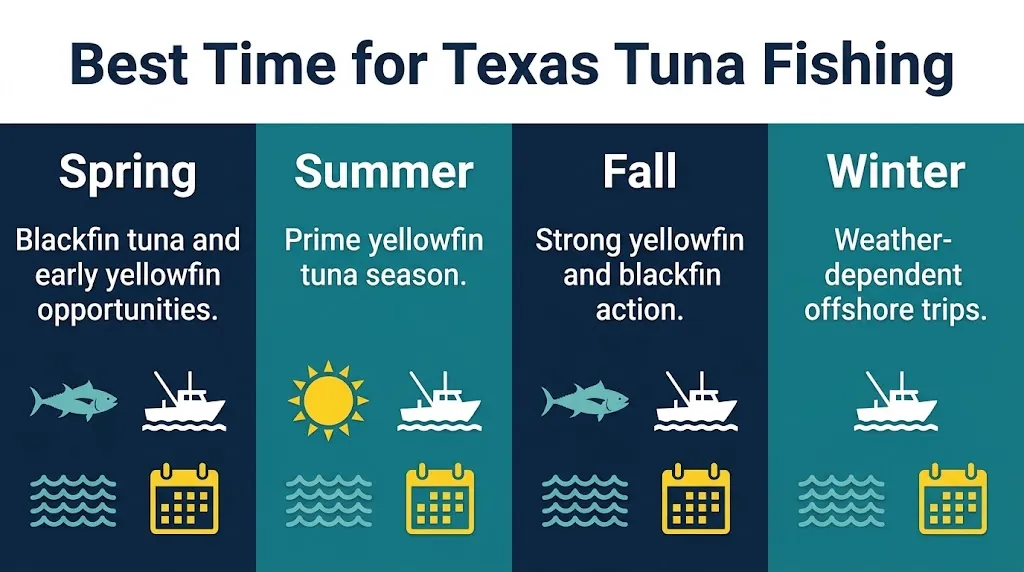
Do not treat any season as a guarantee. Water temperature, bait, currents, shrimp-boat activity, and weather decide whether the fish show up. A good captain watches fishing reports, sea conditions, and recent catches before choosing where to run.
Best time to catch tuna in Texas: For most anglers, book a 24- to 48-hour offshore trip between late summer and fall. If your main goal is blackfin, summer can be excellent. If you want a realistic shot at triple-digit yellowfin, prioritize September and October when conditions line up.
Where Are the Best Tuna Fishing Spots in Texas?
The best tuna hunting locations in Texas are not right at the beach. They lie along the continental shelf, around deepwater platforms and floating rigs, near shrimp fleets, and in areas such as the Alaminos Canyon region that concentrate bait and pelagic fish.
1- Galveston and Freeport
Galveston and Freeport are the most convenient launching points for many Texas anglers, especially those coming from Houston, Austin, or Dallas. Both ports have established offshore fleets, marinas, tackle shops, and captains who run dedicated tuna trips.
Freeport is particularly well positioned for long offshore runs. Charter listings in the area include 12-hour, 24-hour, 36-hour, and 48-hour trips, with yellowfin-focused charters commonly priced from roughly $2,600 to $6,400; one marketplace lists the average full-day yellowfin trip at about $5,681. Prices change with fuel, boat size, trip length, group size, and whether the charter includes food, bait, tackle, and fish cleaning.
Galveston tuna charters often target blackfin and yellowfin around deepwater structure. Because the upper Texas coast sits farther from some of the major deepwater rig fields, many serious tuna trips from Galveston run overnight or longer.
2- Port Aransas and Port O’Connor
Port Aransas and Port O’Connor sit closer to productive southern Gulf structure, making them strong choices for anglers based in Corpus Christi, San Antonio, or the Hill Country. Port Aransas tuna fishing charters can reach offshore grounds on day trips when weather allows, while longer overnight trips expand the range of fishable water.
Port O’Connor is a quieter alternative with experienced offshore captains and good access to the central Texas coast. It can be an excellent choice if you want a serious tuna trip without the larger-port crowds.
3- South Padre Island
South Padre Island is the southern gateway for Texas offshore tuna fishing. Its location gives anglers relatively practical access to southern Gulf shrimp grounds, deepwater rigs, and productive bluewater areas. South Texas tuna deep-sea fishing can be especially productive during warm months, when blackfin gather around shrimp boats and bait concentrations.
If you are searching for “tuna fishing Corpus Christi” or “Corpus Christi TX tuna fishing,” remember that many trips launch from nearby Port Aransas rather than downtown Corpus Christi. Ask the charter exactly where the boat departs, how long the run is, and what species the trip is designed to target.
Yellowfin vs. Blackfin Tuna: Which Species Can You Catch?
Texas anglers mainly target two tuna species: yellowfin and blackfin. Both are fast, strong, and excellent eating, but they offer different styles of fishing.
| Feature | Yellowfin tuna | Blackfin tuna |
|---|---|---|
| Typical appeal | Trophy fish, long runs, big-game experience | Fast action, great table fare, more frequent bites |
| Common size | Often 30–100+ pounds; large fish can exceed 100 pounds | Often 5–20 pounds; larger fish can approach 30 pounds or more |
| Where to find them | Deepwater rigs, canyons, current edges, bait schools | Shrimp boats, rigs, current lines, offshore structure |
| Best techniques | Chunking, live bait, vertical jigging, trolling | Chunking, casting, jigging, trolling |
| Best trip length | Usually 24–48 hours for the best opportunity | Often possible on long day trips or overnight trips |
Yellowfin tuna are the “big tuna Texas” anglers dream about. They are built for speed and endurance, and they can test both angler and equipment. Blackfin, sometimes called “footballs,” may be smaller, but they punch well above their weight and are ideal for anglers who want plenty of rod-bending action.
Bluefin tuna do occur in the Gulf, but NOAA Fisheries does not allow targeted recreational fishing for bluefin in the Gulf of America. Retention is allowed only in limited incidental-catch situations, so do not plan a Texas trip around intentionally targeting bluefin.
What Are the Best Baits and Lures for Texas Tuna Fishing?
The best bait for yellowfin tuna in the Texas Gulf depends on what the fish are feeding on that day. Captains commonly use a mix of live bait, dead bait, chunks, and lures.
- Live bait: Small tuna, blue runners, hardtails, pilchards, and other local baitfish work well when free-lined or drifted back in a chum slick.
- Chunk bait: Menhaden, sardines, and other oily baitfish create a scent trail. Texas captains often chunk heavily around shrimp boats to bring blackfin within casting range.
- Vertical jigs: Knife jigs, butterfly-style jigs, and other metal jigs work well when tuna hold deeper or feed below the boat. Blue, green, and glow-yellow patterns are commonly used offshore.
- Trolling lures: Spreader bars, diving plugs, cedar plugs, and skirted lures help cover water while running between spots.
- Poppers and stickbaits: These can produce explosive surface strikes when tuna are actively feeding on bait at the top.
A practical starting approach is simple: troll while traveling, watch for birds, bait, current lines, and working shrimp boats, then stop and chunk once you find life. If fish show but will not eat, switch to smaller baits, lighter leader, or a different jig.
How Far Offshore Do You Need to Go for Tuna?
Most Texas fishing tuna happens well offshore, often beyond the 9-nautical-mile boundary where state rules end and federal rules begin. The exact distance depends on your departure port and target species.
- Blackfin tuna: Can show up around shrimp boats and structure in roughly 150 feet of water or deeper, particularly during summer and fall.
- Yellowfin tuna: Usually require a longer run to deepwater platforms, floaters, canyons, and productive bluewater areas.
- Typical travel time: Expect several hours each way on many trips. A 24-hour charter may fish through the night; a 48-hour trip gives the captain more flexibility to reach distant water and wait out slow periods.
There is no single magic depth. Tuna follow bait, temperature breaks, current, and structure. A captain may find blackfin at 180 feet one day and yellowfin near a deepwater floater the next.
What Should You Expect on a Texas Tuna Fishing Charter?
A quality Texas offshore fishing charter is more than a boat ride. It is a long, physically demanding trip with a crew that handles navigation, safety, bait, tackle, and fish handling.
Trip lengths and costs
Common trip formats include:
- 12-hour day trip: Best for blackfin or a first offshore experience, though yellowfin odds may be limited by travel time.
- 24-hour tuna safari: A popular format for serious tuna anglers; it allows night fishing and more time around offshore structure.
- 36- to 48-hour trips: Best for anglers who want maximum time on productive tuna water and a better shot at larger yellowfin.
Freeport charter listings show 12-hour trips starting around $2,400, 24-hour tuna trips around $3,200, and larger 36- or 48-hour trips costing substantially more. Treat these as planning ranges, not fixed prices.
What is usually included?
Ask before booking. Many offshore charters include:
- Captain, mate, fuel, and safety equipment
- Rods, reels, terminal tackle, and bait or chum
- Ice and fish storage
- Fishing licenses and permits for the vessel, though personal licenses may still be required
- Meals and sleeping arrangements on longer trips, depending on the boat
What should you bring?
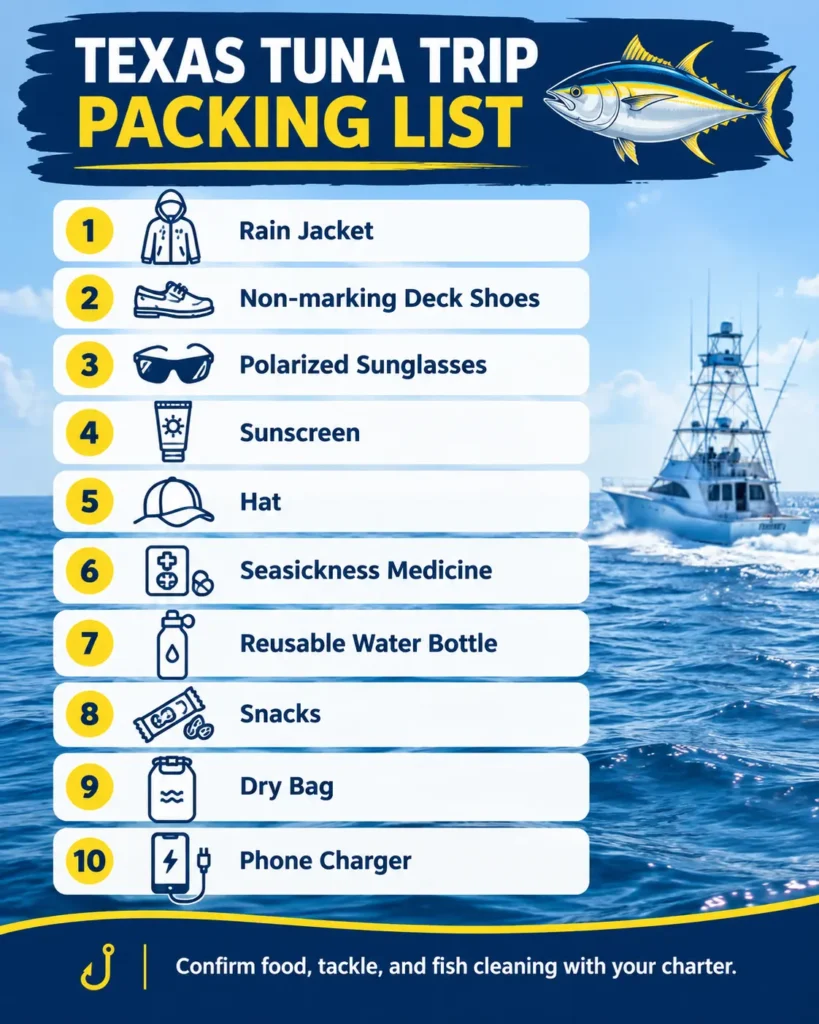
Bring motion-sickness medication, sunscreen, non-marking shoes, warm layers, rain gear, snacks, water, seasickness remedies, and a cooler for your fillets if the charter does not provide one. Offshore weather can change quickly, even on a warm Texas morning.
Which Fishing Techniques Work Best for Texas Tuna?
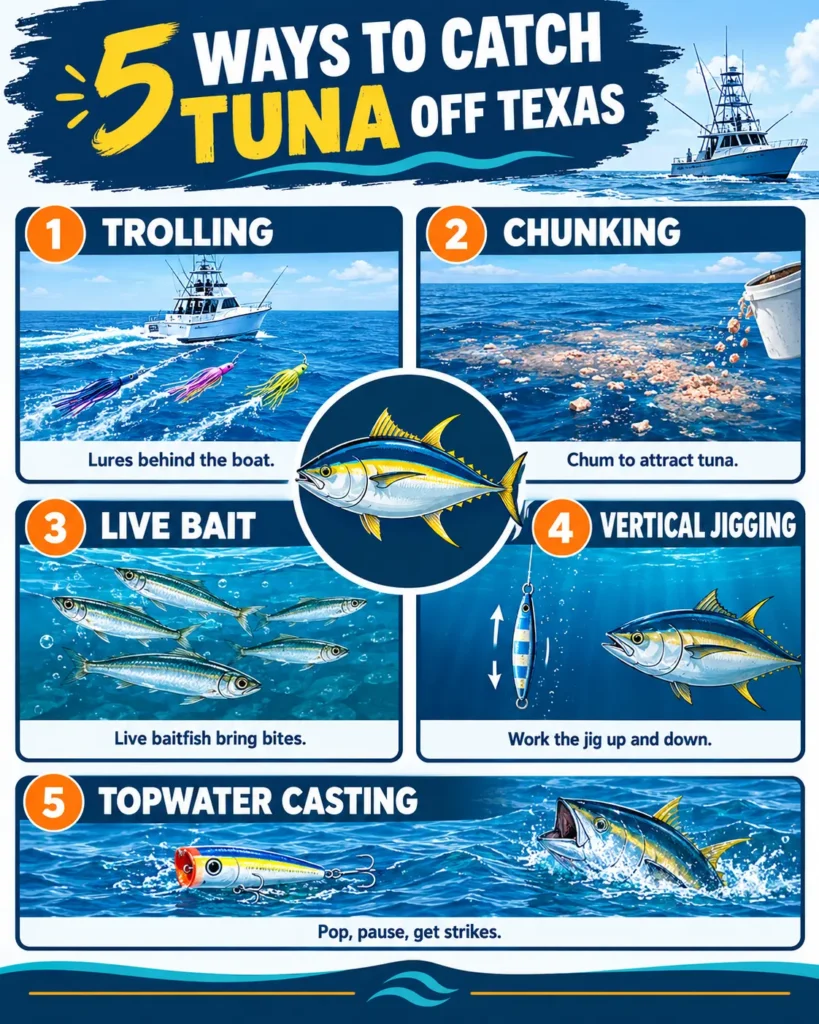
Successful Gulf of Mexico tuna fishing usually comes down to finding life and presenting bait naturally.
- Chunking: Cut bait into small pieces and toss it steadily into the current. This draws tuna toward the boat and creates a feeding rhythm.
- Free-lining bait: Let a live or dead bait drift back with the chunk line. Do not reel too early; let the fish take the bait and turn.
- Vertical jigging: Drop a metal jig to the depth where fish mark on the sonar, then work it aggressively upward.
- Trolling: Pull lures or rigged baits while moving between spots. This is especially useful for covering distance and locating active fish.
- Casting: When tuna crash bait on the surface, cast poppers, stickbaits, or small jigs into the feeding zone.
The key is patience. Tuna may mark on the sounder but refuse to bite for an hour. Keep a clean chunk line, match the hatch, and follow the captain’s instructions.
What Gear and Equipment Should You Bring for Tuna Fishing?
Most Texas tuna charters provide quality tackle, but bring personal gear if you prefer it.
- Conventional or spinning outfit: A 50- to 80-pound-class setup is a solid all-around choice for yellowfin and larger blackfin.
- Lighter blackfin outfit: A 30- to 50-pound setup can make smaller tuna more fun, but keep a heavier pitch rod ready.
- Leader: Fluorocarbon in the 60- to 100-pound range is common, with lighter leader sometimes needed when fish are picky.
- Hooks: Strong circle hooks or short-shank J hooks, matched to bait size and local rules.
- Lures: Metal jigs, poppers, stickbaits, trolling lures, and a few glow or luminescent options for night fishing.
- Personal items: Pliers, hook cutters, sun protection, motion-sickness medicine, rain gear, and a small dry bag.
Do not bring a boat that is too small for the conditions. Tuna charter fishing from Texas requires a seaworthy offshore-capable vessel, reliable electronics, adequate fuel range, safety gear, and enough deck space to fight and store fish. For most anglers, a charter is the safest and most practical option.
Texas Tuna Fishing Regulations, Licenses, and Safety Tips
Before you go, confirm the current rules. Regulations can change, especially for highly migratory species.
- Texas license: Anglers need a valid Texas fishing license with a saltwater endorsement to fish in coastal waters and to possess fish caught in federal waters when landed in Texas.
- Federal waters: Waters beyond 9 nautical miles are federal waters and follow federal rules.
- Yellowfin tuna: The recreational limit is 3 fish per person per day or trip, with a 27-inch curved-fork-length minimum.
- Bluefin tuna: Targeting bluefin is not allowed in the Gulf of America; retention is limited to certain incidental-catch situations.
- Charter permits: Reputable offshore tuna charters should hold the appropriate federal Highly Migratory Species permits. Ask the captain to confirm current limits before the trip.
- Safety: Wear appropriate footwear, listen to the crew, secure loose items, and take seasickness precautions before boarding. Offshore trips can involve long runs, rough seas, and limited access to medical help.
Best Texas offshore tuna charters – FAQs
Can you catch fish in Texas year-round?
Yes. Texas offers fishing opportunities year-round, from bays and jetties to offshore Gulf waters. Tuna trips are possible in many months, but weather and seasonal fish movement strongly affect offshore success.
What fish species can be found in the Texas Gulf Coast?
The Texas Gulf Coast offers redfish, trout, flounder, and offshore species such as red snapper, wahoo, amberjack, kingfish, groupers, bonito, cobia, mahi-mahi, and tuna. Species vary by season, depth, and location.
What is the best bait for yellowfin tuna in the Texas Gulf?
Live baitfish, sardines, menhaden chunks, and vertical jigs are all effective. The best choice depends on the bait the tuna are feeding on that day.
Where can you catch ahi tuna on the Texas Gulf Coast?
“Ahi” usually refers to yellowfin or bigeye tuna. In Texas, yellowfin are the realistic offshore target, commonly caught around deepwater rigs, canyons, and productive bluewater areas.
Where do you go tuna fishing near Texas?
The main departure points are Galveston, Freeport, Port O’Connor, Port Aransas, and South Padre Island. From there, boats run offshore to shrimp fleets, deepwater platforms, and canyon areas.
Where do you fish for tuna in Texas?
Fish around shrimp boats, current edges, temperature breaks, floating rigs, and deepwater structure. Blackfin often gather near shrimp boats, while yellowfin are more common around distant offshore structure.
How much does it cost to go yellowfin tuna fishing in the Gulf of Mexico?
Plan on roughly $2,400 to $6,400 or more for a dedicated Texas yellowfin trip, depending on trip length, boat, fuel, and group size. Longer 36- and 48-hour trips can cost much more.
What do you do with all the tuna caught on Texas tuna trips?
Most anglers keep tuna within legal limits, ice it properly, and have it filleted after the trip. Tuna is excellent fresh, grilled, seared, canned, or frozen. Always follow bag limits and the charter’s fish-handling policy.
What type of boat is needed for tuna fishing from Texas?
For Texas yellowfin tuna fishing you need a seaworthy offshore boat with sufficient fuel range, safety equipment, electronics, and storage. Many private anglers use charters because tuna grounds can require long runs and specialized gear.
Can you catch bluefin tuna in the Houston area?
Bluefin tuna are not a normal target from the Houston-area coast. In the Gulf of America, NOAA does not allow targeted recreational fishing for bluefin.
Can you catch tuna in Corpus Christi?
Yes, usually by launching from nearby Port Aransas or another nearby port. The fish are caught offshore, not in the bays near Corpus Christi.
Are there tuna charters from Corpus Christi to Amarillo?
No. Amarillo is inland in the Texas Panhandle, hundreds of miles from the Gulf. Tuna charters depart from Gulf Coast ports such as Port Aransas, Port O’Connor, Freeport, Galveston, and South Padre Island.
What are the best places to catch tuna on the Texas Gulf Coast?
Freeport, Galveston, Port O’Connor, Port Aransas, and South Padre Island are the leading departure ports. The best fishing water is usually offshore around shrimp boats, deepwater rigs, and canyon areas.
How far offshore do you need to go for Texas tuna?
Often well beyond 9 nautical miles, with many productive areas requiring a long run to deeper water. Blackfin may appear around structure in roughly 150 feet or more, while yellowfin often require deeper, more distant water.
What is the best bait for tuna in Galveston?
Ask your captain, but common choices include live baitfish, sardines, menhaden chunks, and metal jigs. The right presentation matters more than one “magic” bait.
Are bluefin tuna in Texas?
Bluefin can occur in the Gulf, but Texas anglers should not plan trips around targeting them. Federal rules prohibit targeted recreational bluefin fishing in the Gulf of America.
How deep do you have to fish to catch tuna?
There is no fixed depth. Blackfin can be caught around shrimp boats in roughly 150 to 180 feet, while yellowfin are often associated with deeper offshore structure and canyons.
How do you fish for tuna on the Texas Gulf Coast?
Book an offshore-capable charter, run to productive water, locate bait or structure, then troll, chunk, free-line bait, or jig. Follow the crew’s instructions and be ready for a long fight.
Can you catch tuna in the Gulf of America out of Galveston?
Yes. Galveston-based offshore charters target blackfin and yellowfin tuna, often on overnight or multi-day trips because of the distance to productive water.
Conclusion
Texas Tuna deep sea fishing delivers one of the most exciting offshore adventures on the Gulf Coast. From Galveston and Freeport to Port O’Connor, Port Aransas, and South Padre Island, anglers can chase hard-pulling blackfin and trophy-class yellowfin across deep blue water. The best trips usually happen from late summer through fall, but the right captain, weather window, bait presentation, and offshore structure matter more than a date on the calendar.
Book a reputable Texas offshore fishing charter, pack for a long day or overnight run, confirm current tuna regulations, and prepare for a fight you will remember. Whether you want fast blackfin action or a legitimate shot at a triple-digit yellowfin, Texas Tuna Fishing gives you a real chance to experience world-class Gulf of Mexico tuna fishing without leaving the Lone Star State.
You might also like:
- How Long Is Tuna Fishing Season! (Complete Guide & Dates)
- Tuna Fishing Tips: 21+ Things Every Tuna Angler (Should Know)
- How Much Is A Tuna Fishing Boat? In-Depth (Boat Cost Guide)
- Tuna Fishing Tackle Recommendation & Techniques (Explained)
- Top 5 Best Tuna Fishing Reels (TUNA FISHING REEL REVIEWS)
- Tuna Fishing Long Island Guide (Full Day Offshore Charter)
- The 9 Best Deep Sea Fishing Reels For Tuna – That Worth Money
- Is Wahoo A Good Fish to Eat? Taste, Safety & Cooking Tips
- Do You Need a License to Fish for Tuna? U.S. Rules Explained
- How to Catch Tuna From a Kayak: Tips, Gear & Techniques