
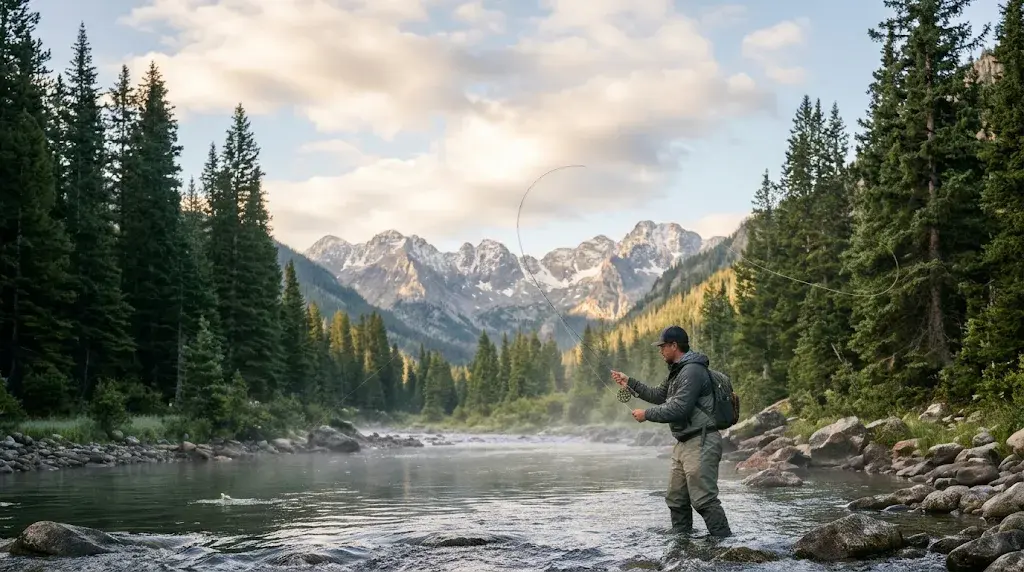
The best time to fly fish in Colorado is generally June through September, when snowmelt has settled, trout feed actively, and dry-fly hatches are at their strongest. For the most dependable all-around conditions, plan a Colorado fly fishing trip in July; for fewer crowds and aggressive trout, target September. Tailwaters also make winter fly fishing productive across much of the state.
Colorado offers excellent fly fishing every month of the year, but the right destination changes with runoff, water temperature, insect activity, and elevation. This guide breaks down the best months to fly fish in Colorado, the hatches to expect, the best rivers by season, and the flies that produce.
A Colorado fly fishing trip isn’t just about catching trout. It’s about peaceful mornings, fresh mountain air, spectacular landscapes, and those unforgettable moments when a wild trout takes your fly.
So, start planning your adventure, prepare your gear, and get ready to experience some of the most beautiful fishing waters in the country!
🎣 Your next great fishing story could begin in Colorado Today.
When Is the Best Time to Fly Fish in Colorado?
The best overall period is mid-June through September. By then, most freestone rivers have dropped and cleared after spring runoff, trout are spread through productive feeding water, and anglers can choose between dry flies, nymphs, and streamers.
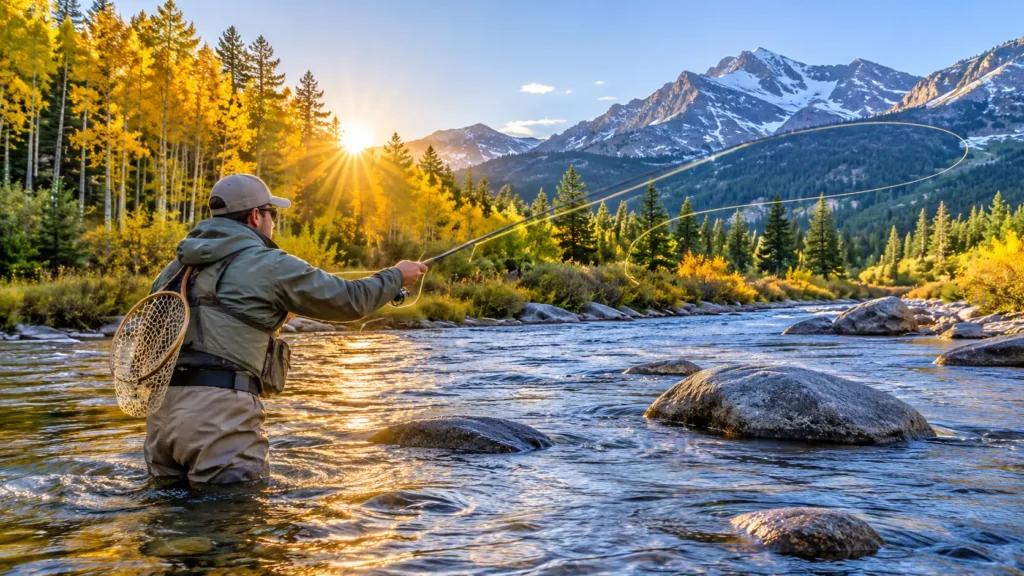
July is the strongest month for classic summer fly fishing in Colorado. Green drakes, pale morning duns, caddisflies, yellow sallies, and terrestrials overlap across many waters, creating reliable opportunities to cast a fly to rising fish.
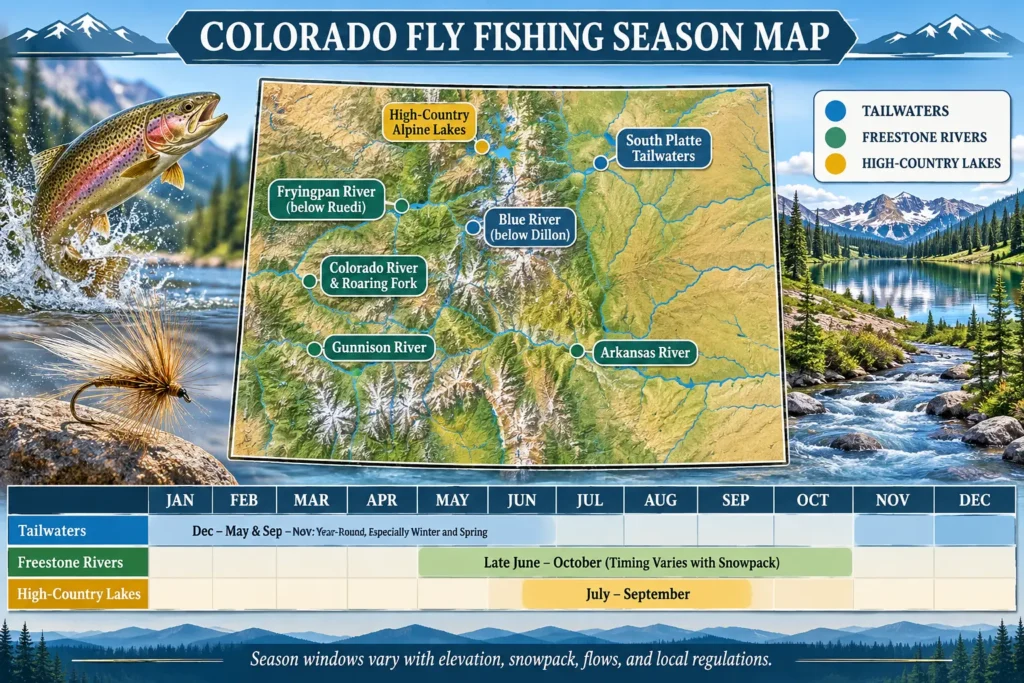
That does not mean the other seasons are poor. Colorado’s dam-controlled tailwaters—such as the South Platte, Frying Pan, Blue, and Arkansas below Pueblo—can fish well year-round because flows and water temperature remain more stable than on freestone rivers.
Best overall months
| Goal | Best time | Why it works |
|---|---|---|
| Classic dry-fly fishing | July | Multiple hatches overlap and most rivers are fishable. |
| Fewer crowds, active trout | September | Cooler water, BWO hatches, and pre-spawn brown trout activity. blog. |
| Biggest dry flies | June | Salmonflies and golden stoneflies hatch on several major rivers. |
| Technical tailwater fishing | January–March | Midges and small nymphs produce in stable, cold water. |
| Streamer fishing for big browns | October | Brown trout become aggressive before the spawn. |
| Peaceful rivers and clear water | Early fall | Lower flows create defined fish-holding water and lighter pressure. |
How seasons affect trout activity
Trout are cold-blooded, so water temperature drives much of their behavior. They feed most consistently when water is roughly in the 50–65°F range; as water approaches 71°F, trout become stressed, feed less, and are less likely to recover after release.
In winter, trout conserve energy and concentrate in slower, deeper water. In summer, they may feed hard during morning and evening but move to cooler, oxygen-rich water during hot afternoons.
Colorado Parks and Wildlife advises anglers to fish earlier in the day, choose higher-elevation water, and avoid fishing when temperatures reach 70°F or higher.cpw.state.co
Best Months for Fly Fishing in Colorado
The Colorado fly fishing season does not open and close like a traditional hunting season. Most rivers are open year-round, but conditions, access, and fish behavior change dramatically through the year.
Spring fly fishing: March–May
Spring is a transition period. March can be excellent on tailwaters and lower-elevation rivers, while April often brings the first strong caddis activity and better dry-fly opportunities.
Fly fishing in Colorado in May can be outstanding early in the month, especially on the Arkansas River during the famous Mother’s Day caddis hatch. By late May, warm weather can trigger runoff, turning many freestone rivers high, cold, and off-color.
Best spring choices:
- South Platte tailwaters, including Cheesman Canyon and Deckers. riverreports
- Arkansas River near Salida and Buena Vista for caddis.
- Fryingpan River for midges, BWOs, and consistent flows.
- Blue River below Dillon Dam for winter-to-spring tailwater fishing.
- Roaring Fork River for early BWOs and spring float fishing.
Summer fly fishing: June–August
Summer is the easiest time to plan a successful fly fishing trip. Runoff usually fades by mid-June, opening access to freestone rivers, high-country creeks, and mountain lakes.
June brings salmonflies and golden stoneflies to parts of the Colorado River and Gunnison River. July delivers the state’s best mix of dry-fly fishing, nymphing, and terrestrial patterns. August shifts toward hoppers, ants, beetles, tricos, and early-morning sessions as water warms.
Best summer choices:
- Upper Colorado River for salmonflies, floats, and hopper-dropper fishing.
- Roaring Fork River for green drakes, PMDs, and caddis.
- Eagle River for caddis, wade fishing, and summer hatches.
- Gunnison River and Gunnison Gorge for stoneflies and remote float trips.
- High-country creeks and mountain lakes for quieter fishing opportunities.
Fall fly fishing: September–November
Fall fly fishing in Colorado may be the most underrated time of year. September brings cooler nights, returning blue-winged olives, lower water, and fewer anglers on popular public stretches.
October is prime time for streamer fishing, especially if you want a chance at a big brown trout. Brown trout become more aggressive before their fall spawn, and streamers can trigger reaction strikes from fish that ignored smaller patterns all summer.
Best fall choices:
- South Platte for BWOs, October caddis, and technical dry-fly fishing.
- Colorado River for streamers and pre-spawn browns.
- Gunnison River for larger brown trout moving ahead of the spawn.
- Roaring Fork for BWOs, hoppers, and streamer fishing.
- Eagle River for clear water, defined holding lies, and lighter crowds.
Colorado Winter fly fishing: December–February
Winter fishing rewards anglers who slow down, dress properly, and fish the warmest part of the day. Trout feed less often, but midges remain available, and tailwaters keep water temp more stable than nearby freestone rivers.
The best winter window is usually late morning through mid-afternoon. Focus on deep, slow runs, subtle takes, and small flies. A size 20–26 midge pattern is often more important than a large attractor dry.
Best winter choices:
- South Platte River, especially Cheesman Canyon and Deckers.
- Blue River below Dillon Dam.
- Fryingpan River below Ruedi Reservoir.
- Arkansas River below Pueblo Reservoir, where winter conditions are milder.
- Lower Colorado River near Glenwood Springs, where warmer water can extend the season.
Colorado Fly Fishing Month-by-Month Calendar
This calendar gives you a practical starting point, but always check local fishing reports, river flows, weather, and regulations before you go. Conditions can change quickly after rain, snowmelt, or a dam release.
| Month | What to expect | Best water and tactics |
|---|---|---|
| January | Cold water, midges, concentrated fish | Fish tailwaters midday with small midge nymphs and dry flies. |
| February | Longer days, stronger midge activity | Target open water and deeper wintering holes; try small BWO patterns late month. |
| March | Early spring transition | Fish midges and BWOs; tailwaters remain dependable. |
| April | Pre-runoff opportunity | Nymph, streamer, and dry-fly fishing improve; watch for early caddis. |
| May | Caddis, then runoff | Fish the Arkansas early; shift to tailwaters when freestones blow out. |
| June | Salmonflies and clearing water | Target stoneflies early, then dry flies as flows drop |
| July | Peak dry-fly season | Fish PMDs, caddis, green drakes, yellow sallies, and terrestrials. blog. |
| August | Hoppers and warm water | Start early, fish banks with terrestrials, and monitor water temperature. |
| September | Fall transition | Fish BWOs, hoppers, nymphs, and early streamers. |
| October | Streamer season | Target aggressive brown trout with streamers, eggs, and October caddis. |
| November | Late fall to winter | Fish BWOs early, then shift toward midges and nymphs. |
| December | Winter tailwater fishing | Fish slow, deep water during the warmest hours with midges. |
How Seasonal Hatches Affect Colorado Fly Fishing
A hatch is simply an insect emergence that gives trout a predictable food source. When insects are on the water, trout often move into feeding lanes and rise to dry flies; when no hatch is active, nymphs and streamers usually produce more fish.
Blue-winged olives
Blue-winged olives, commonly called BWOs, are among Colorado’s most important mayflies. They hatch in spring and again in fall, often on cloudy or overcast days when trout are more willing to feed near the surface.
Carry BWO patterns in sizes 18–22, including comparaduns, sparkle duns, emerger patterns, and small nymphs.
Caddisflies
Caddisflies fuel some of Colorado’s best dry-fly fishing. The Arkansas River’s Mother’s Day caddis hatch is one of the state’s best-known events, while summer caddis keep trout looking up on the Eagle, Colorado, and Roaring Fork rivers.
Try elk-hair caddis patterns, CDC caddis, and caddis pupa nymphs. A dry-dropper rig can be especially effective when trout feed both on the surface and below it.
Pale morning duns
Pale morning duns, or PMDs, are a summer staple on many Colorado rivers. They usually hatch during warmer months and create excellent opportunities for dry-fly fishing during late morning and evening.
Carry PMD duns, cripples, spinners, and nymphs in sizes 14–18.
Green drakes and stoneflies
Green drakes are large mayflies that create exciting, visible dry-fly fishing, particularly on the Roaring Fork and parts of the Gunnison system. They generally appear from late June into July.
Stoneflies, including salmonflies and golden stones, hatch earlier in the season. Their nymphs are important before the adults emerge, and large dry flies can draw explosive strikes from trout in June.
Midges and other trout insects
Midges hatch throughout the year and become the primary food source during the winter months. They are especially important on tailwaters, where trout may feed on tiny insects even in freezing conditions.
Other useful insects include tricos in late summer, October caddis in fall, and terrestrials such as hoppers, ants, and beetles during warm, windy weather.
Best Time of Day to Fly Fish in Colorado
The best time of day depends more on water temperature and hatch timing than on the clock. In summer, early morning and evening often outfish the middle of the day; in winter, midday is usually best.
– Early morning fishing
Early morning is excellent during hot summer weather. Trout feed before the water warms, and anglers can fish hopper-dropper rigs, streamers, or nymphs before recreational traffic increases.
– Midday fishing opportunities
Midday is the best window in winter because sunlight slowly warms the water and trout become more active. On tailwaters, look for midge clusters, subtle rises, and fish holding in slower current.
– Evening hatch activity
Summer evenings can be the best fishing of the year. Caddis, PMDs, green drakes, and yellow sallies often create a reliable evening hatch, giving anglers a chance to fish dry flies to rising fish.
– How temperature affects feeding patterns
When water is cold, trout feed in short windows and prefer slower water. When water is warm, trout may feed early and late but become stressed during the hottest part of the day. Carry a stream thermometer and adjust your plans based on the temp.
Best Time to Catch Trout in Colorado
Different trout species peak at different times, though good anglers can catch trout in Colorado throughout the year.
| Trout species | Best season | Where to focus |
|---|---|---|
| Rainbow trout | March–July | Tailwaters, spring spawning areas, and summer hatches. |
| Brown trout | September–October | Rivers with good streamer water and pre-spawn fish. |
| Cutthroat trout | June–September | High-country lakes, creeks, and remote headwaters. |
| Brook trout | June–September | Small high-elevation streams and mountain lakes. |
Best season for rainbow trout
Rainbow trout often become more active in late winter and early spring. March can be especially productive as daylight increases, midge hatches strengthen, and pre-spawn rainbows feed more aggressively.
Best season for brown trout
Brown trout are a top target in fall. As water cools, brown trout become more aggressive, and streamer fishing can produce the biggest fish of the year.
Best season for cutthroat trout
Cutthroat trout are often best targeted in summer, when high-country lakes, beaver ponds, and small streams become accessible. These fisheries can offer beautiful trout, quiet water, and a more adventurous fly fishing experience.
Best season for brook trout
Brook trout also respond well to summer access in high-elevation water. Small streamers, attractor dry flies, and simple nymph patterns can work well in creeks where fish are less selective.
How Weather and Water Conditions Affect Fly Fishing
Water temperature and trout behavior
Water temperature controls how actively trout feed. Cold water slows metabolism, while excessively warm water creates stress and lowers survival after release. CPW specifically advises anglers to move to another location when water reaches 70°F or higher.cpw.state.co
Snowmelt and spring runoff
Runoff usually affects freestone rivers from late May into June. Snowmelt can make rivers high, cold, and murky, so tailwaters and lakes become better choices during that period.
Rain, wind, and changing weather
Rain can improve fishing by cooling water and triggering insect activity, but heavy rain can also blow out a river. Wind can make dry-fly presentations difficult, although it pushes terrestrials onto the water and can improve hopper fishing.
Water clarity and river flows
Clear, stable water favors technical fishing with smaller flies and longer leaders. Murky water often favors larger nymphs, streamers, and brighter fly patterns because trout have less time to inspect a fly. Always check real-time flows before committing to a river.
Best Places for Fly Fishing in Colorado by Season
Which river in Colorado is best for fly fishing? With its clear mountain water, healthy trout populations, and stunning Rocky Mountain scenery, Colorado offers some of the best fly fishing in the United States. But if you could choose just one river for your next fishing trip, where should you cast your line?
The Gunnison River stands out as one of Colorado’s best fly fishing destinations, especially for anglers targeting rainbow and brown trout. The Colorado, South Platte, Fryingpan, and Arkansas rivers also offer excellent opportunities, from technical dry-fly fishing to productive nymphing and streamer fishing.
Local fly fishing guides and Colorado Parks and Wildlife provide valuable insights into seasonal hatches, trout populations, and river conditions.
– South Platte River
The South Platte is one of Colorado’s most reliable year-round fisheries. Cheesman Canyon and Deckers are especially strong in winter and early spring, when midges and small nymphs produce steady action.
– Colorado River
The Colorado River offers excellent variety, from the upper Colorado near Pumphouse to water below State Bridge and toward Glenwood Springs. It is a strong choice for salmonflies in early summer, hopper-dropper fishing in late summer, and streamer fishing in fall.
– Arkansas River
The Arkansas River is a top spring destination, particularly for the Mother’s Day caddis hatch. Its Pueblo tailwater also gives anglers a milder option during the winter months.
– Fryingpan River
The Fryingpan is one of Colorado’s most dependable tailwaters. It supports fishing year-round and produces green drakes, PMDs, BWOs, midges, and mysis shrimp opportunities below the dam.
– Gunnison River
The Gunnison River is a strong choice for anglers seeking bigger fish and more remote water. The Gunnison Gorge is especially known for its salmonfly hatch and multi-day float fishing opportunities.riverreports
What Flies to Use Throughout the Year in Colorado
Best spring fly patterns
- Midge dries and emergers, sizes 20–26.
- BWO comparaduns and sparkle duns, sizes 18–22.
- Caddis pupa and adult patterns.
- Stonefly nymphs ahead of salmonfly hatches.
- Small streamers for pre-runoff brown trout.
Summer dry flies and terrestrials
- PMD duns and spinners.
- Green drake patterns, sizes 10–14.
- Elk-hair caddis and CDC caddis.
- Yellow sallies and small stonefly dries.
- Hopper-dropper rigs with ants and beetles.
Fall nymphs and streamers
- BWO emergers and dries.
- October caddis patterns.
- Egg patterns where regulations and conditions allow.
- Streamers in olive, black, white, and natural baitfish colors.
Winter midges and small nymphs
- Midge dries and cluster patterns, sizes 20–26.
- RS2-style emergers and tiny nymphs.
- Mysis shrimp patterns on certain tailwaters.
- Small leeches and streamers during warmer winter afternoons.
Colorado Fly Fishing Tips for Every Season
- Check local fishing regulations before every trip; rules can differ by water, species, and season.
- Monitor river flows and weather before leaving home.
- Match your flies to local hatches rather than relying on one pattern all day.
- Start early during summer and fish higher elevations when water warms.cpw.state.co
- Prepare for changing mountain weather with layers, rain gear, sun protection, and extra water.
- Practice catch-and-release techniques: land fish quickly, keep them submerged while removing the hook, and release them promptly.
- Buy the proper Colorado fishing license; annual licenses run from March 1 through March 31 of the following year.
- Stop at a local fly shop for current fishing reports, hatch updates, access advice, and fly recommendations.
Best Time to Pond Fish in Colorado
The best time to pond fish in Colorado is usually early morning or evening from late spring through early fall. Ponds warm quickly in the afternoon, so trout and other species often move deeper or become less active during the hottest part of the day.
For trout ponds, spring and fall are often the most productive seasons. In summer, fish early, use small streamers or leech patterns, and look for shaded water near inflows, weed edges, and drop-offs. CPW notes that high water temperatures stress cold-water species and reduce catch rates.
Trout Lake Colorado: Best Season
For a trout lake in Colorado, the best season is usually late spring through early fall. Ice-out can be excellent in spring, while summer gives anglers access to high-country lakes that remain snowbound much of the year.
Mountain lakes can fish well with damselfly nymphs, callibaetis patterns, leeches, chironomids, and small streamers. Early morning and evening are often better than midday, especially when the sun is bright and the water is warm.
Fly Fishing Near Rocky Mountain National Park
For anglers searching for fly fishing near Rocky Mountain National Park, Estes Park is a strong base. The area offers small streams, mountain lakes, and nearby tailwater options, though conditions can change quickly with snowmelt and weather.
Late June through September is usually the most accessible period for high-country fishing near Estes Park. A local fly shop can help you choose public access points, match the hatch, and avoid water that is still too high or cold.
Colorado Fly Fishing Season FAQs
When is the best time to go fly fishing in Colorado?
The best time to fly fish in Colorado is June through September. July is the best month for classic dry-fly fishing, while September offers excellent fishing with fewer crowds.
Is Colorado fly fishing good in winter?
Yes. Winter fishing can be very good on tailwaters such as the South Platte, Frying Pan, Blue, and Arkansas below Pueblo. Fish small midges and nymphs during the warmest part of the day.
What is the best month for dry fly fishing in Colorado?
July is usually the best month for dry fly fishing in Colorado. Green drakes, PMDs, caddis, yellow sallies, and terrestrials overlap across many rivers.
When does runoff happen in Colorado?
Runoff often begins in late May and can continue into June, depending on snowpack and weather. During runoff, tailwaters and lakes are often better choices than freestone rivers.
Can you fly fish Colorado year-round?
Yes. Colorado offers fishing opportunities every month of the year, but winter anglers should focus on tailwaters, midday sessions, and small flies.
What flies should I use in Colorado?
Carry midges, BWO patterns, caddis, PMDs, green drakes, stonefly patterns, terrestrials, and a few streamers. The best fly depends on the river, season, and current hatch.
Do I need a fishing license in Colorado?
Yes. Most anglers need a valid Colorado fishing license. Annual licenses are valid from March 1 through March 31 of the following year, and youth age 15 and under fish free.
Is fall a good time to fly fish in Colorado?
Yes. Fall is one of the best times for fly fishing in Colorado because trout feed heavily before winter, BWO hatches return, and brown trout become more aggressive before the spawn.
Is Colorado good for fly fishing?
Yes—Colorado is excellent for fly fishing, with more than 6,000 miles of streams and 1,300-plus lakes and reservoirs offering trout, diverse hatches, and year-round opportunities.
What is the 60/20/20 rule in fly fishing?
It’s a leader-building guideline: about 60% butt section, 20% tapered midsection, and 20% tippet. This taper transfers casting energy smoothly for better fly turnover and presentation.
What month is trout most active?
Trout are generally most active from June through September, when water temperatures reach the low 50s to mid-60s°F and insect hatches are strongest.
Conclusion
The best time to fly fish in Colorado depends on the experience you want, but June through September delivers the most consistent conditions for most anglers. July stands out for dry-fly fishing, while September combines active trout, beautiful scenery, and lighter crowds. For a reliable winter fly fishing trip, choose a tailwater such as the South Platte, Frying Pan, or Blue River and fish small midges during the warmest hours.
Colorado is one of the best places in the country to fly fish because its rivers, tailwaters, mountain lakes, and high-country creeks offer something in every season. Time it right, check flows and regulations, match the hatch, and respect the water. Whether you want rising fish, a big brown trout, or a peaceful day casting dry flies beneath the Rockies, Colorado has an excellent fly fishing opportunity waiting for you.
You might also like:
- What Size Wooly Bugger For Trout River Fishing (Explained)
- Best Fly Tying Vise Kits & Helpful Tips (2022 Buyer’s Guide)
- Best Time Of Day To Fly Fish – (Beginners Guide & Hacks)
- Do You Need A Tapered Leader For Fly Fishing? (Ultimate Formula)
- Is Fly Fishing Hard To Learn? (Not With This Quick Guide!)
- Do You Really Need A Tippet For Fly Fishing? (Complete Guide)
- How To Choose The Best Inflatable Life Vest For Fly Fishing
- River Nymphing Mastery: 5 Powerful Tips for Epic Success!